A complete pricing guide for renting a luxury tempo traveller in Delhi covering seating options, cost factors, popular routes, and what to check before booking.
Published on 07 Sep, 2026
Updated on 26 Oct, 2026
2480 Views
Luxury Tempo Traveller on Rent in Delhi: Full Pricing Guide
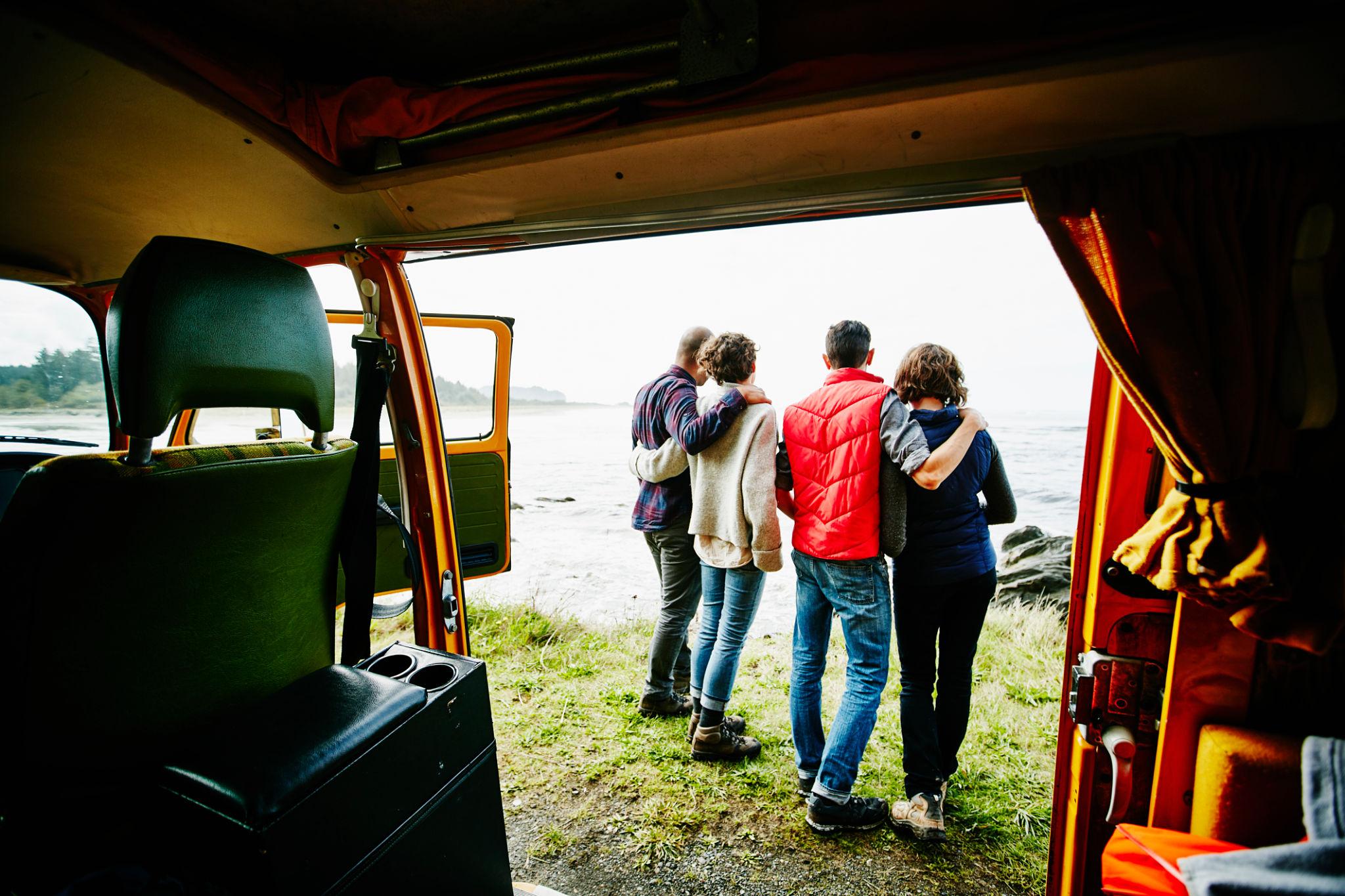
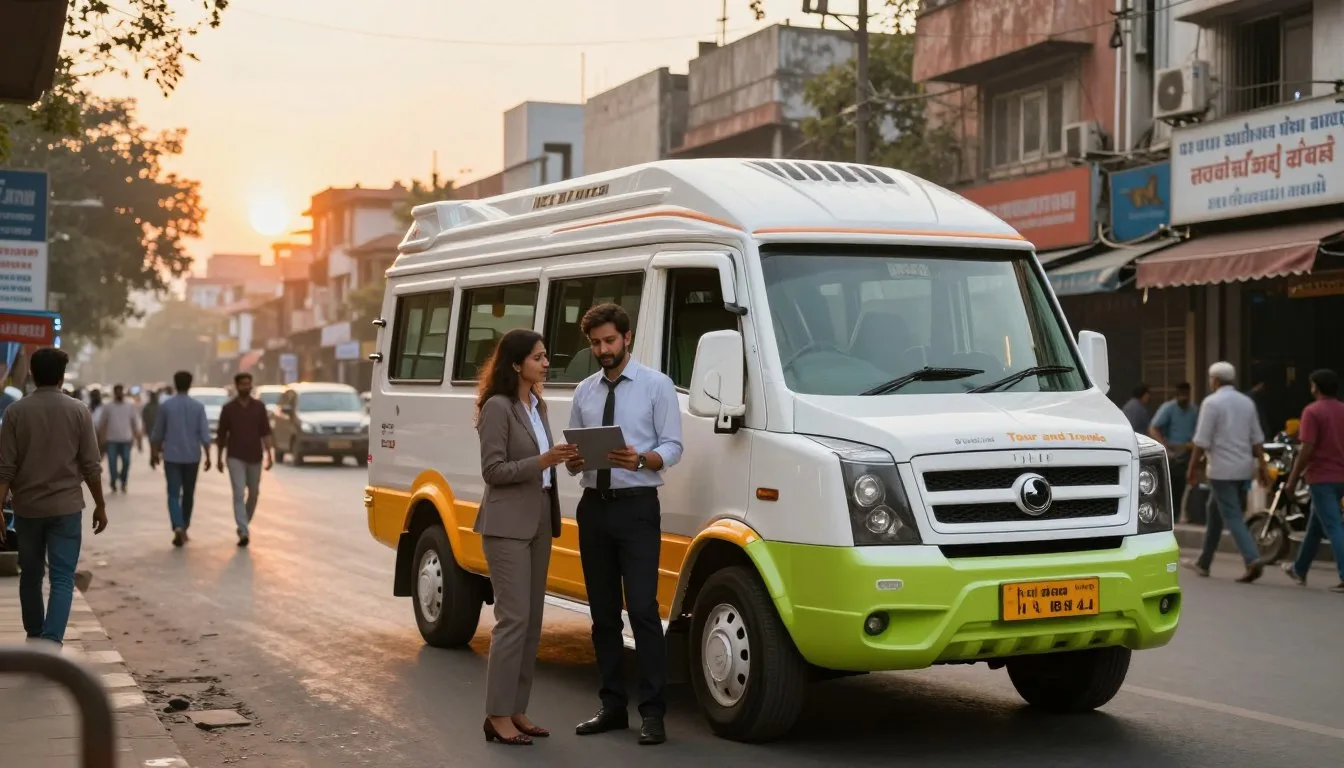
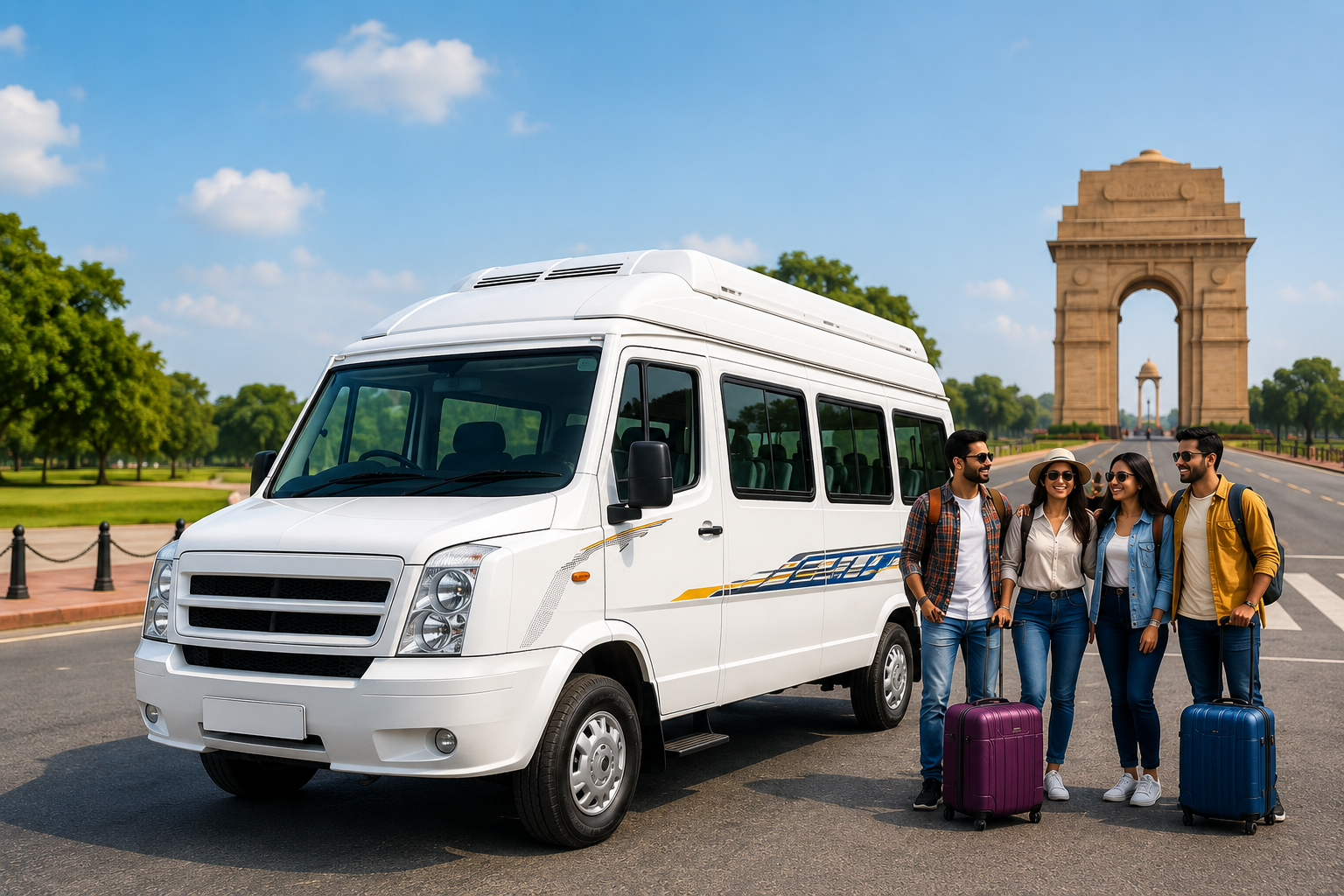
A luxury tempo traveller on rentis one of the most practical choices for group travel out of Delhi, whether you're planning a family trip to the hills, a corporate outing, or a wedding-related group movement. Unlike booking multiple cabs or a standard bus, a tempo traveller keeps the group together, cuts down on coordination hassle, and works out more comfortable for longer routes where sitting for several hours at a stretch matters. It also gives a group more control over stops, timing, and route flexibility compared to relying on shared or scheduled transport. This guide walks through what a luxury tempo traveller on rent in delhi typically costs, what affects pricing, seating options, and what to check before booking one, so you can compare quotes with a clearer idea of what you're actually paying for.
What Is a Luxury Tempo Traveller?
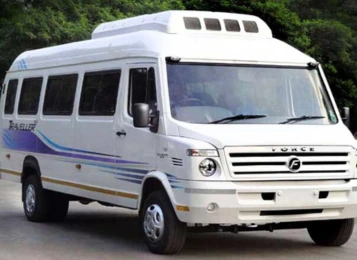
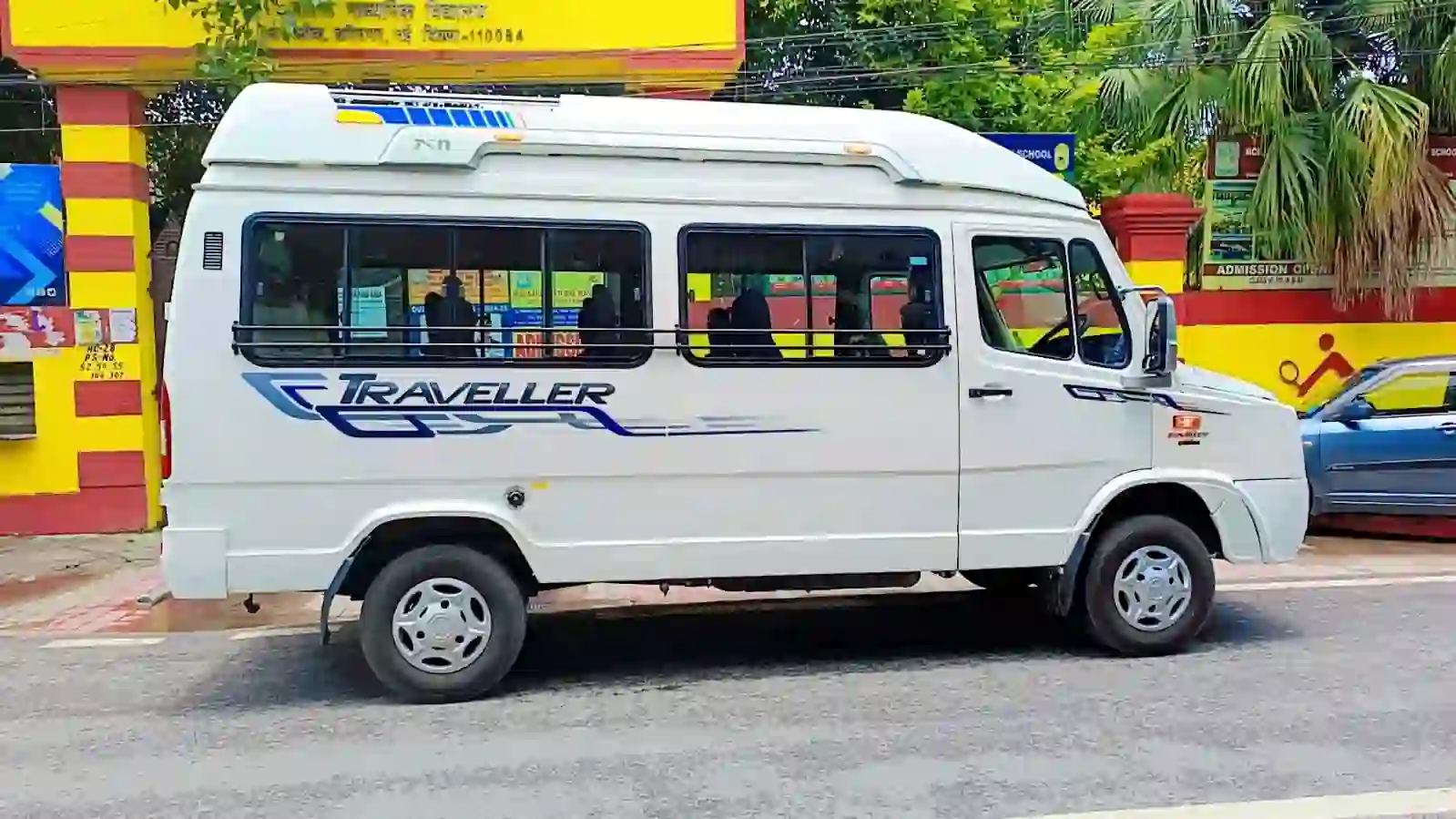
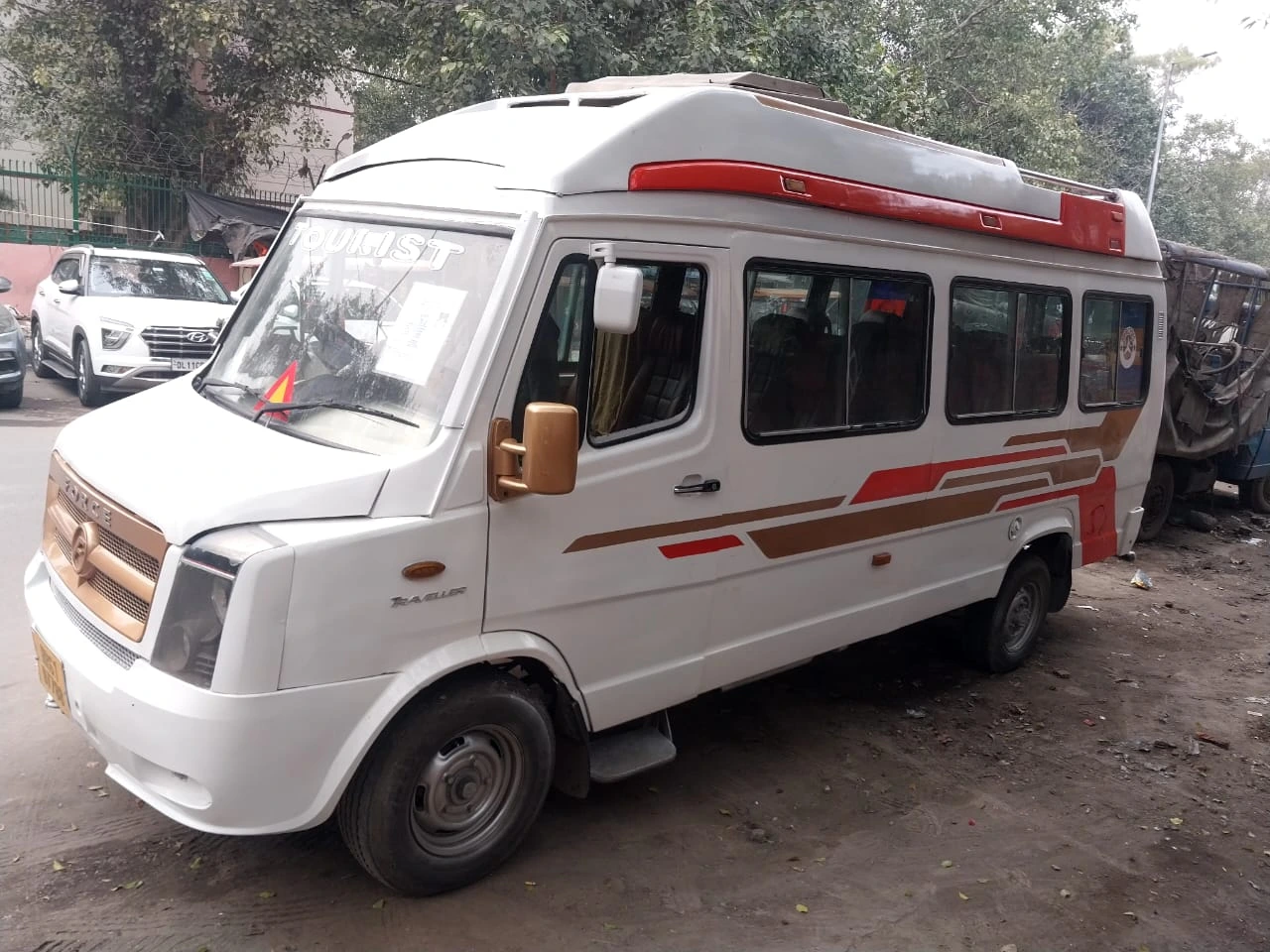
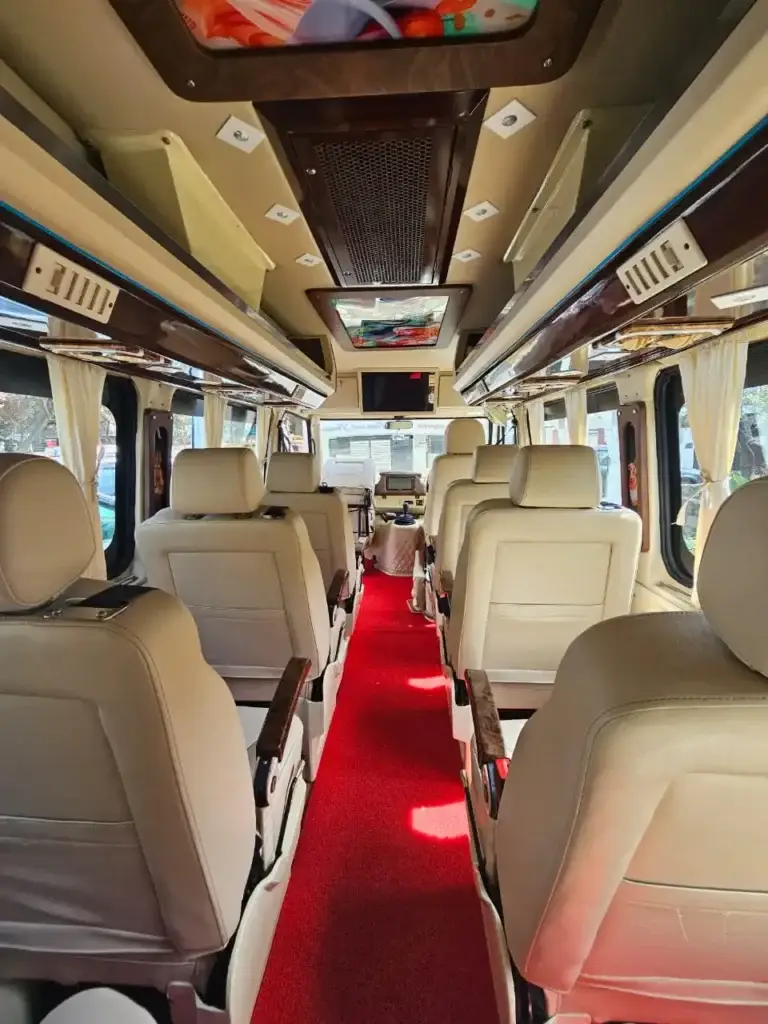
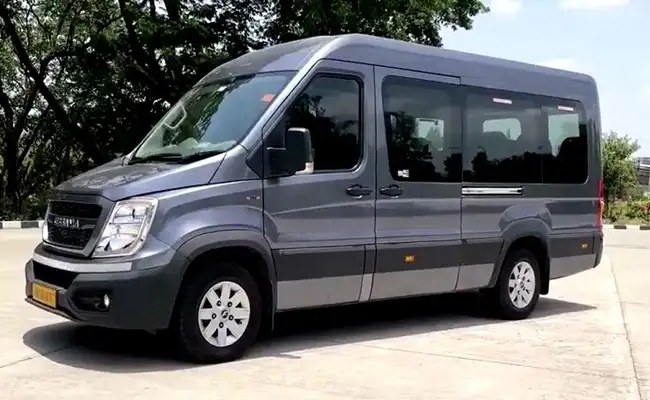
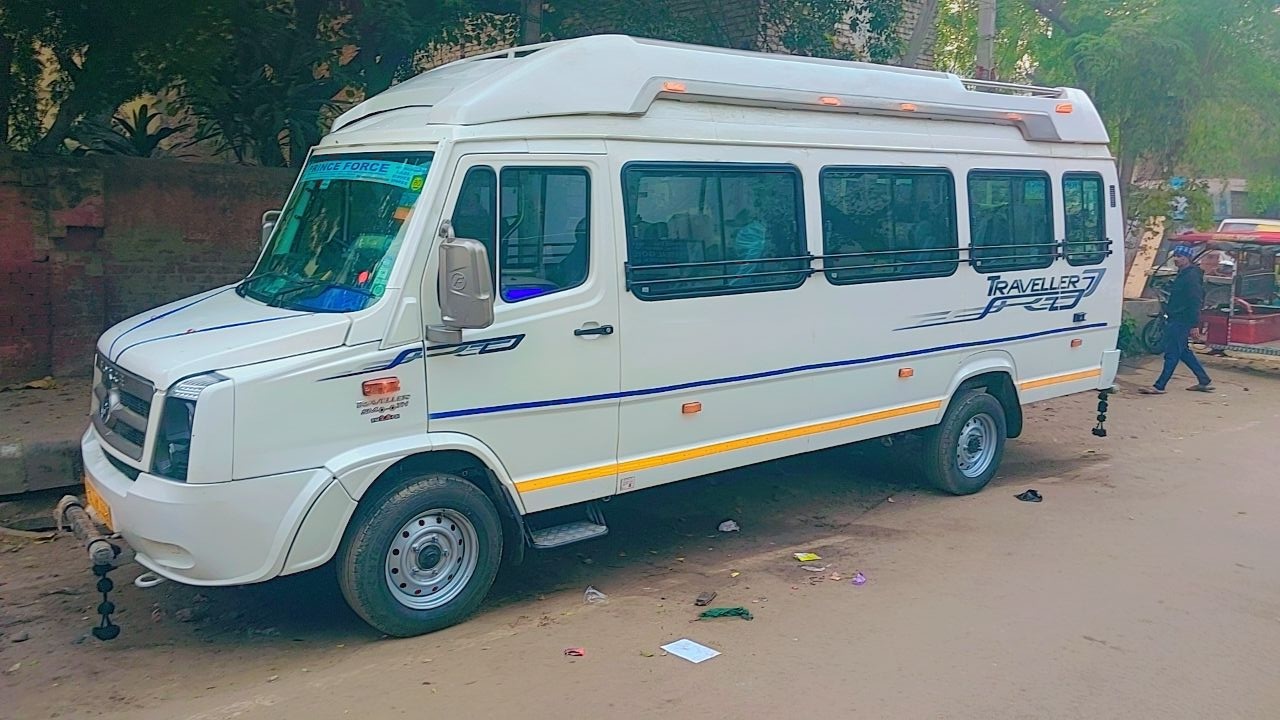
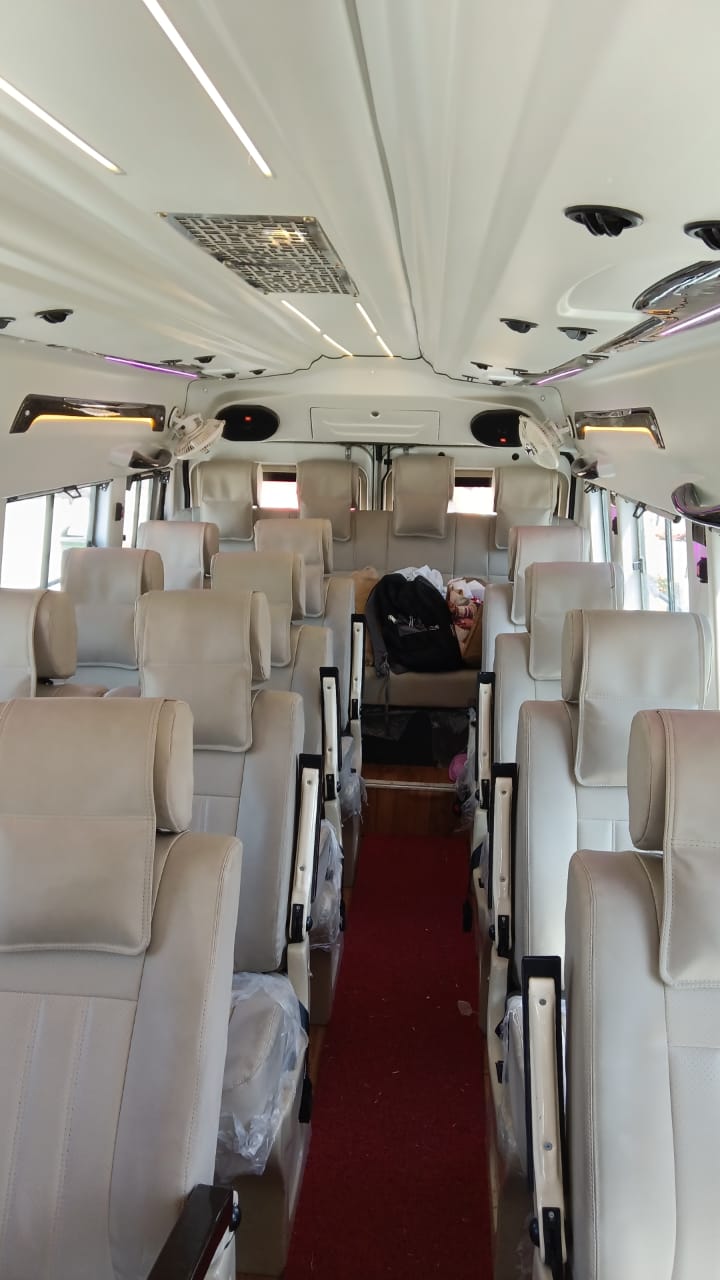
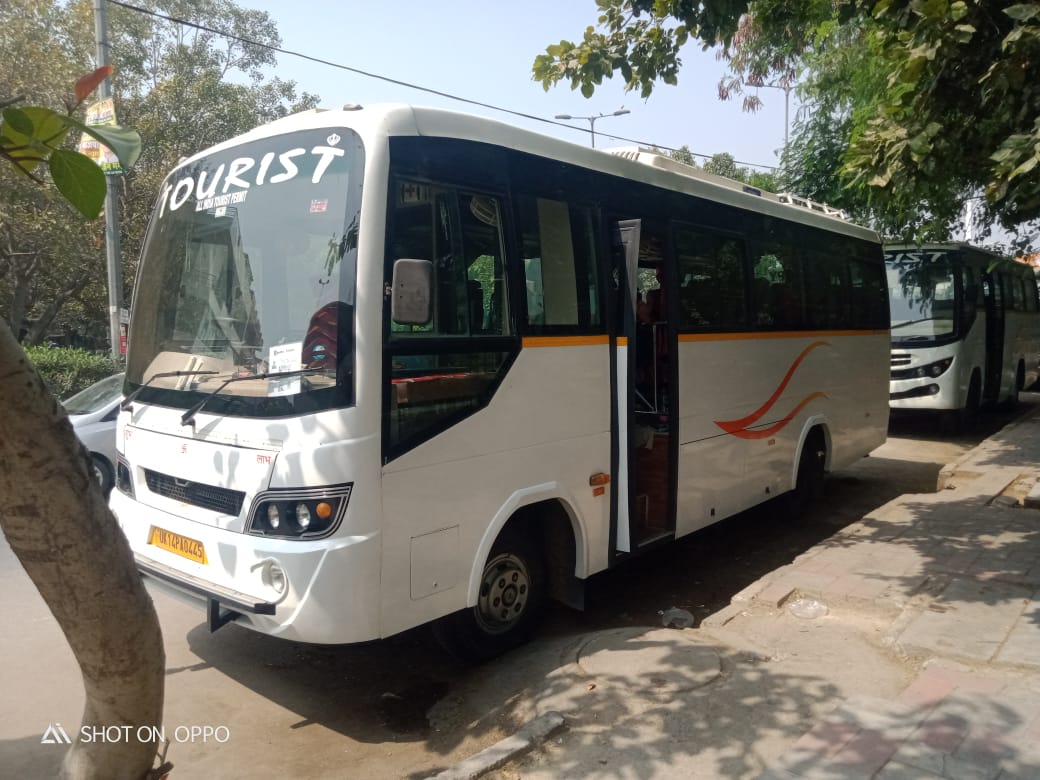
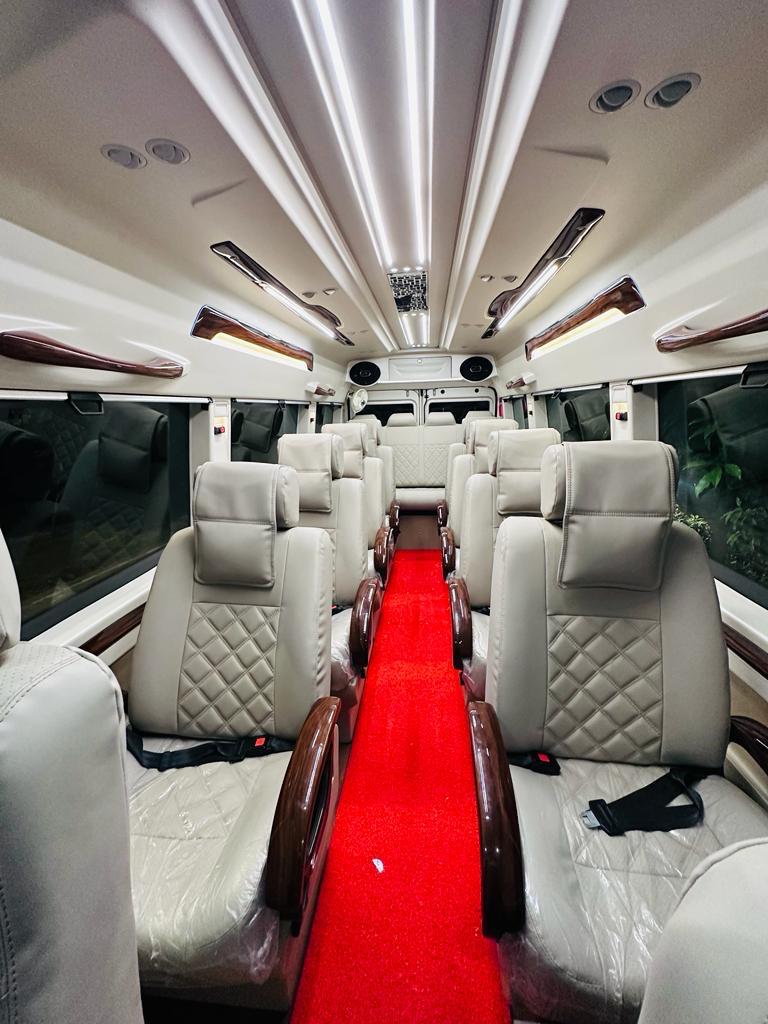
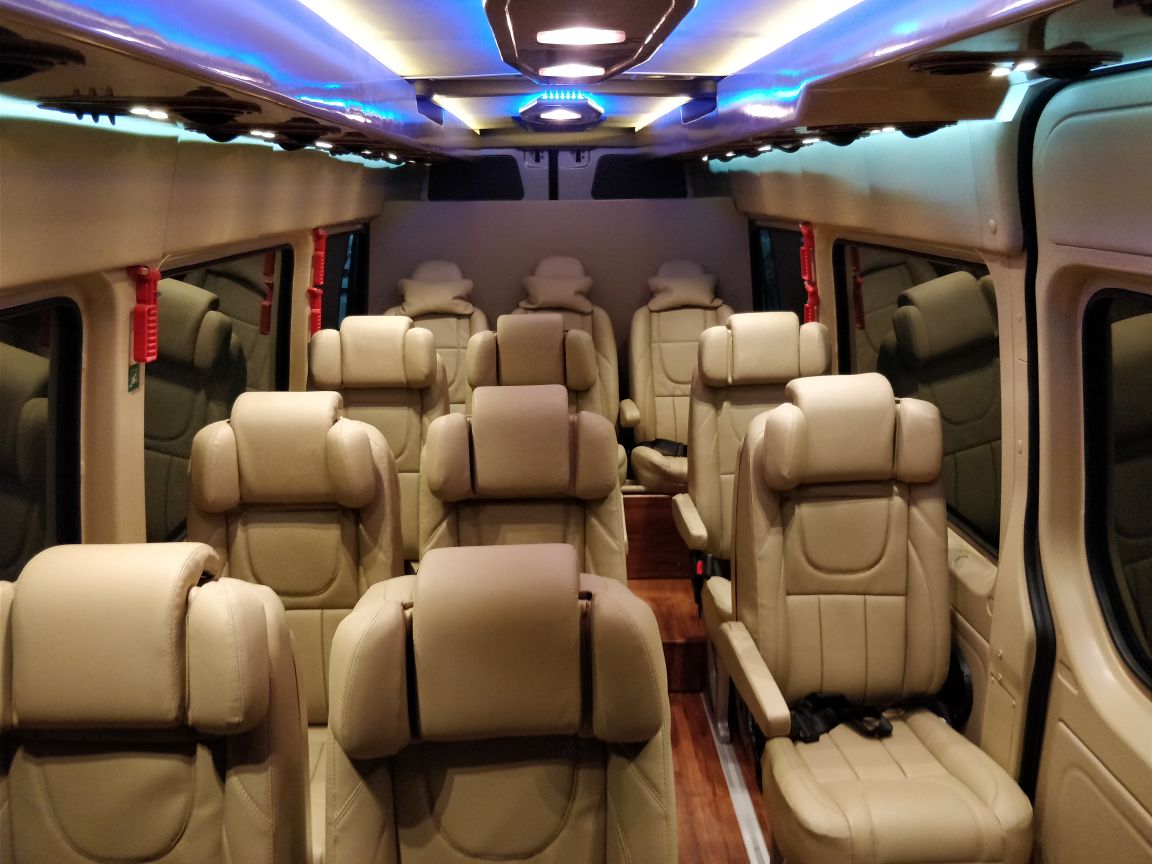
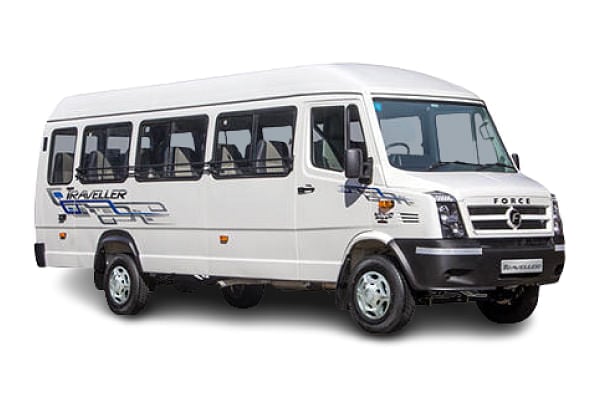
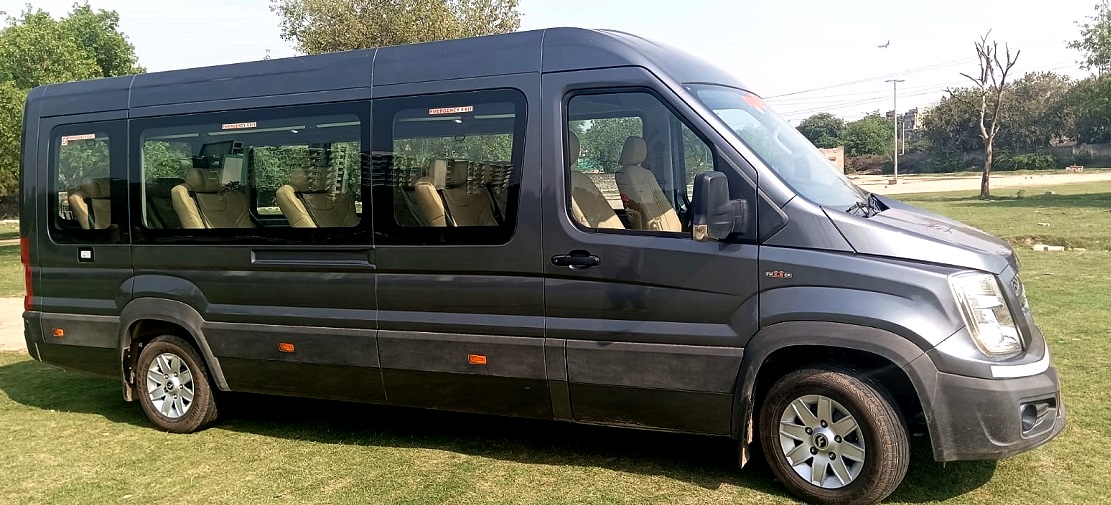
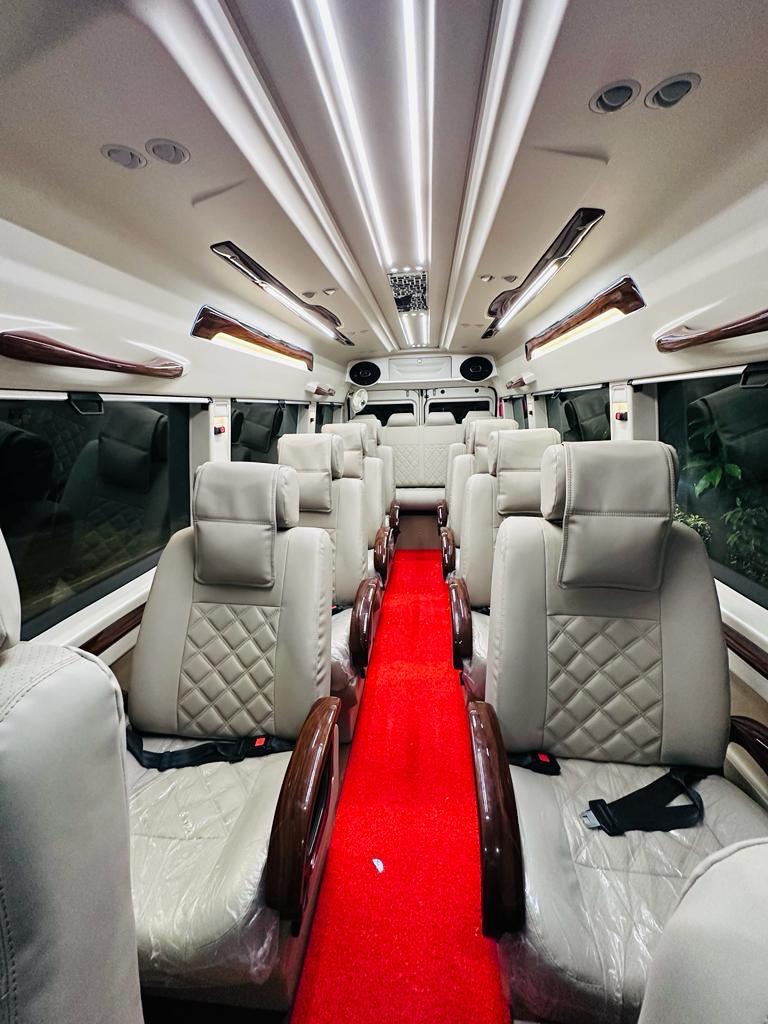
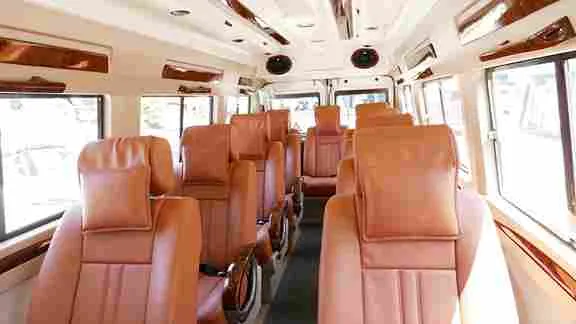
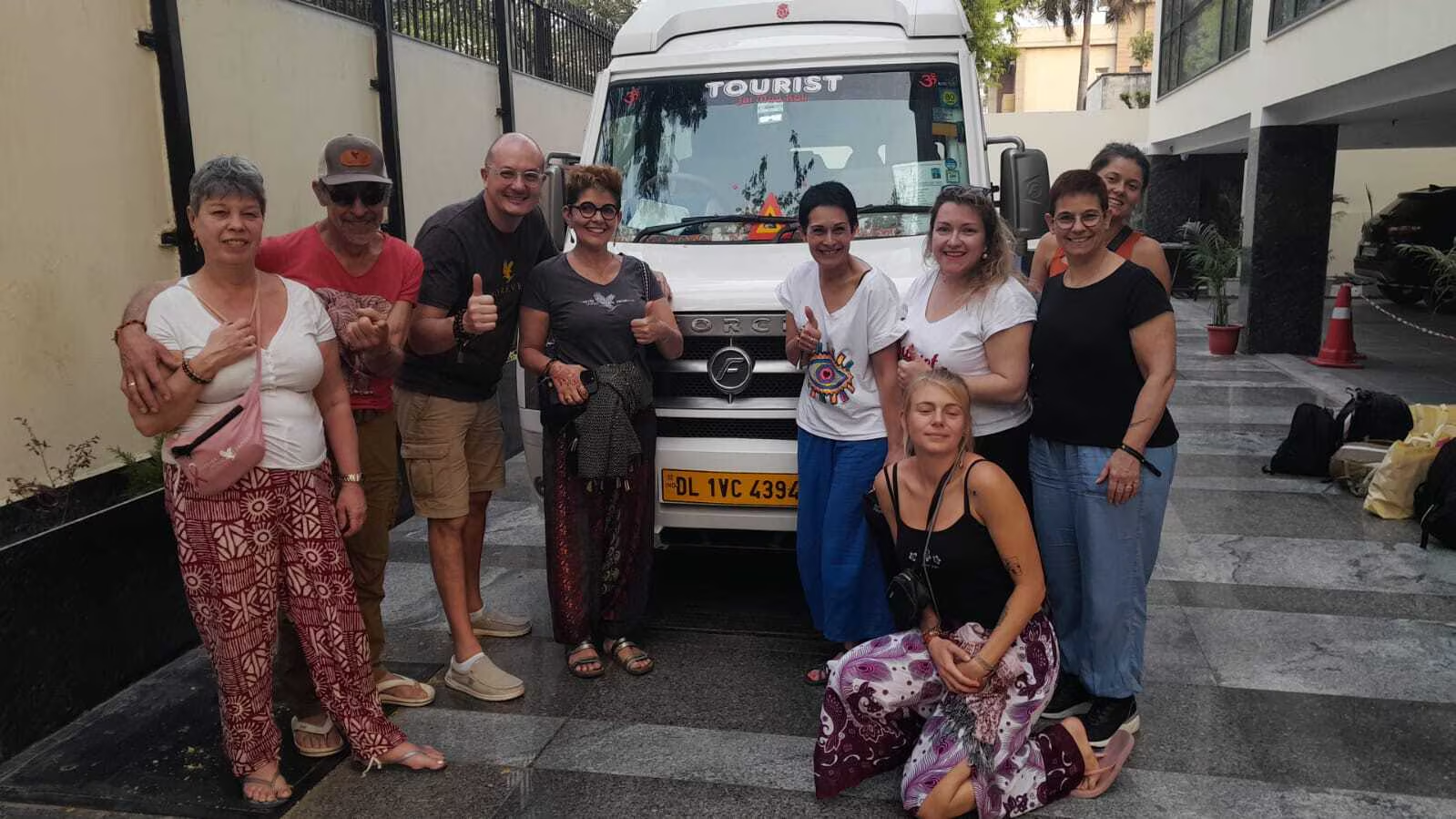
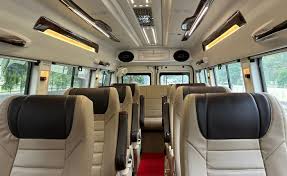
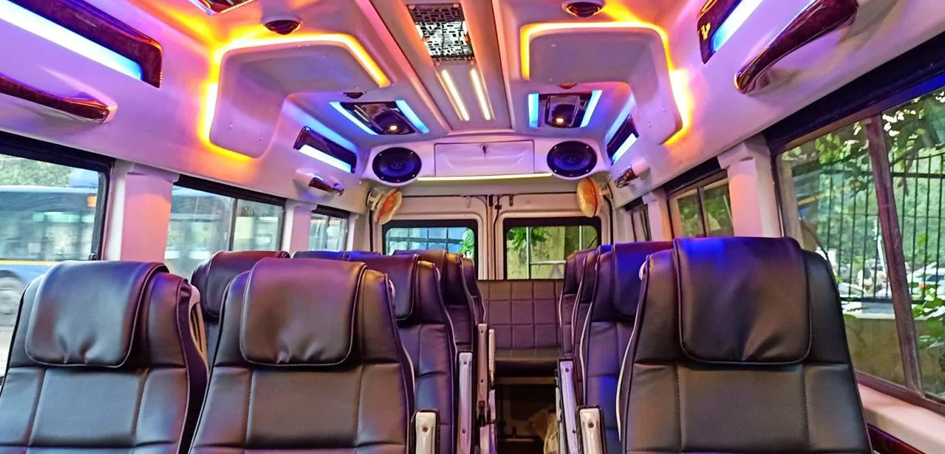
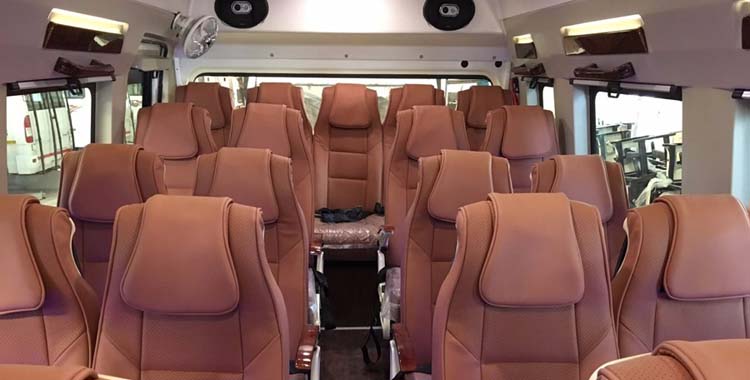
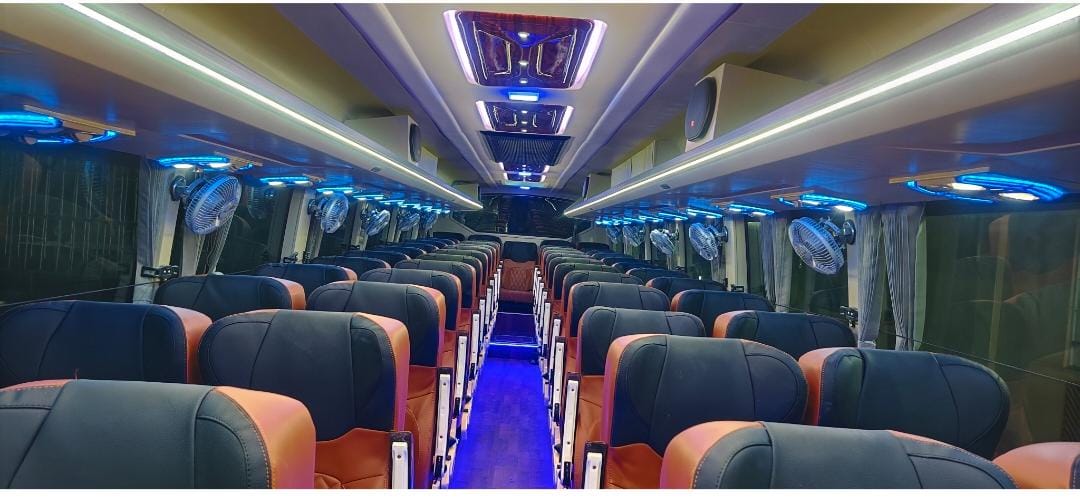
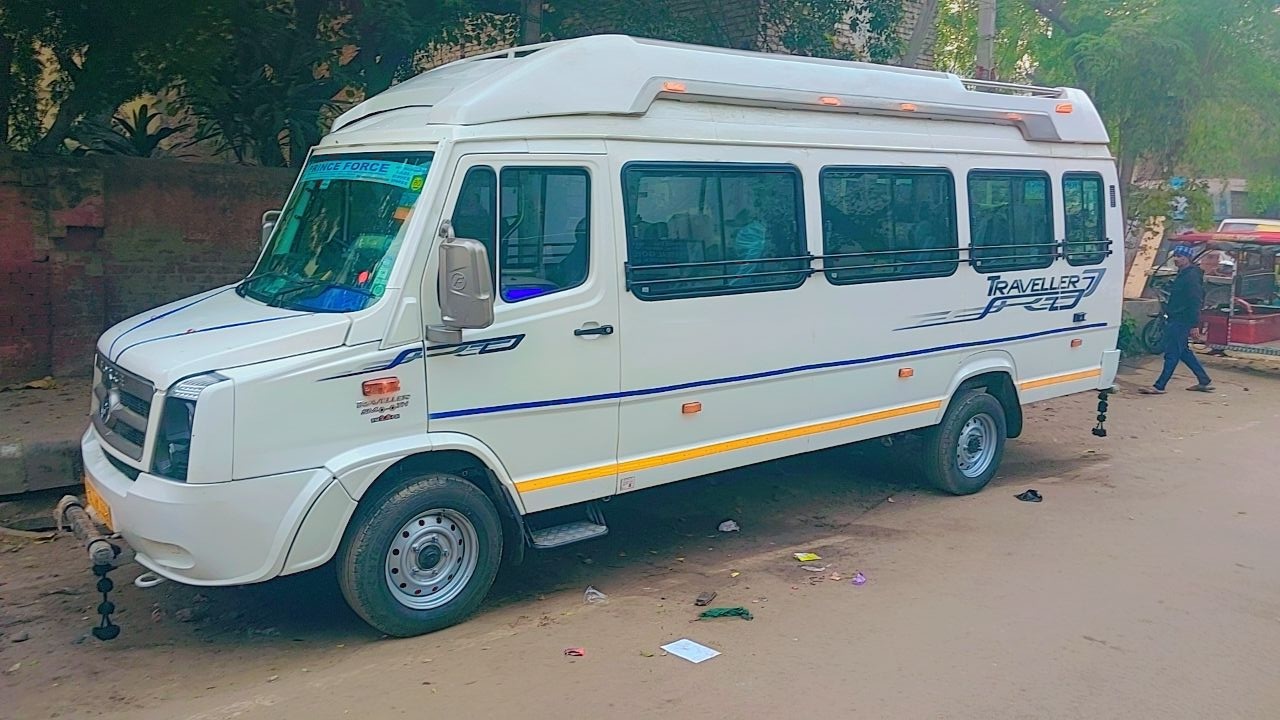
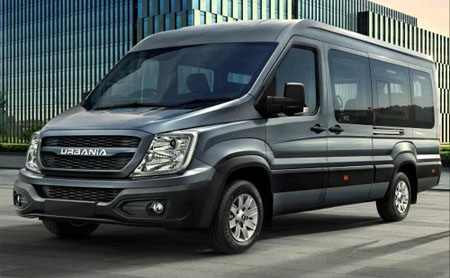
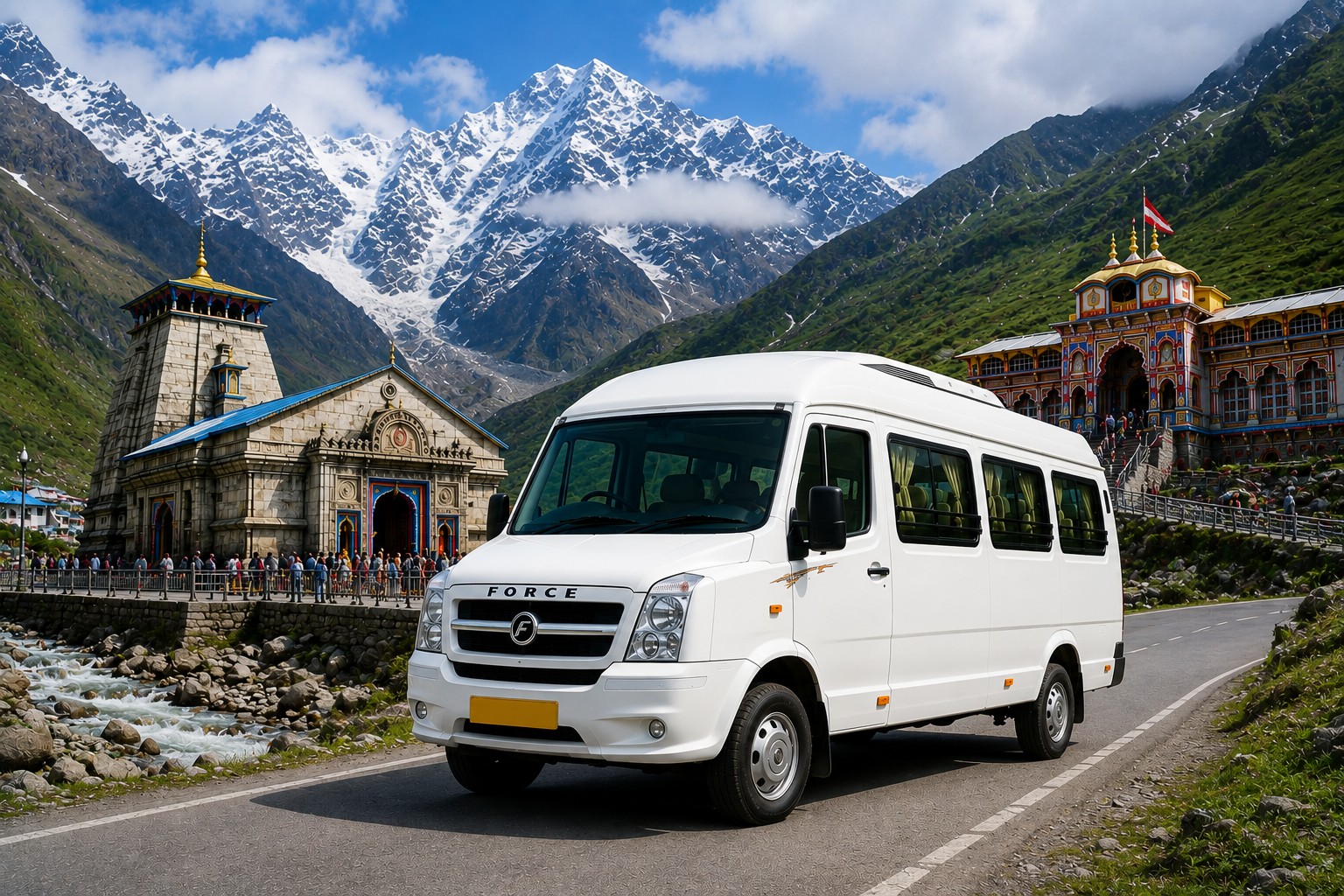
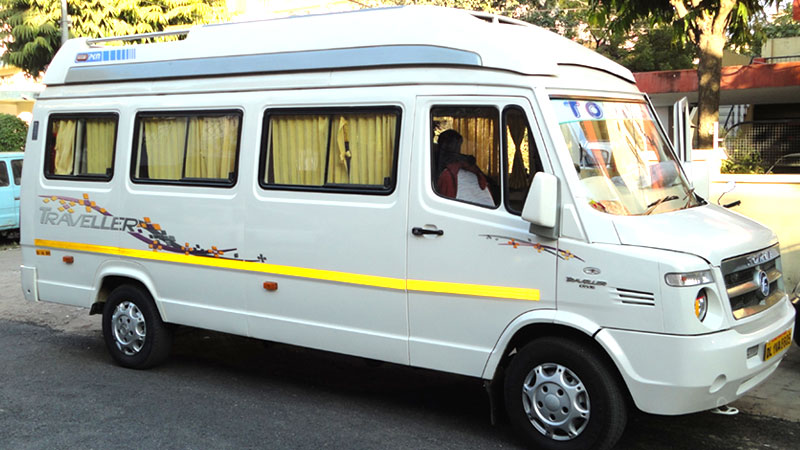
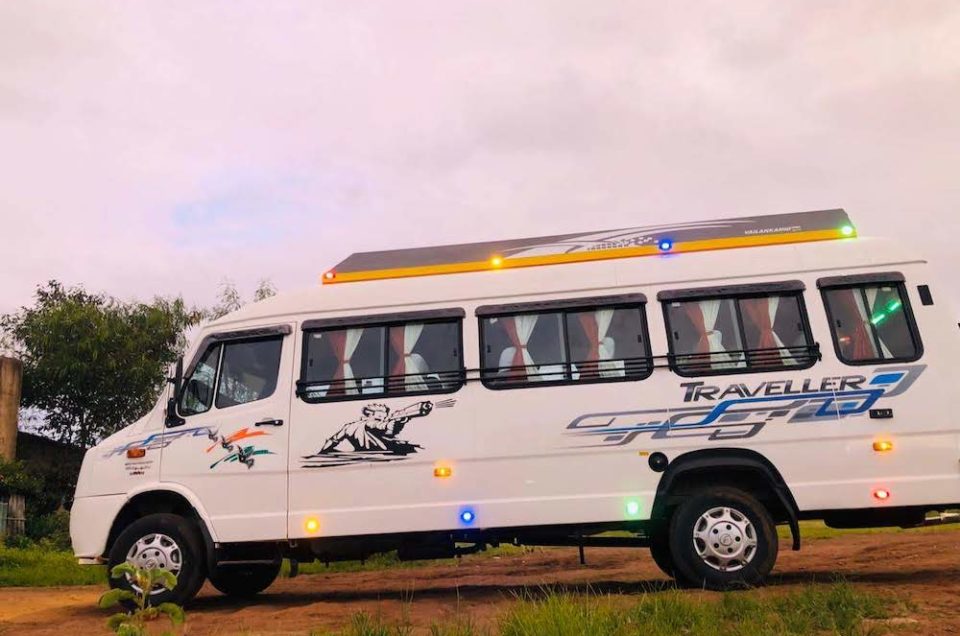
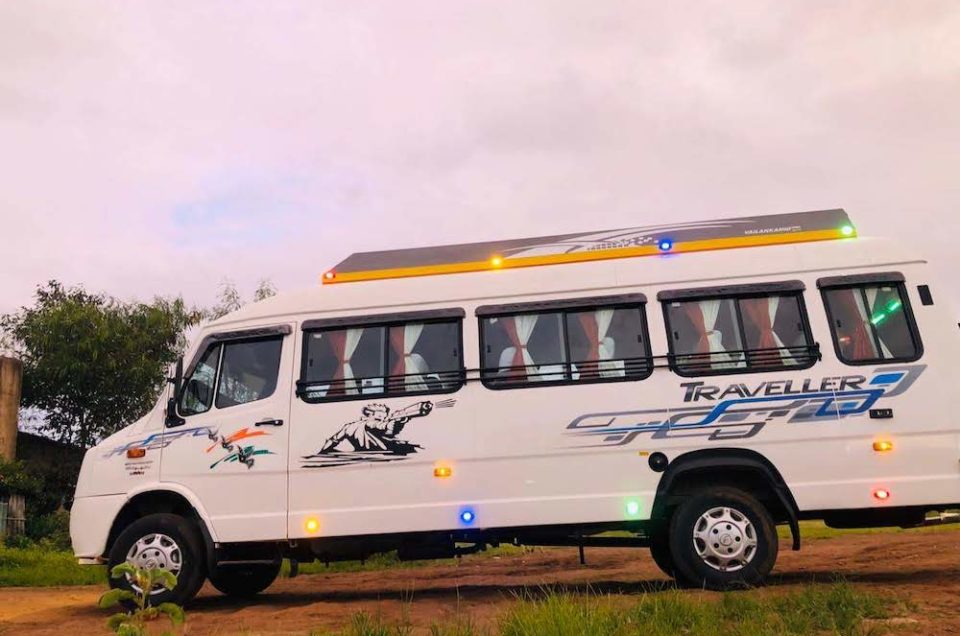
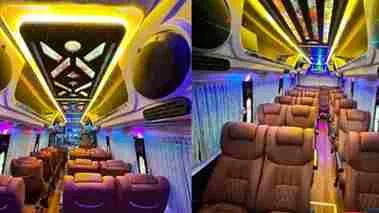
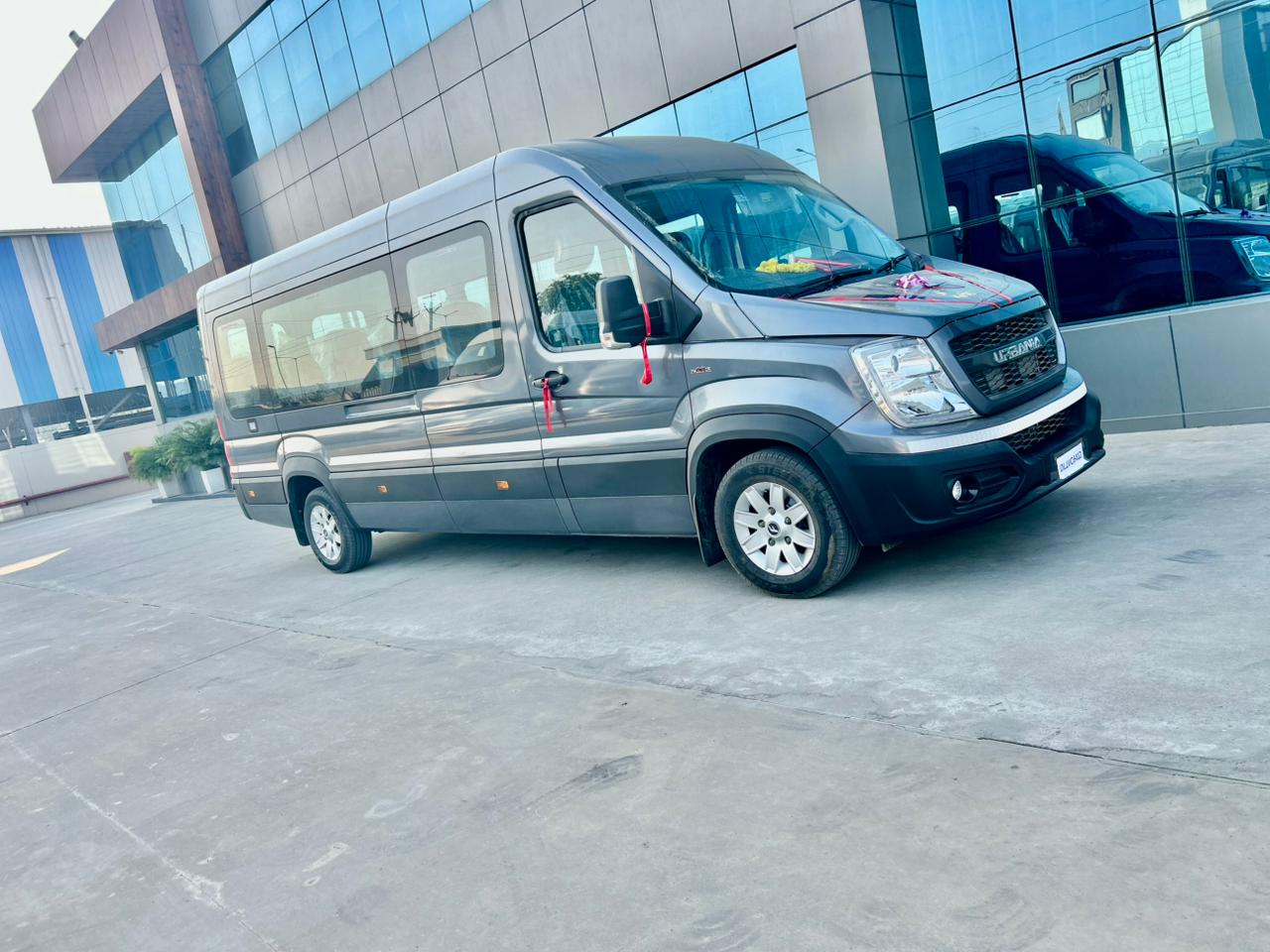
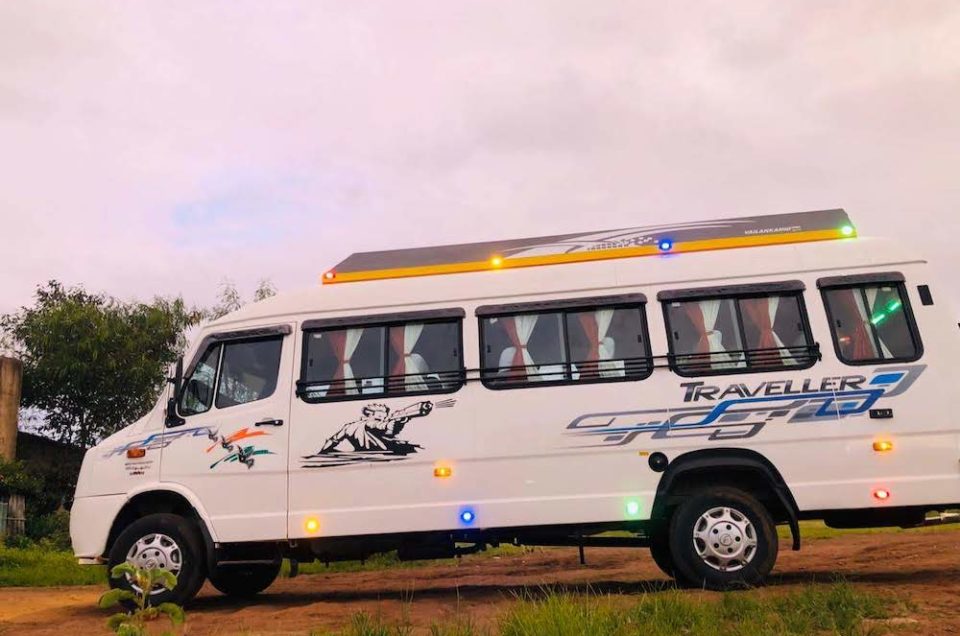
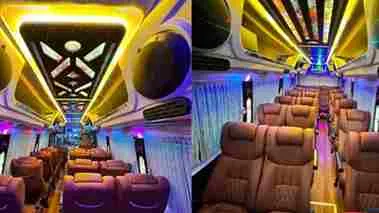
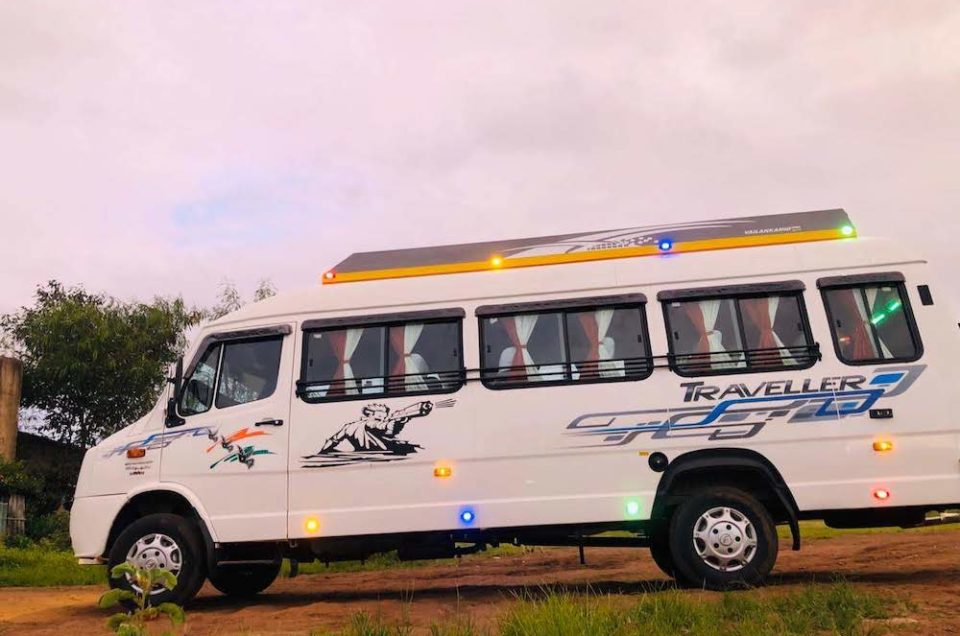
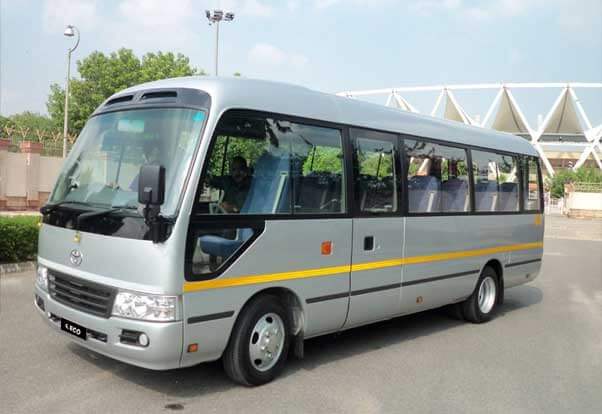
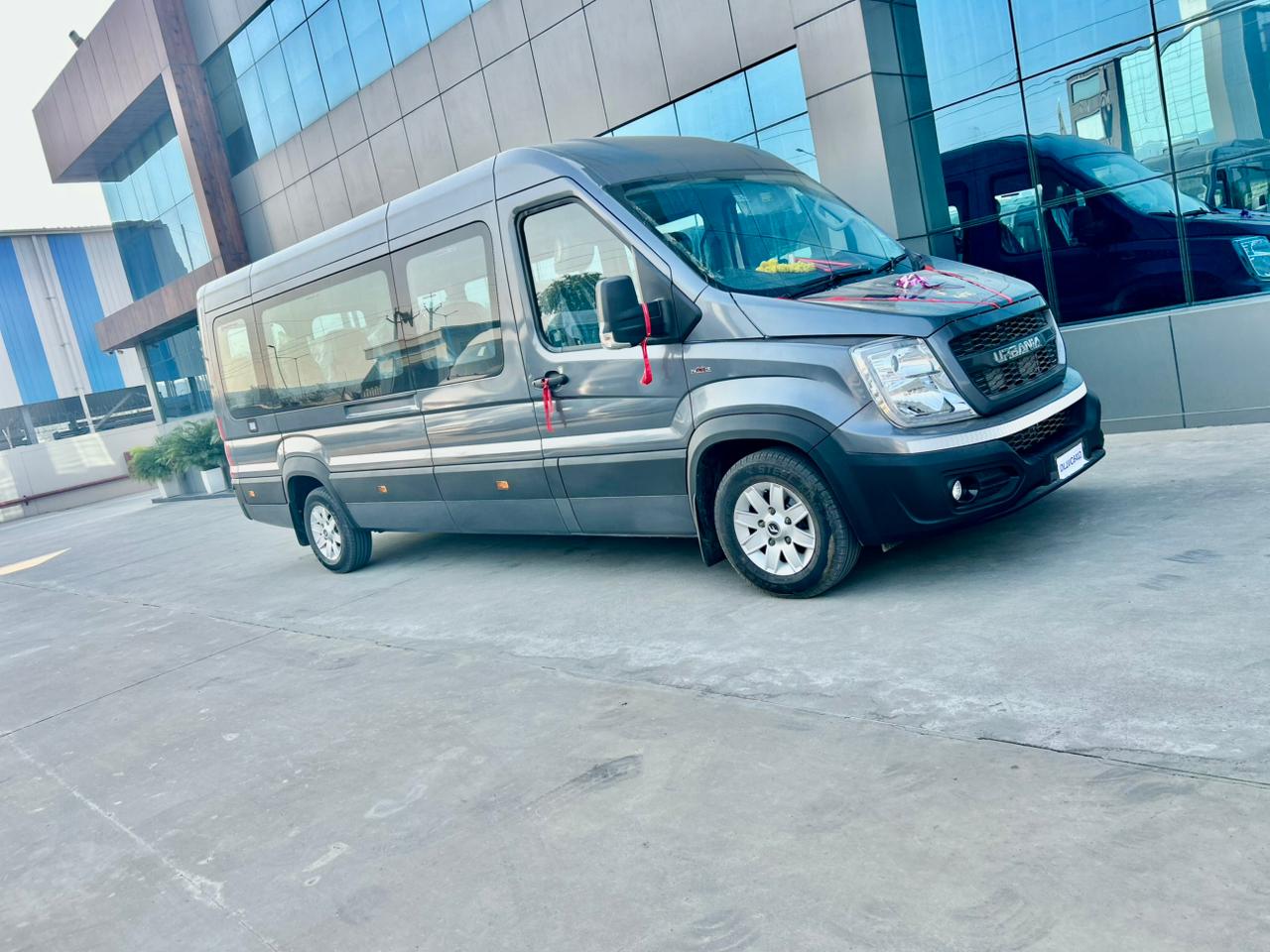
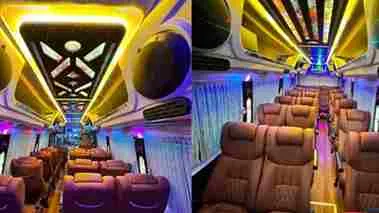
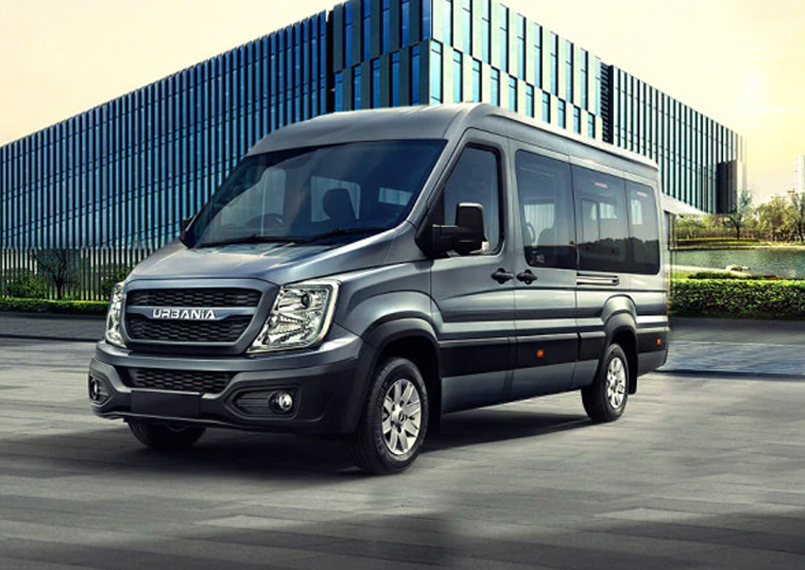
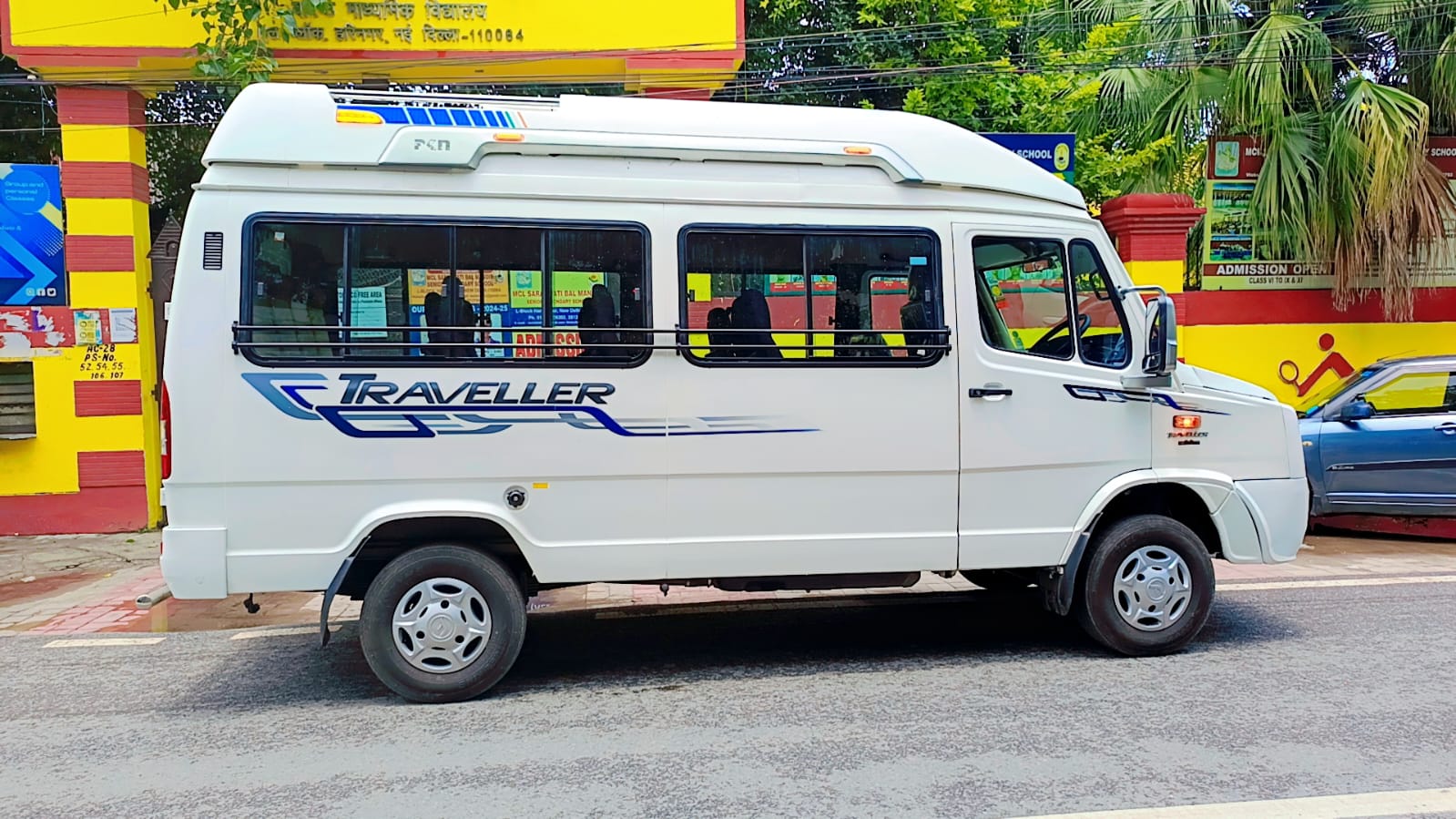
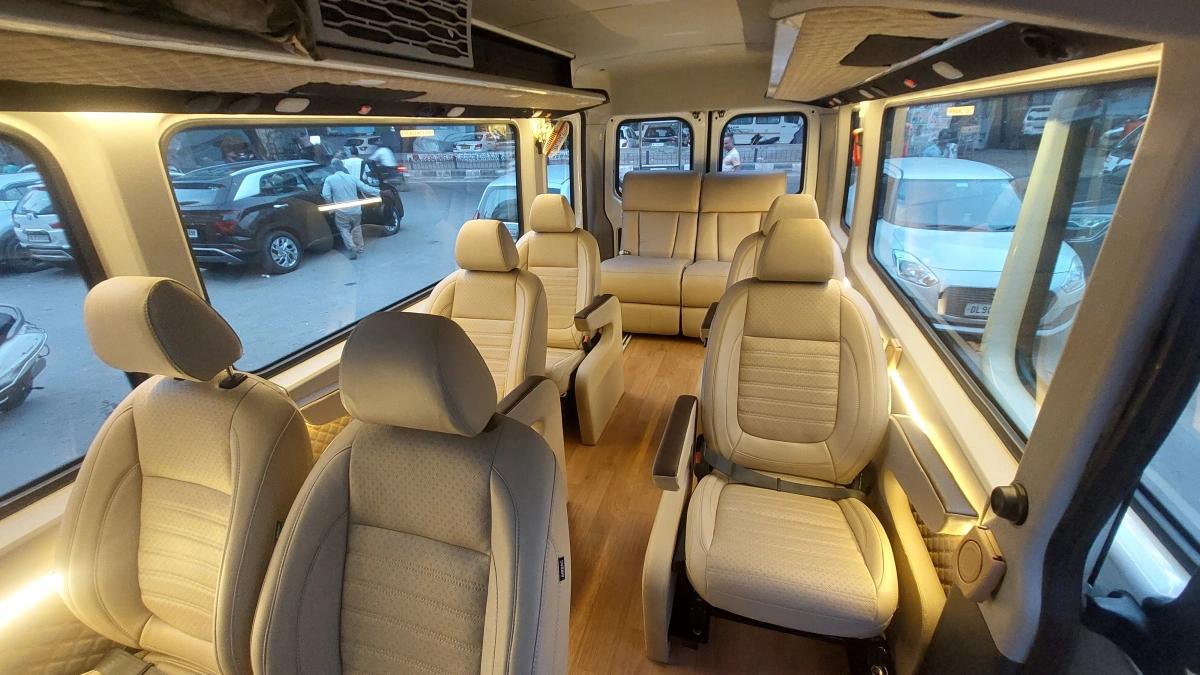
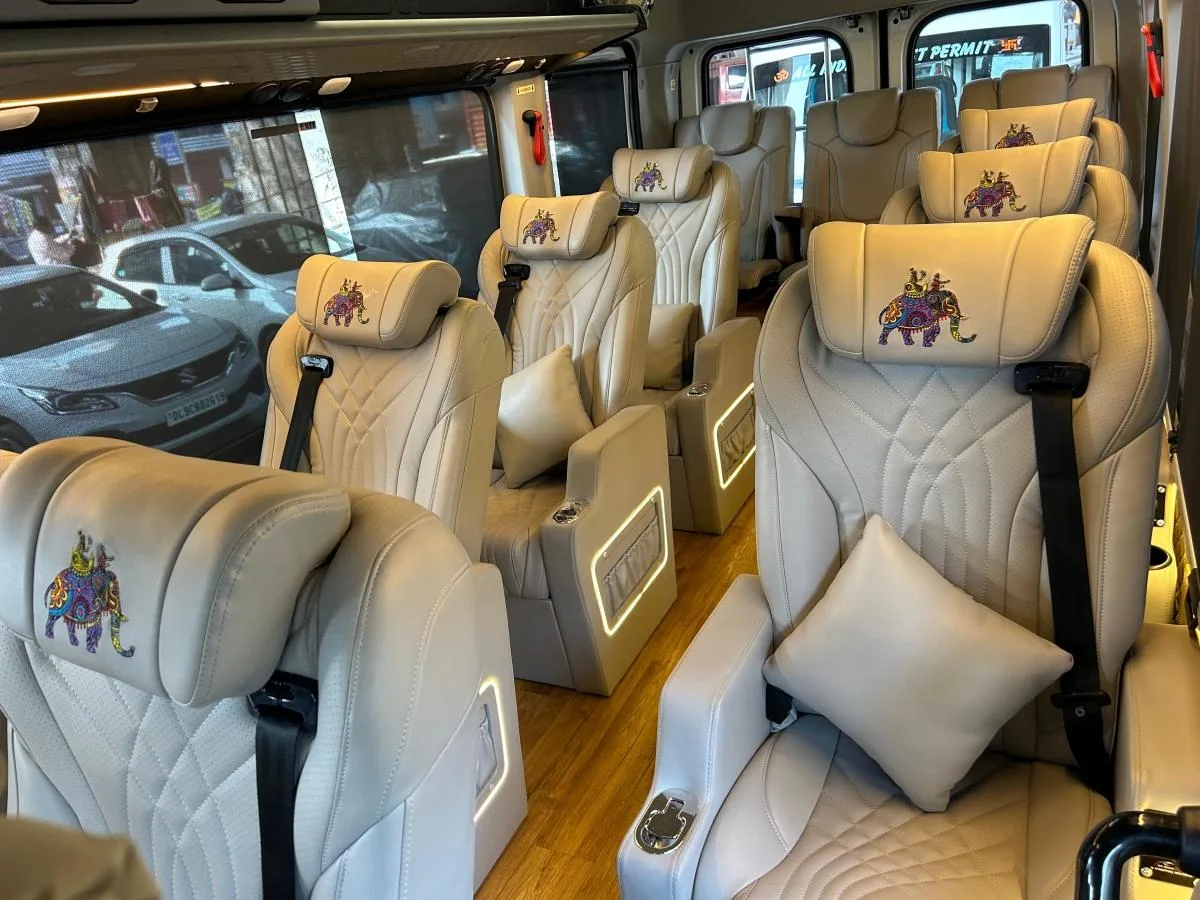
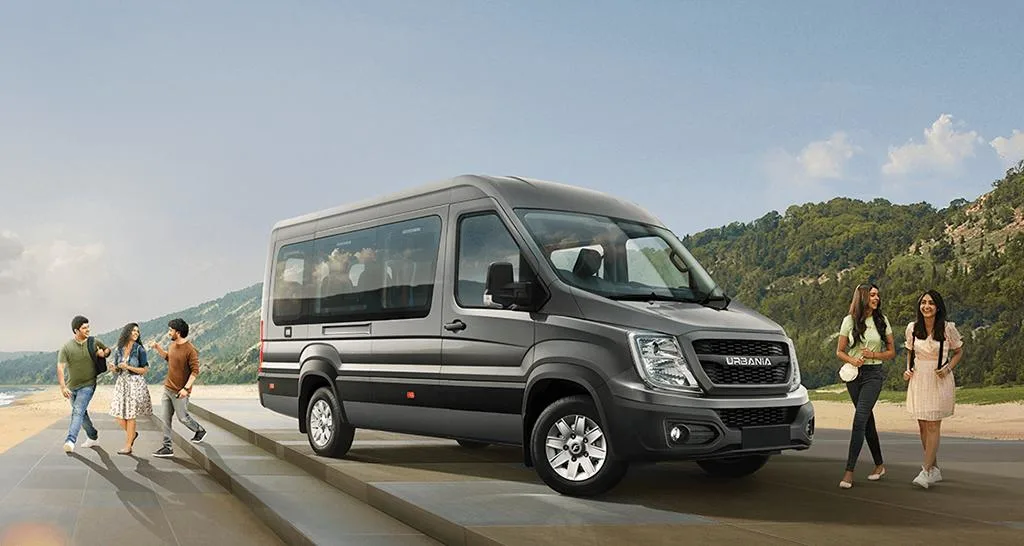
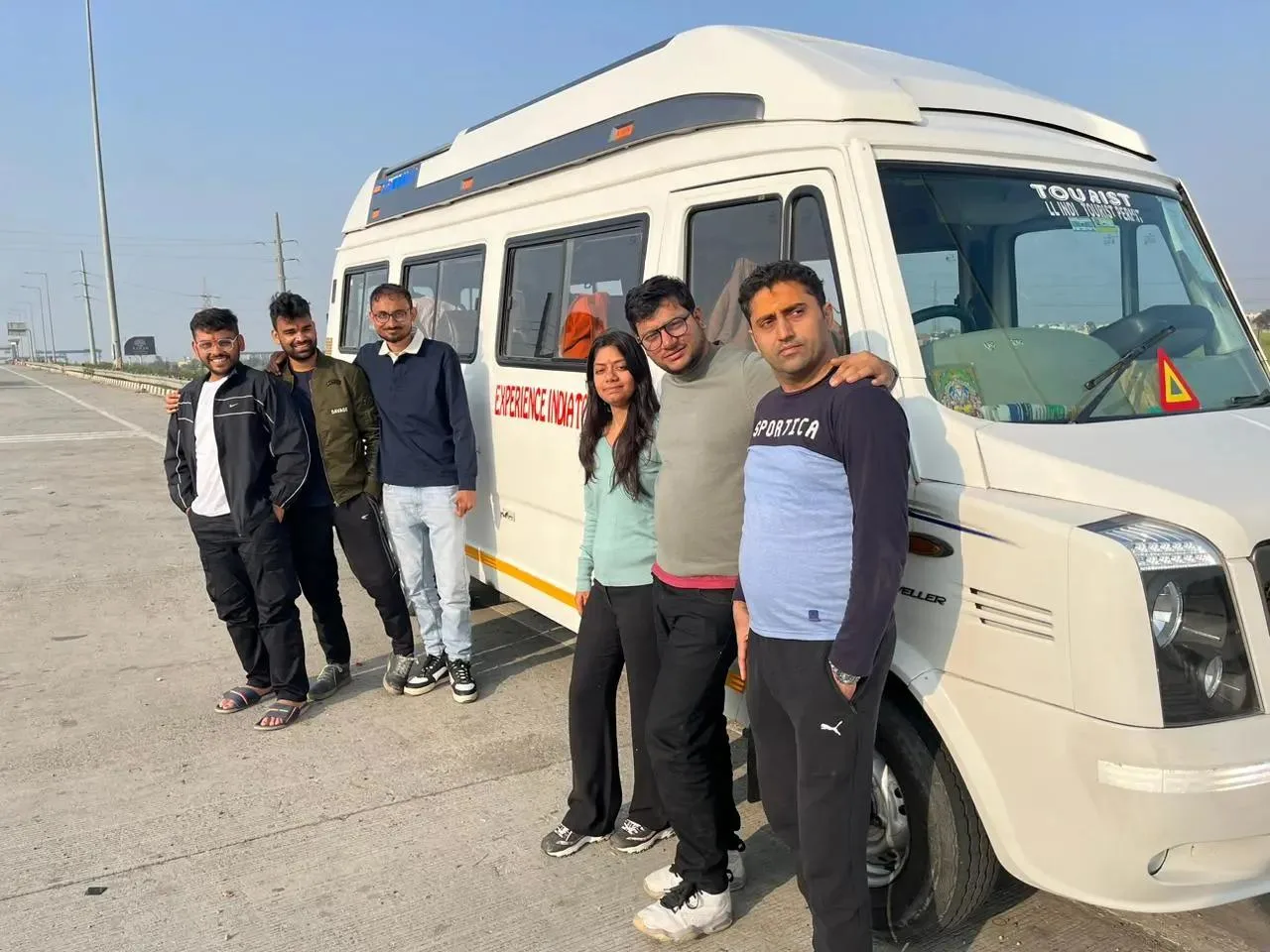
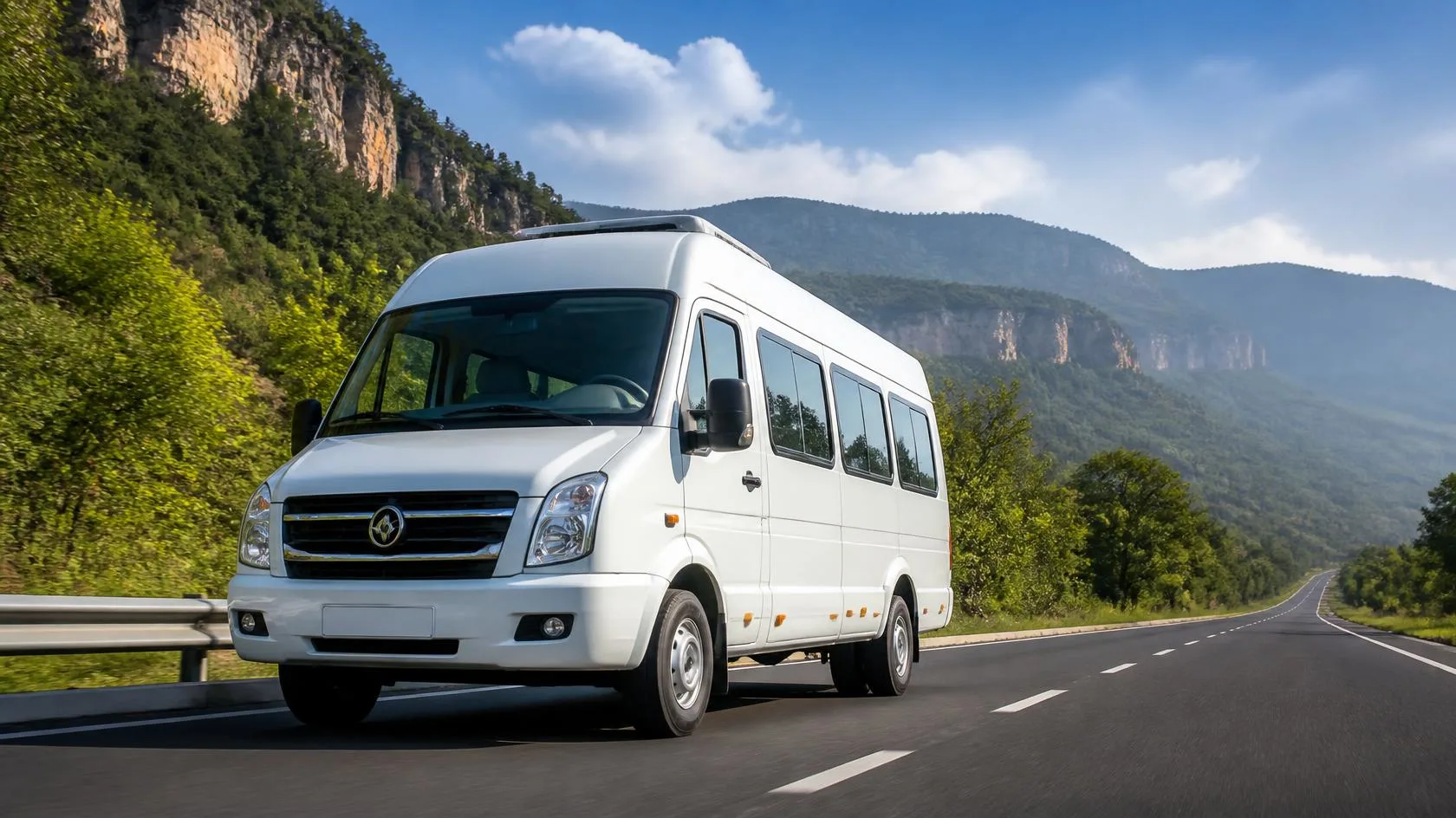
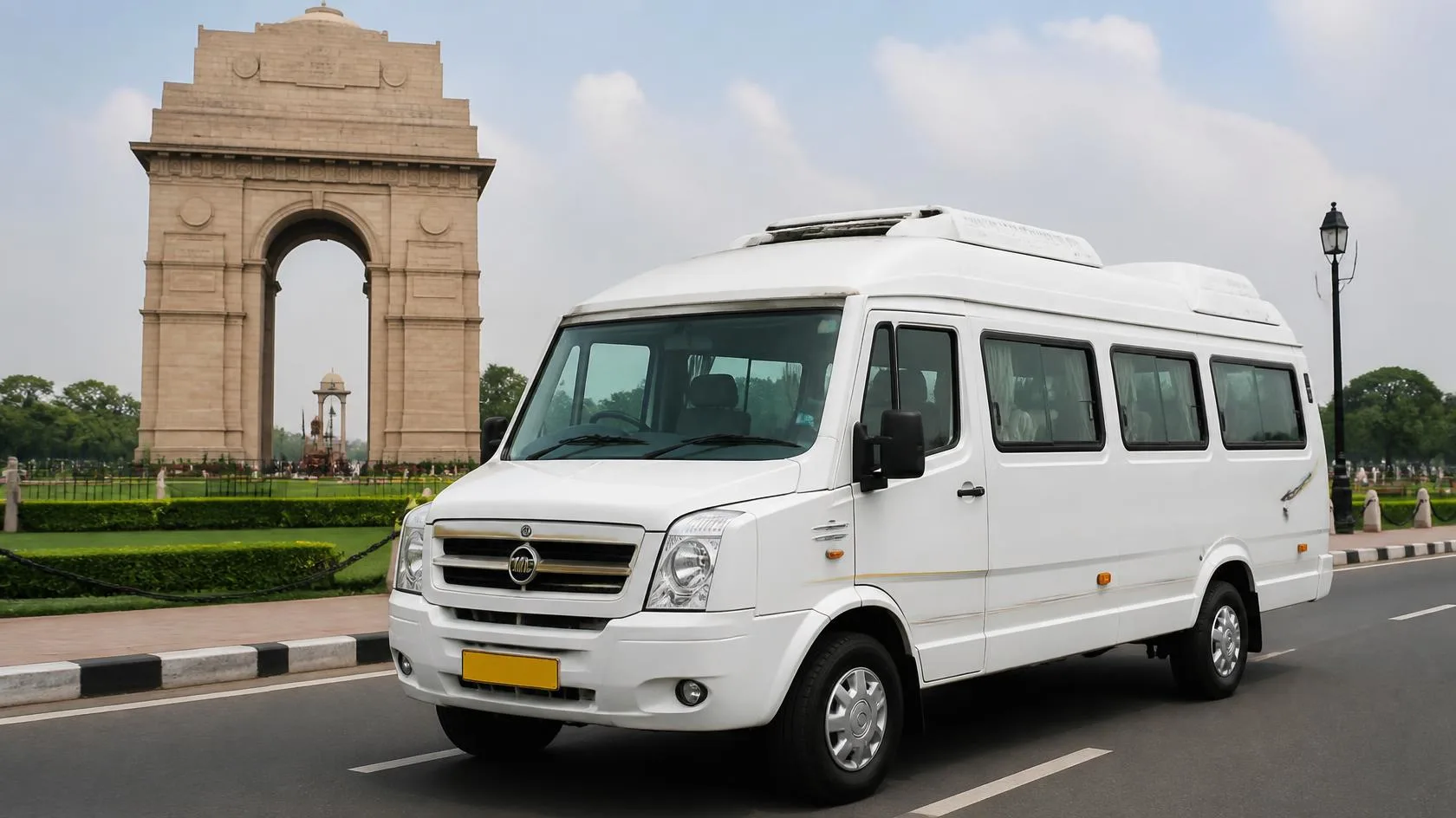
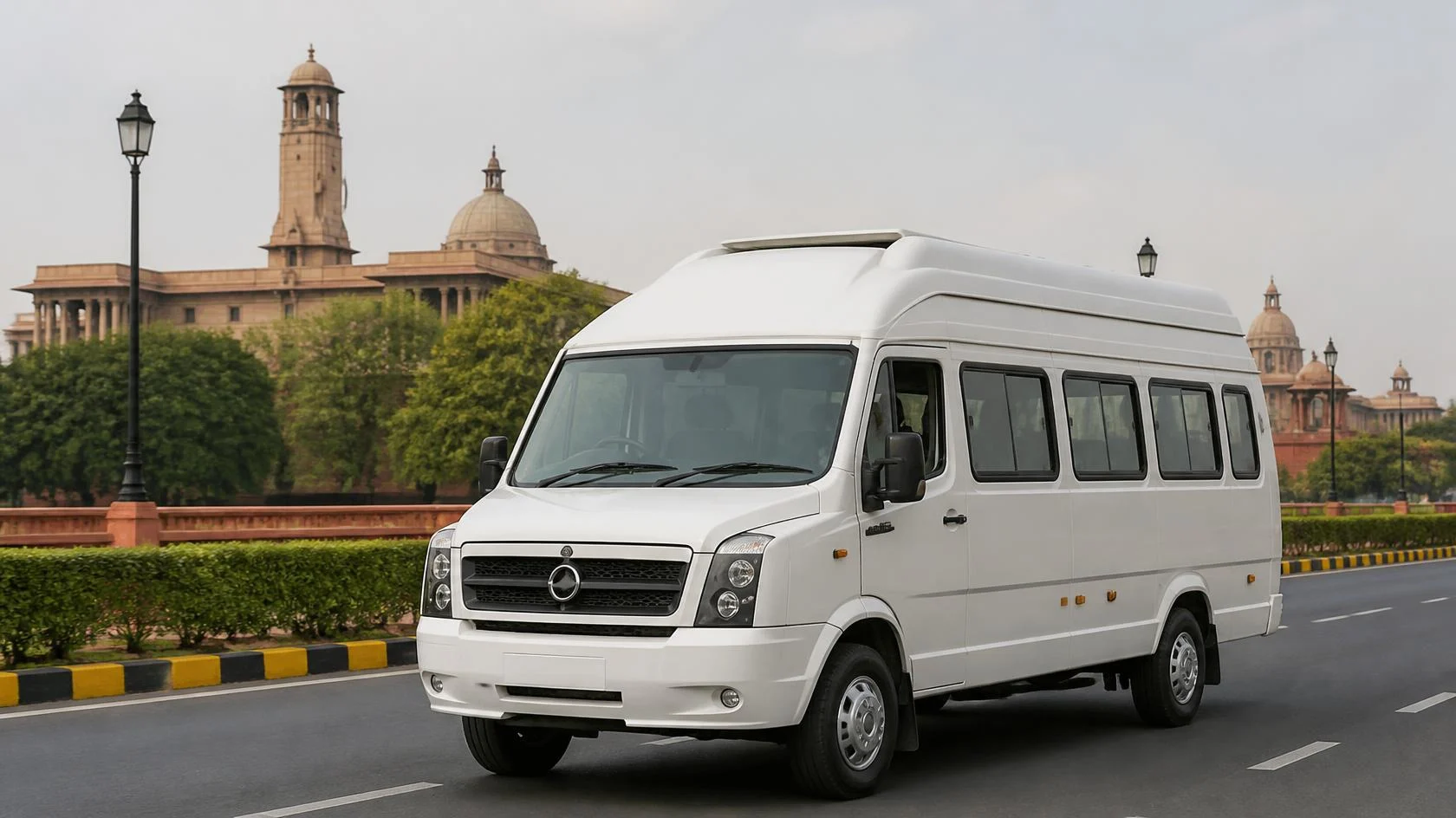
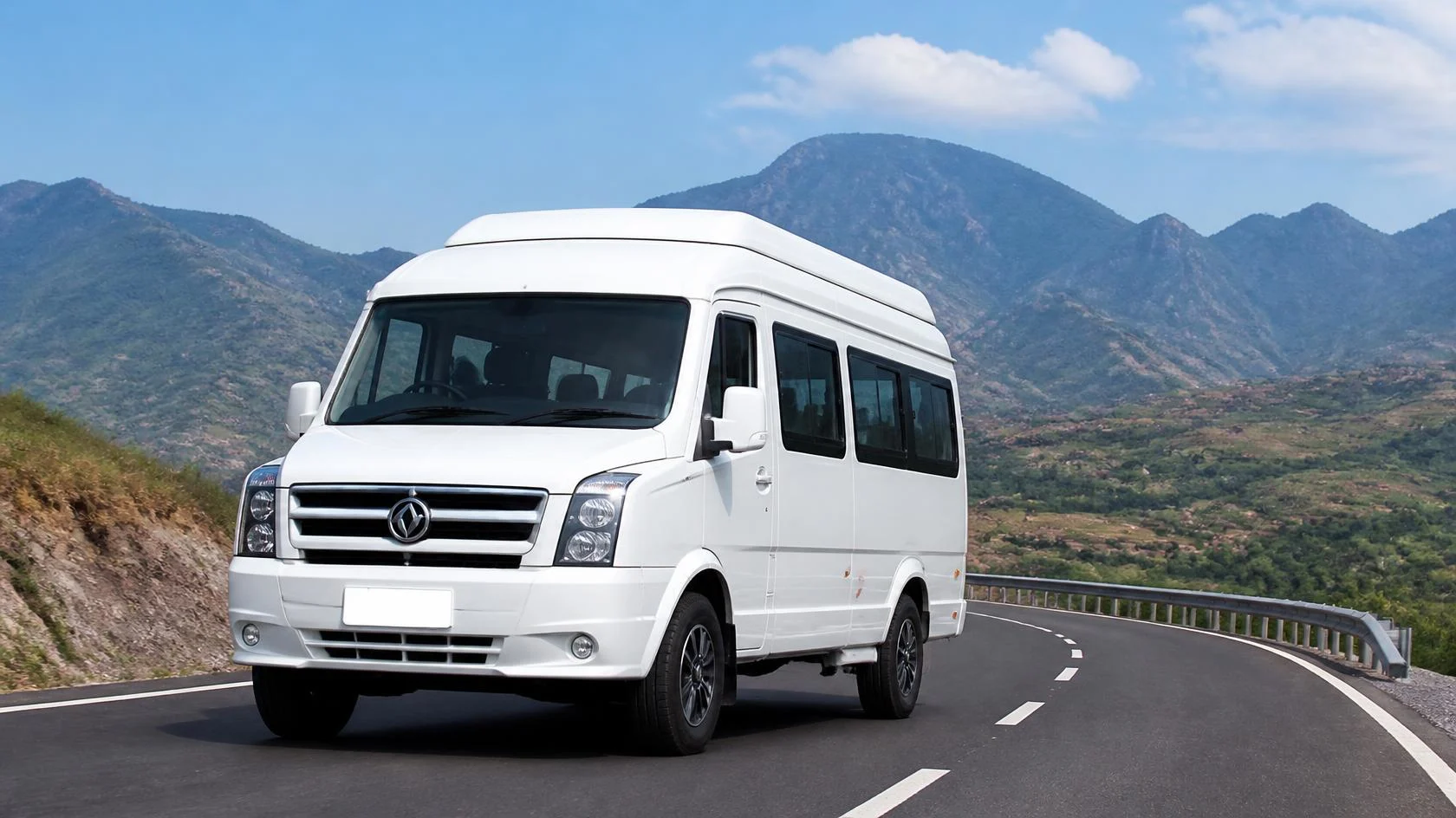
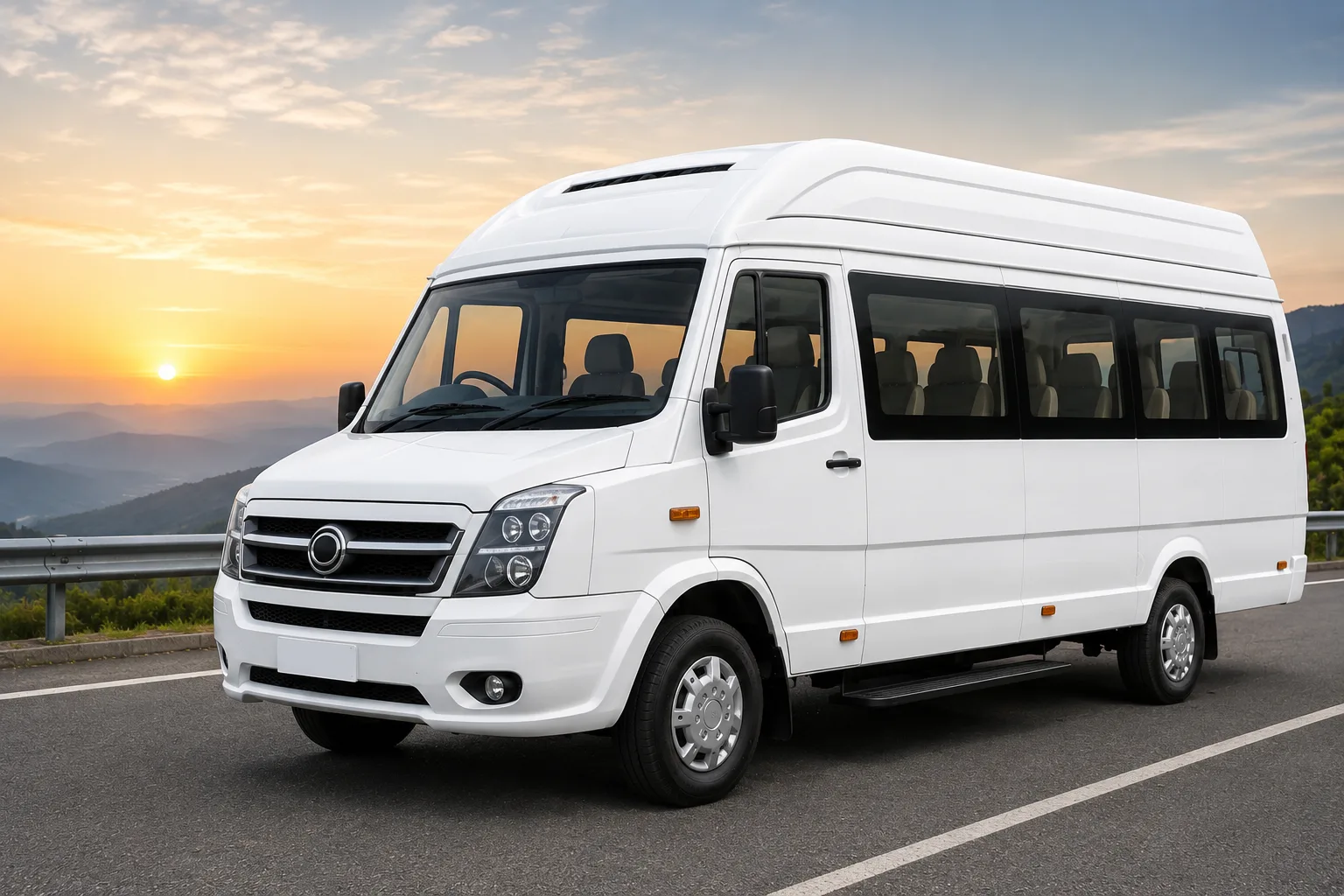
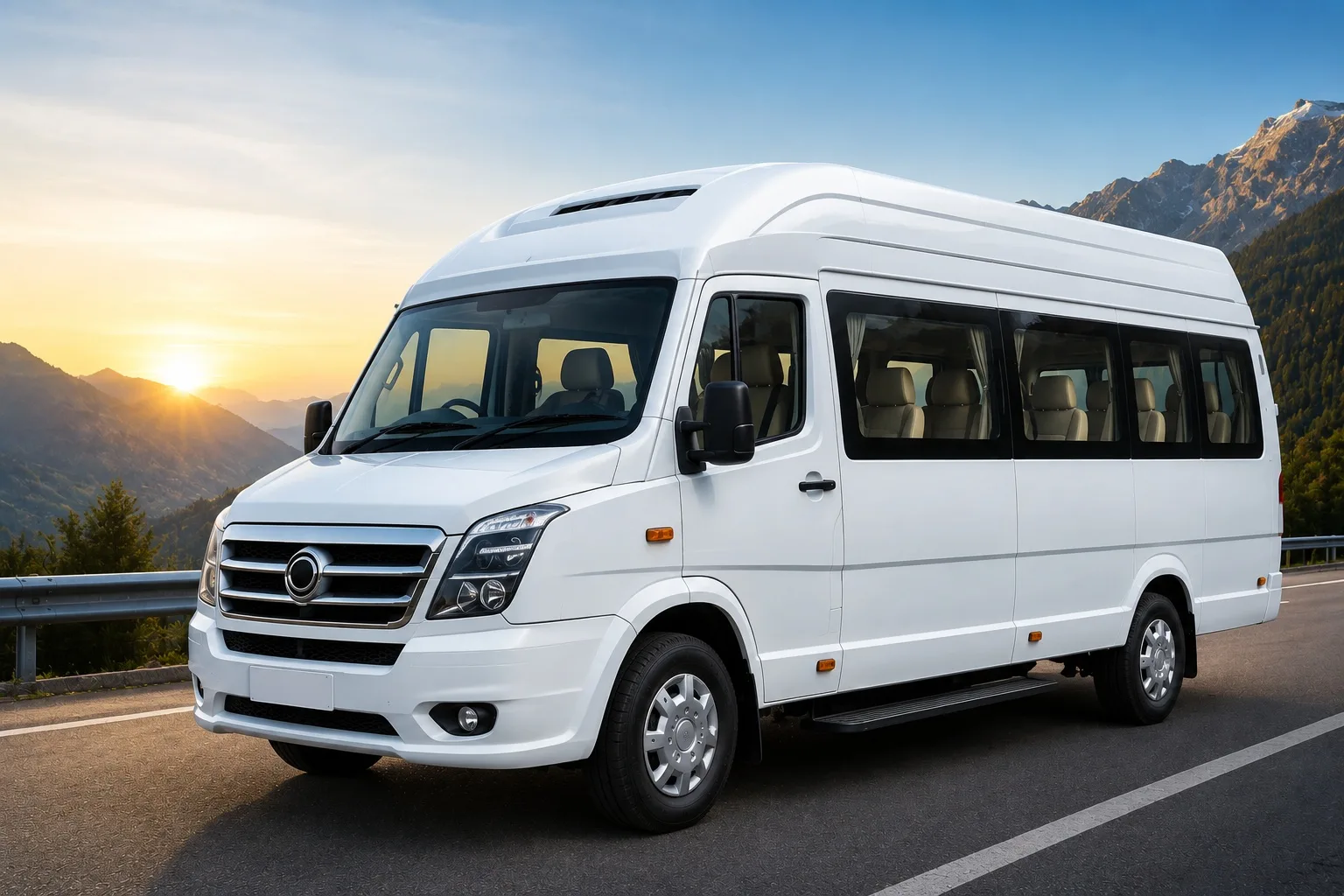
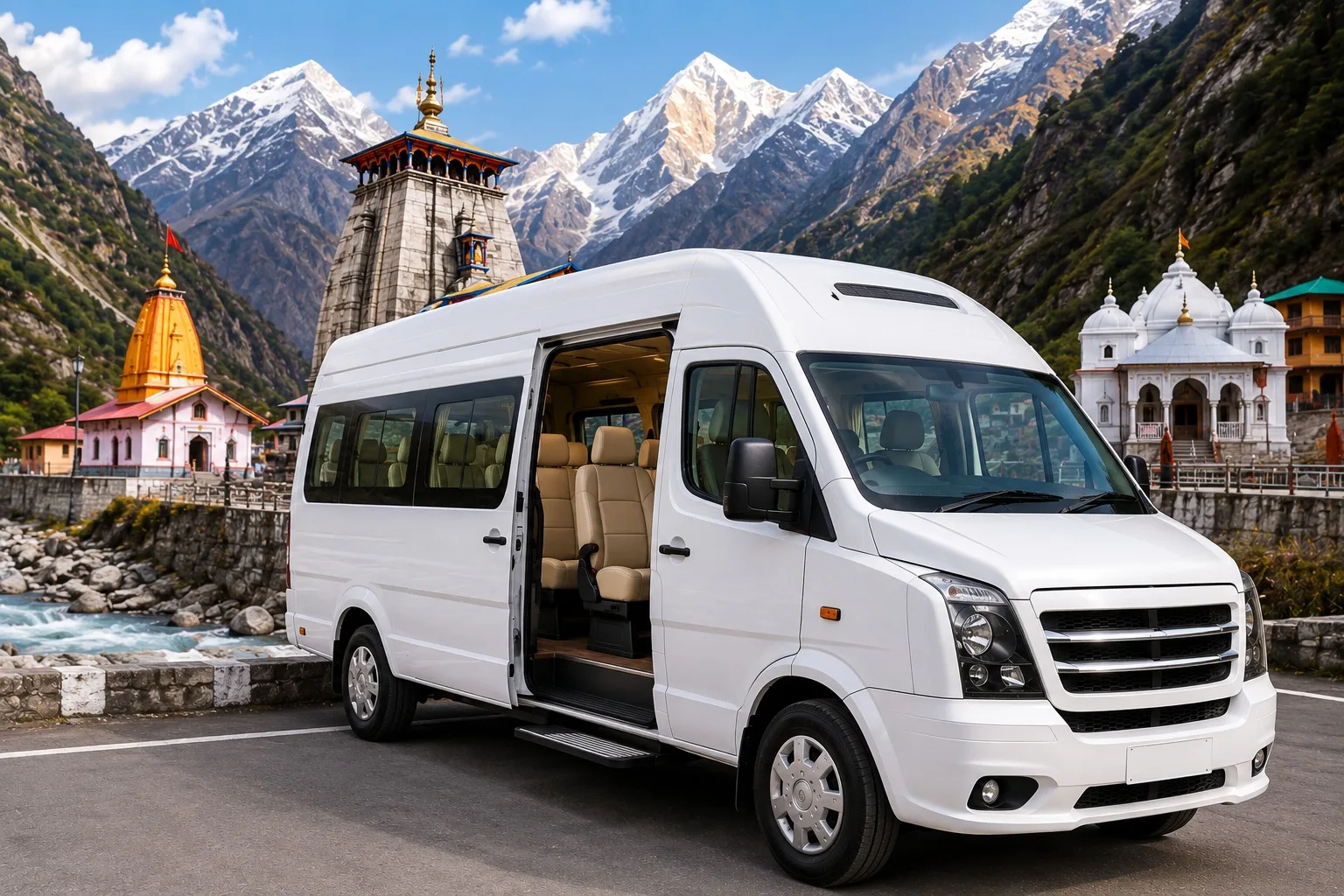
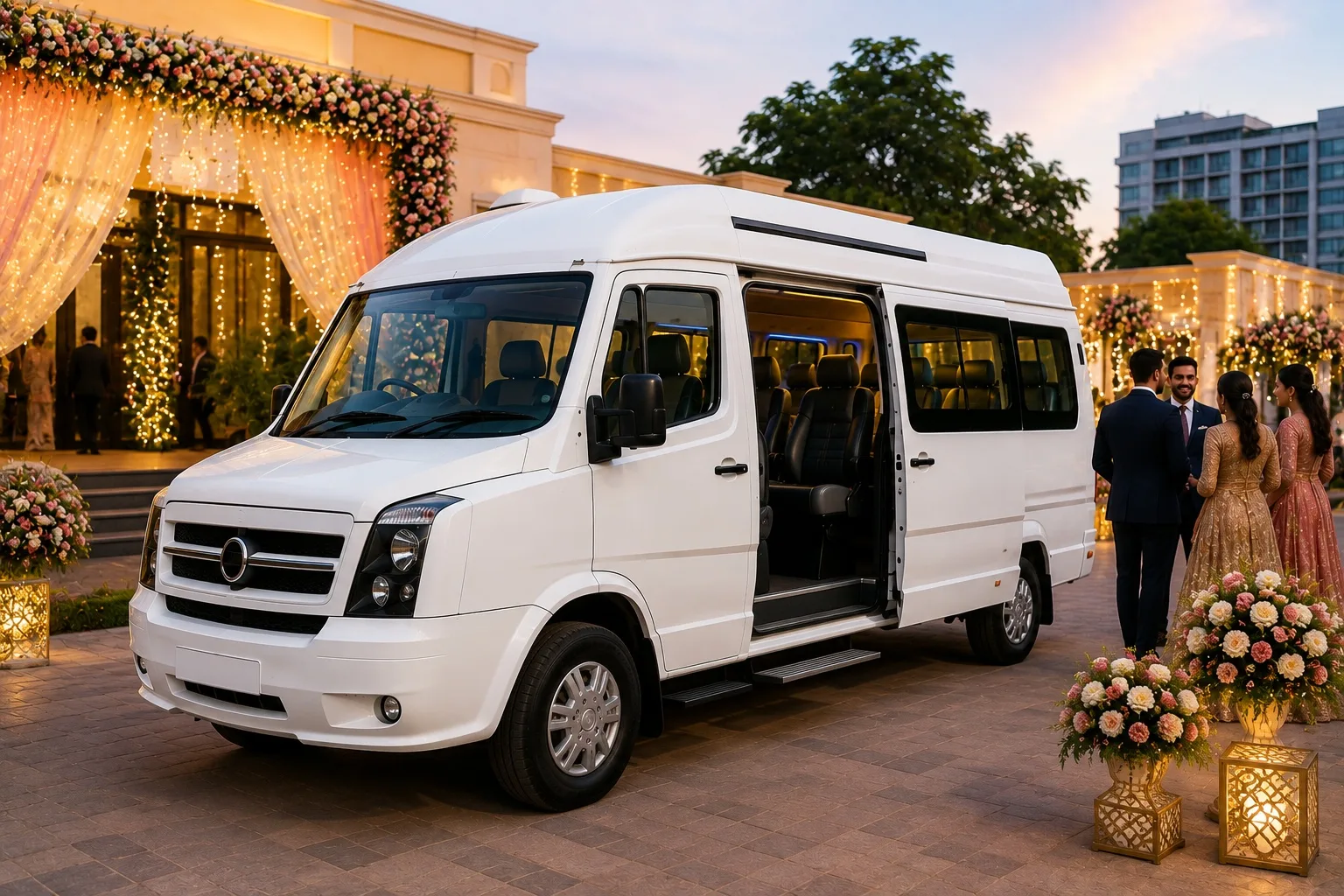
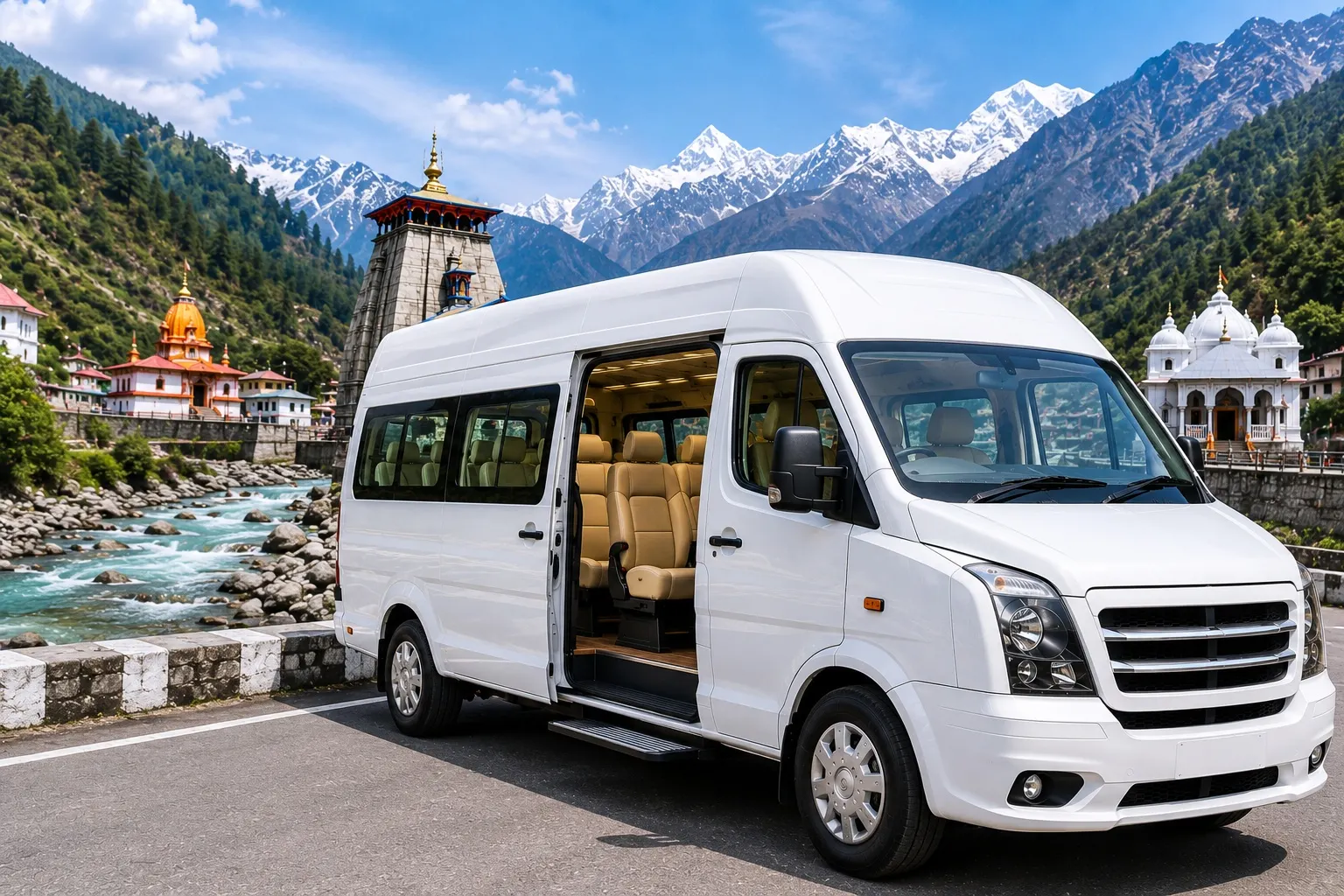
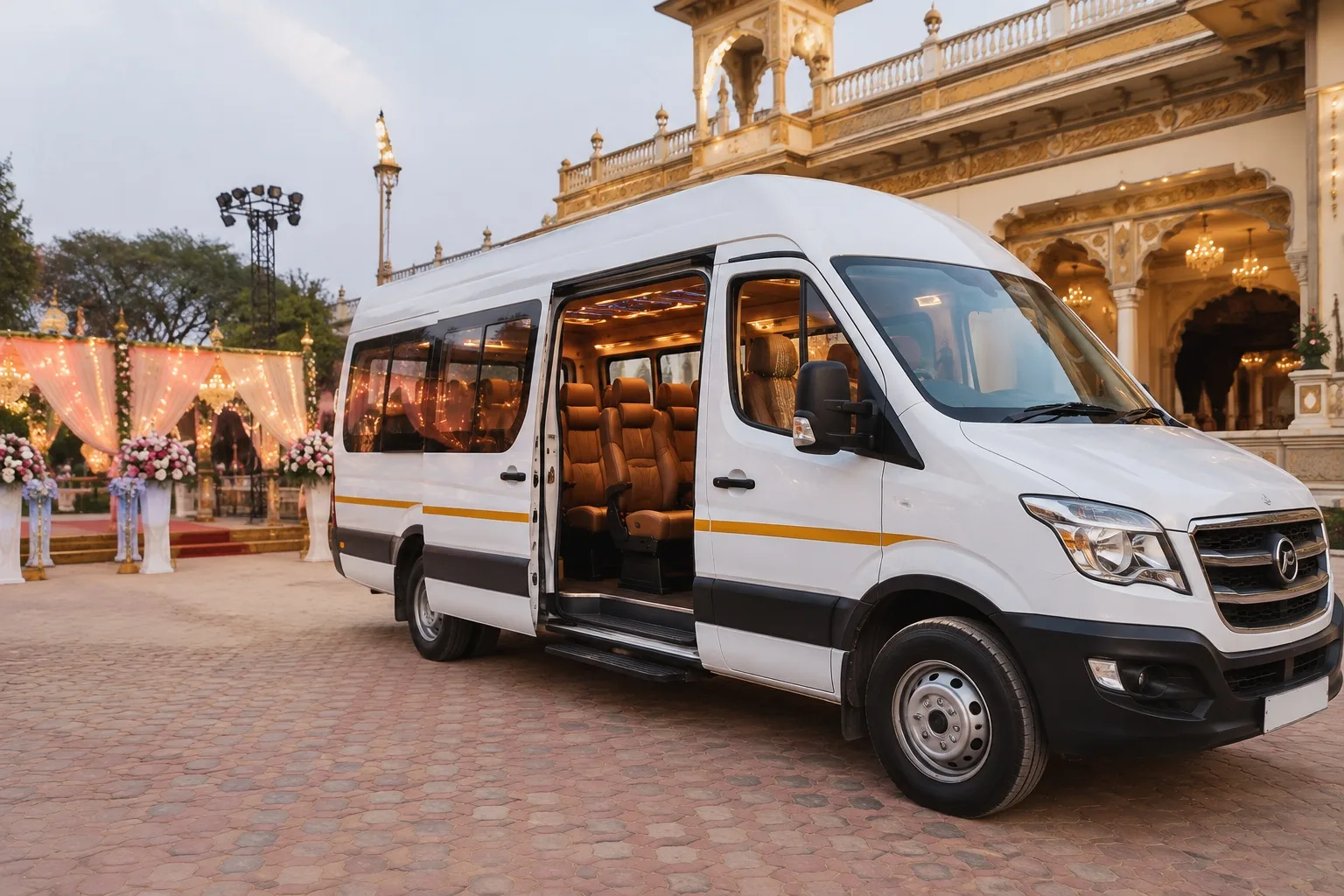
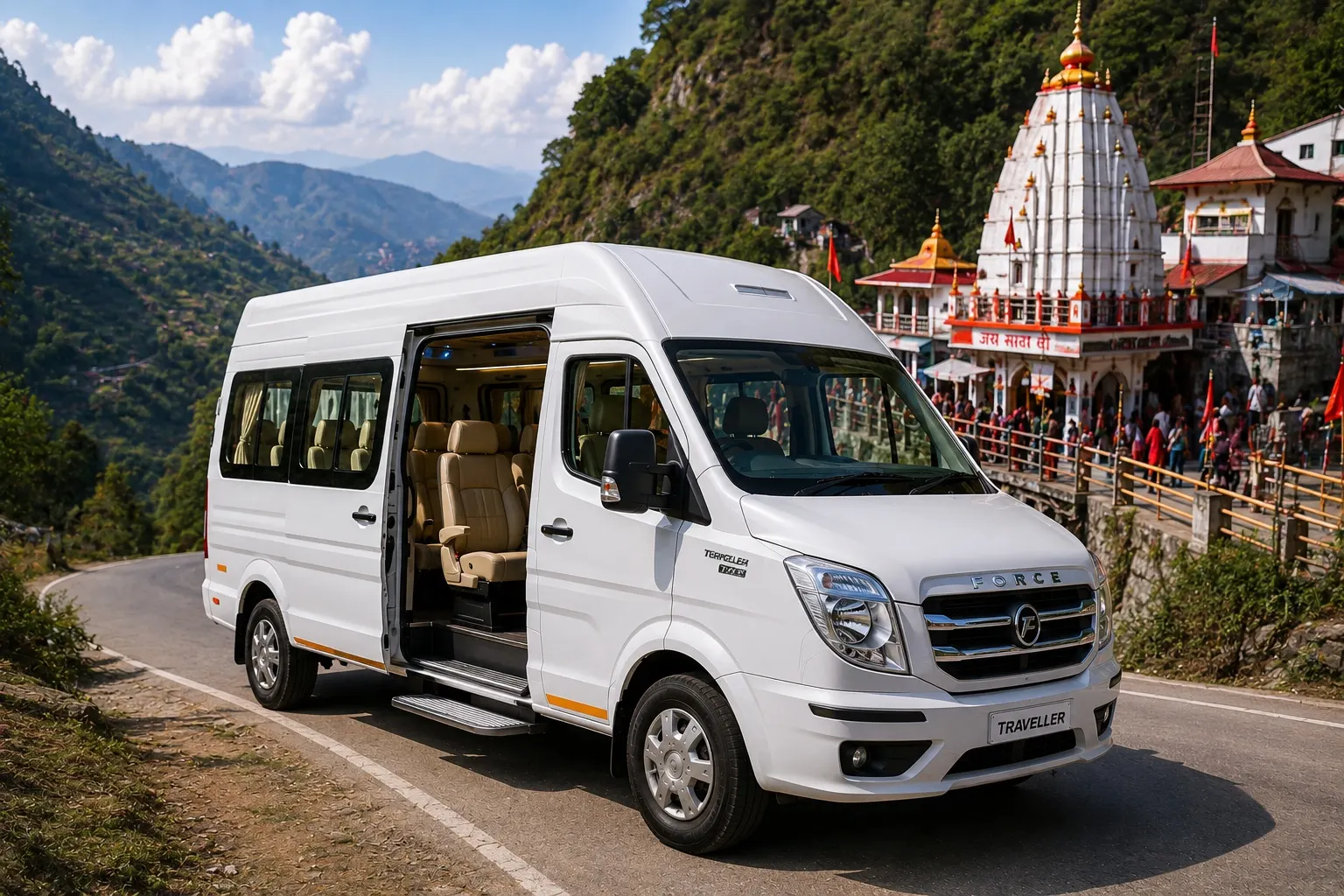
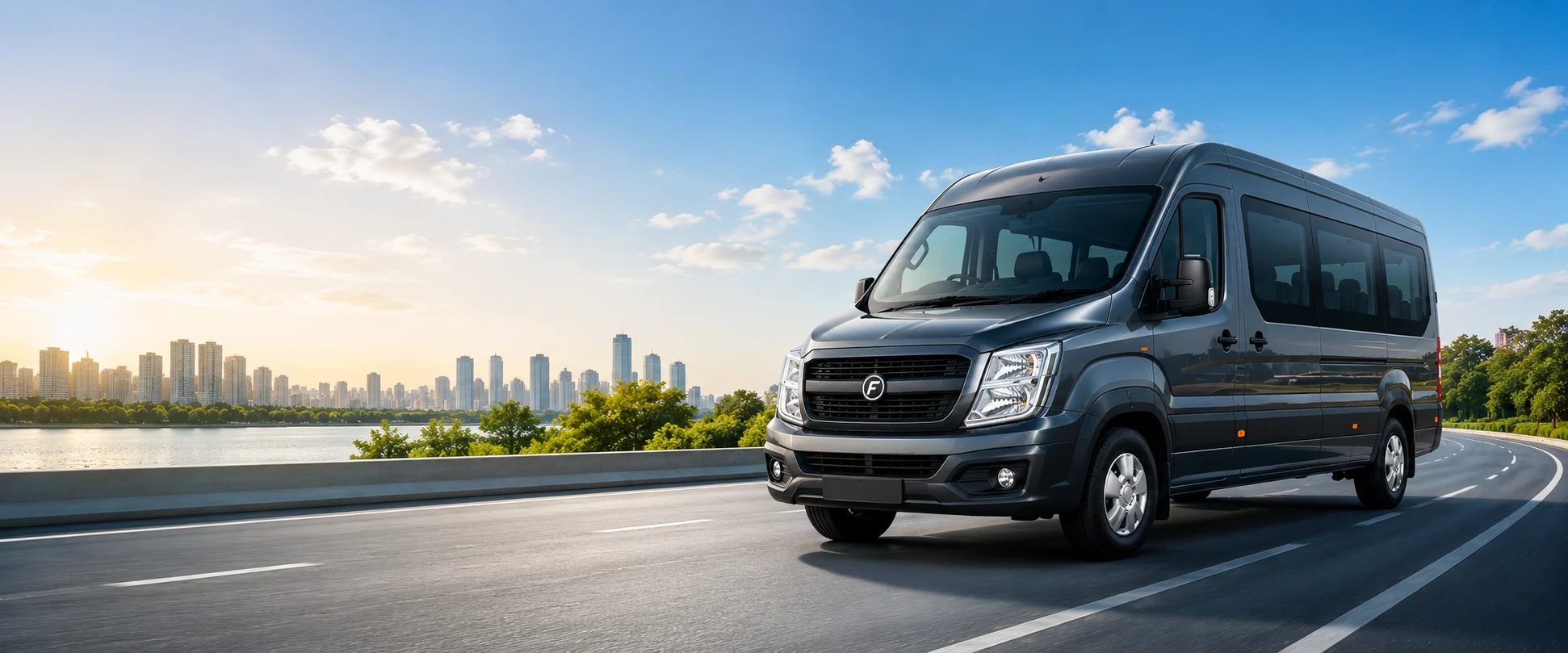
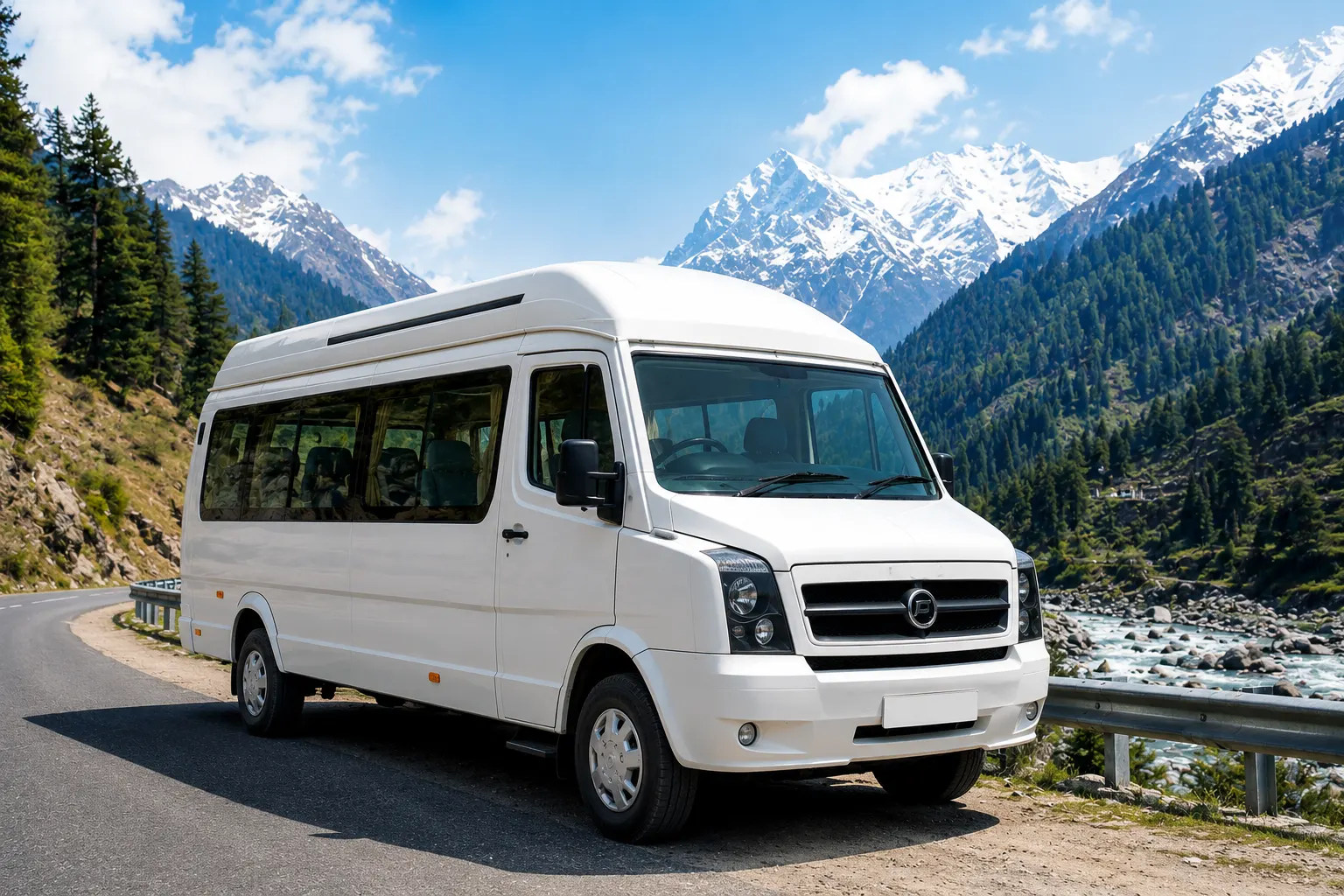
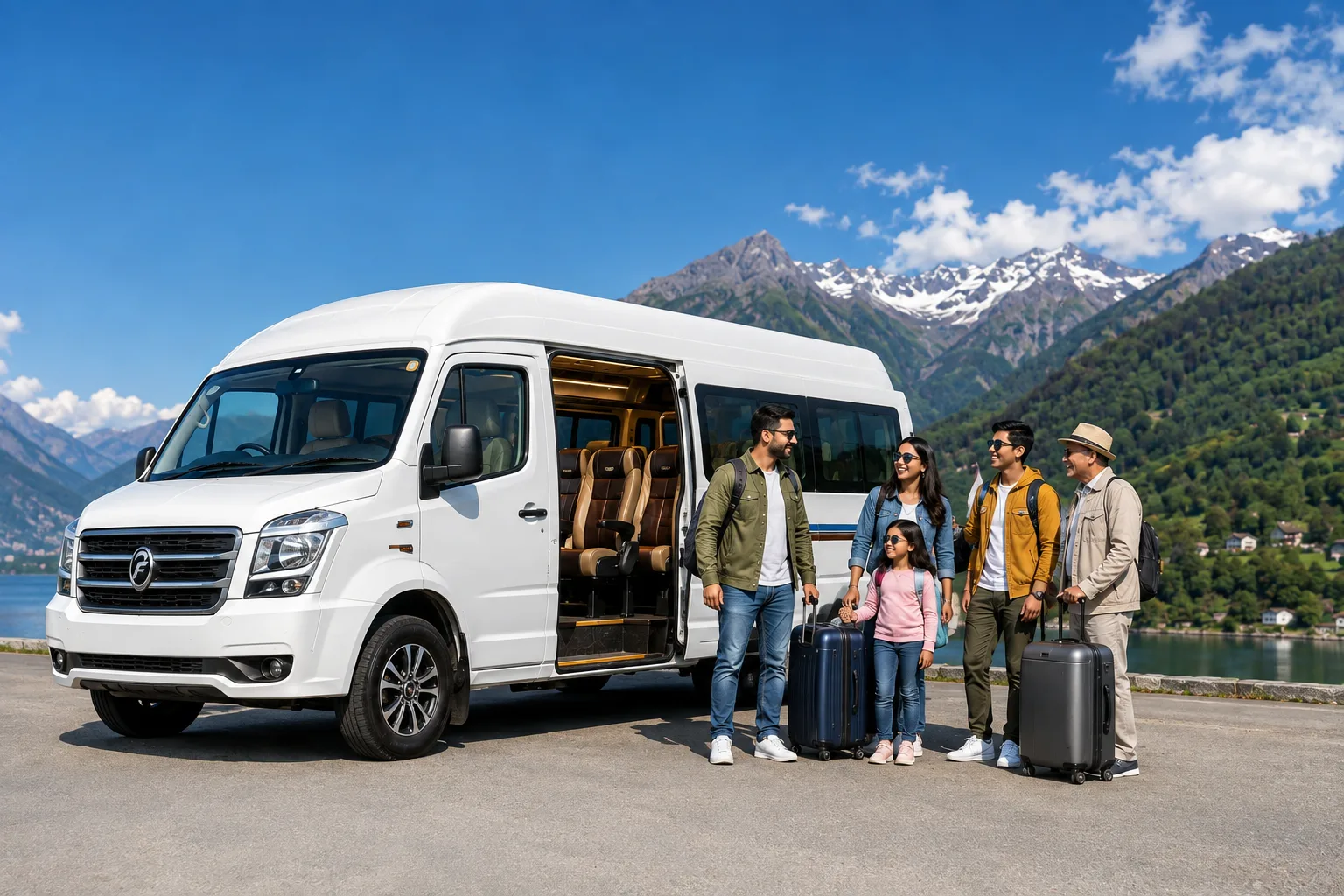
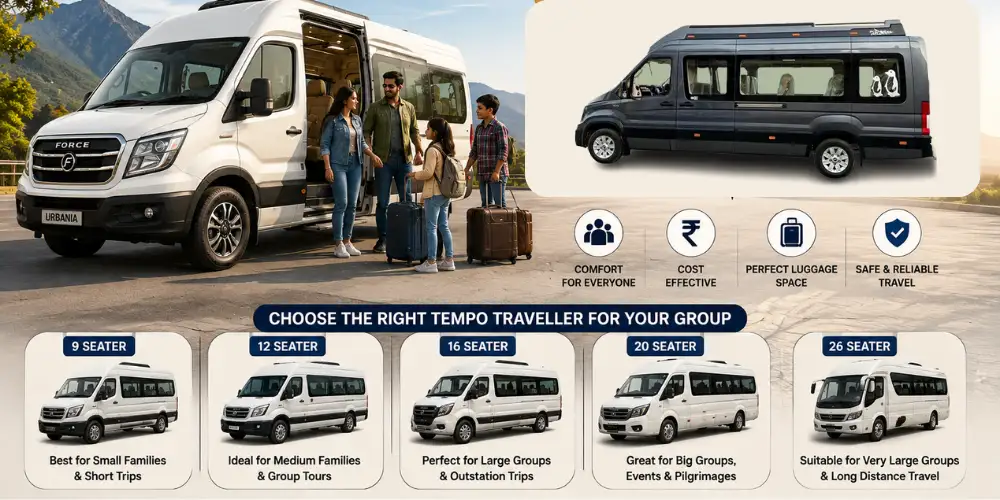
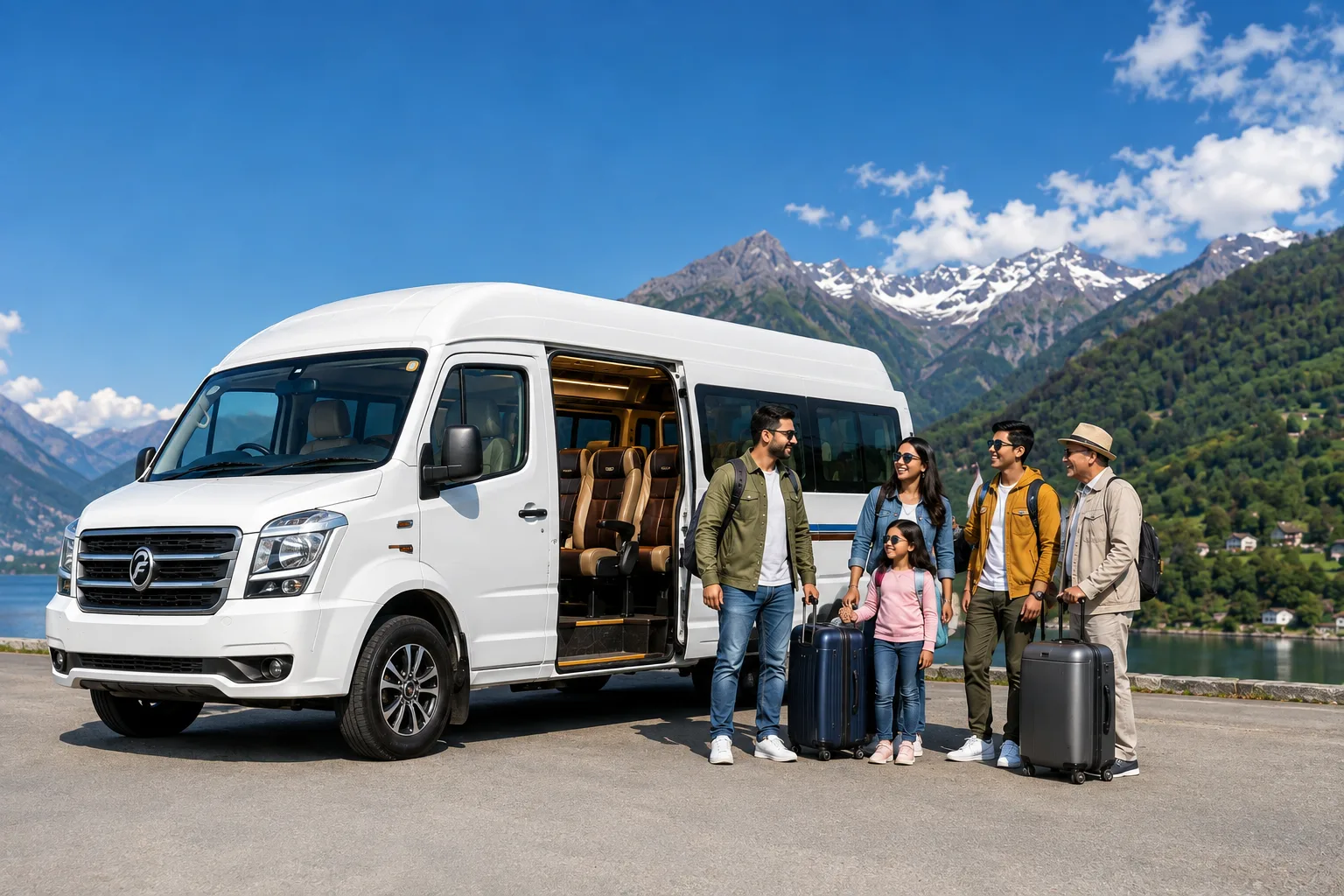
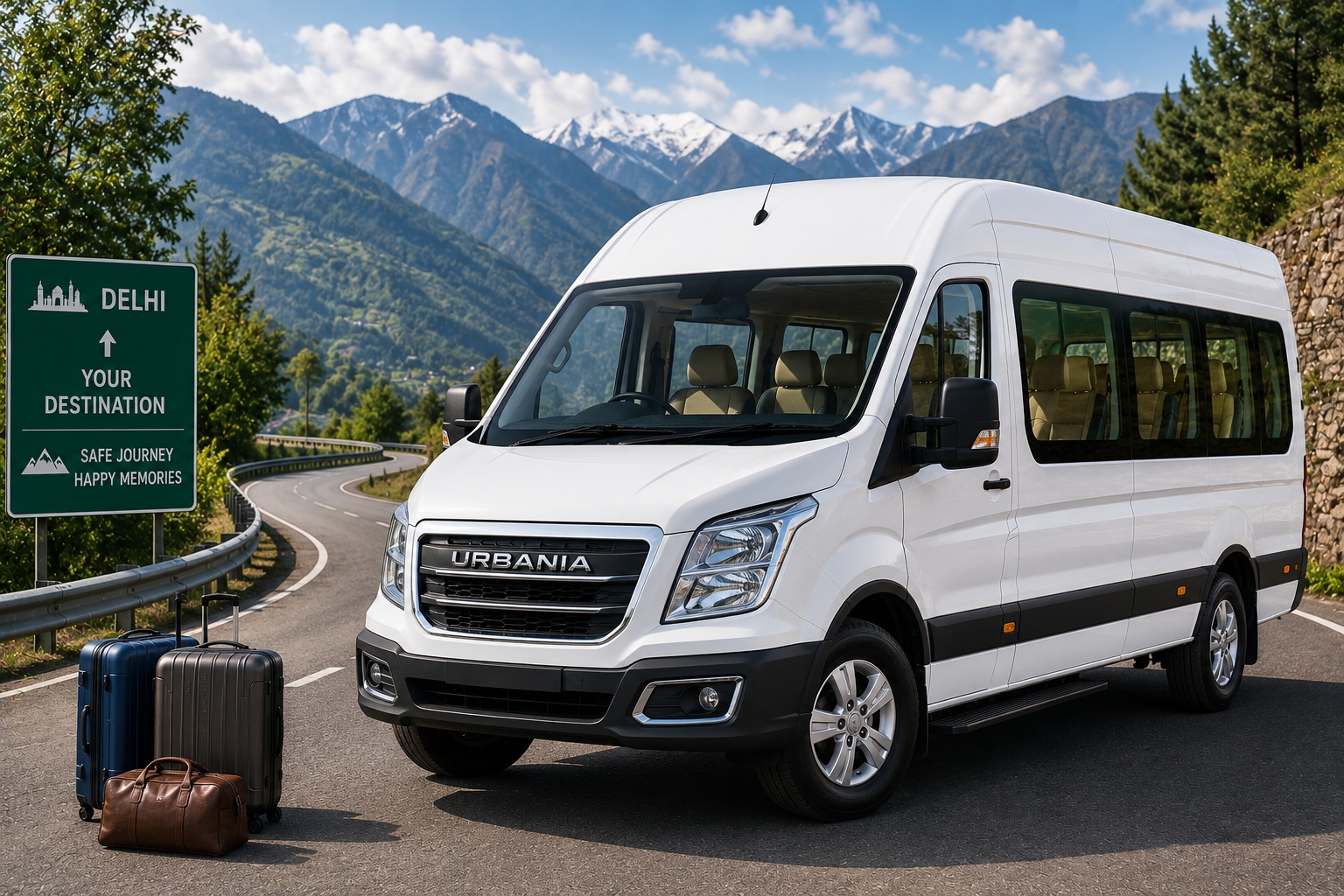
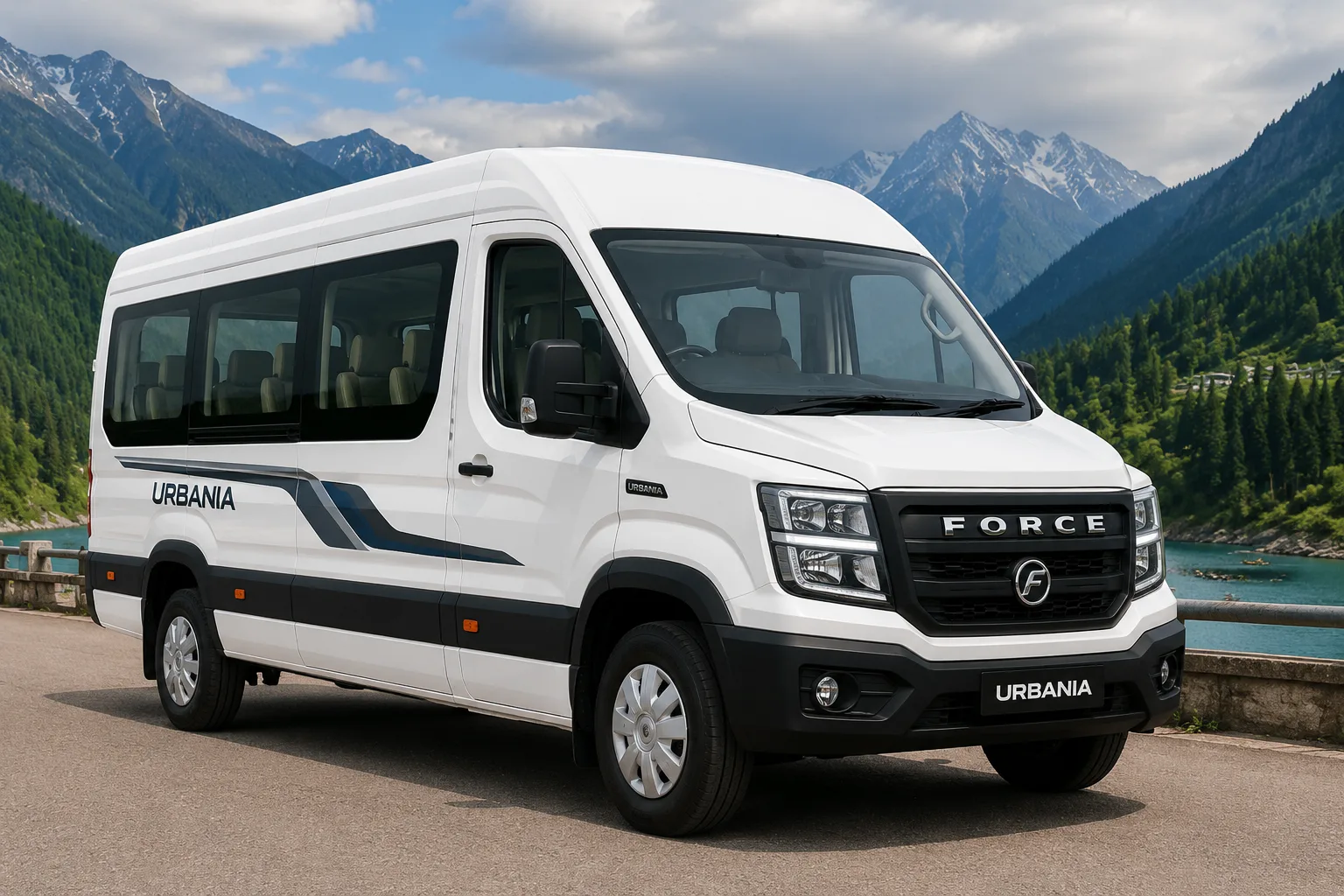
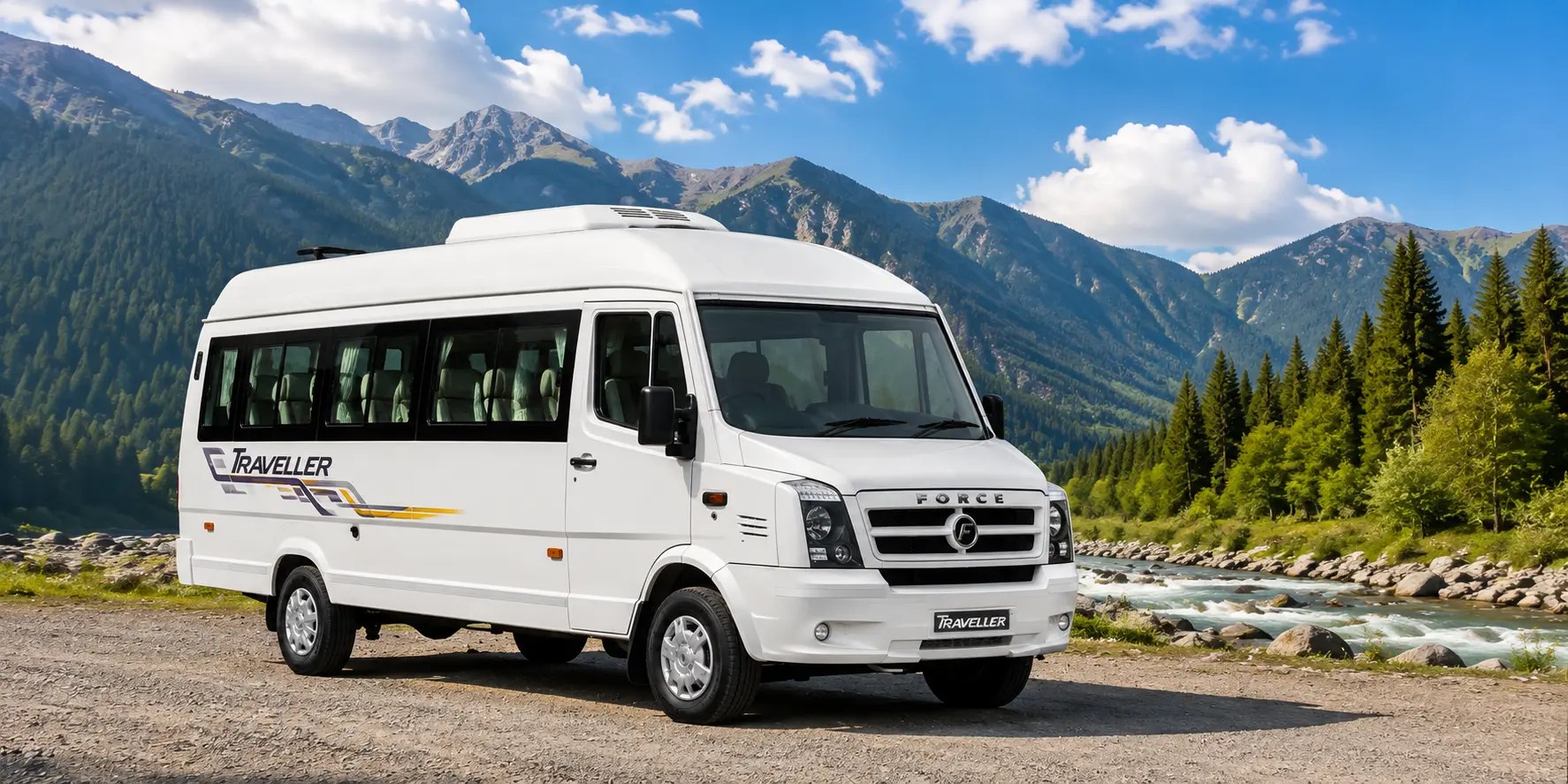
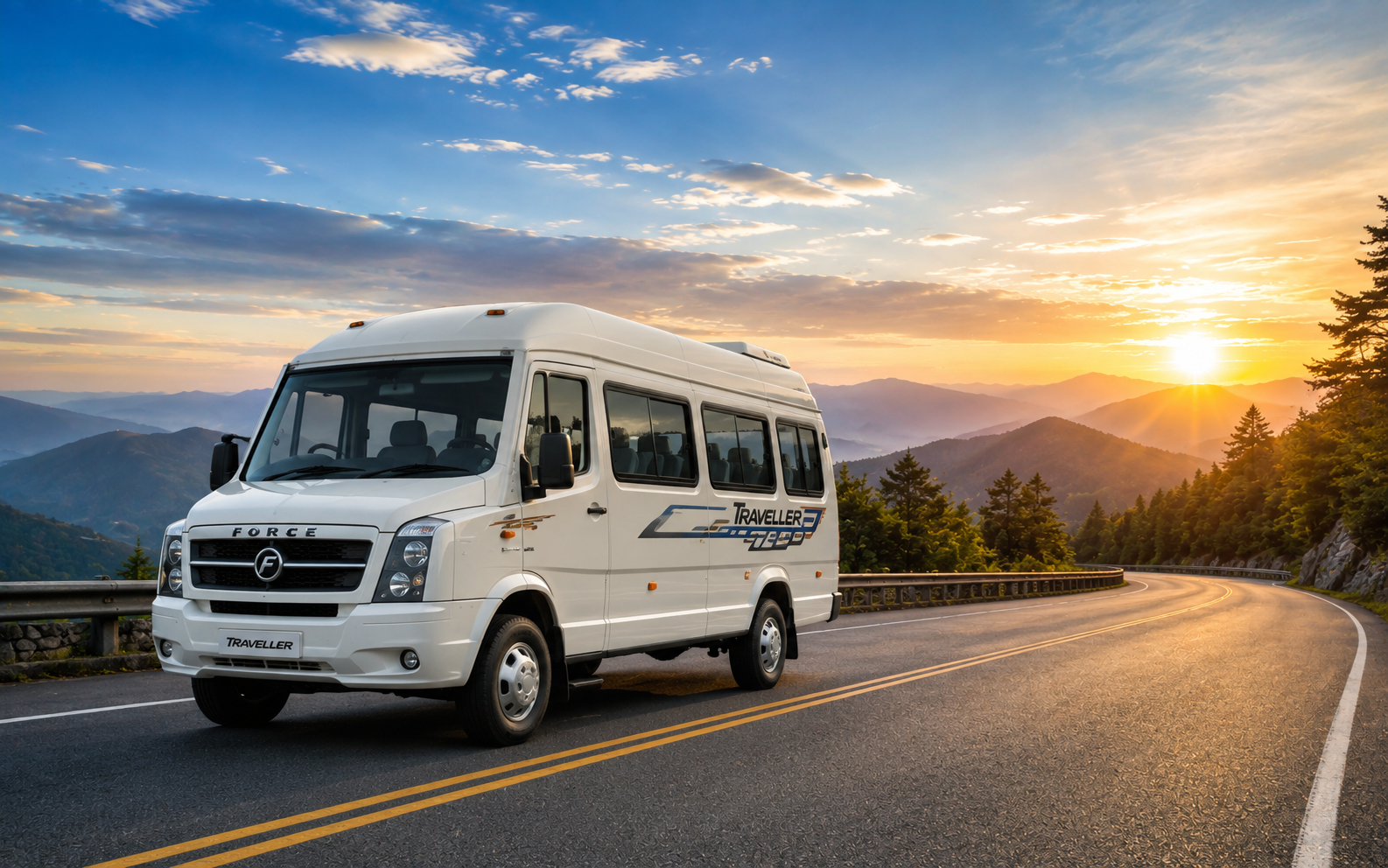
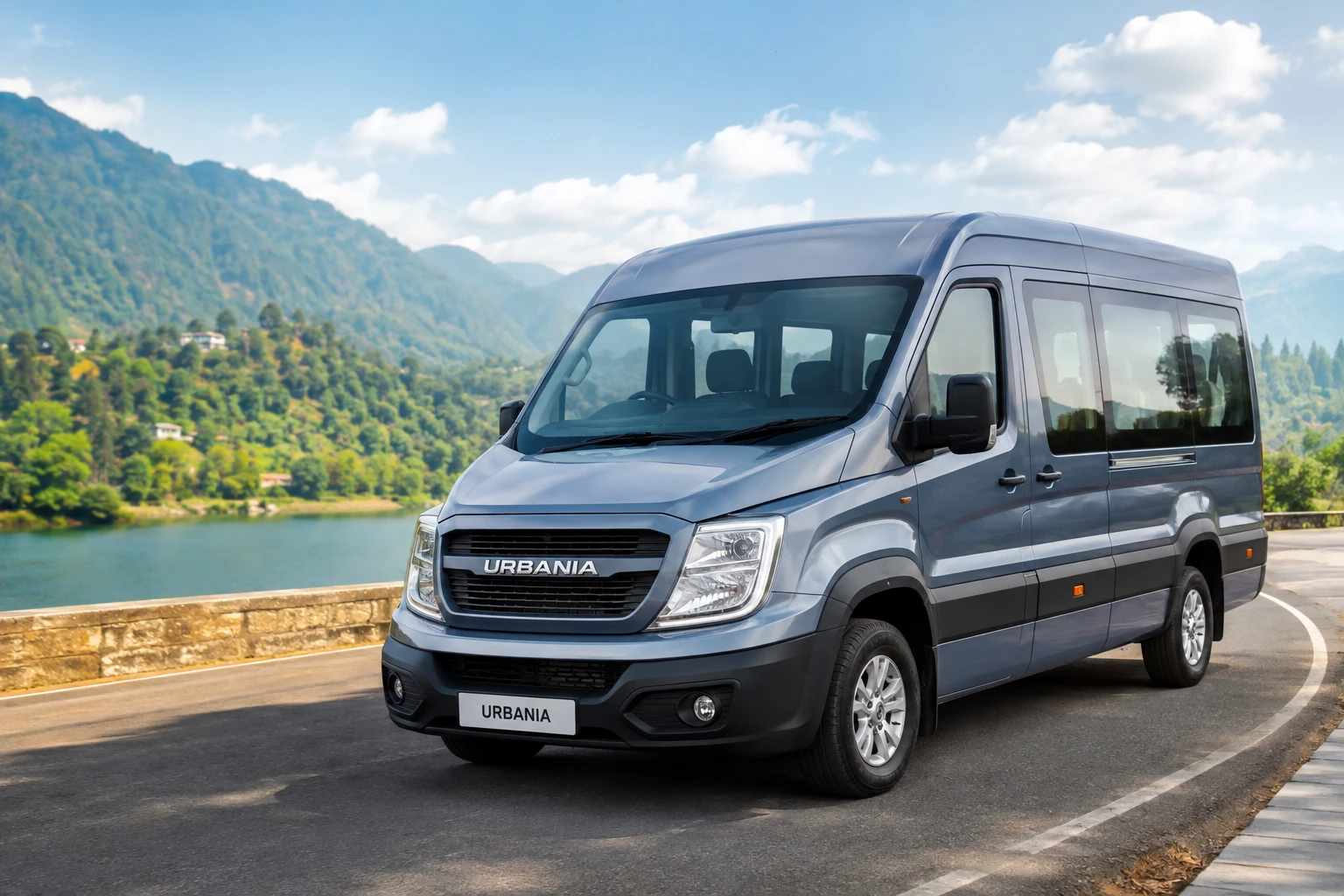
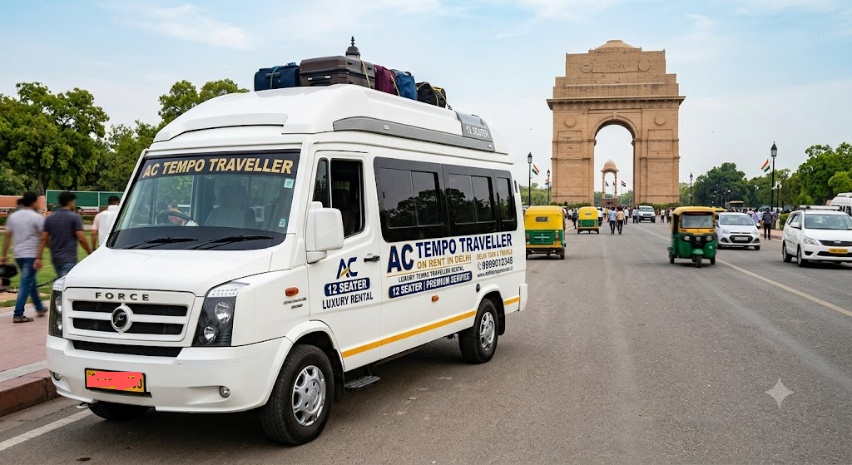
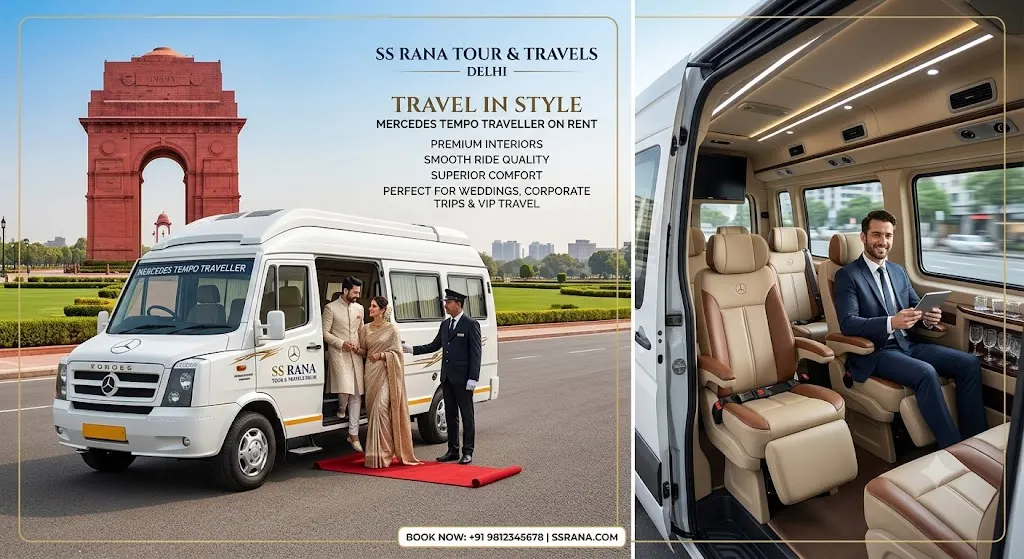
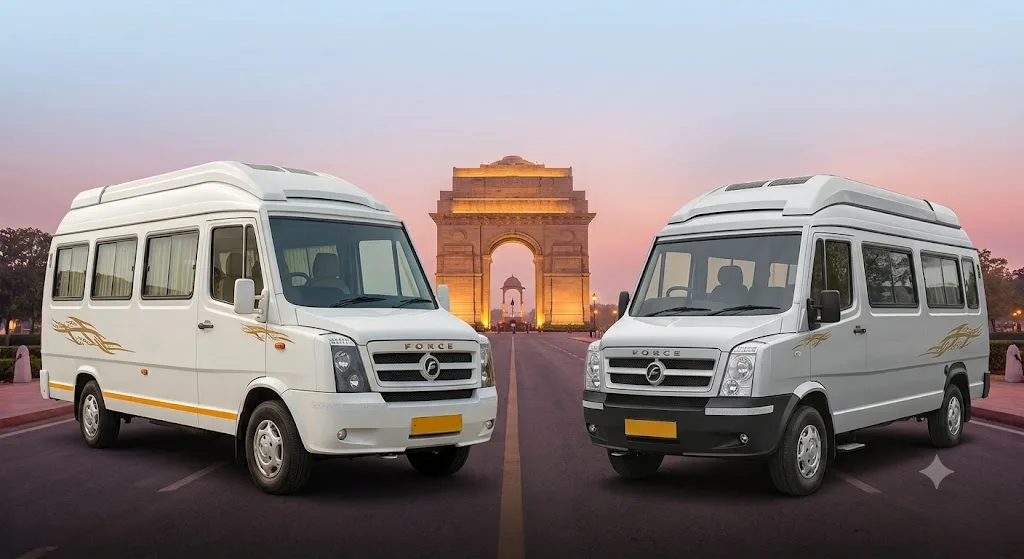
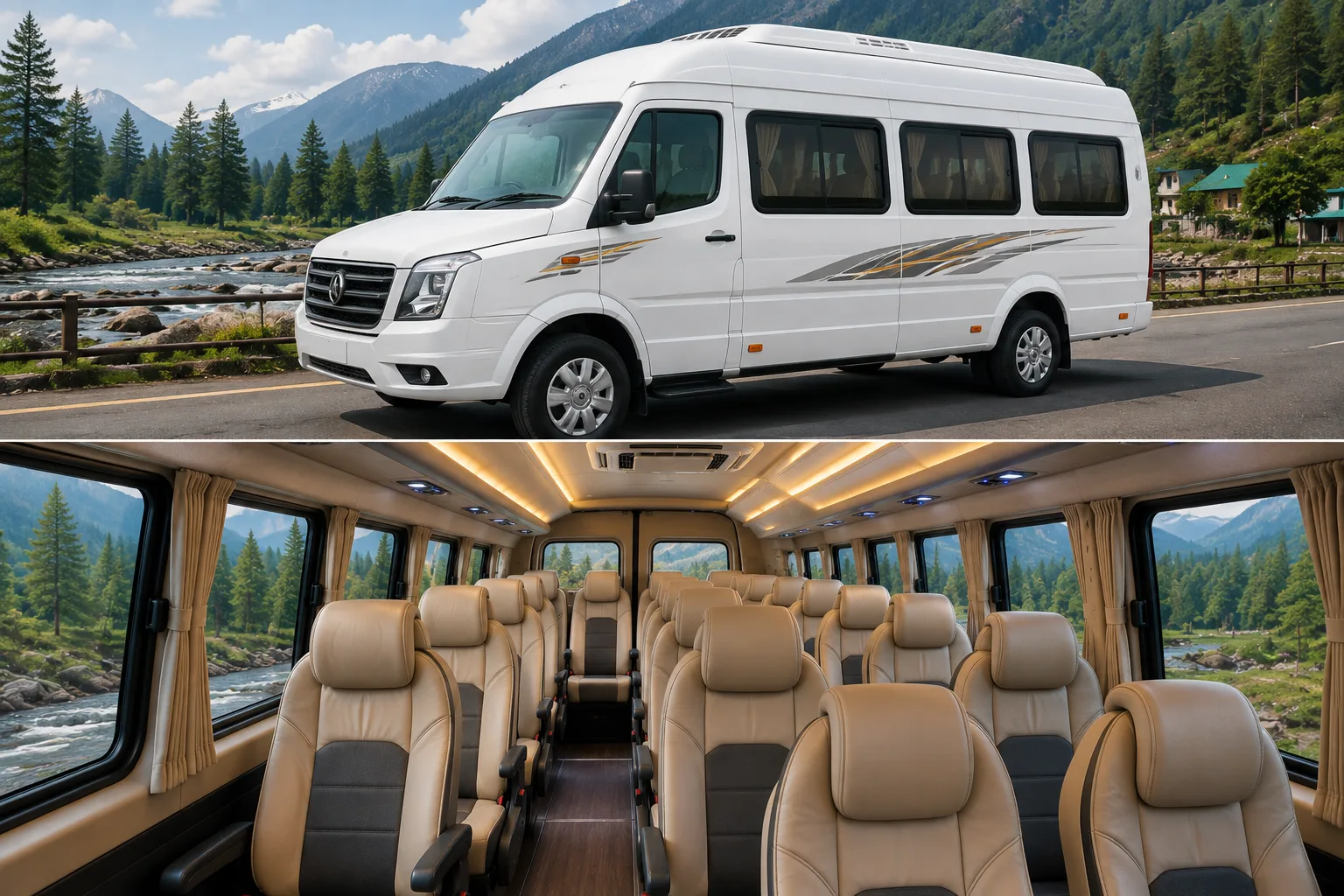
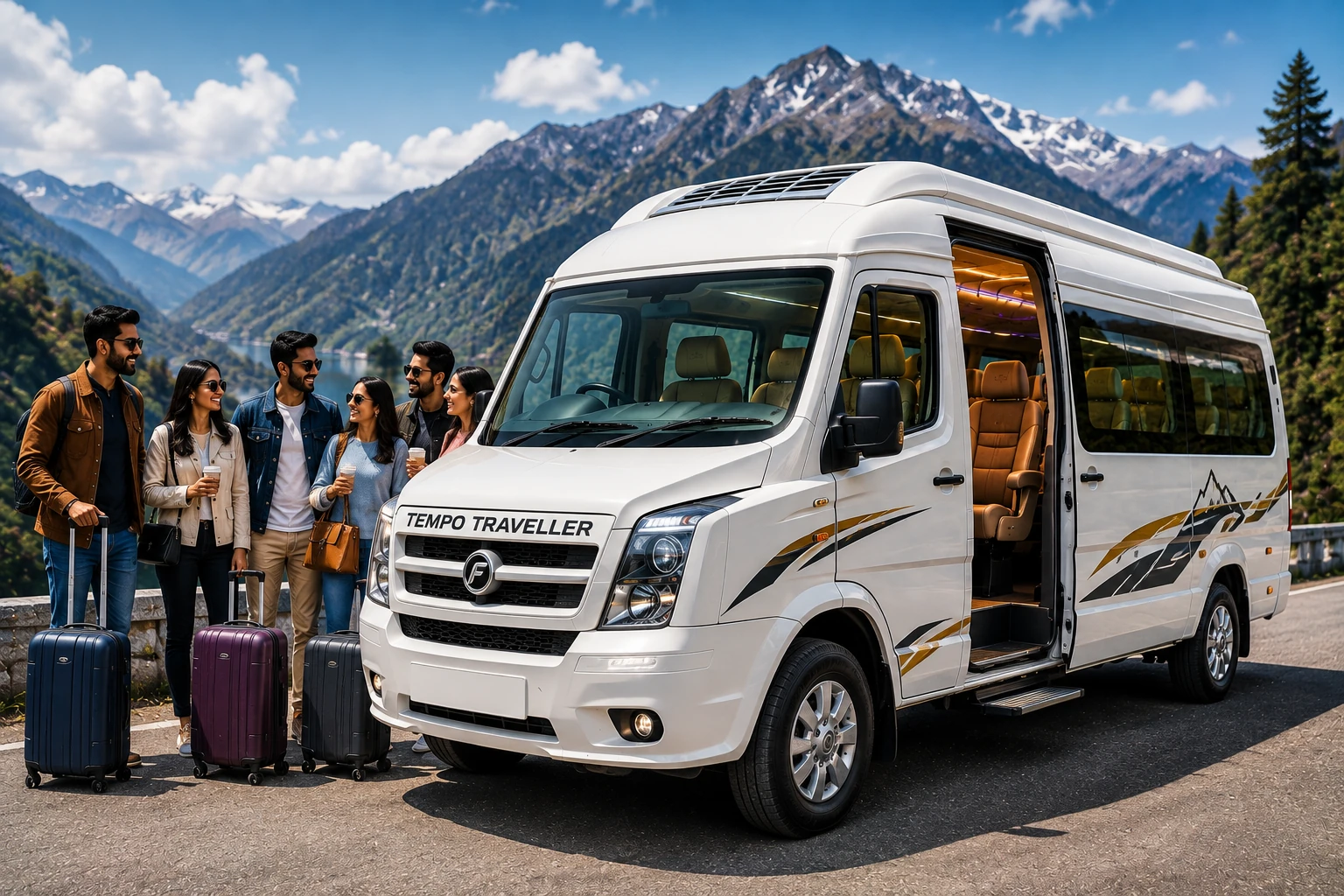
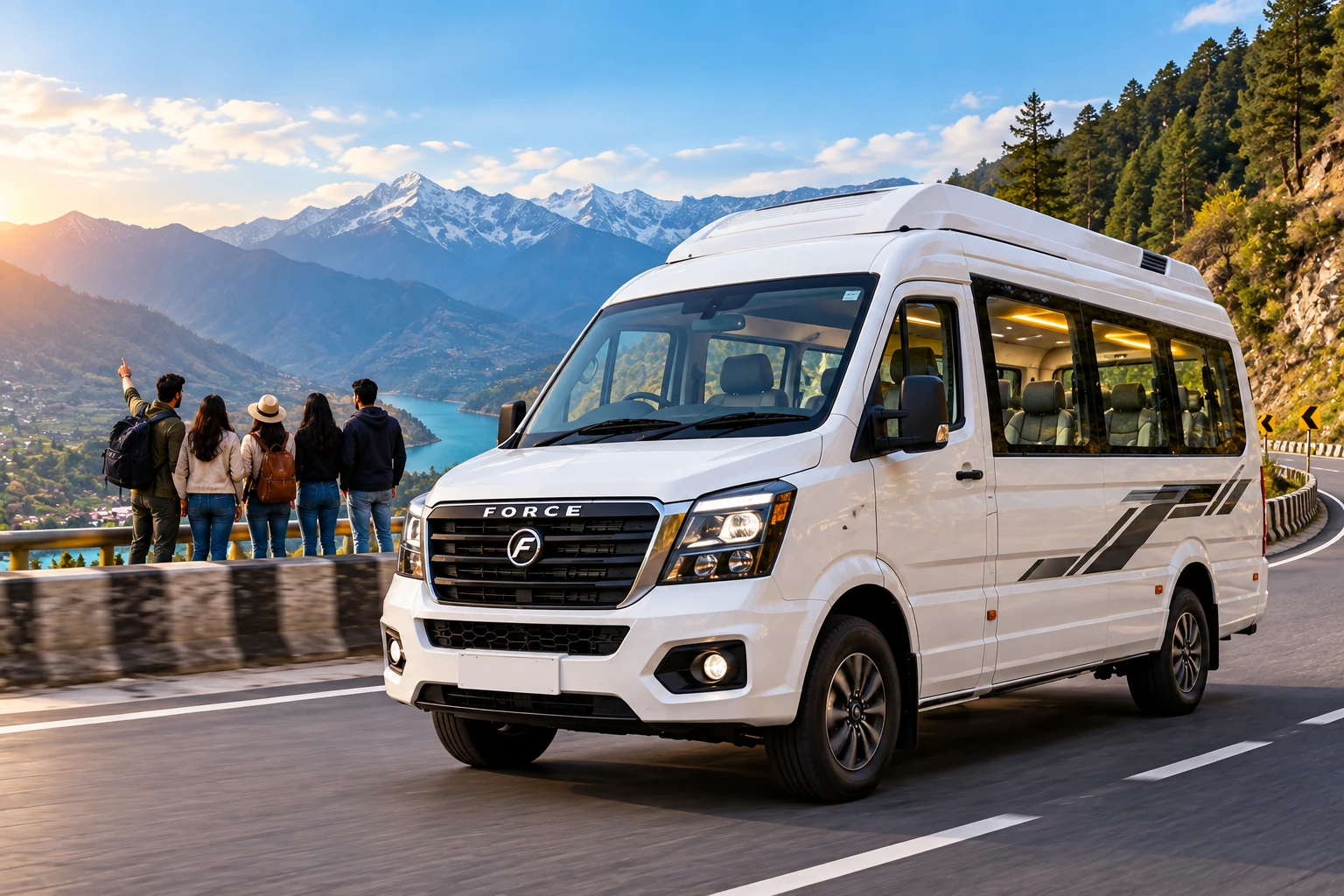
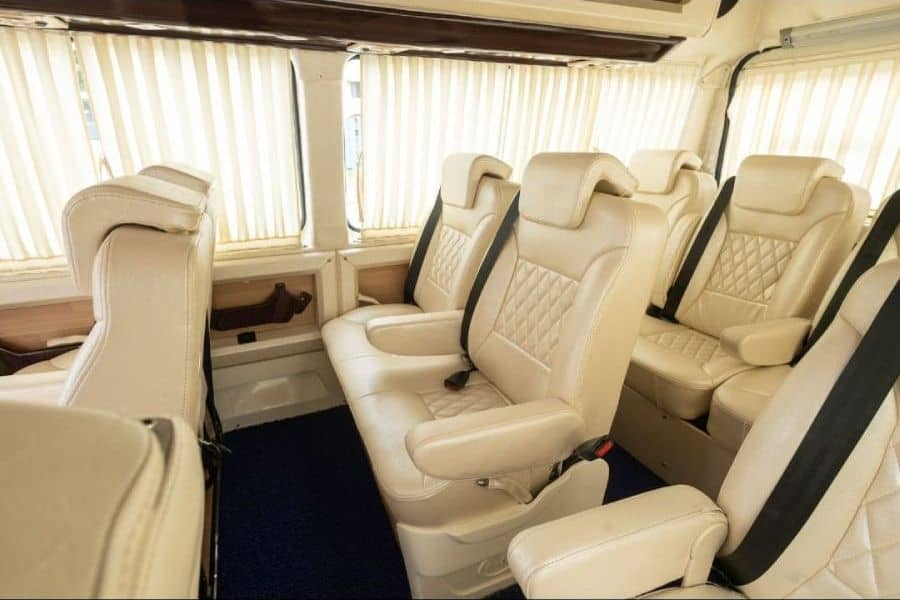
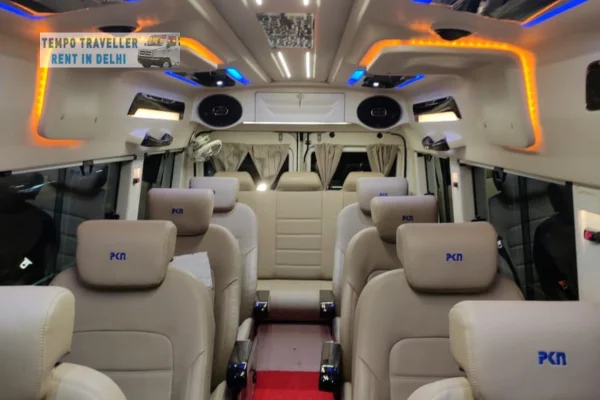
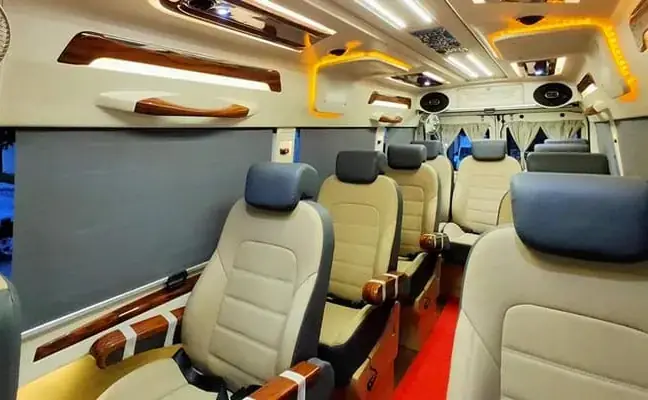
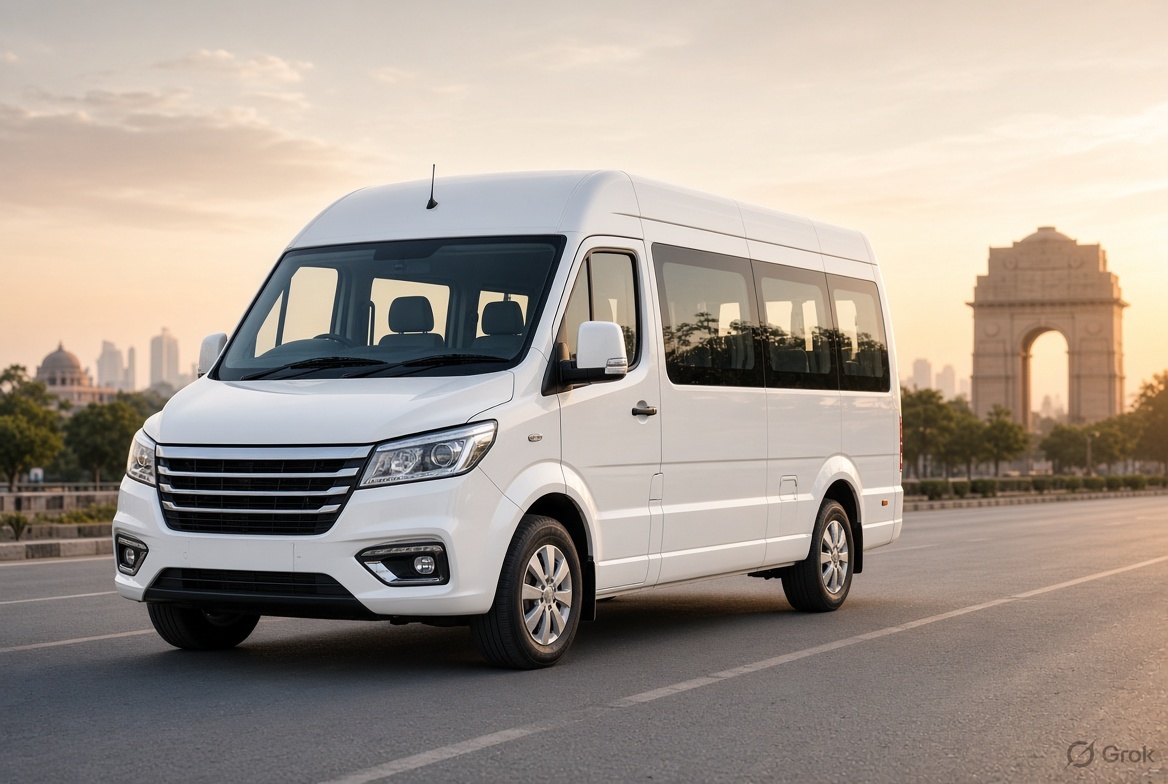
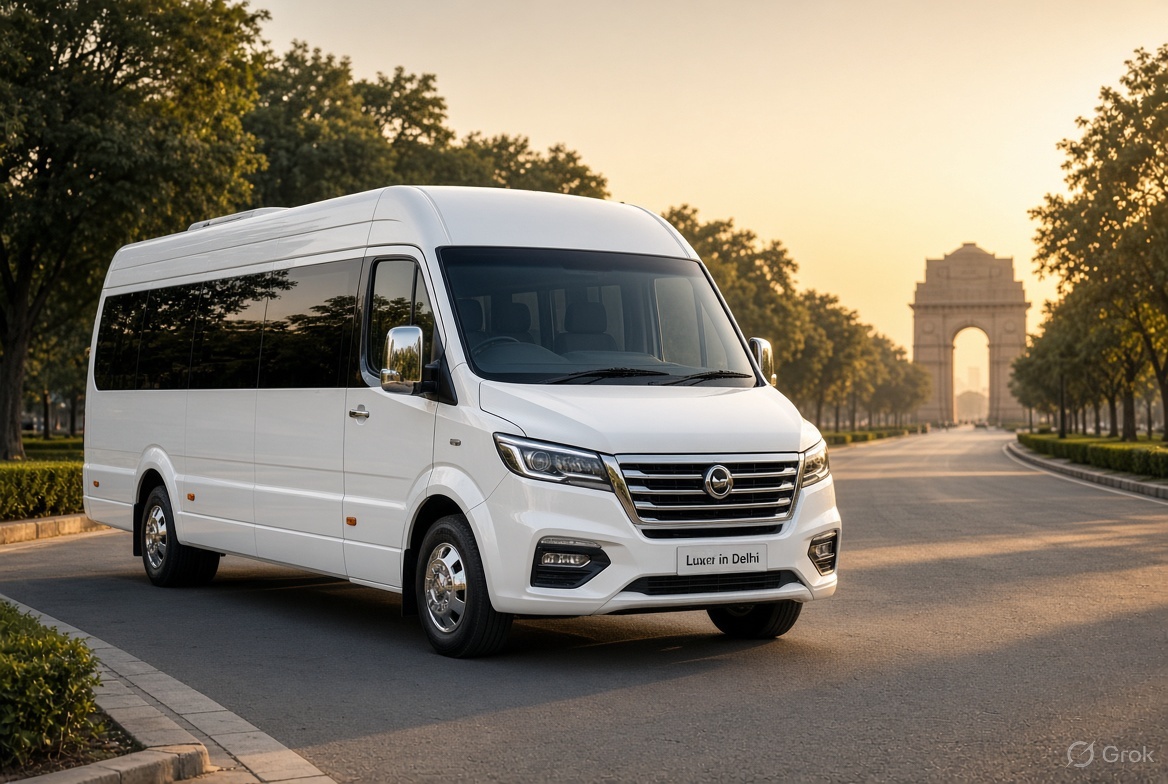
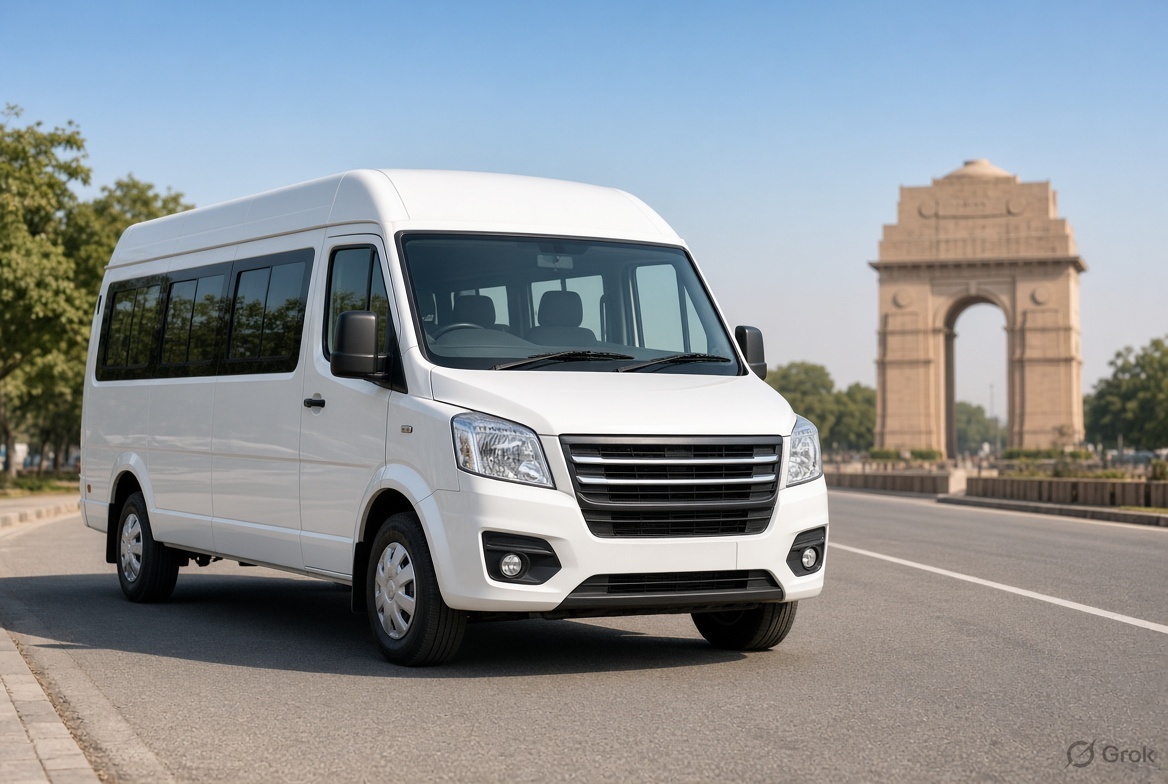
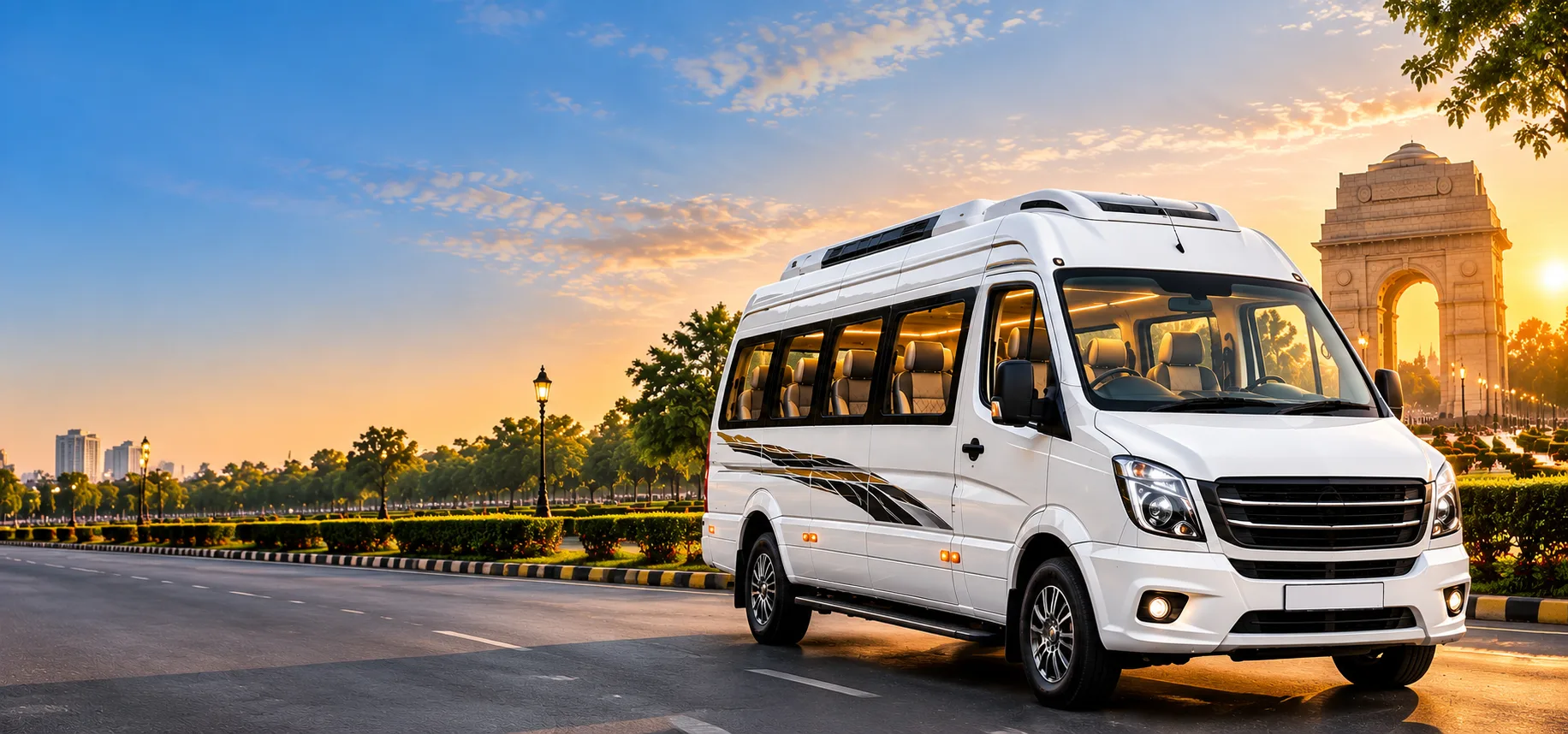
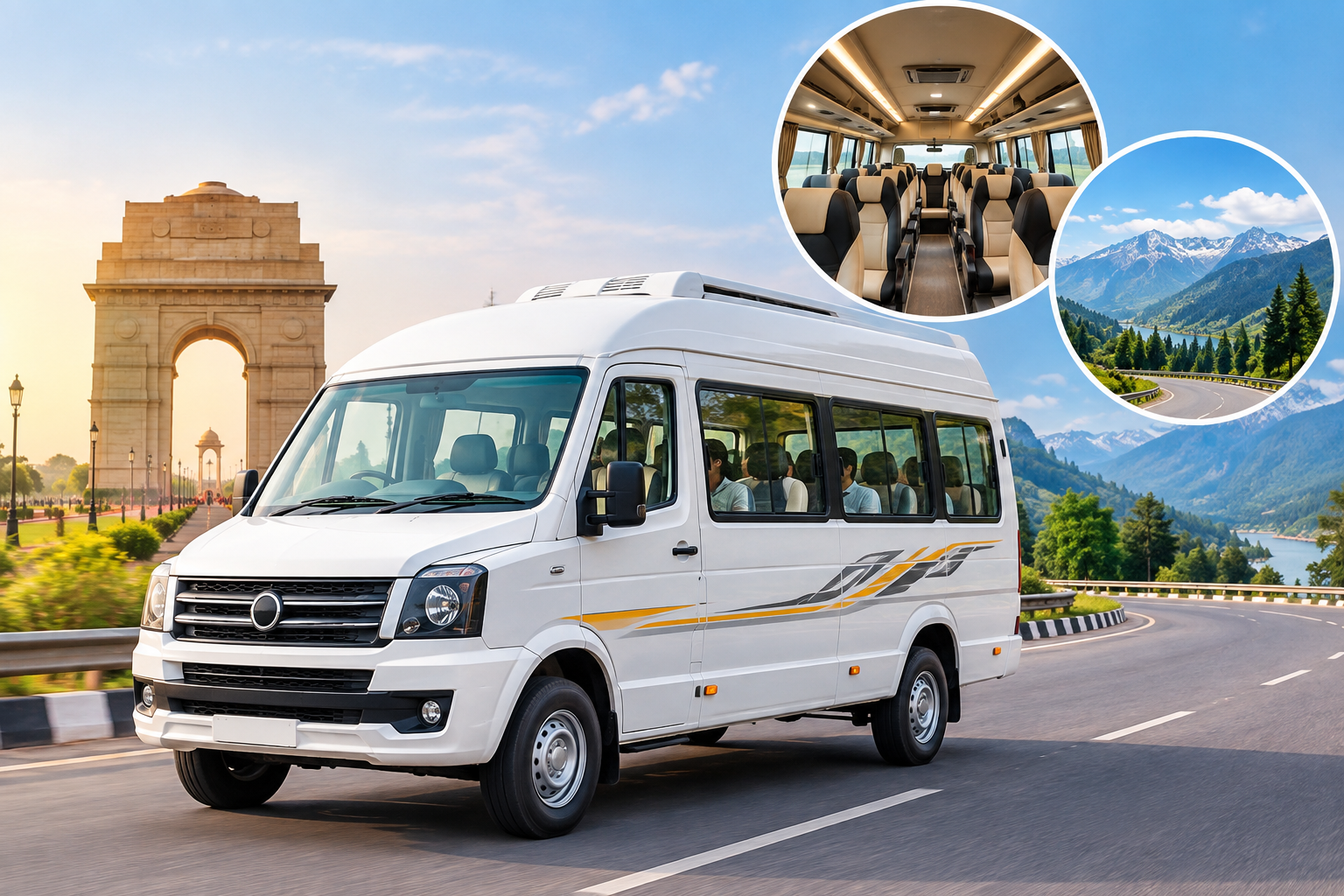
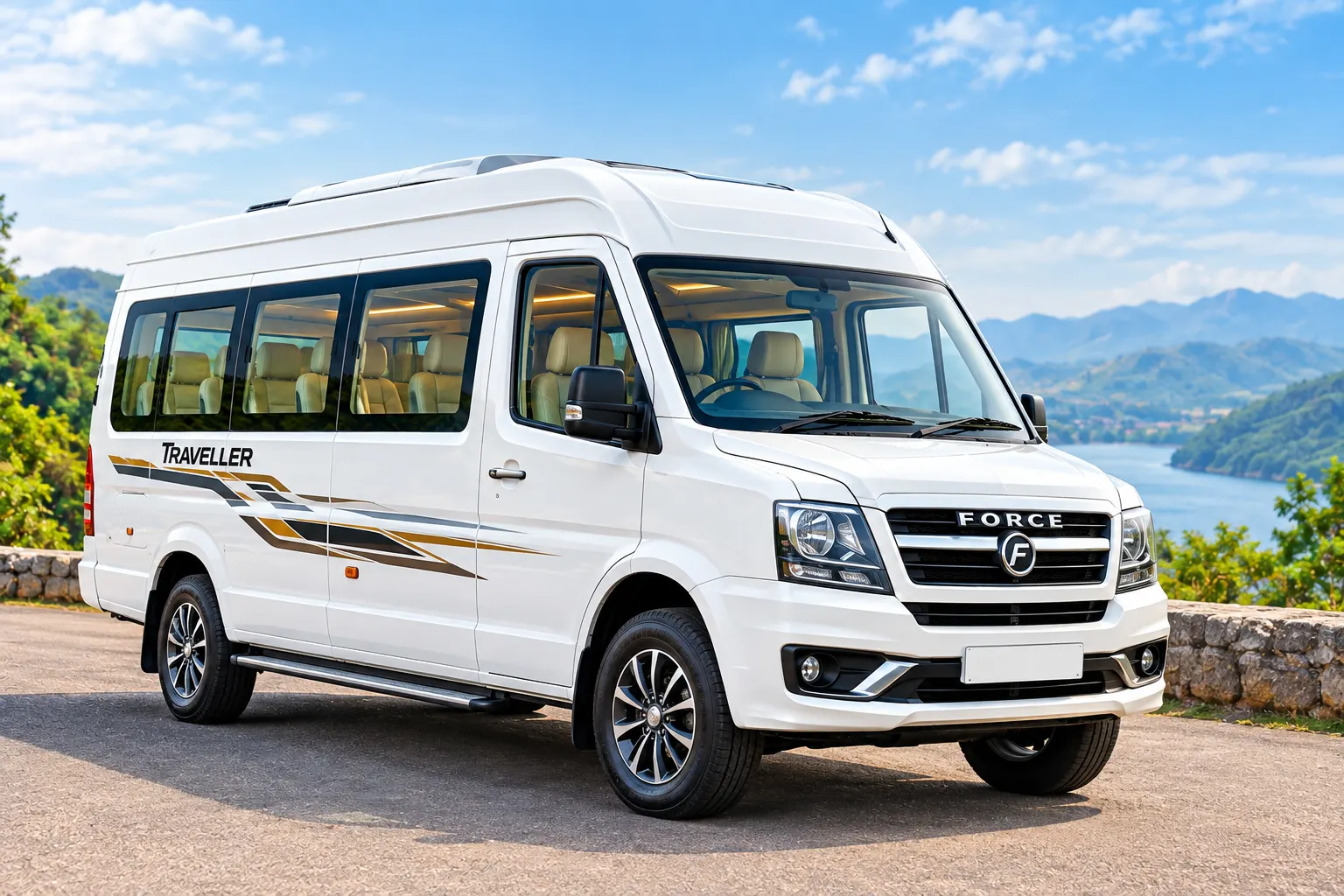
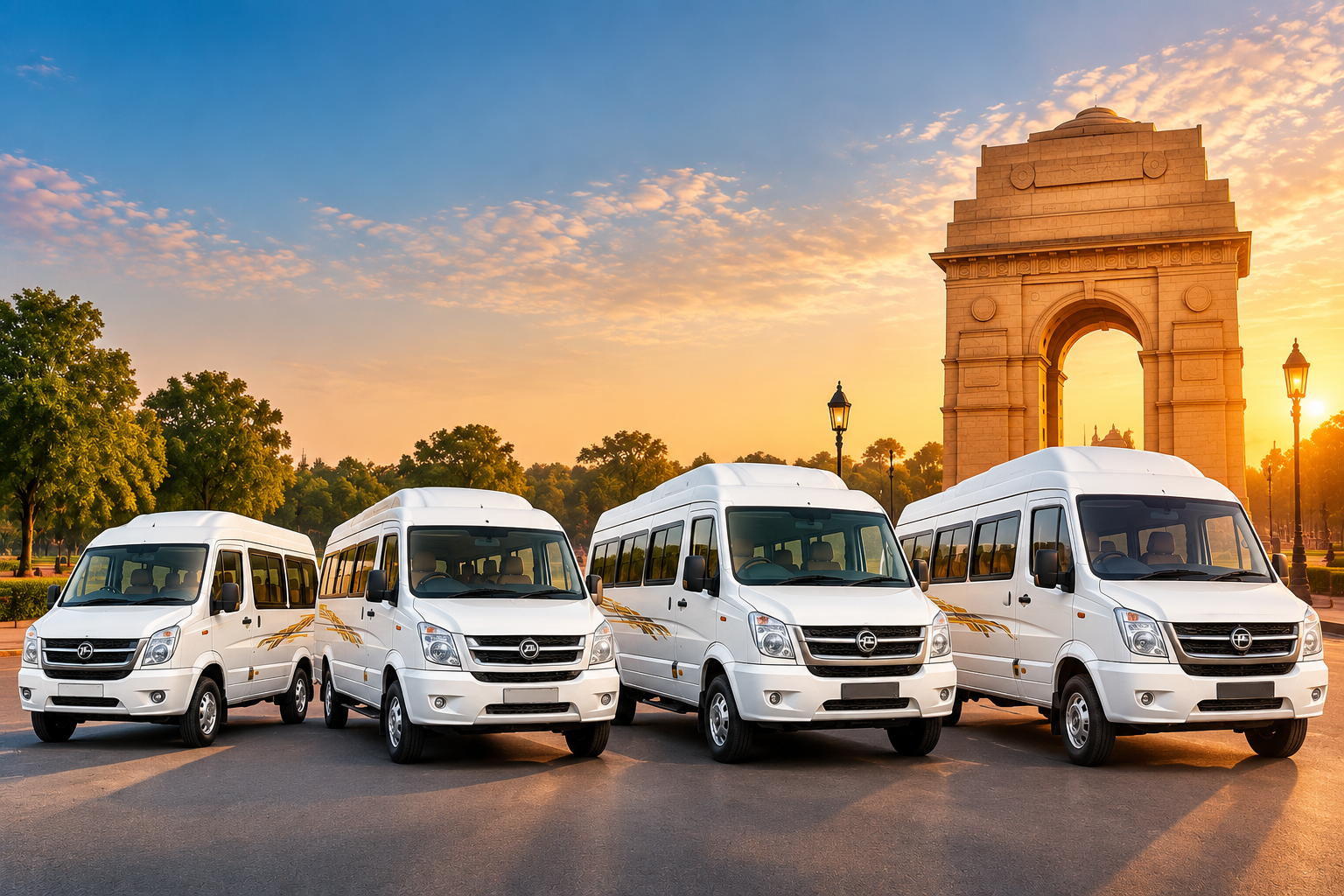
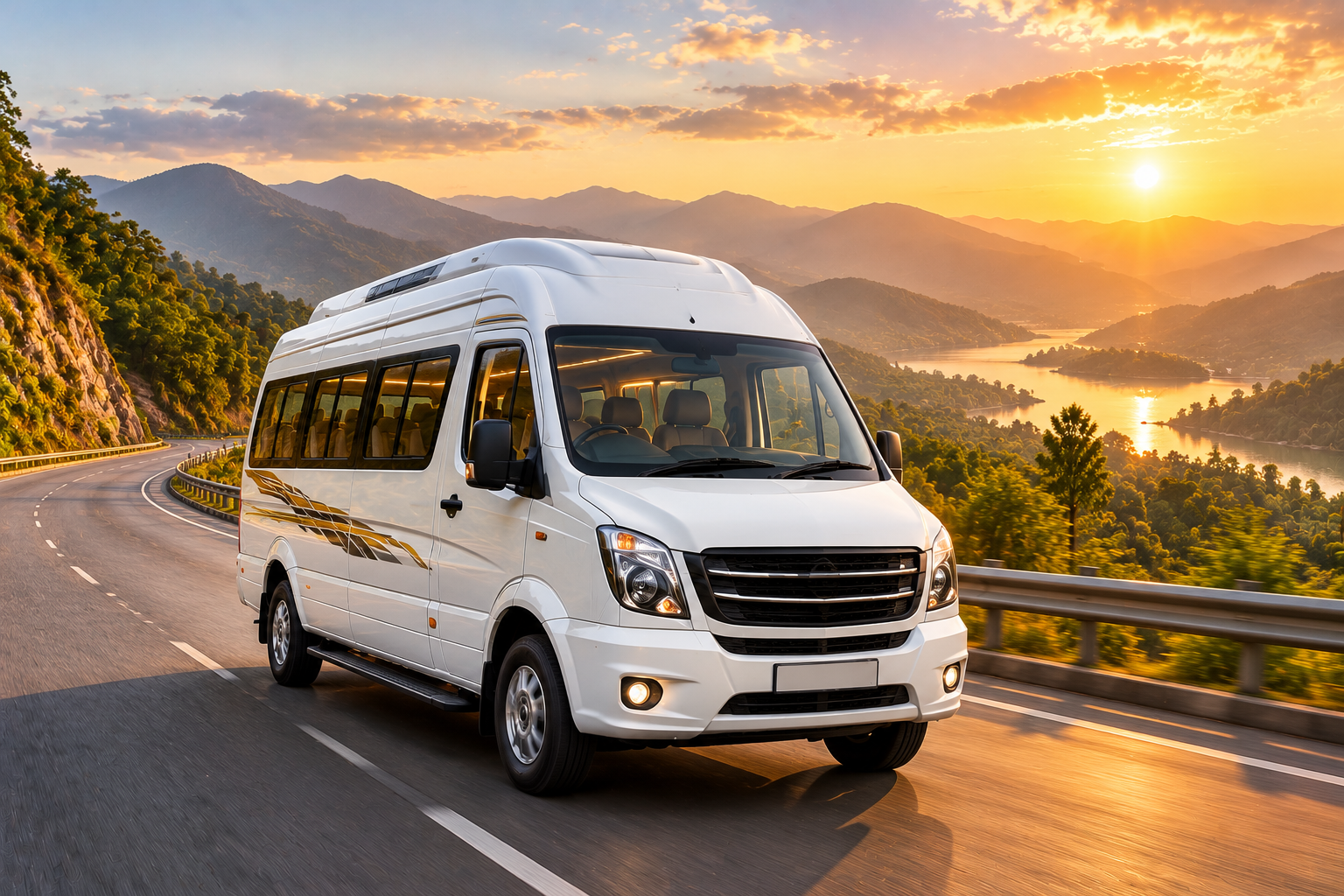
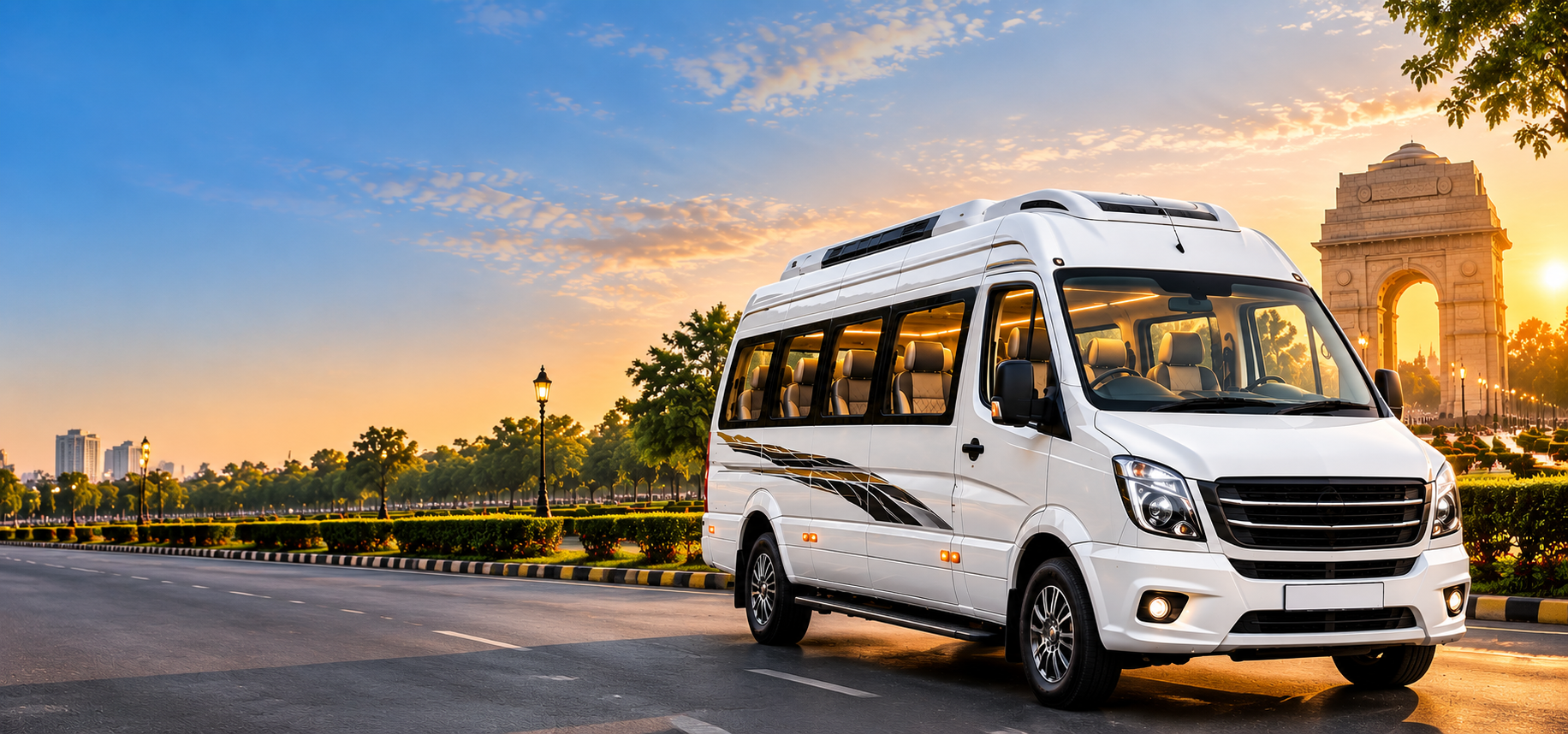
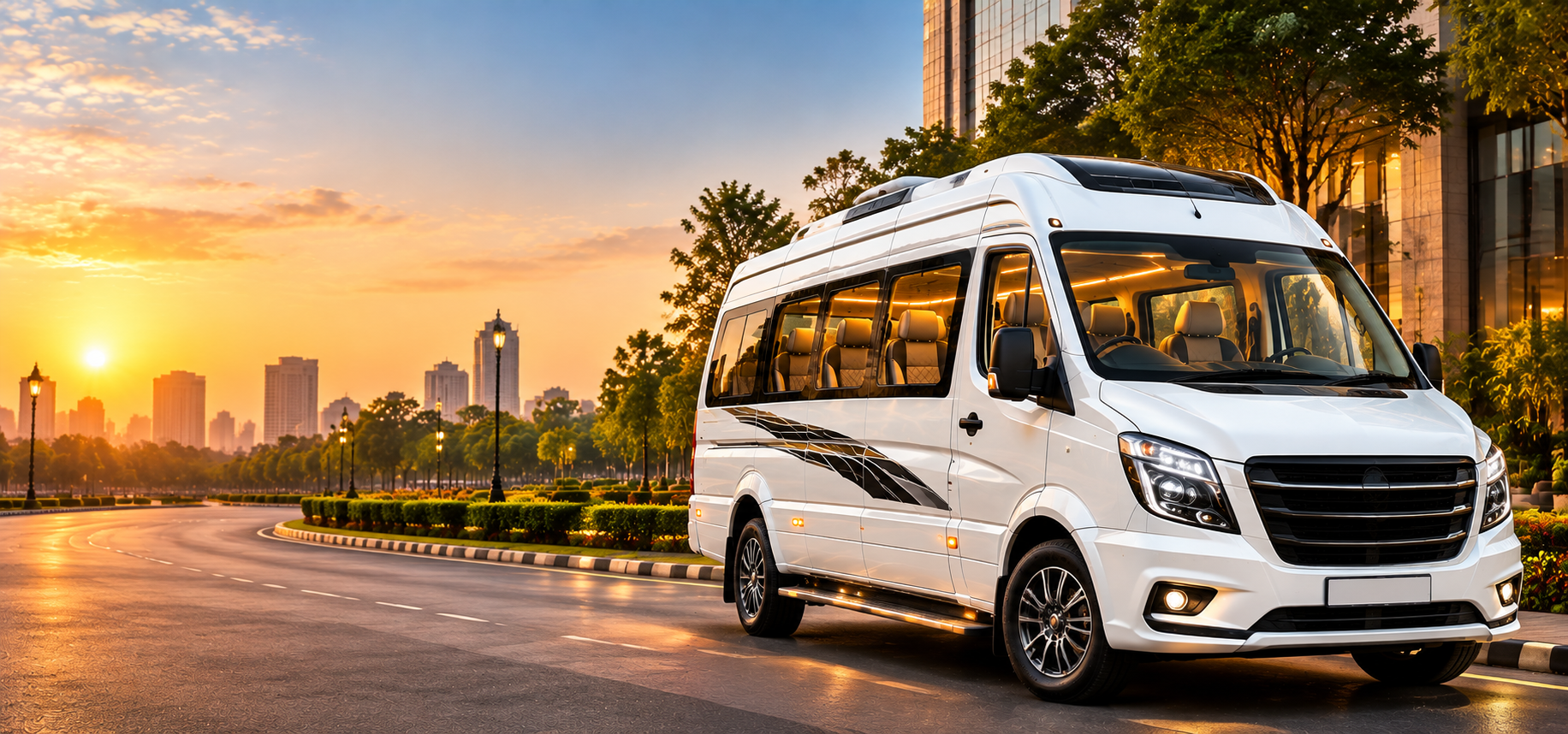
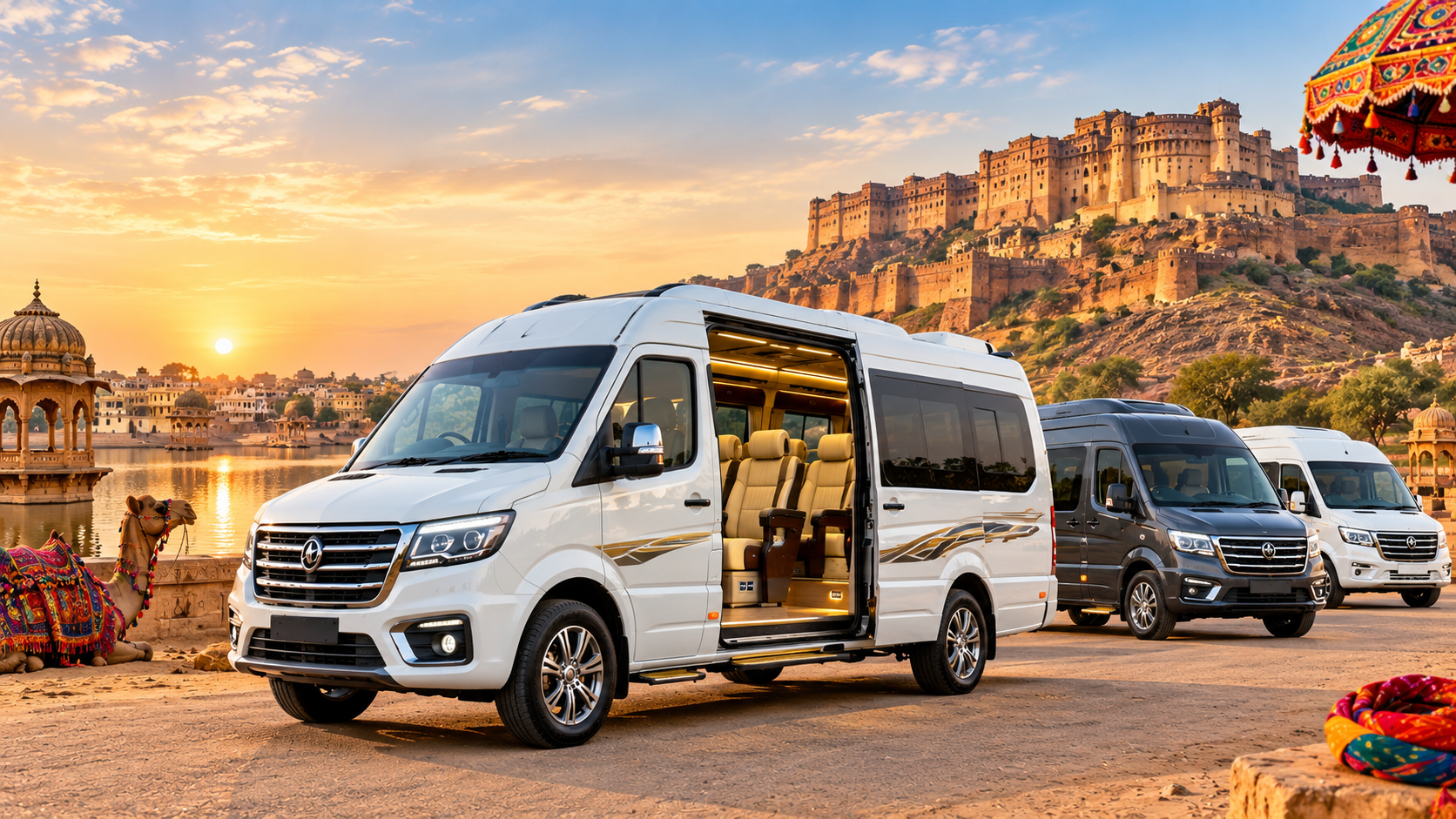
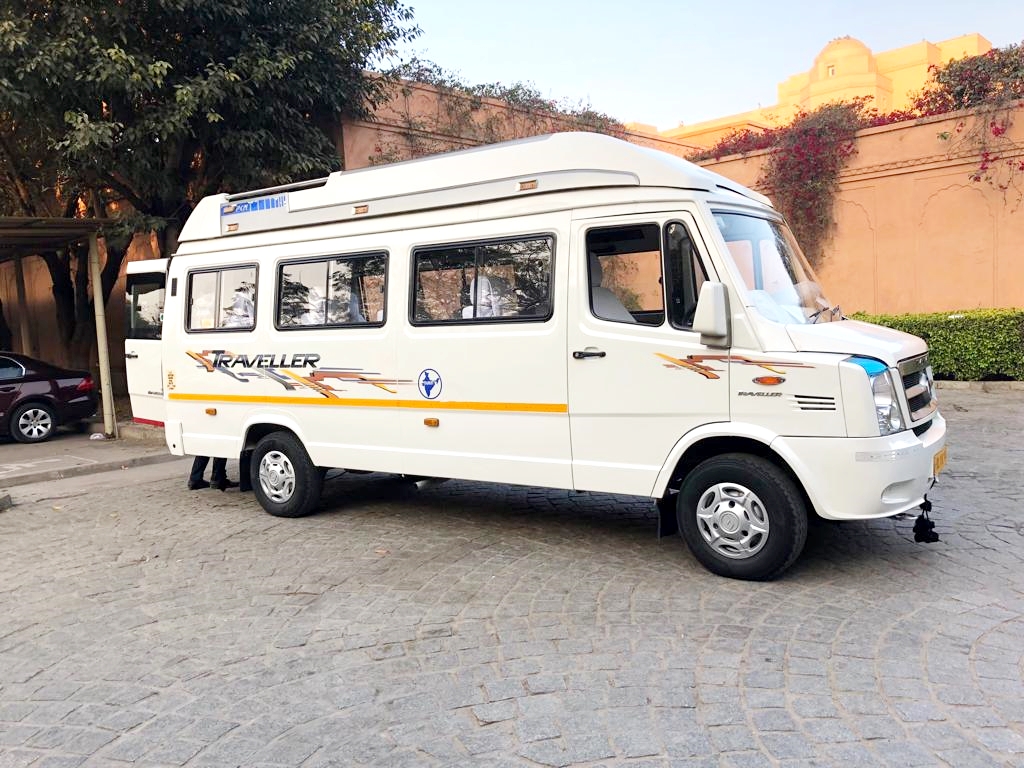
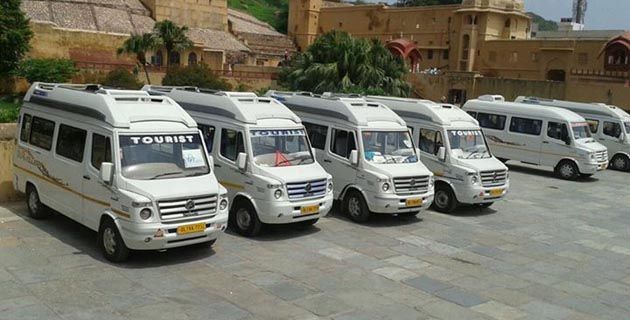
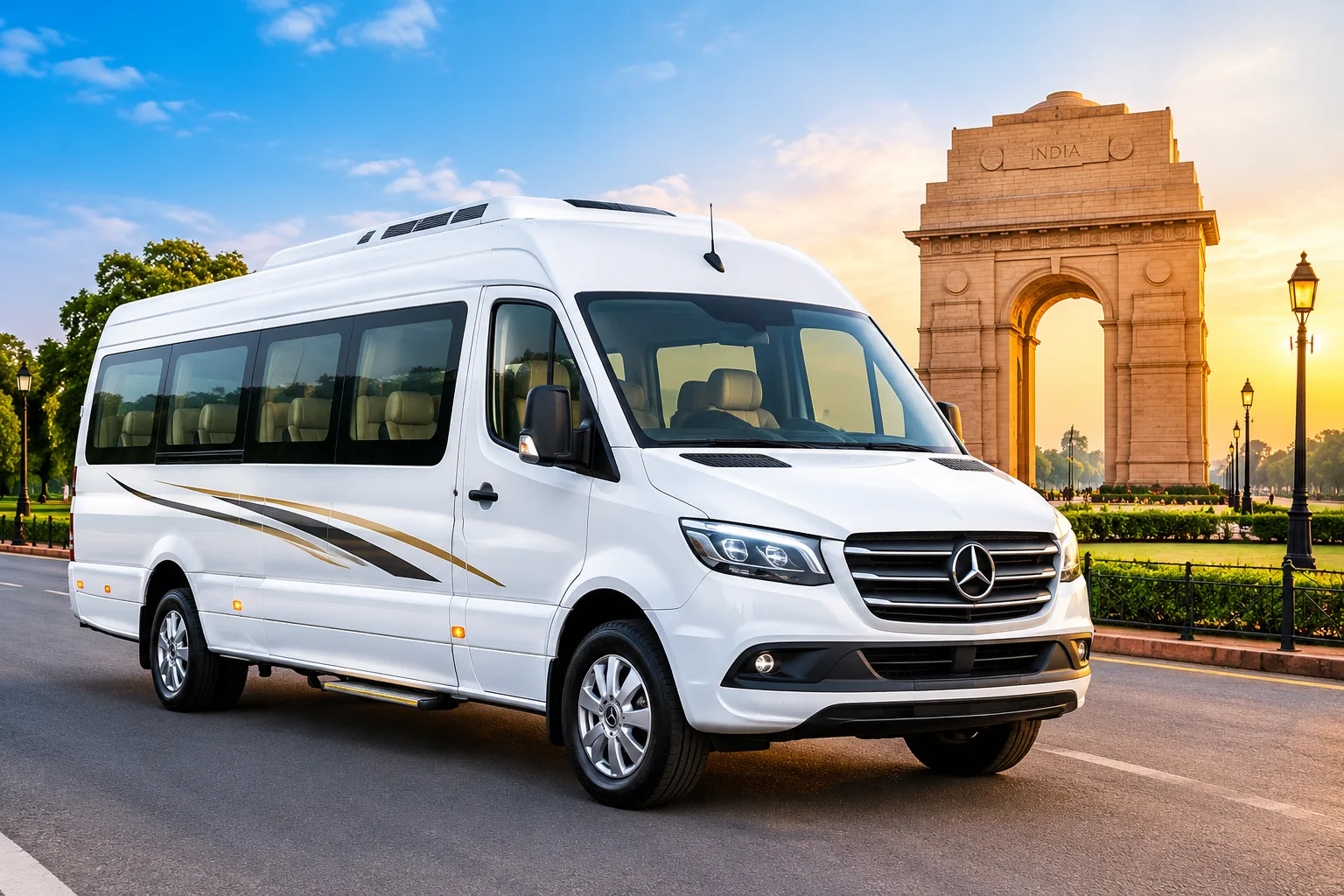
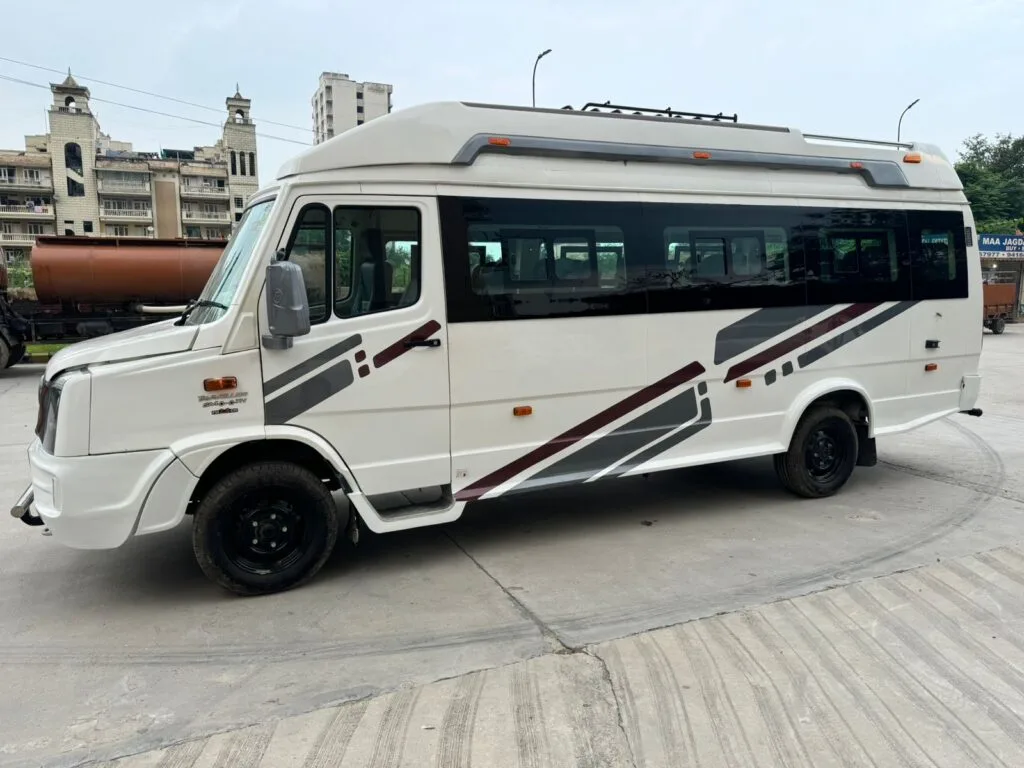
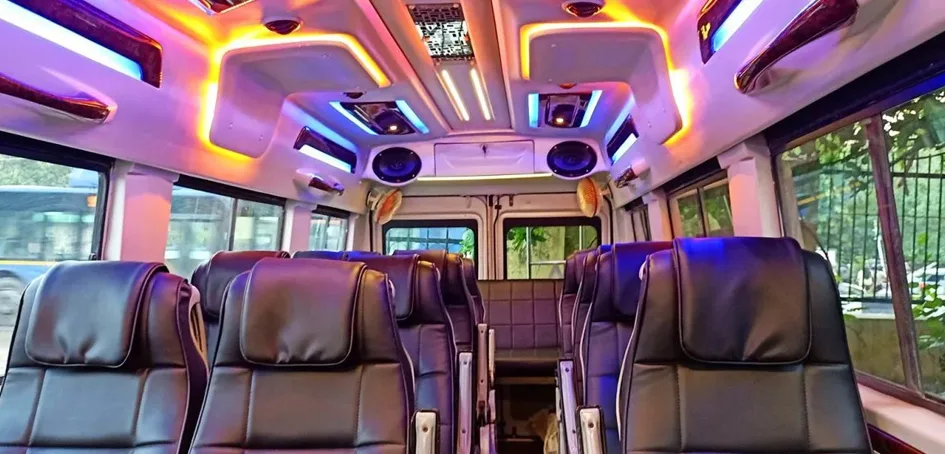
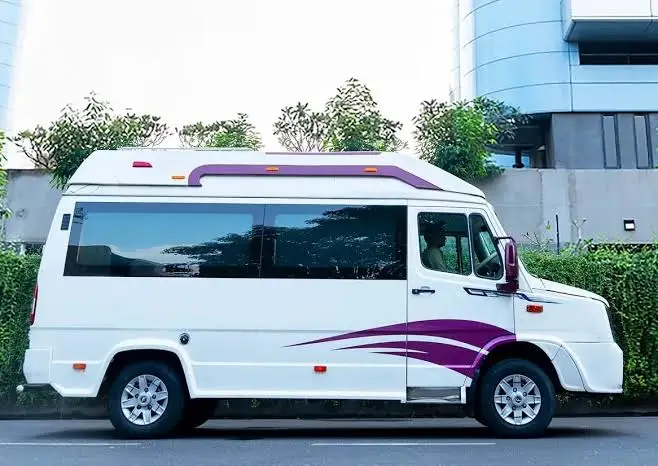
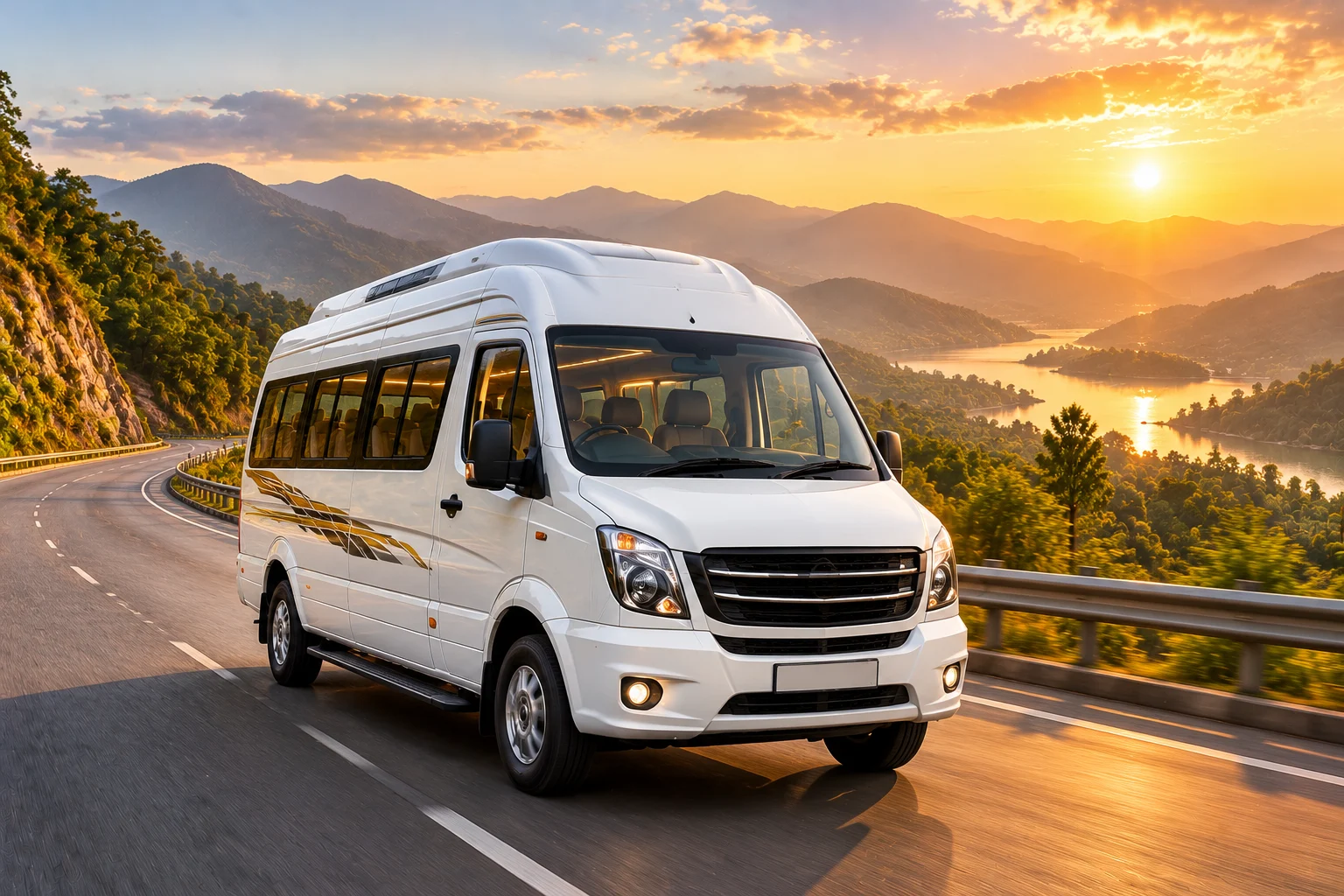
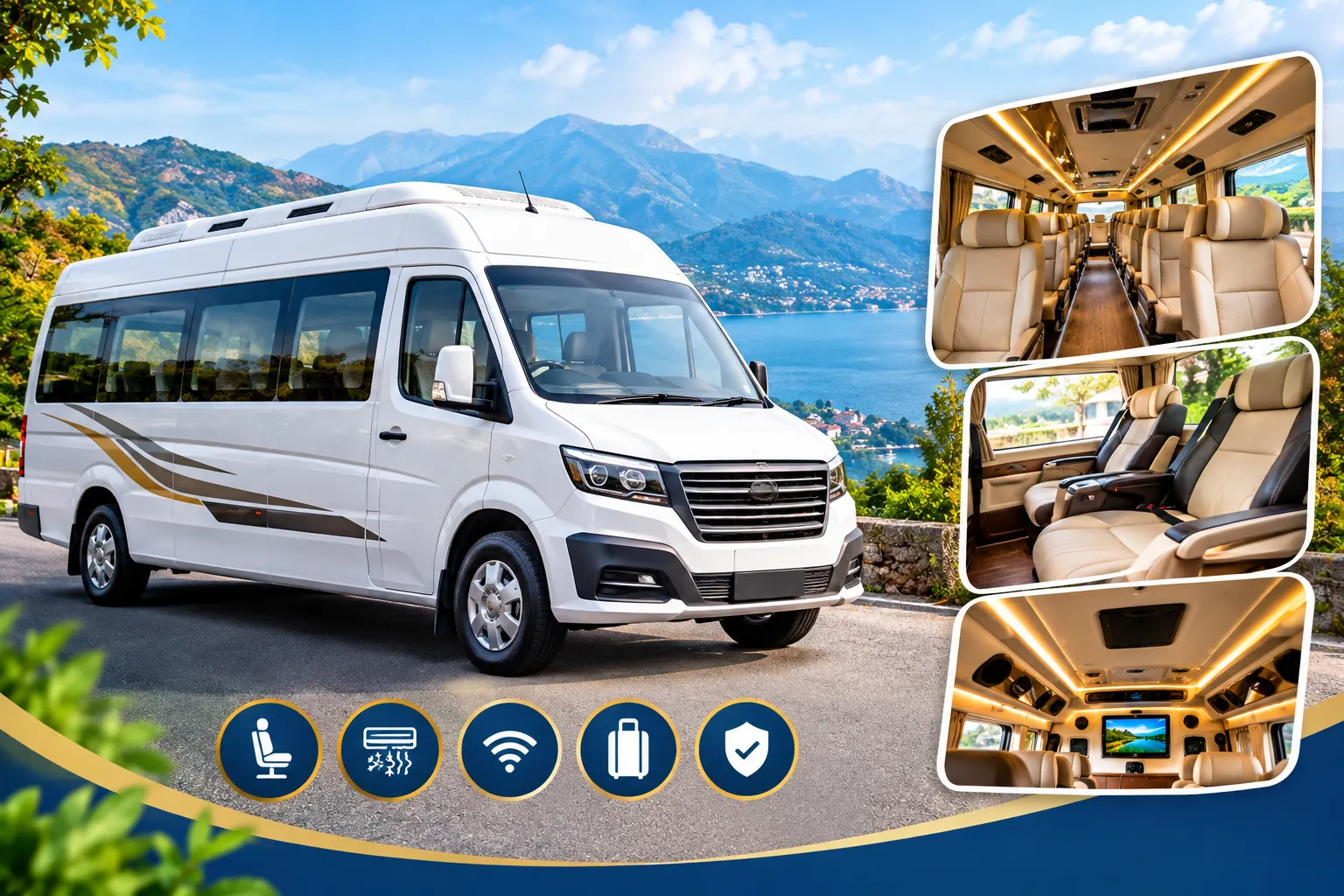
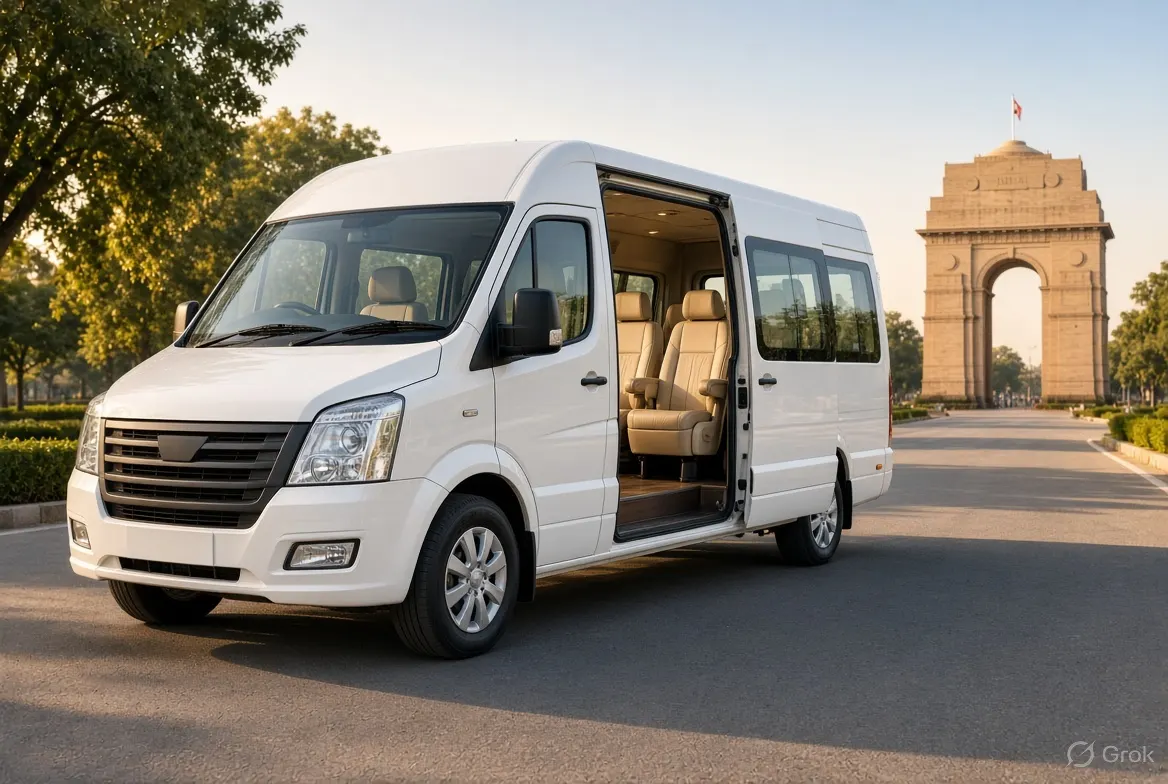
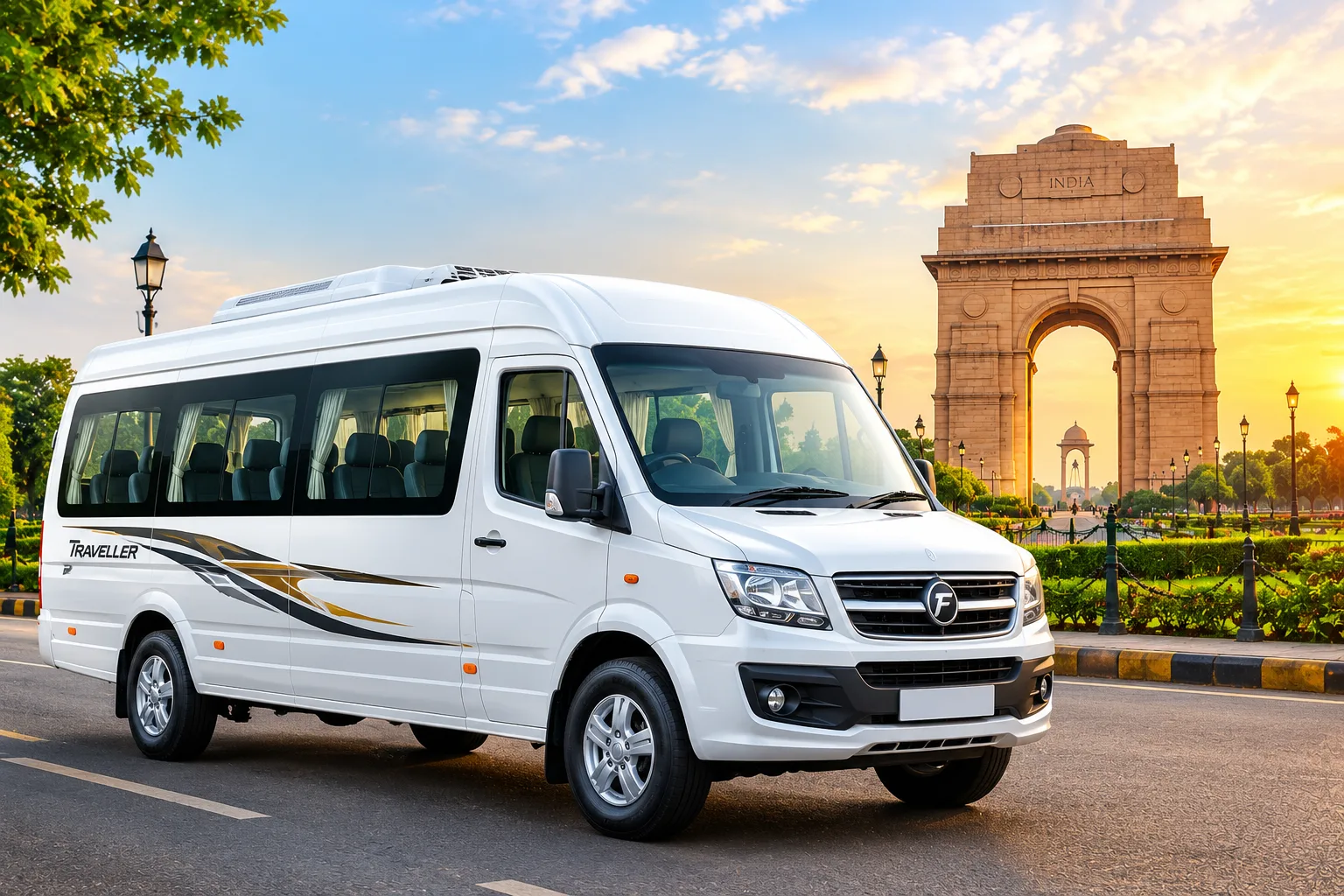
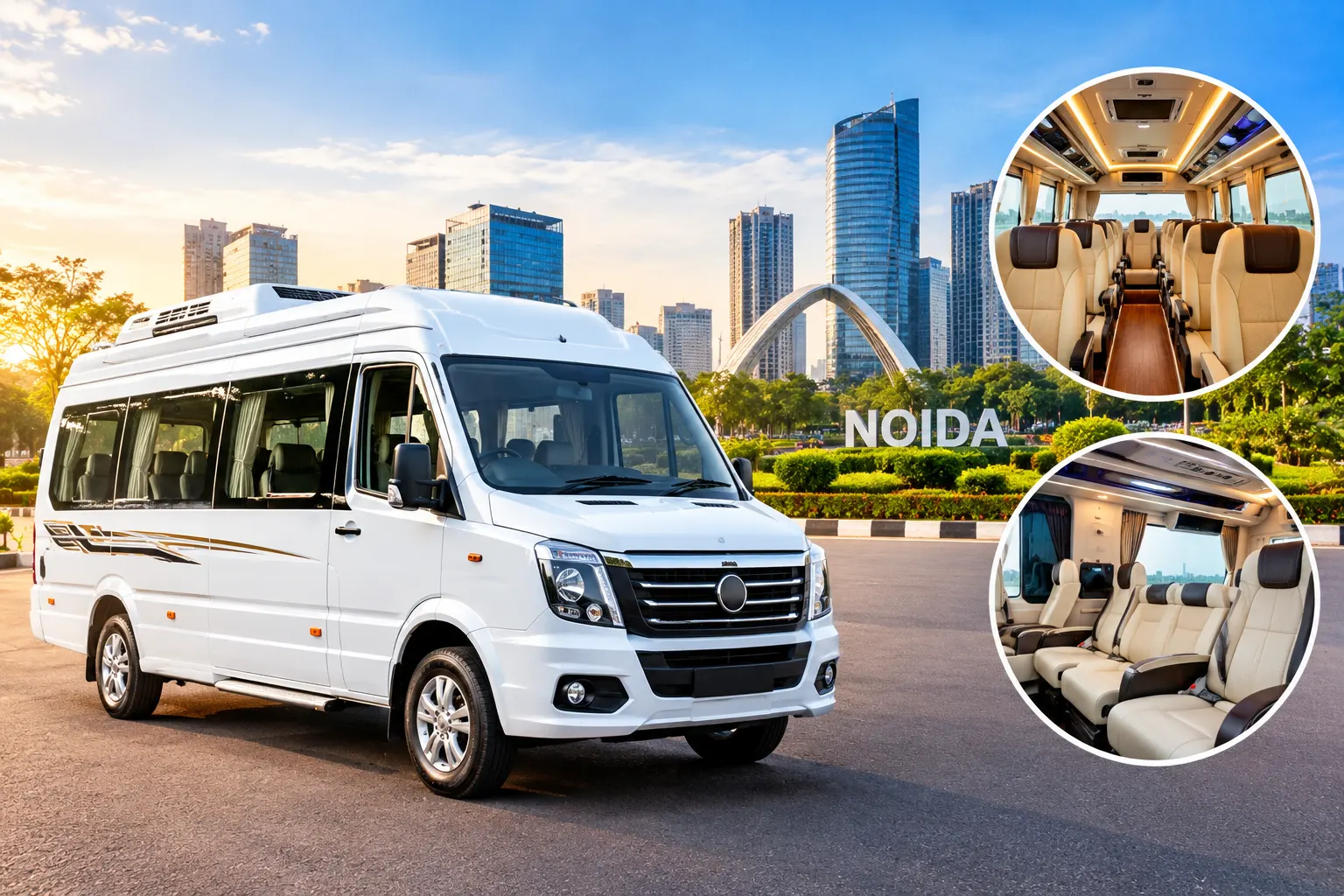
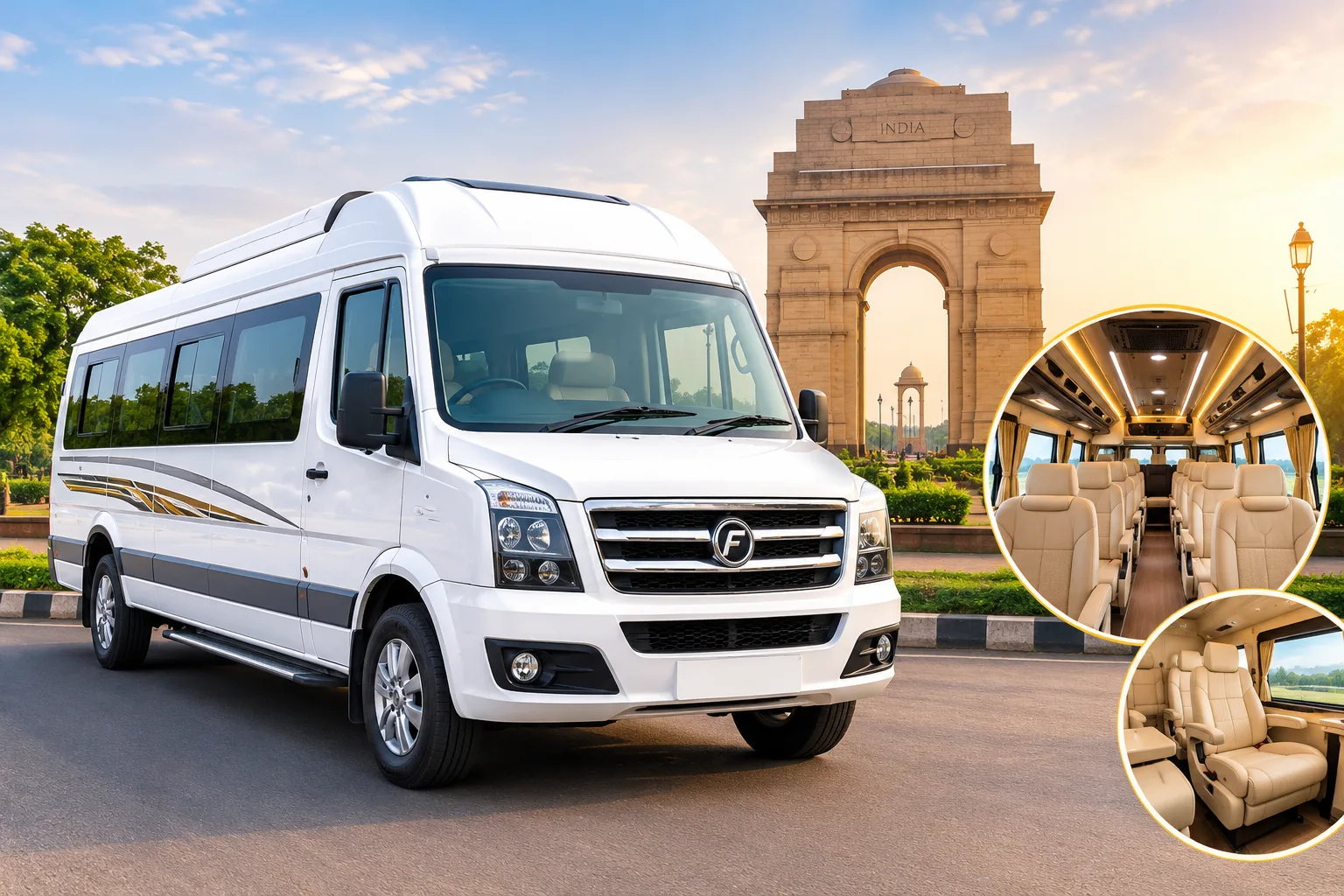
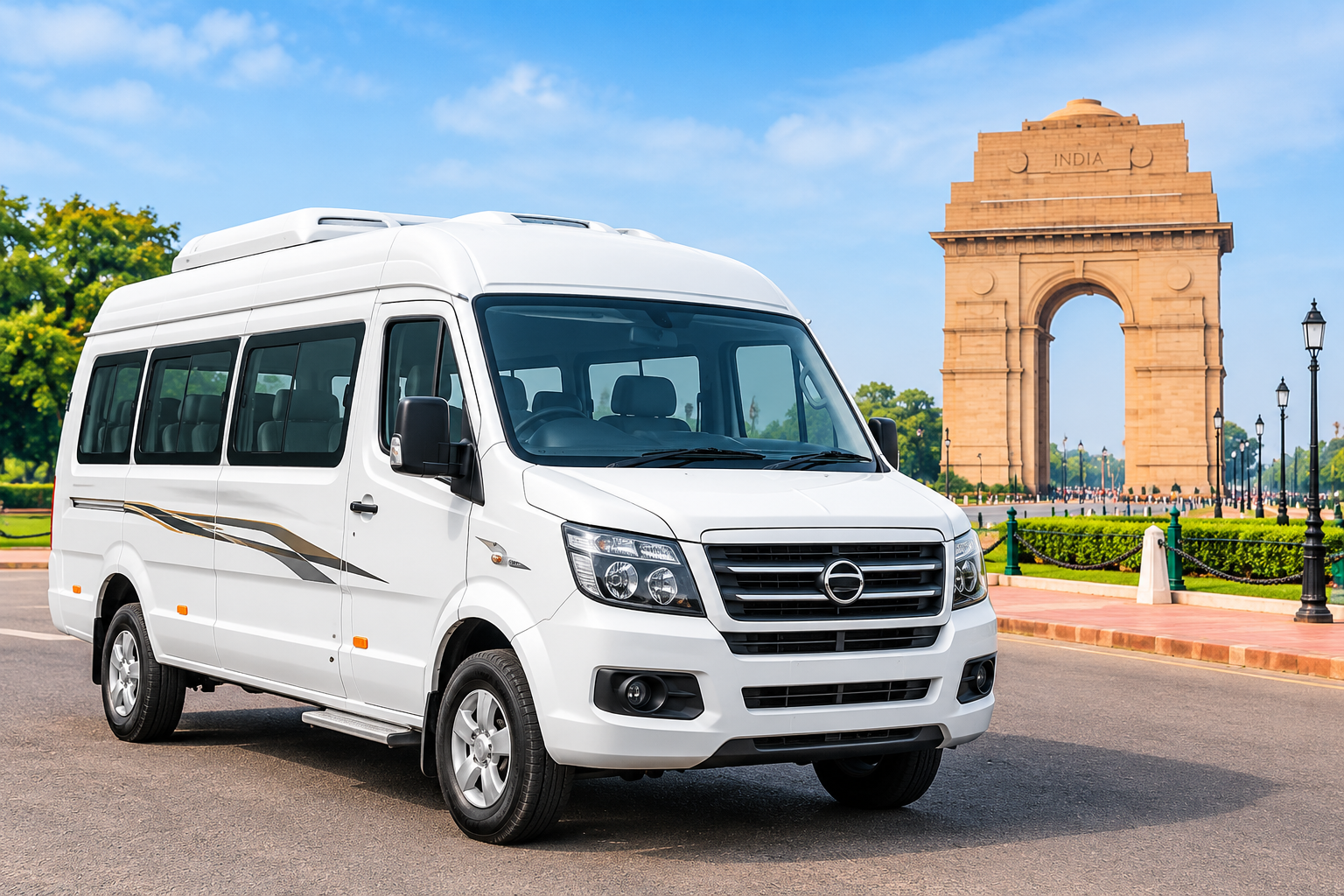
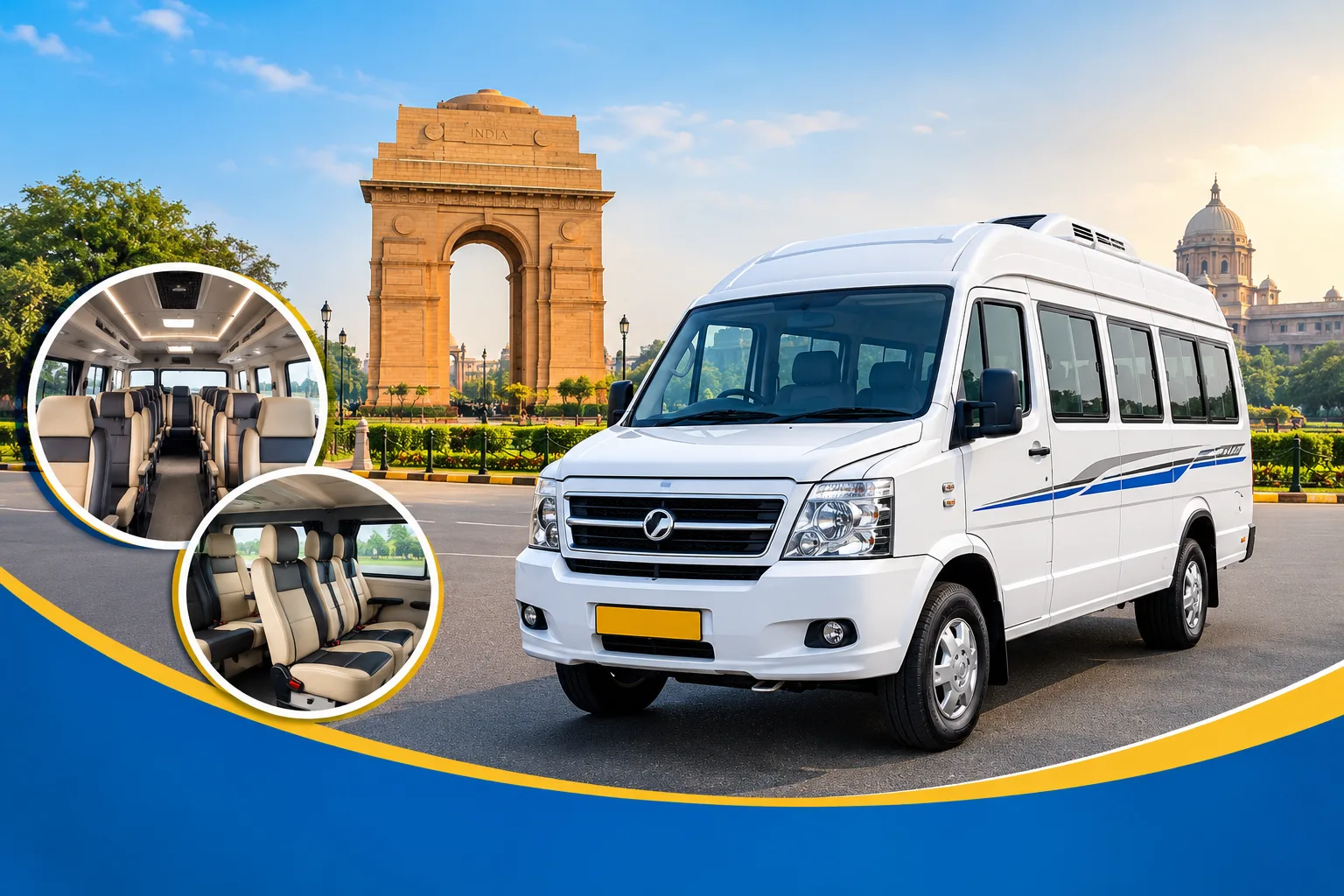
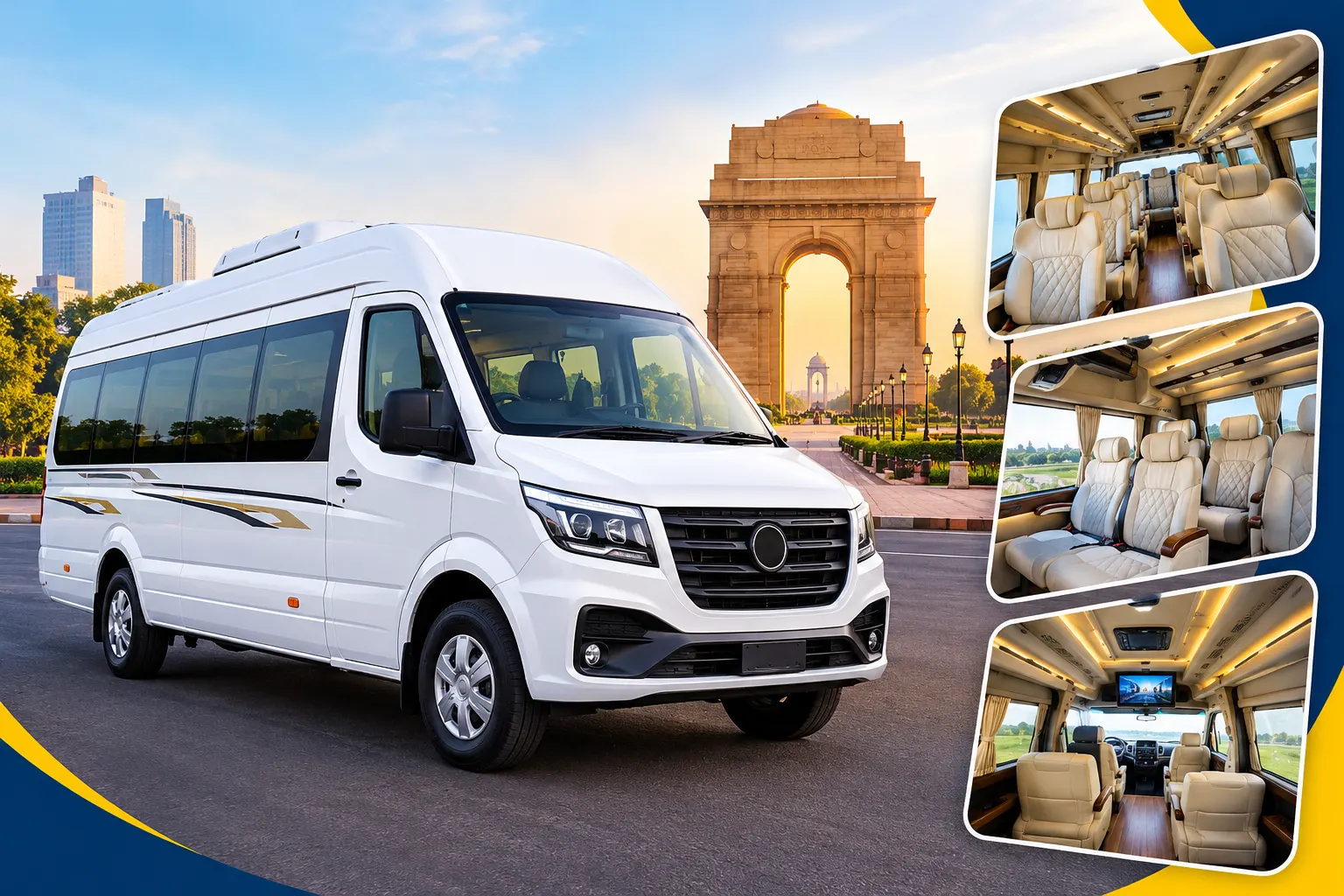
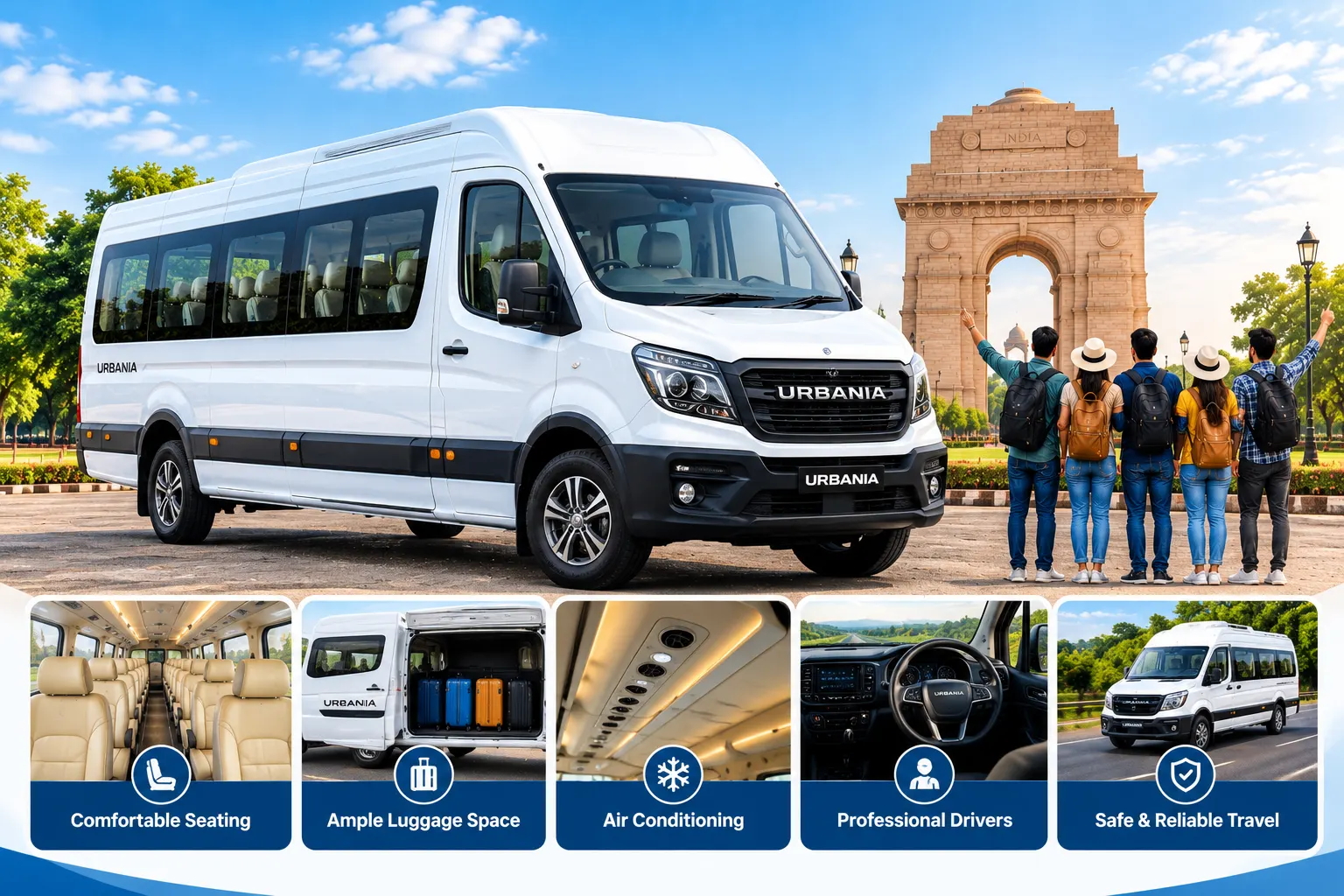
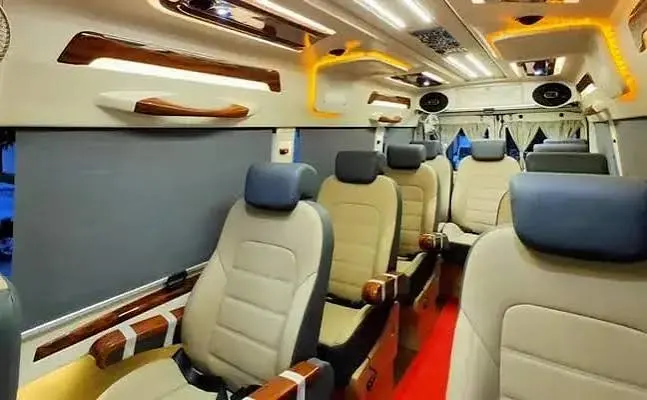
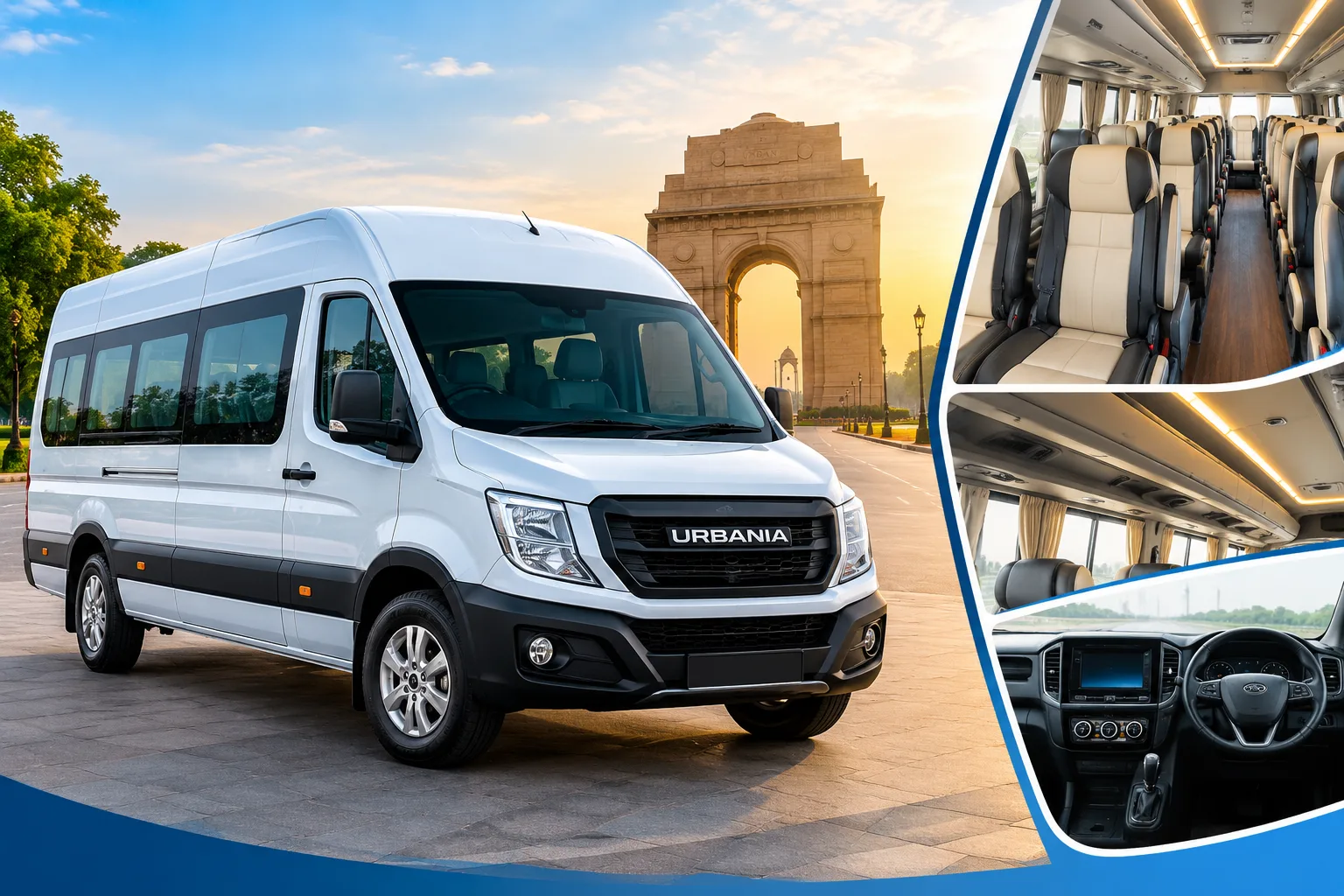
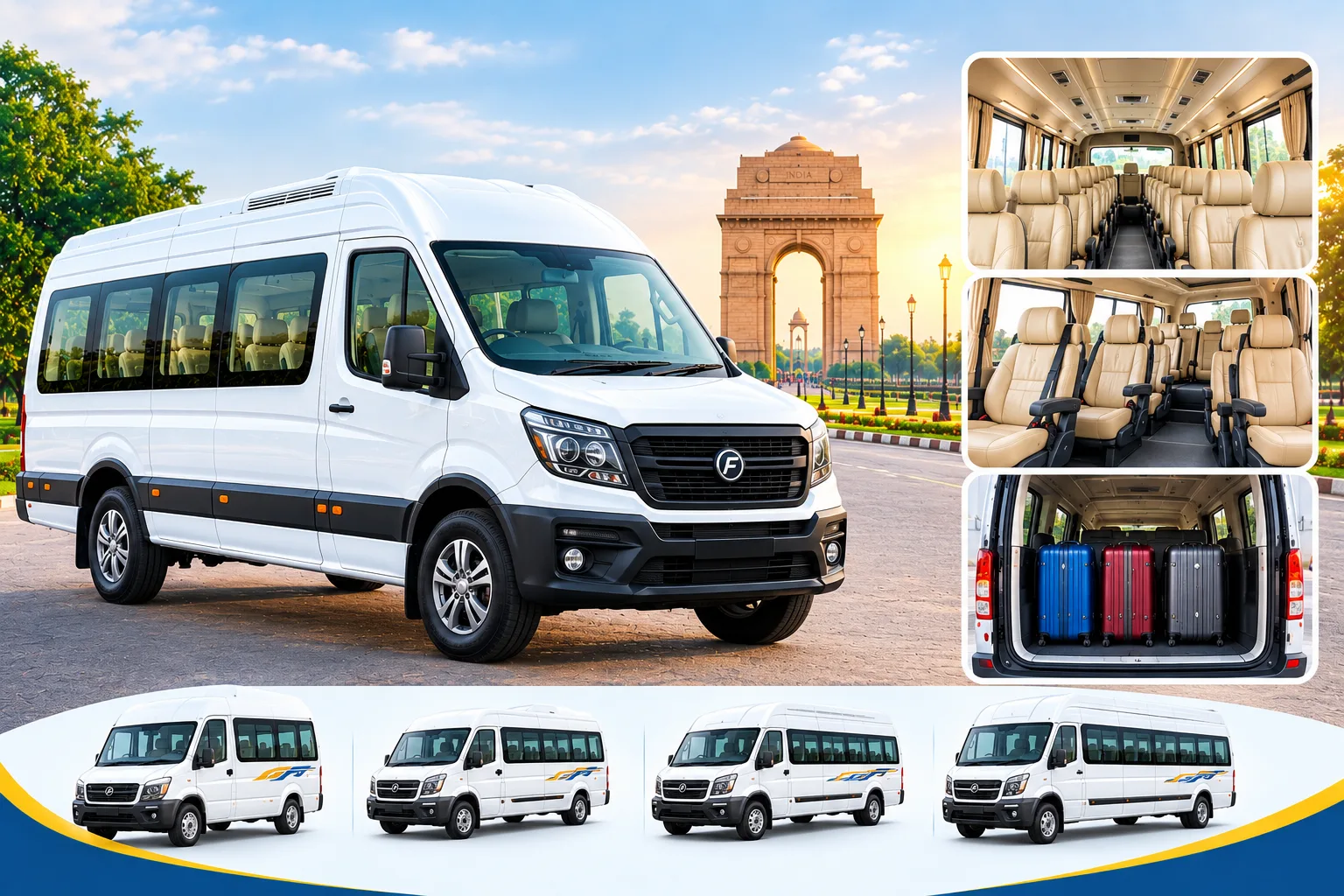
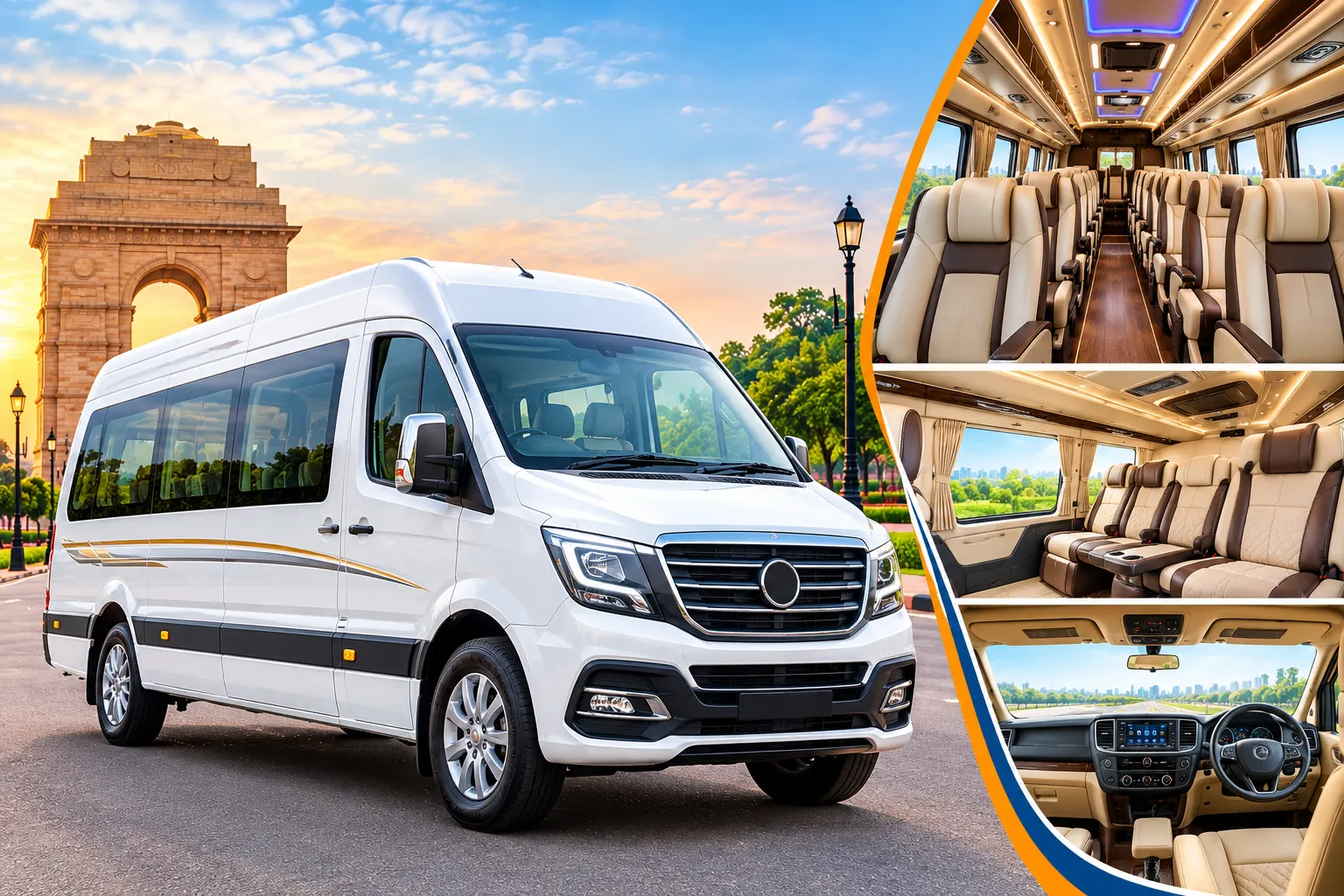
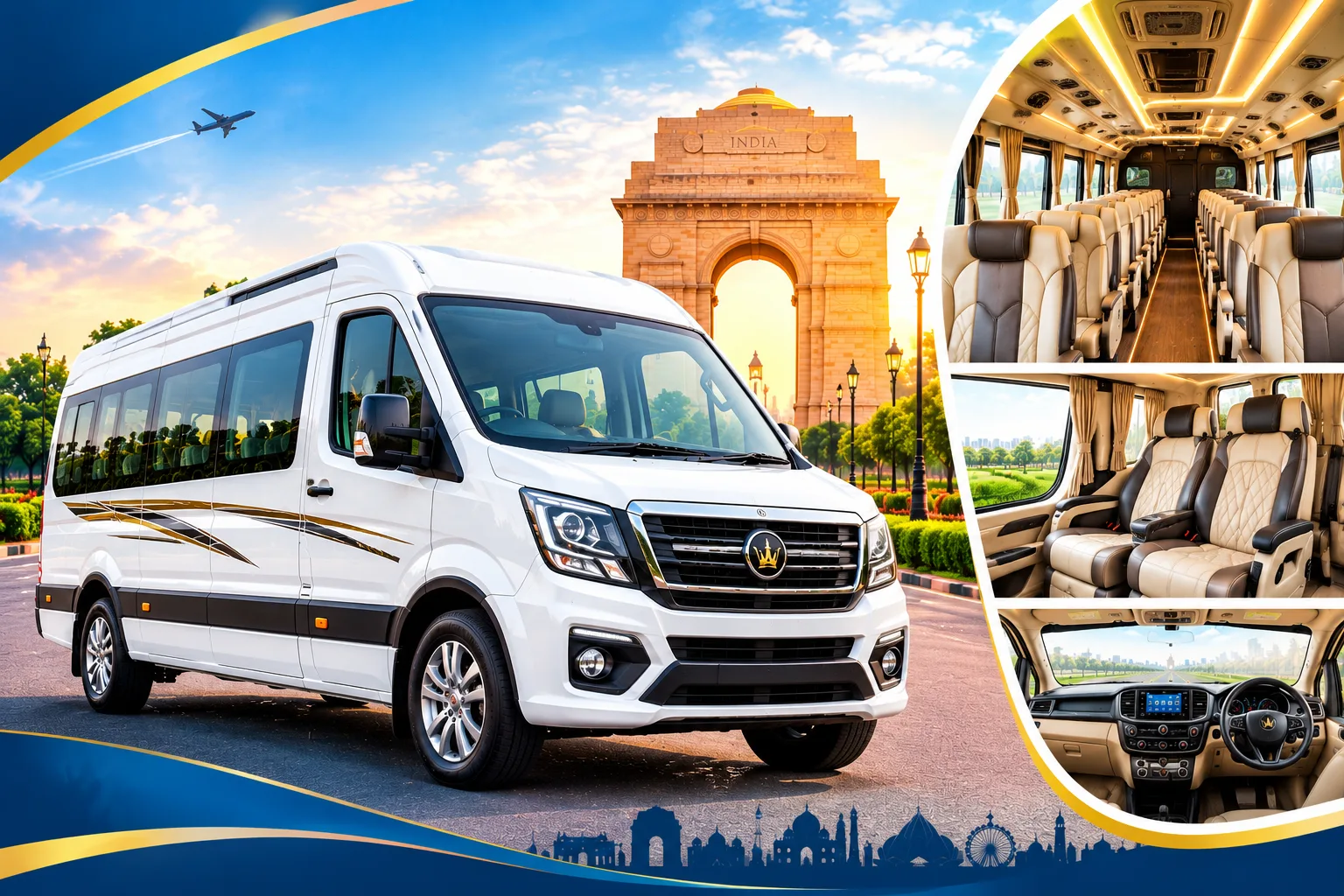
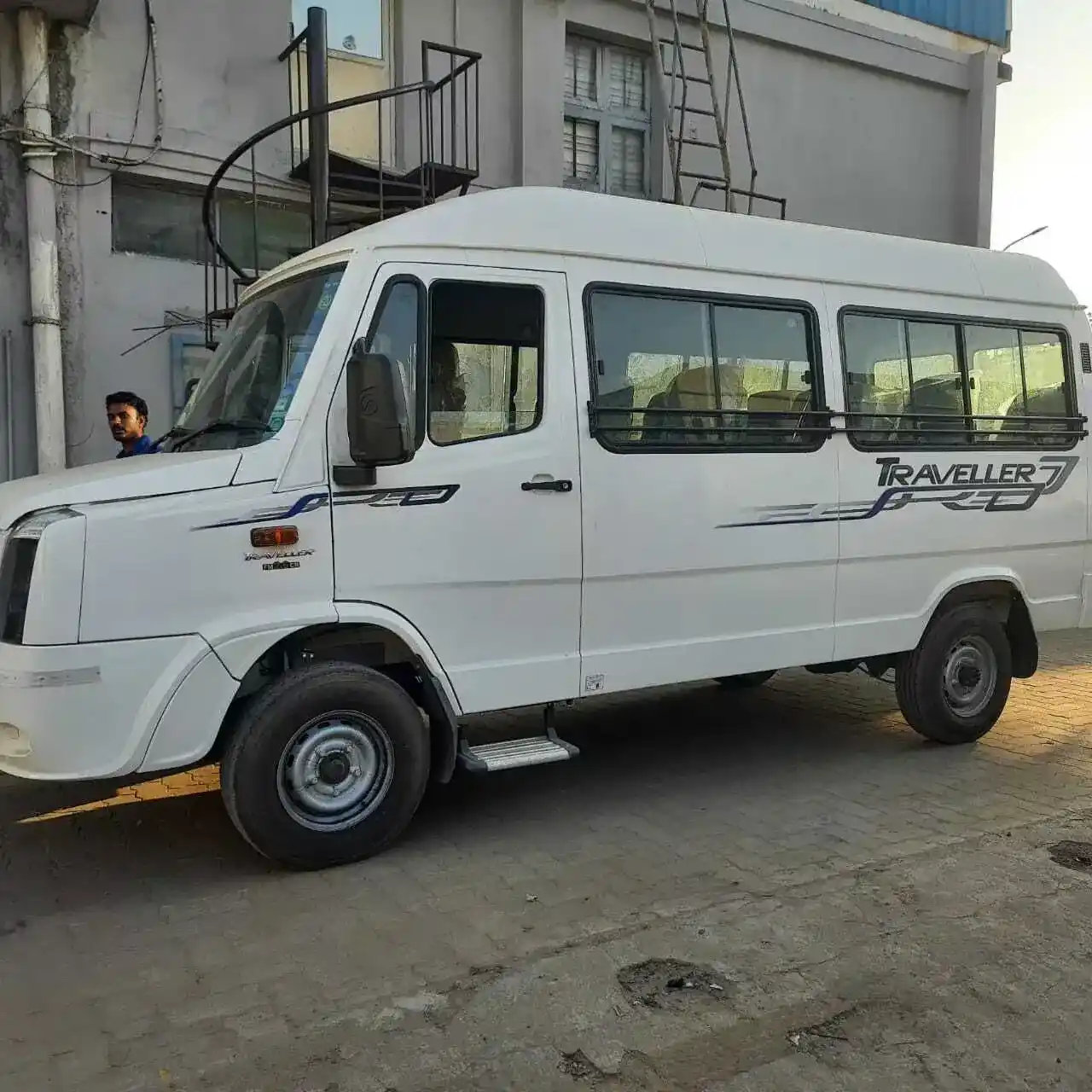
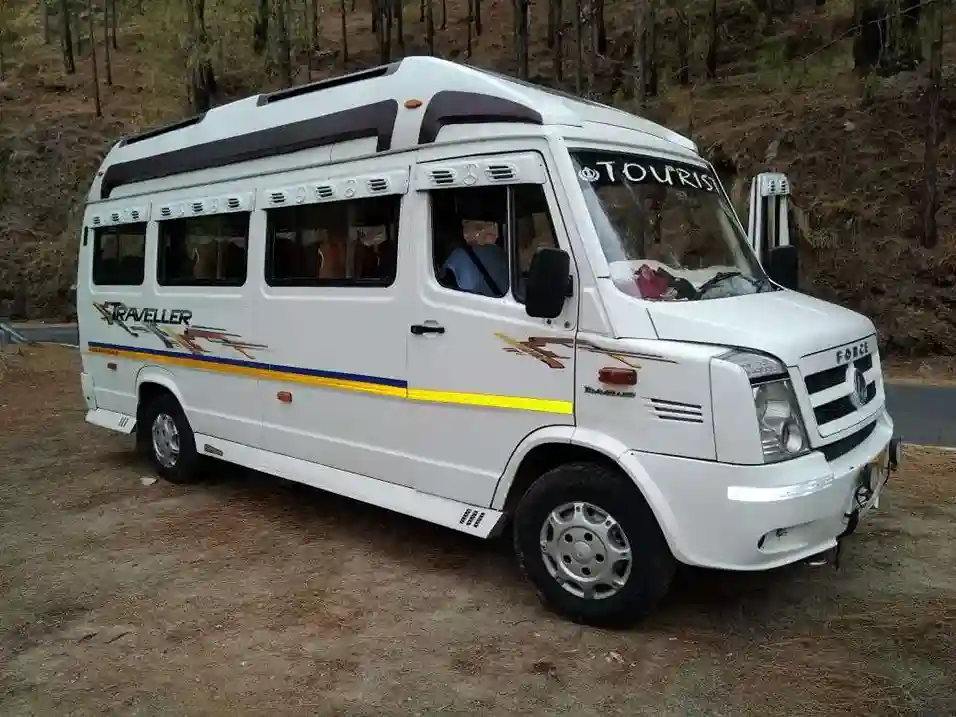
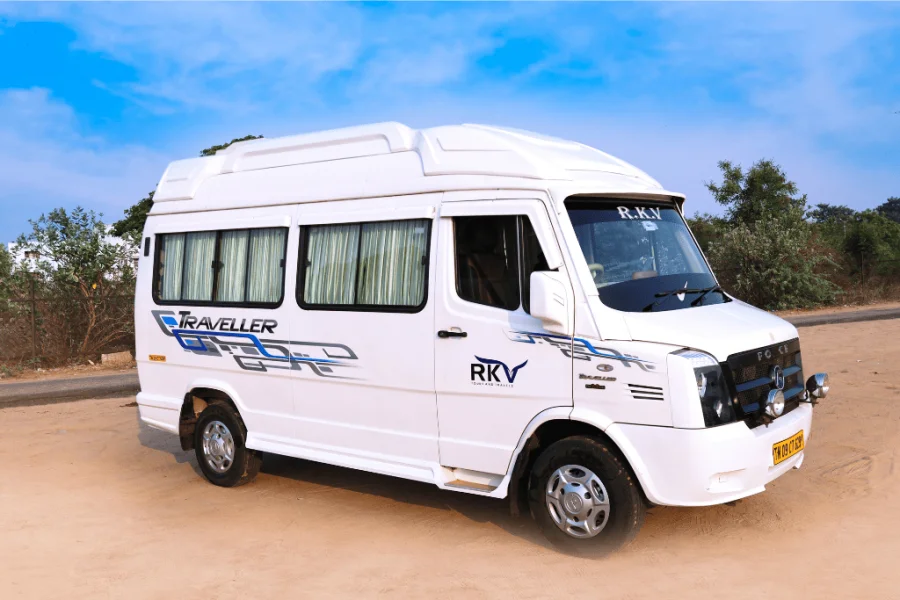
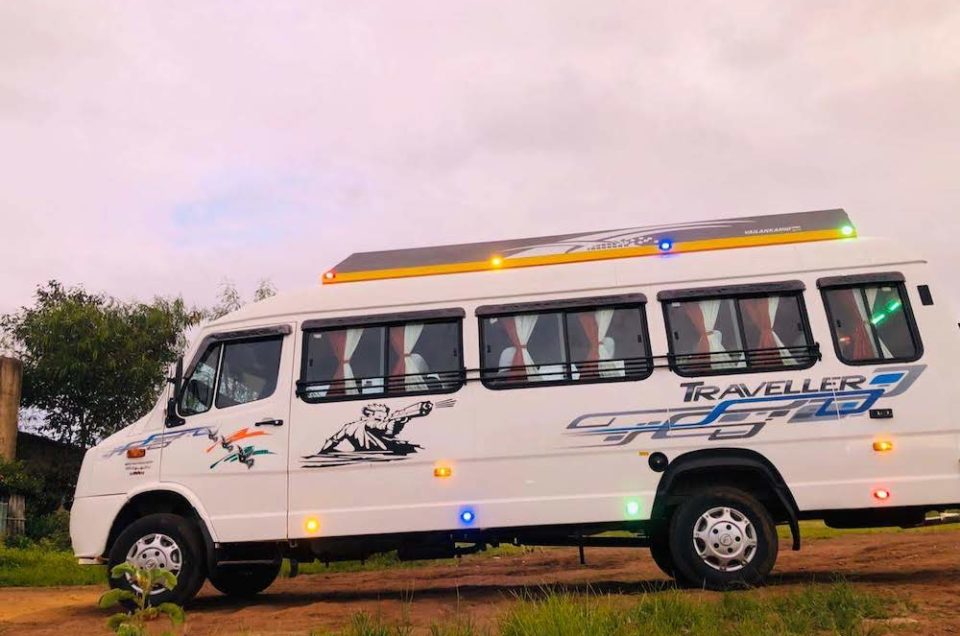
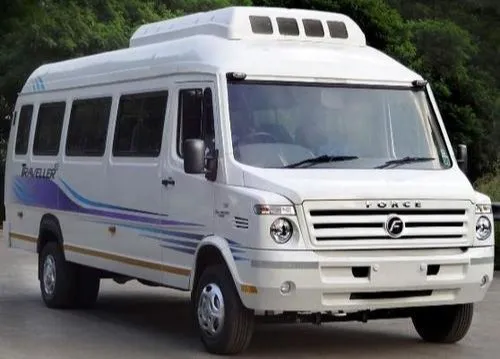
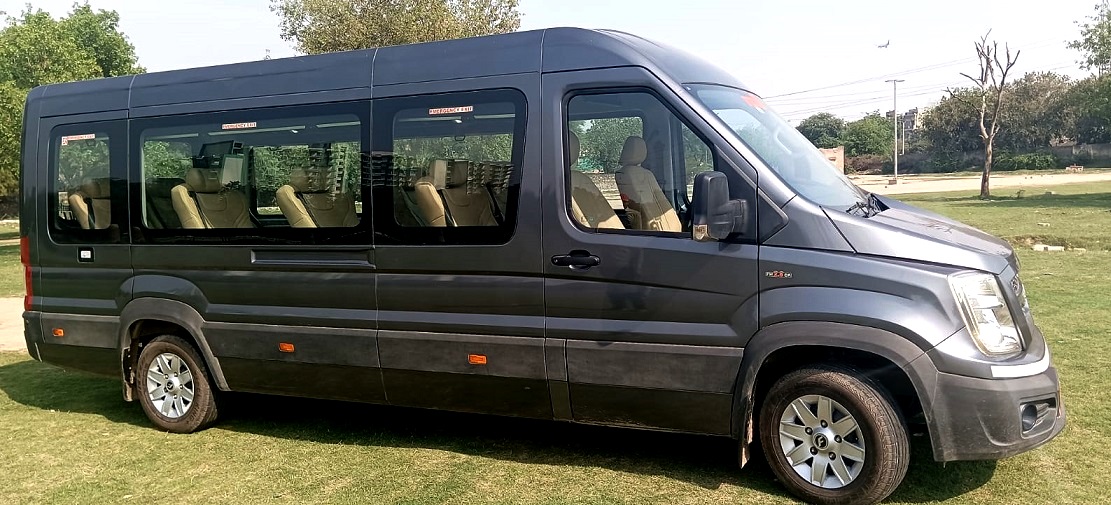
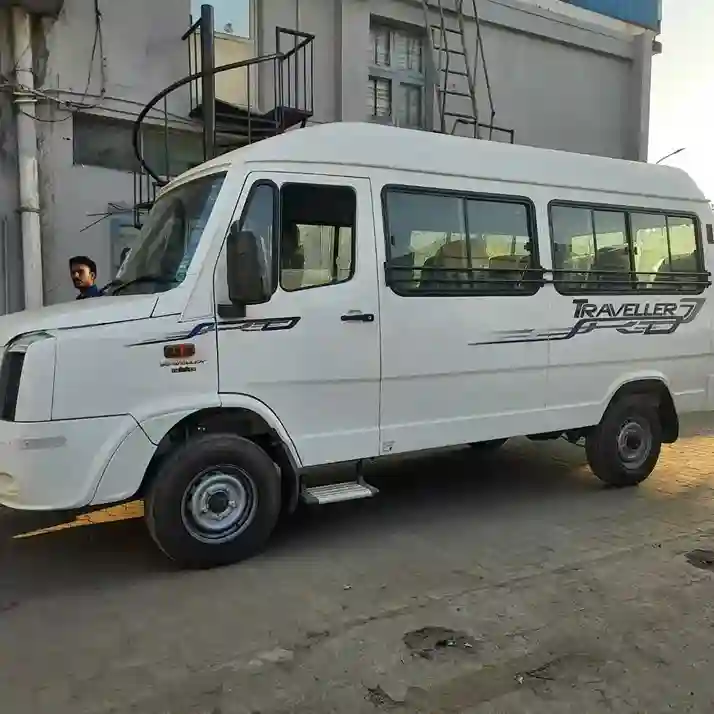
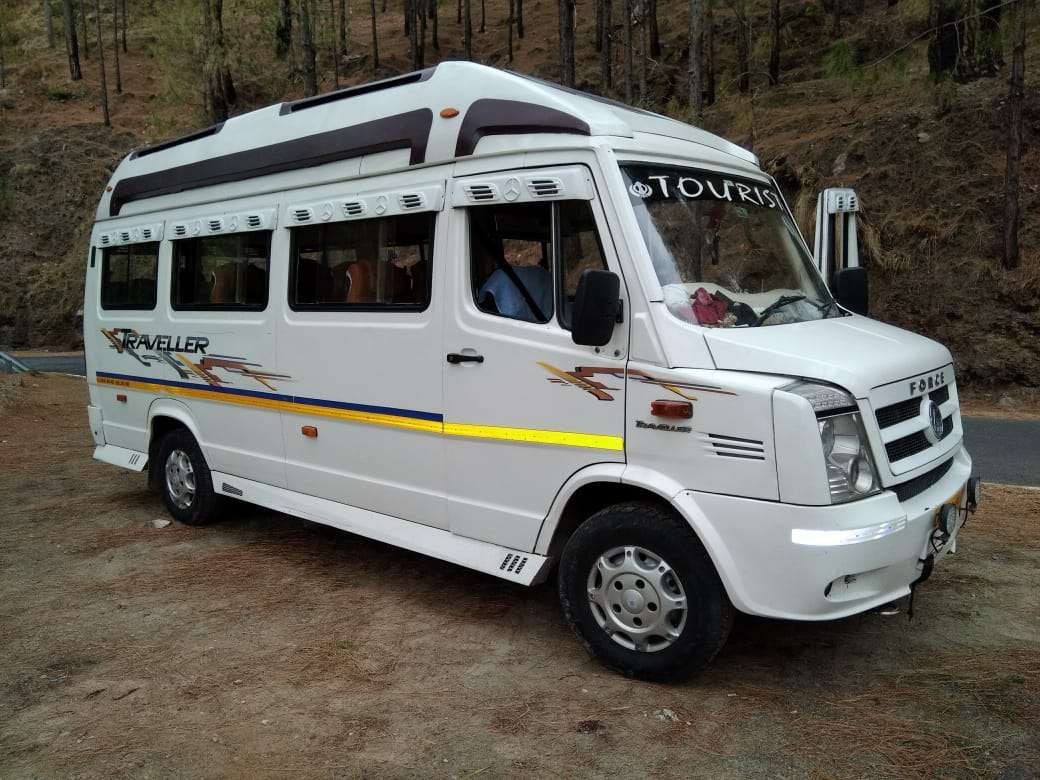
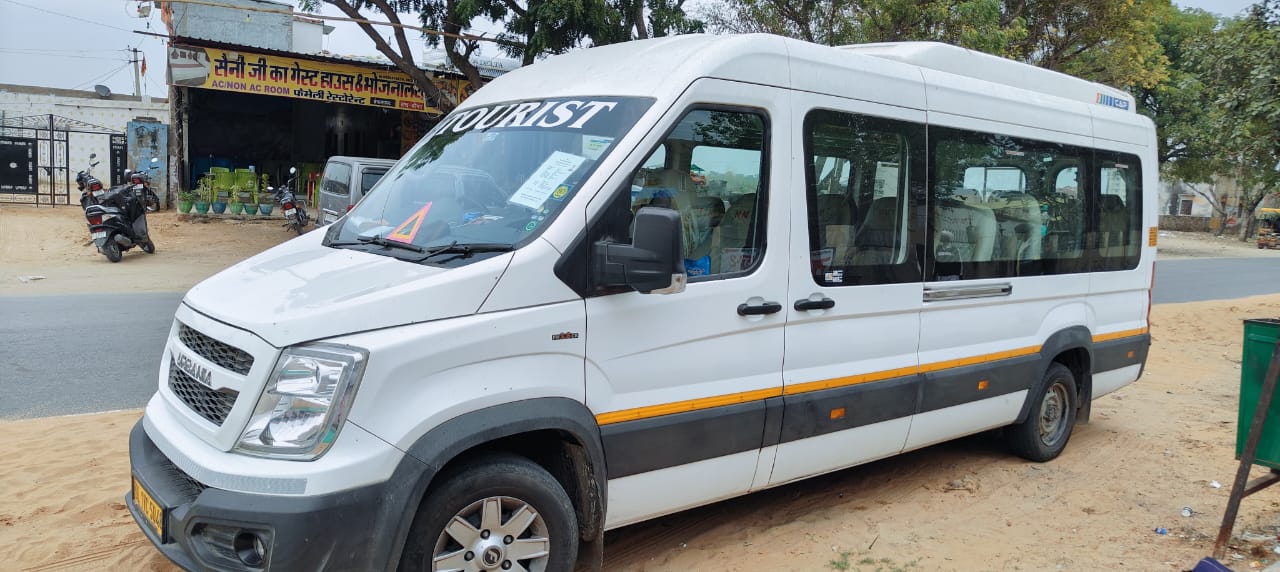
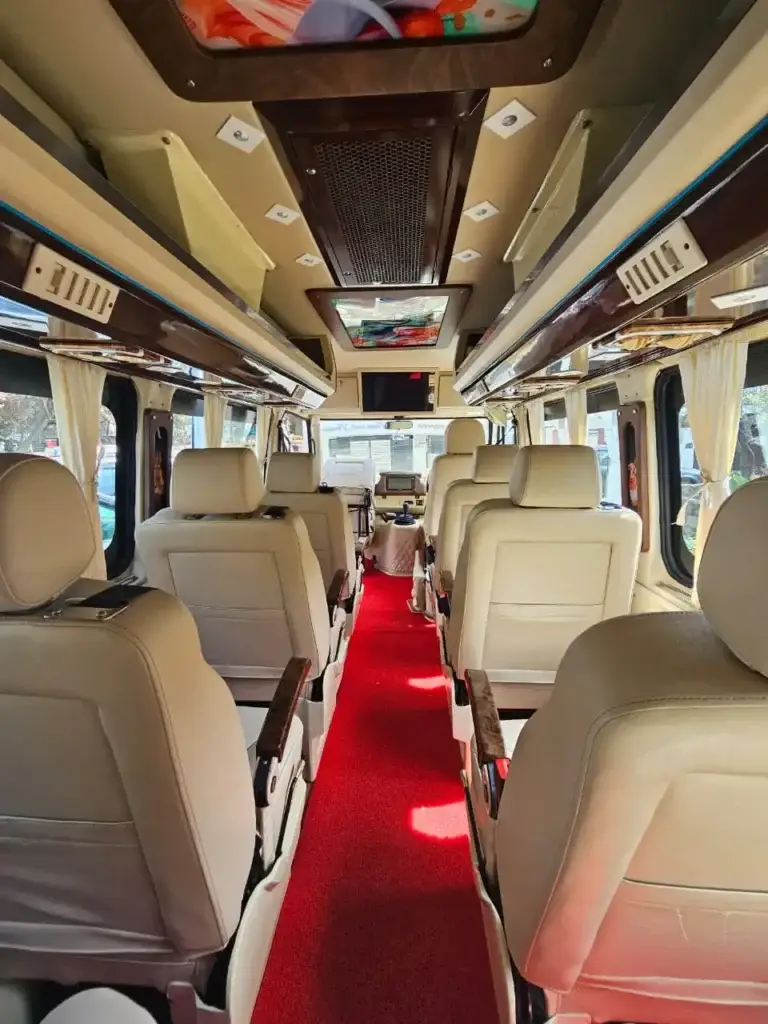
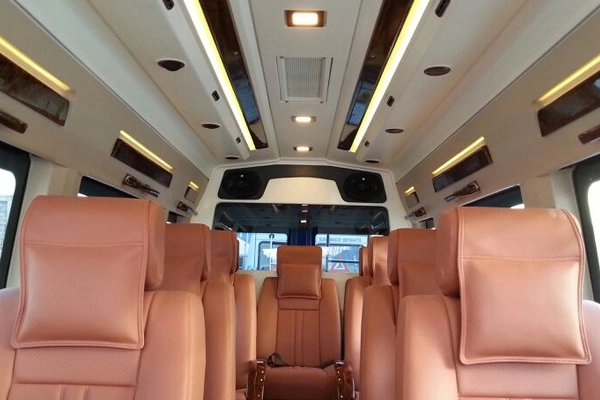
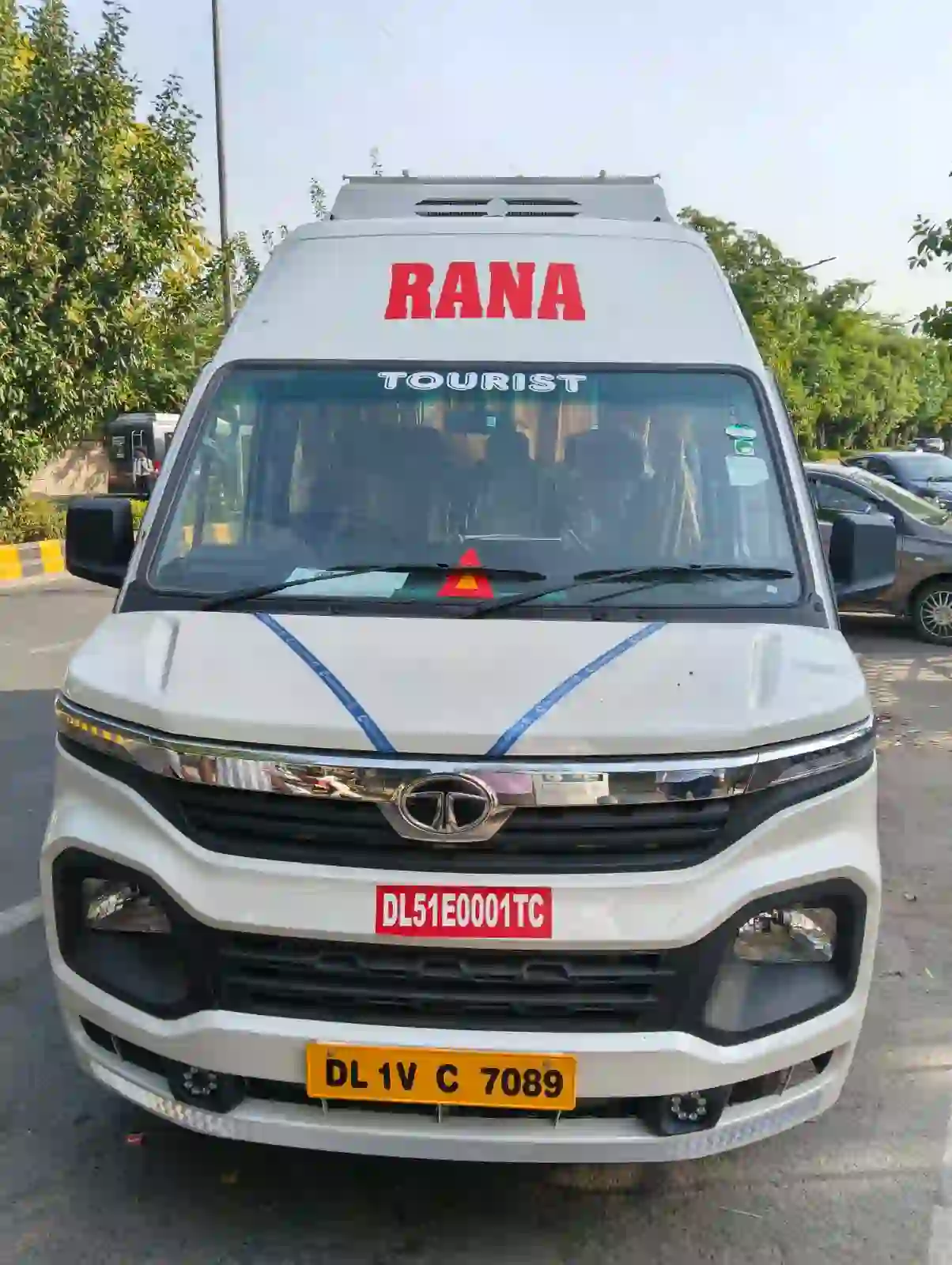
A tempo traveller is a mid-sized vehicle, typically seating anywhere from 9 to 26 passengers, used widely across India for group travel, outstation trips, and airport transfers. It sits in a comfortable middle ground between a private cab, which is too small for larger groups, and a full-sized bus, which can feel impersonal and less flexible for smaller group sizes. The "luxury" category specifically refers to vehicles with upgraded interiors — pushback seats, better legroom, LED lighting, entertainment systems, and sometimes onboard charging points — as opposed to the standard non-AC or basic AC versions used for shorter local trips. Because the interior layout and finish vary so much between operators, it's worth actually seeing photos or a video of the specific vehicle before assuming "luxury" means the same thing across the board.
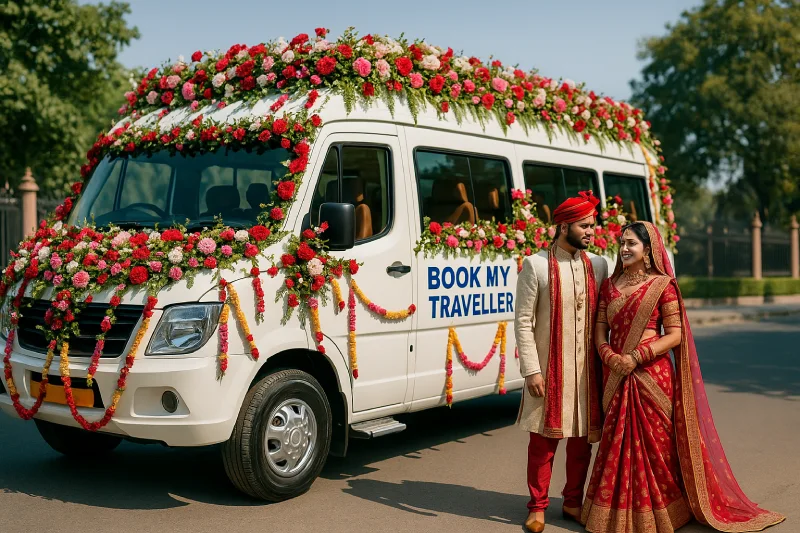
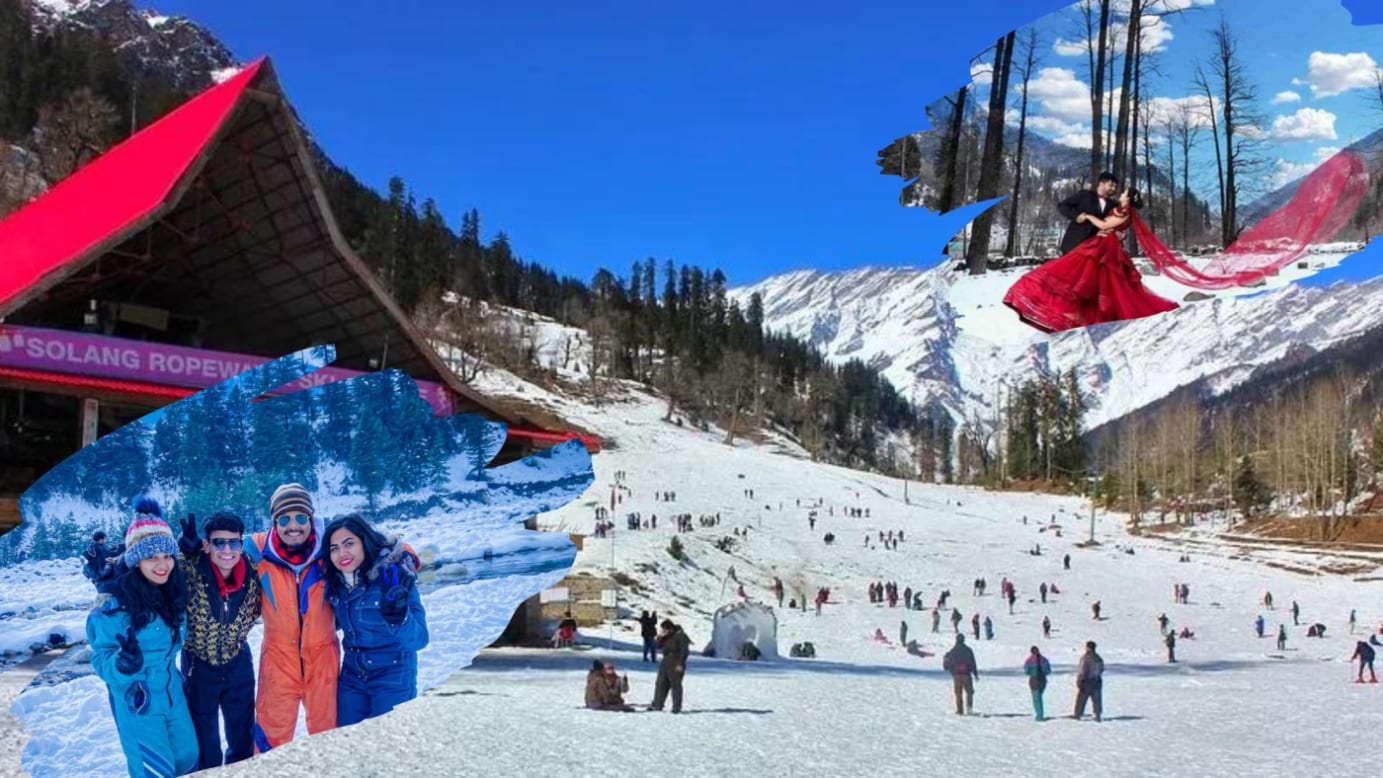
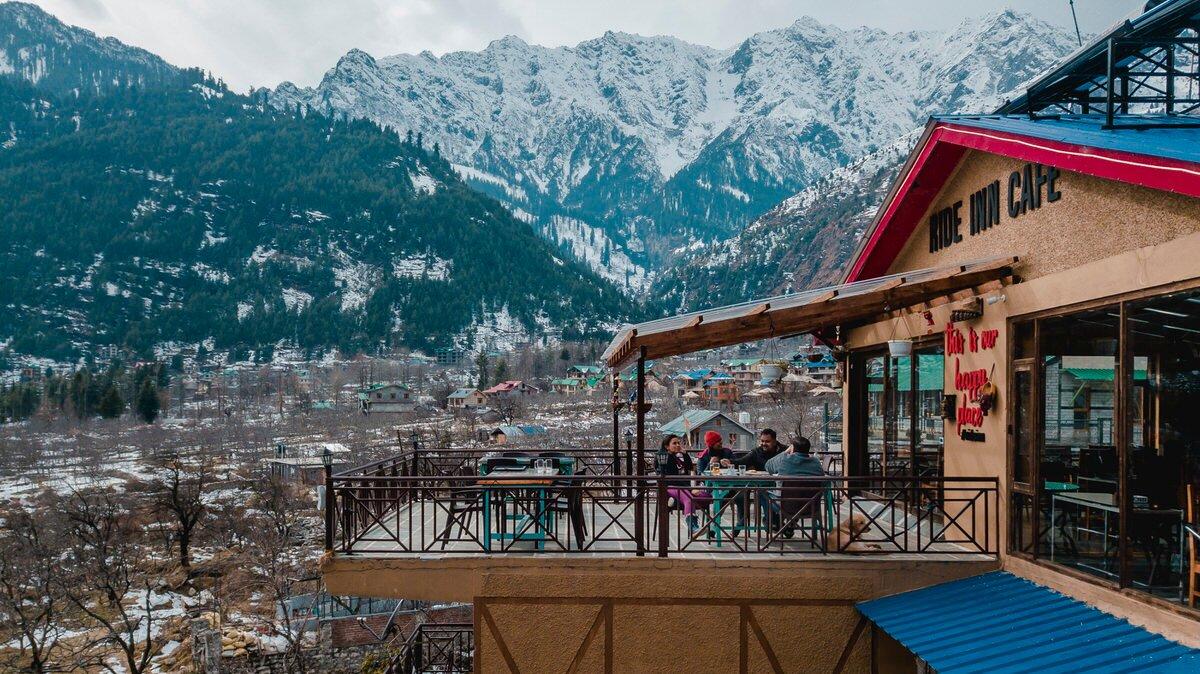
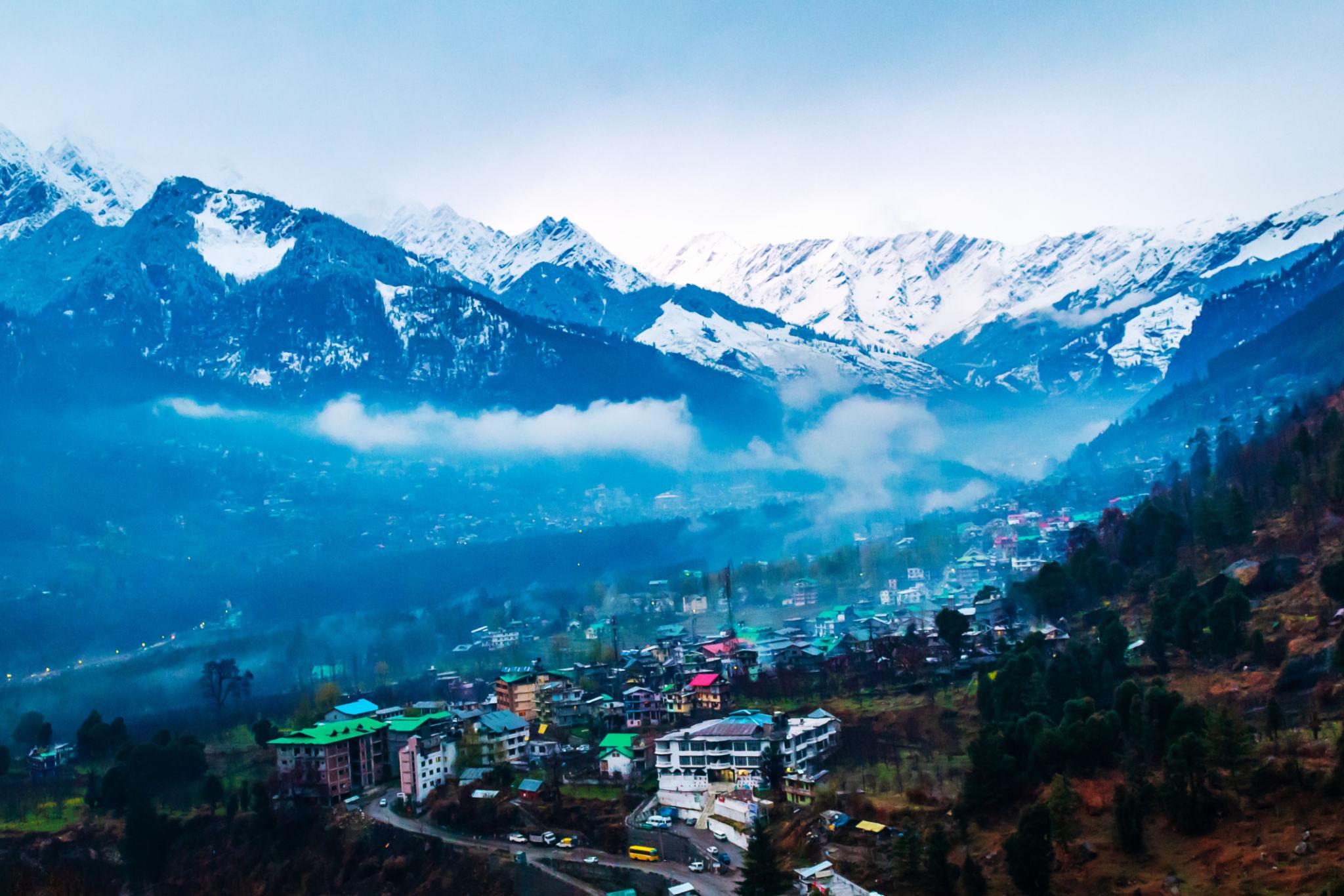
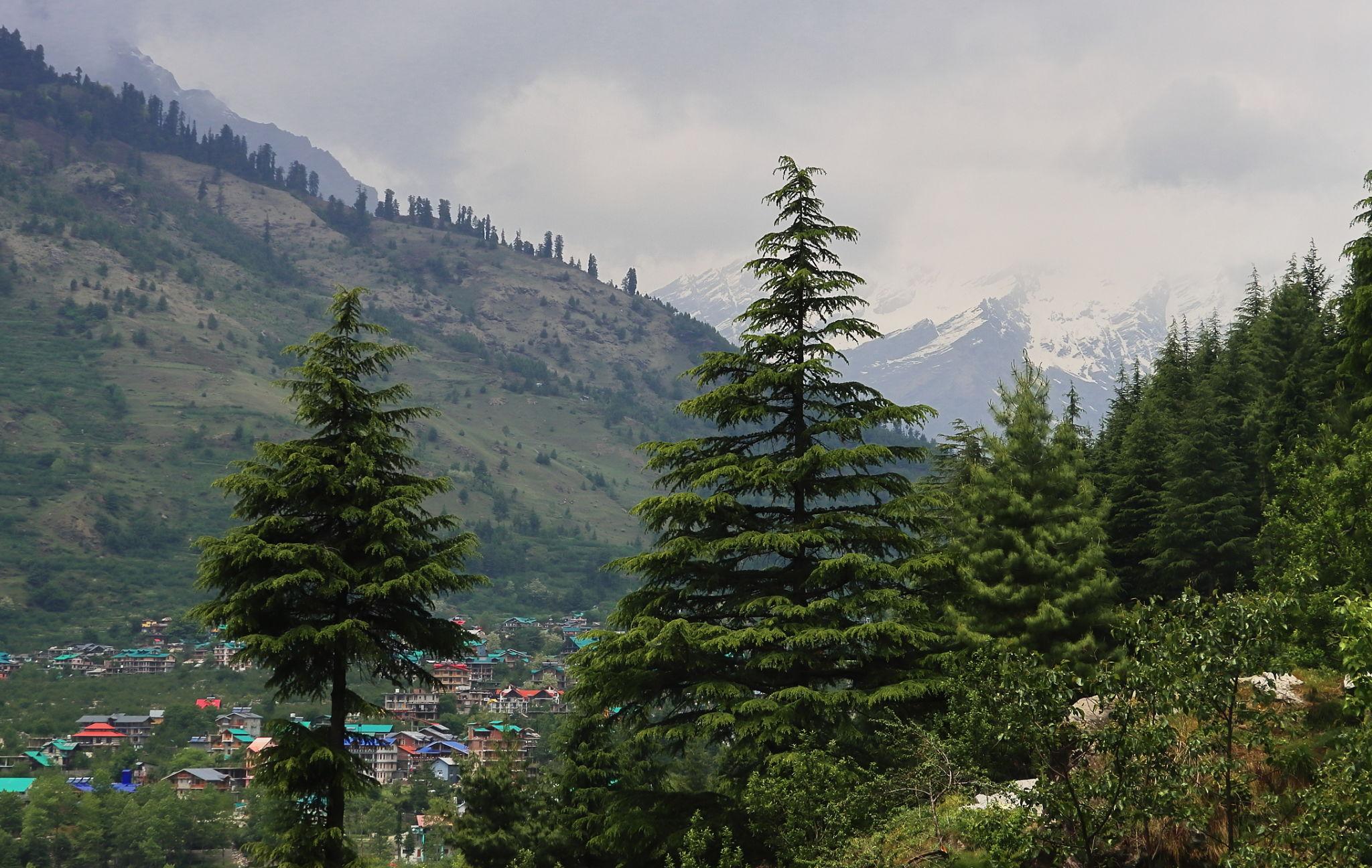
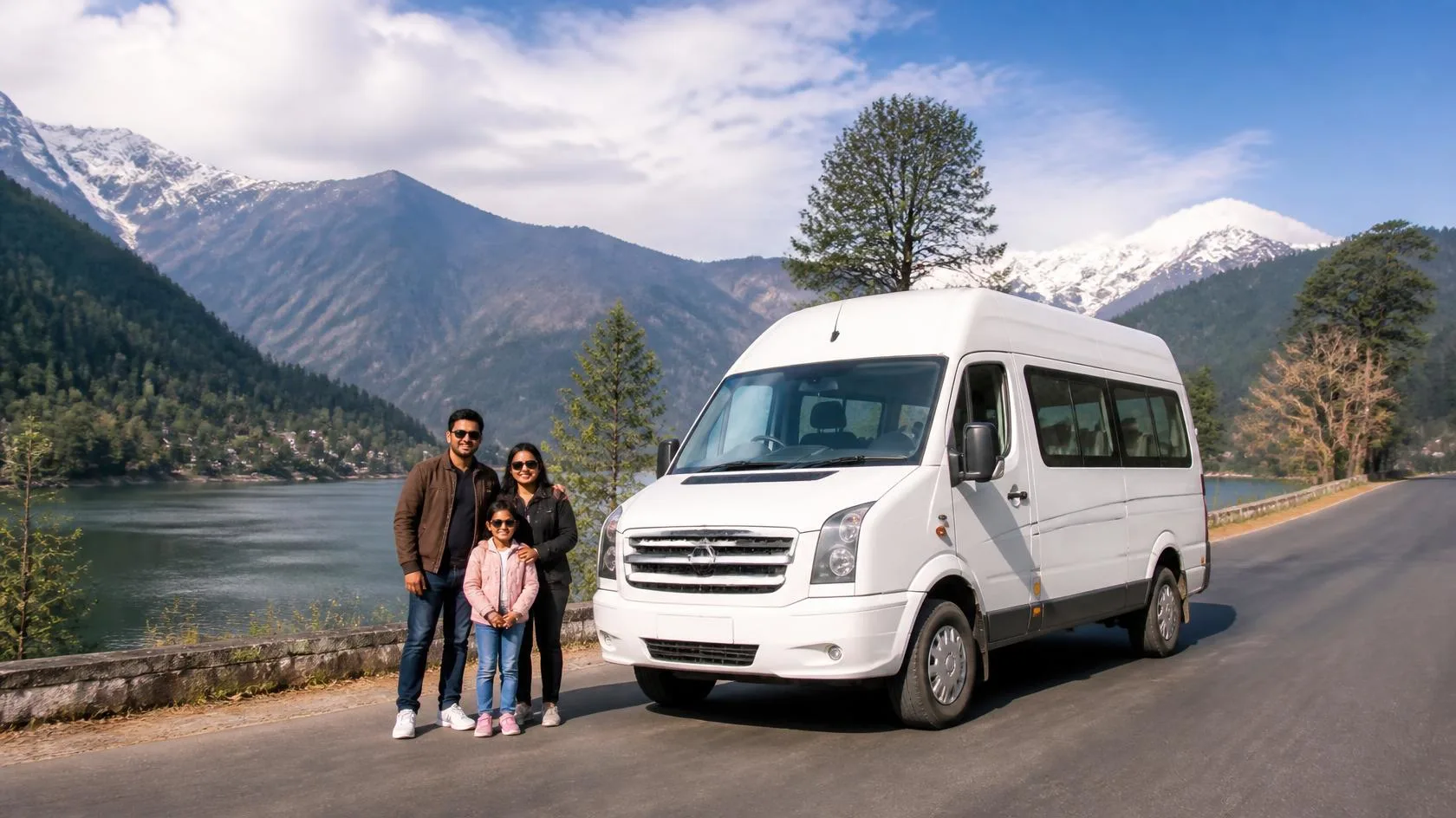
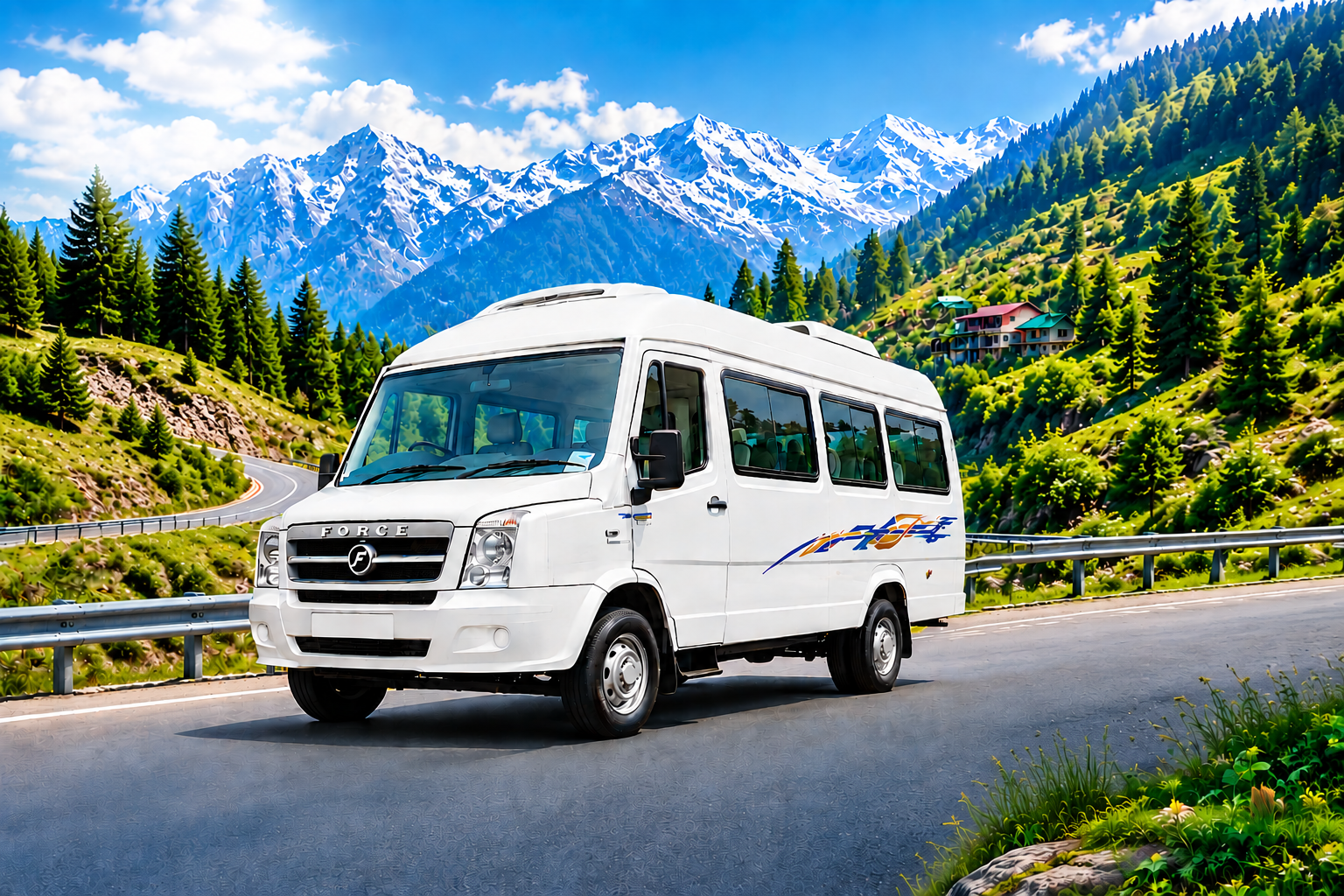
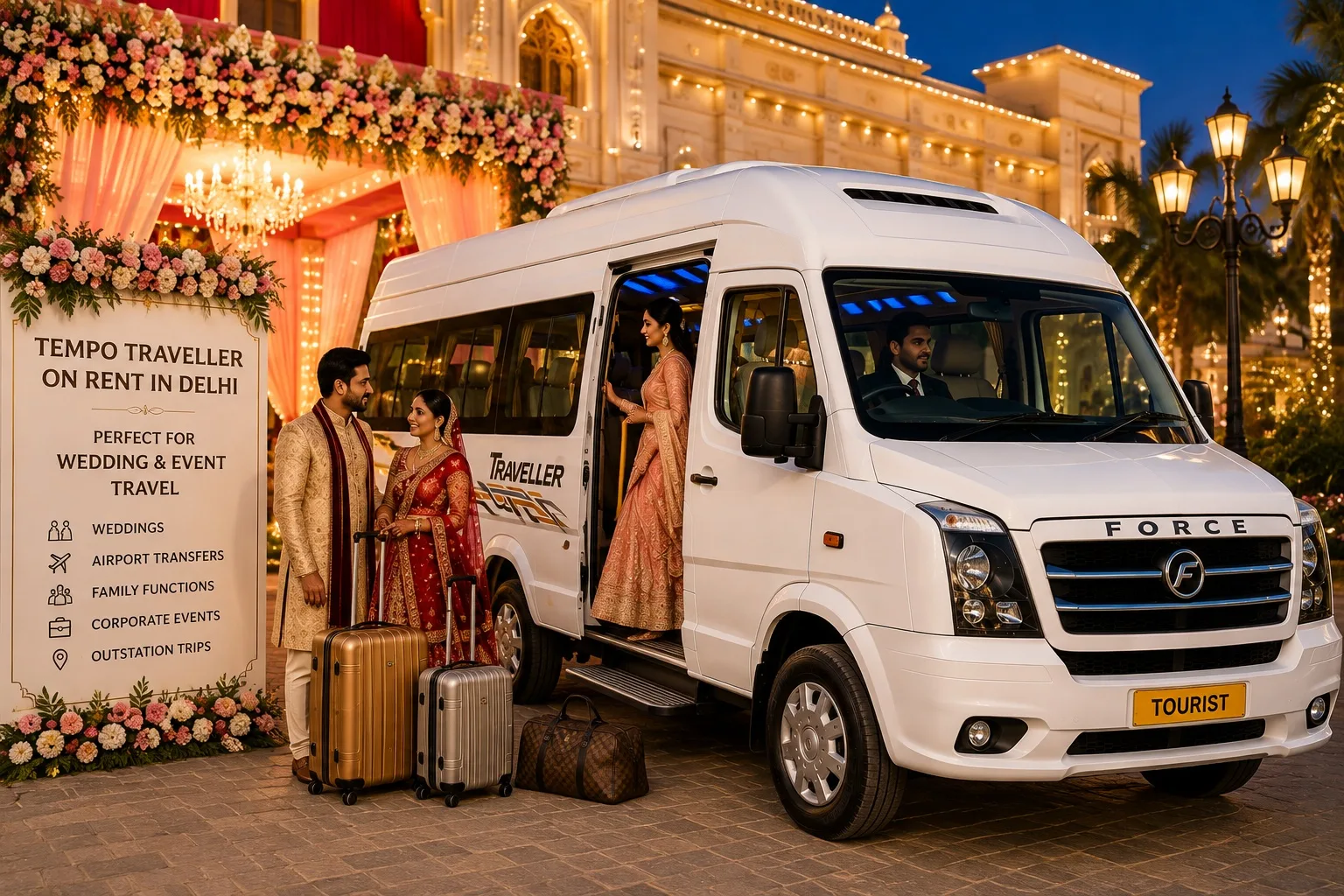
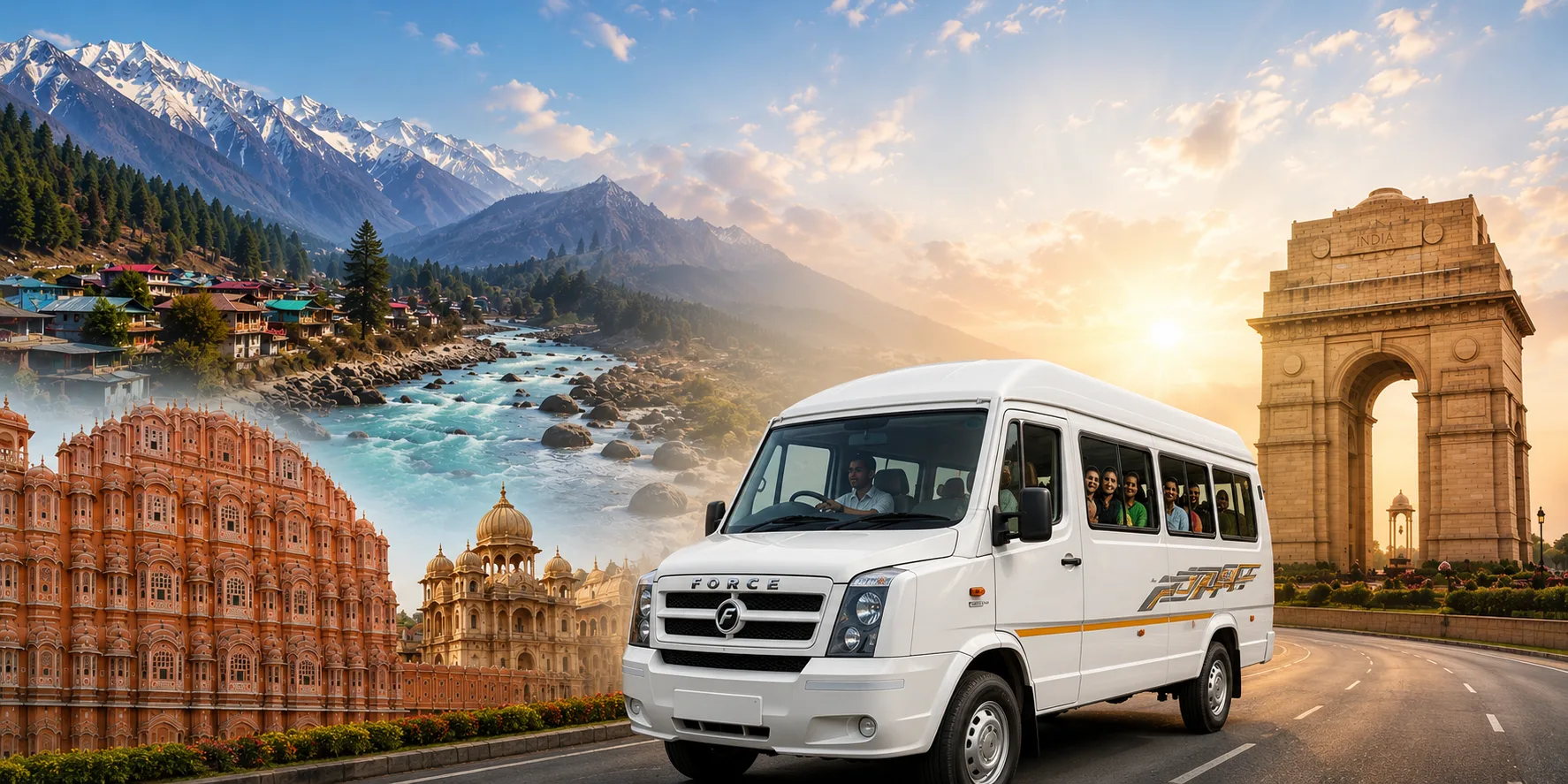
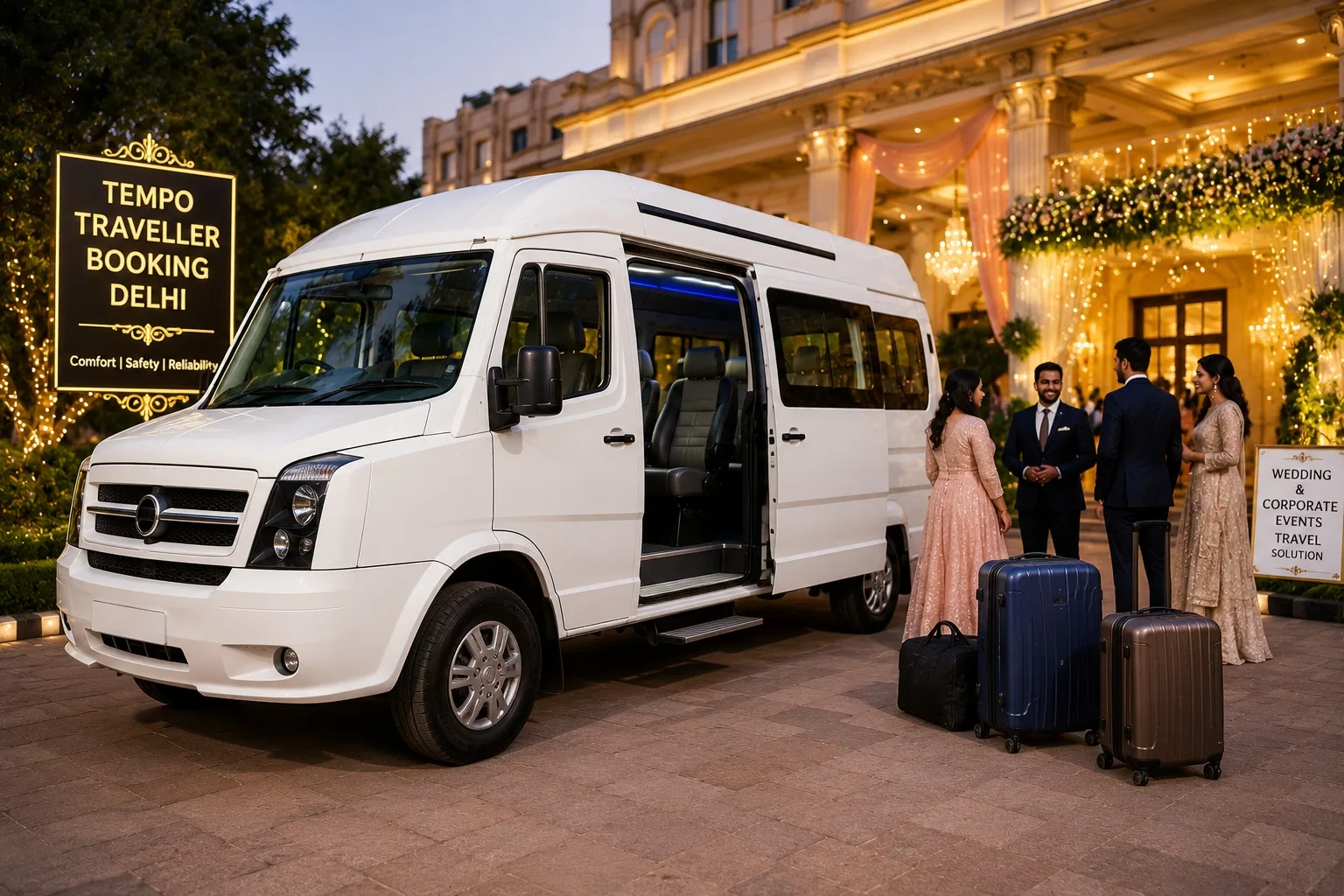
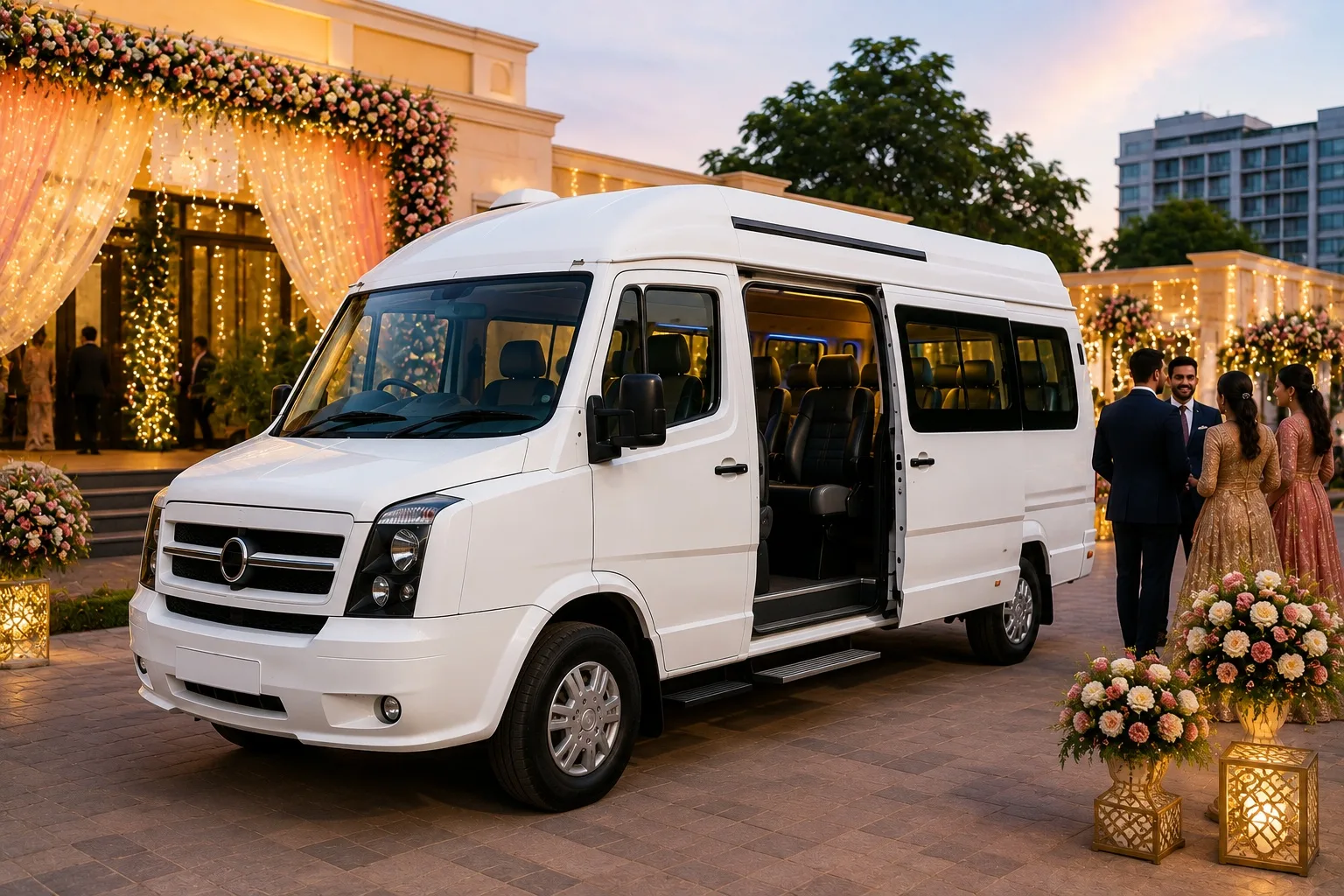
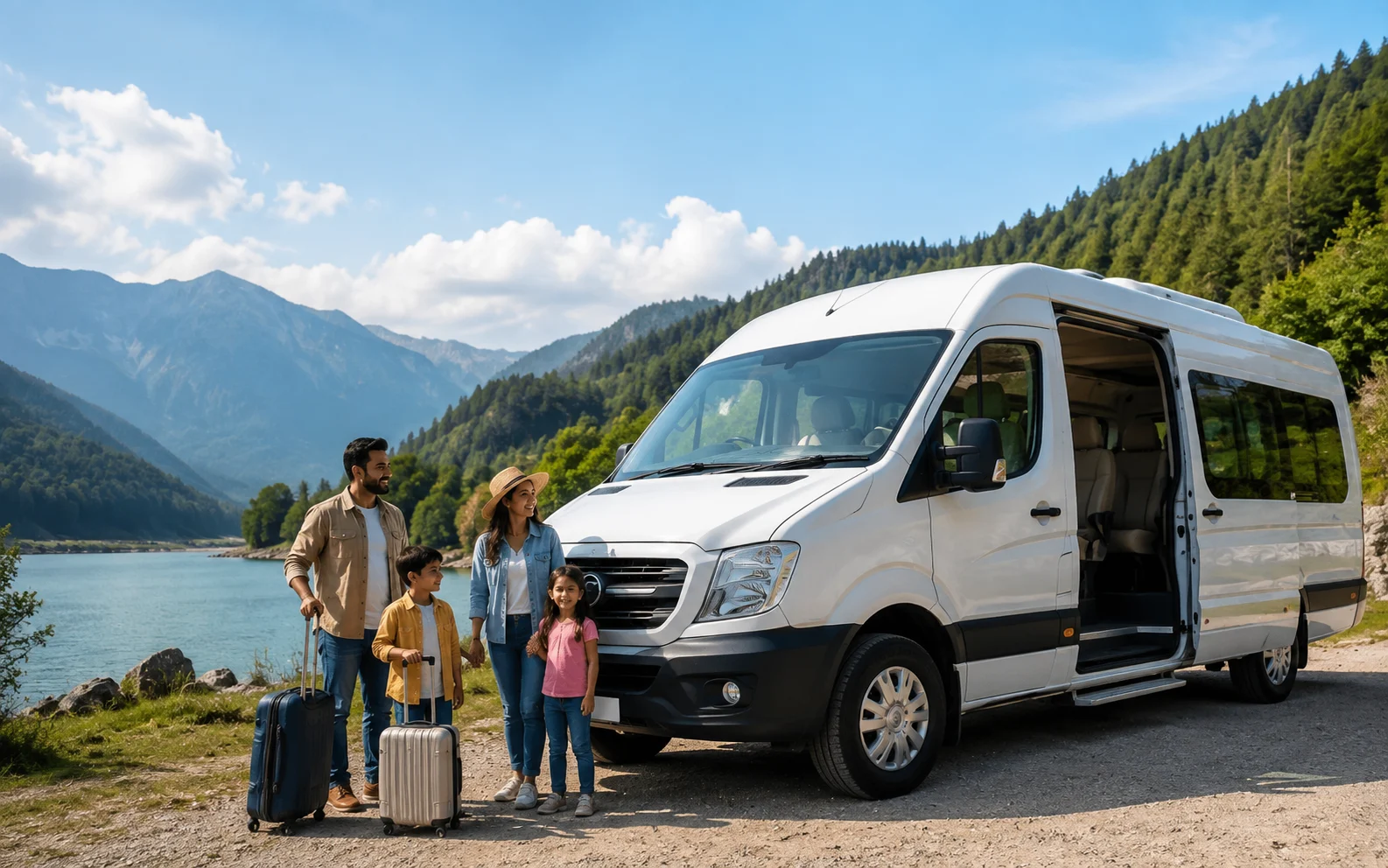
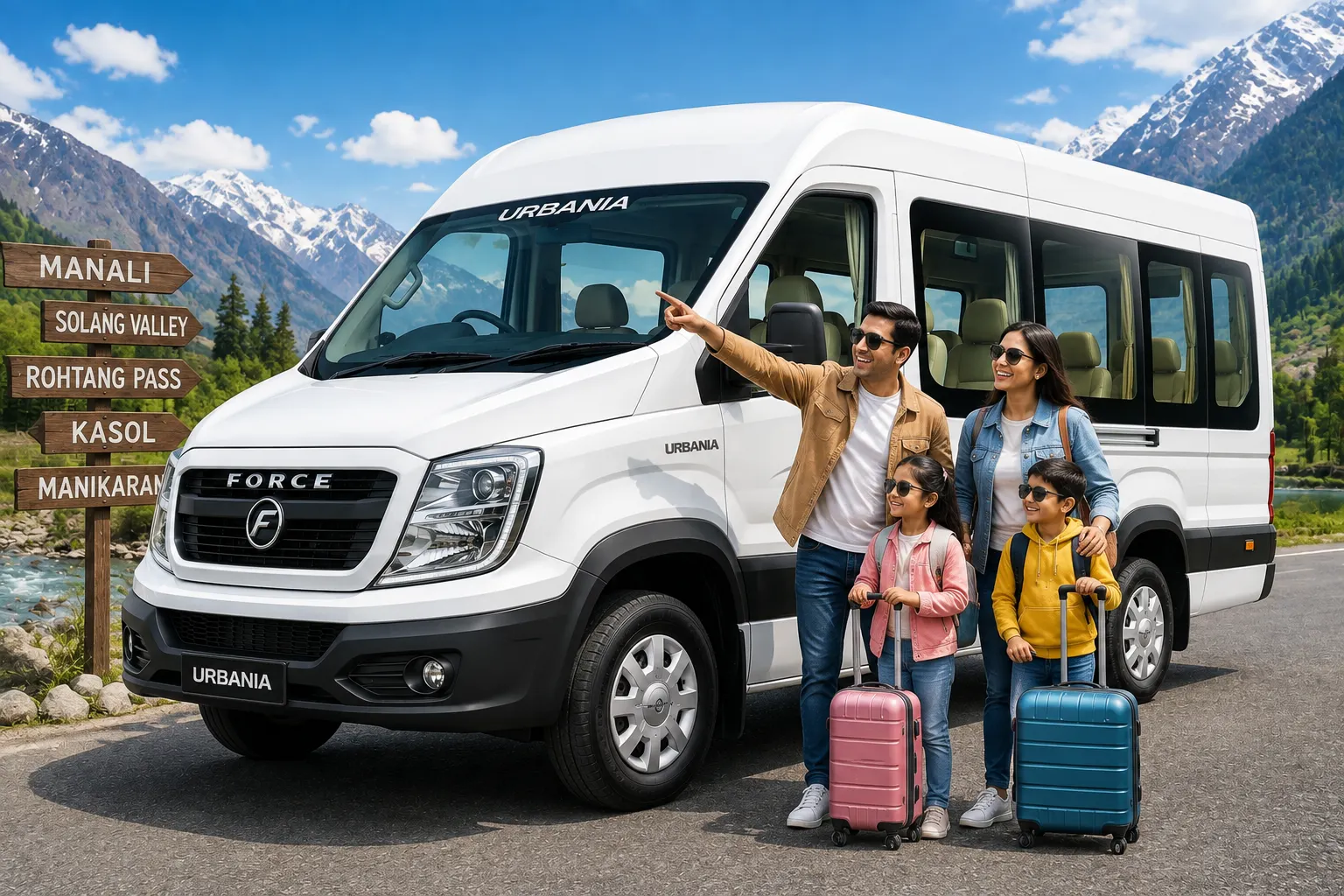
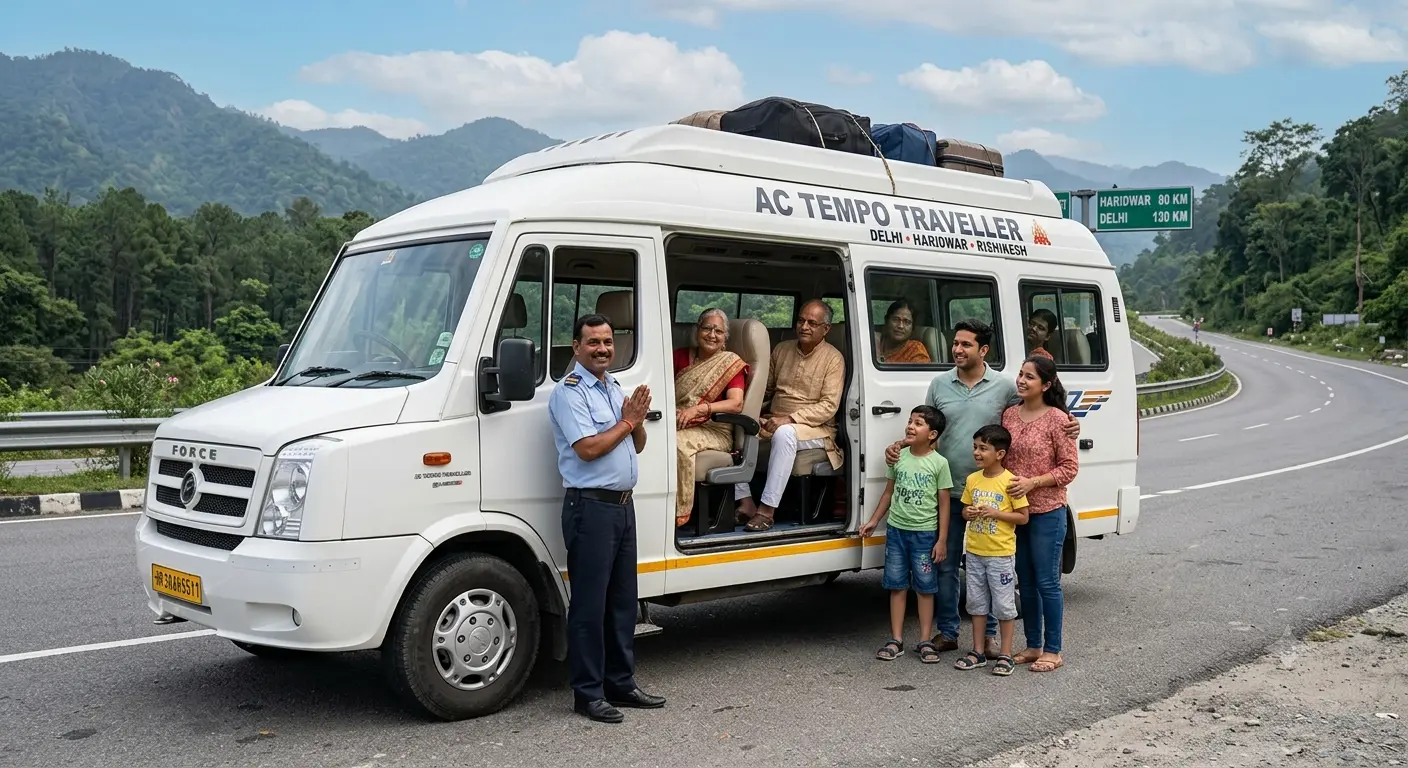
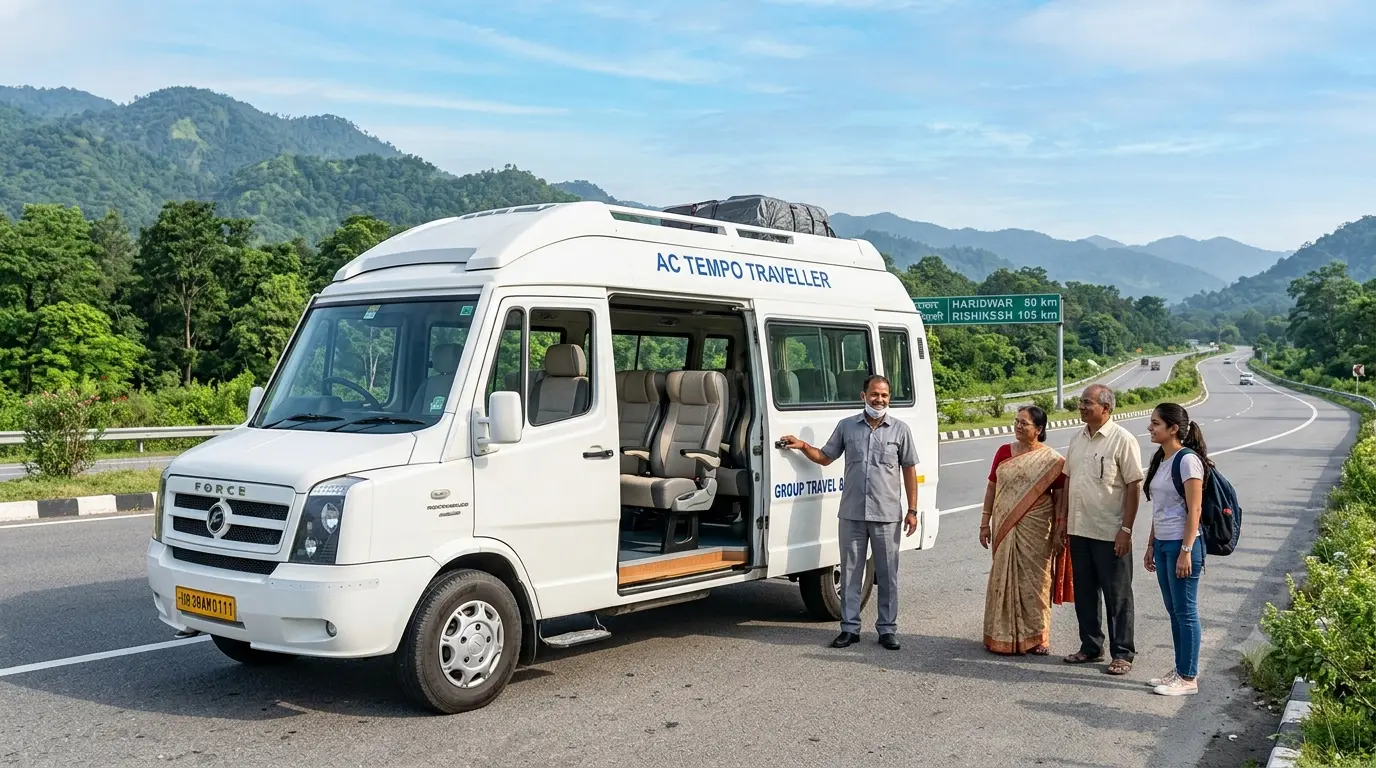
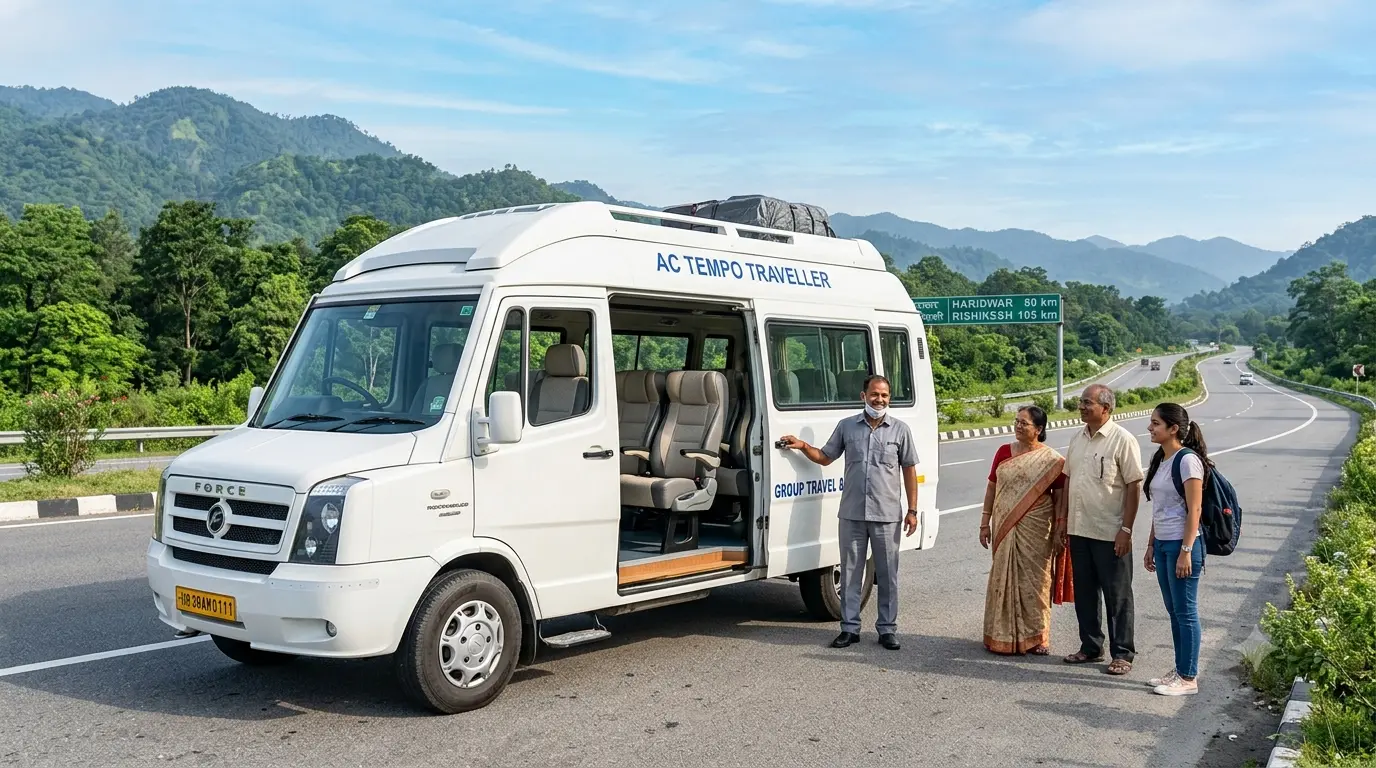
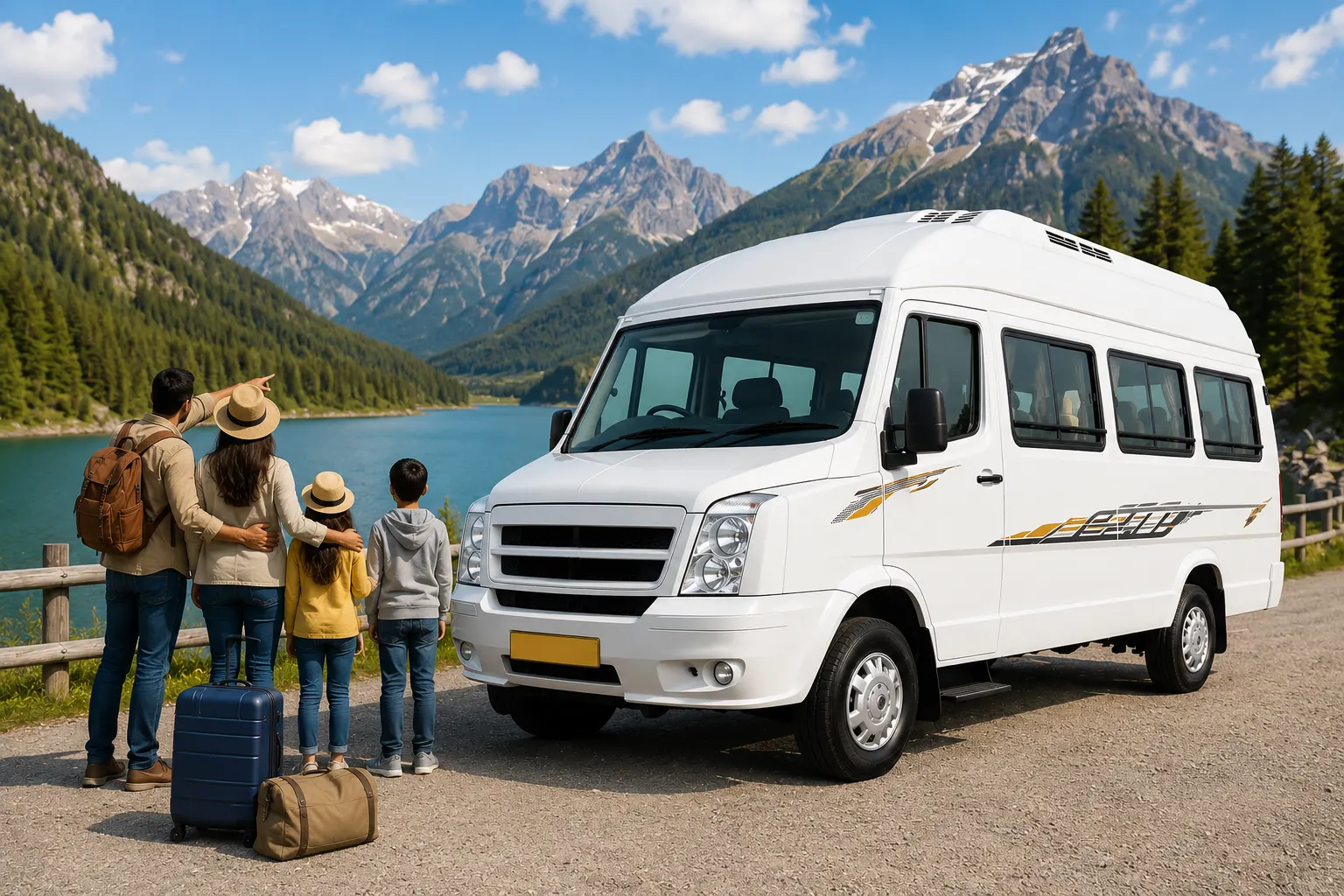
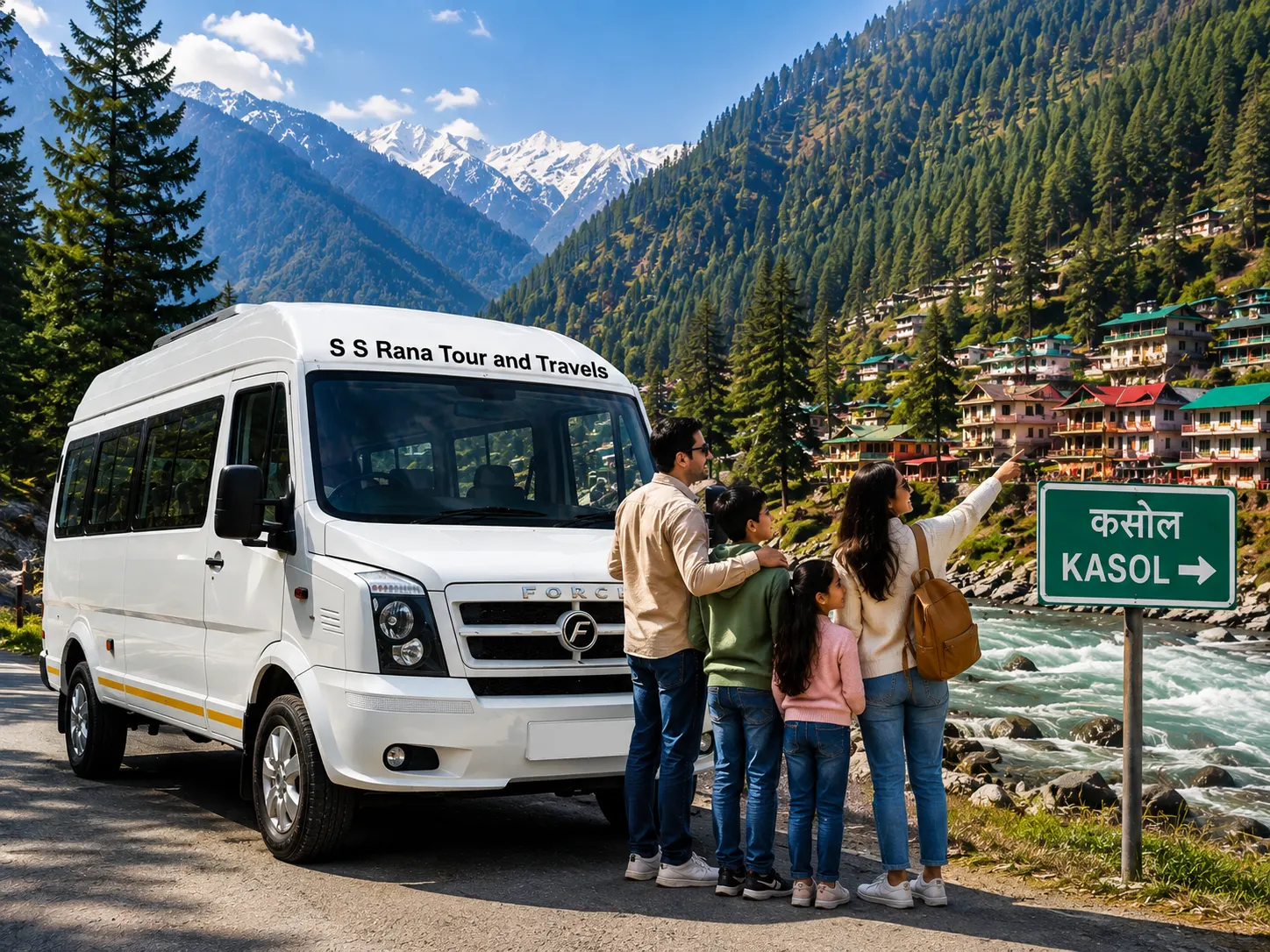
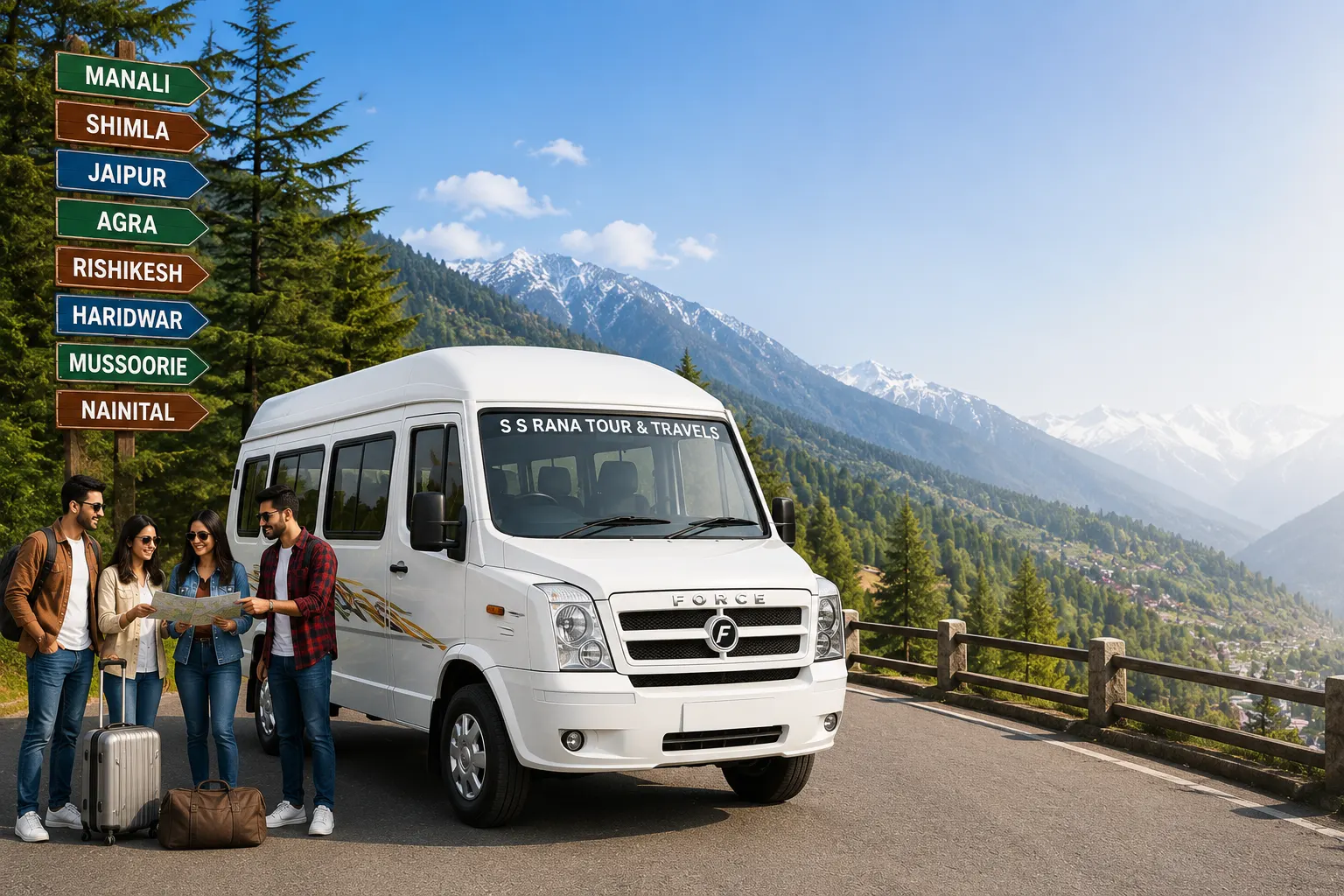
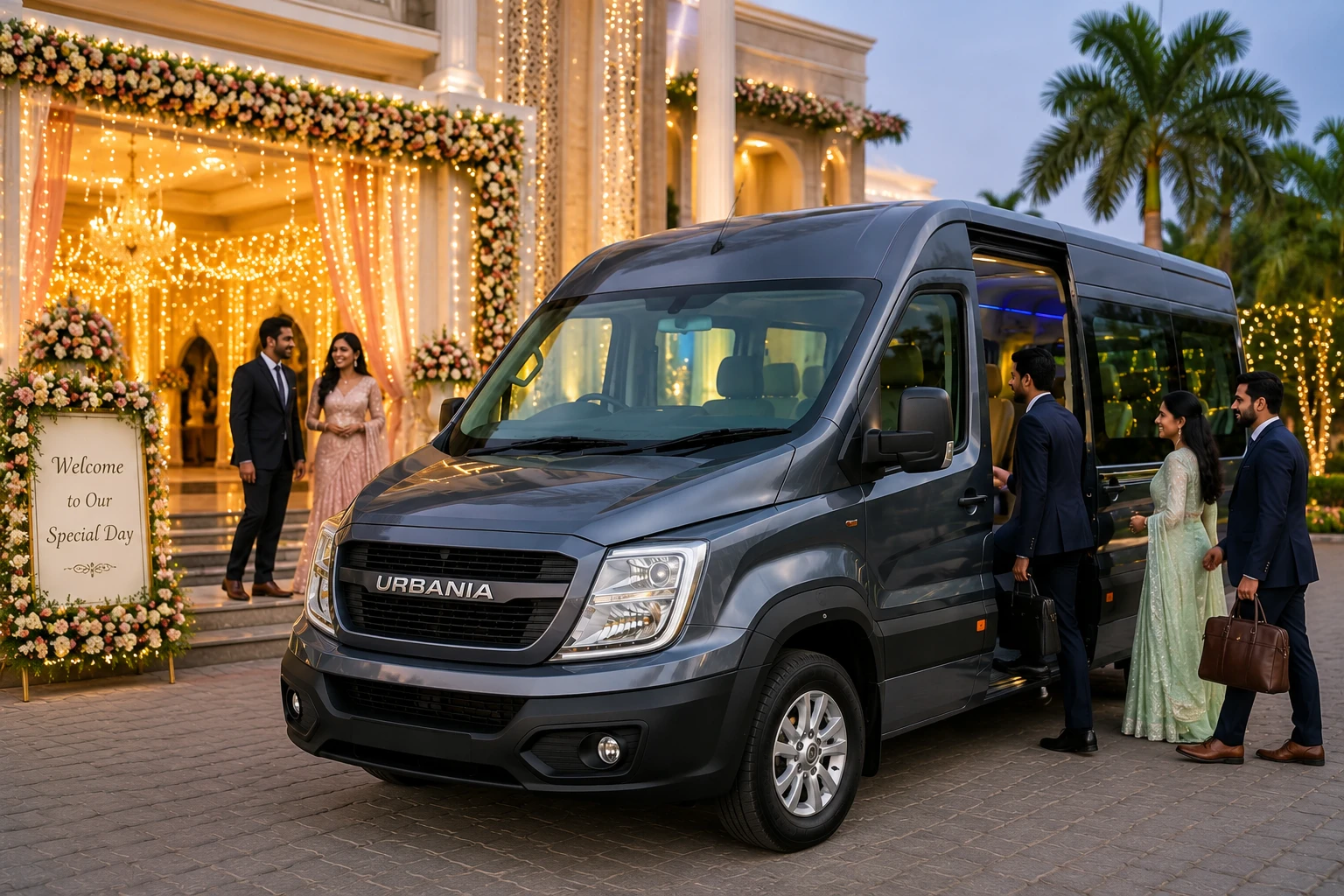
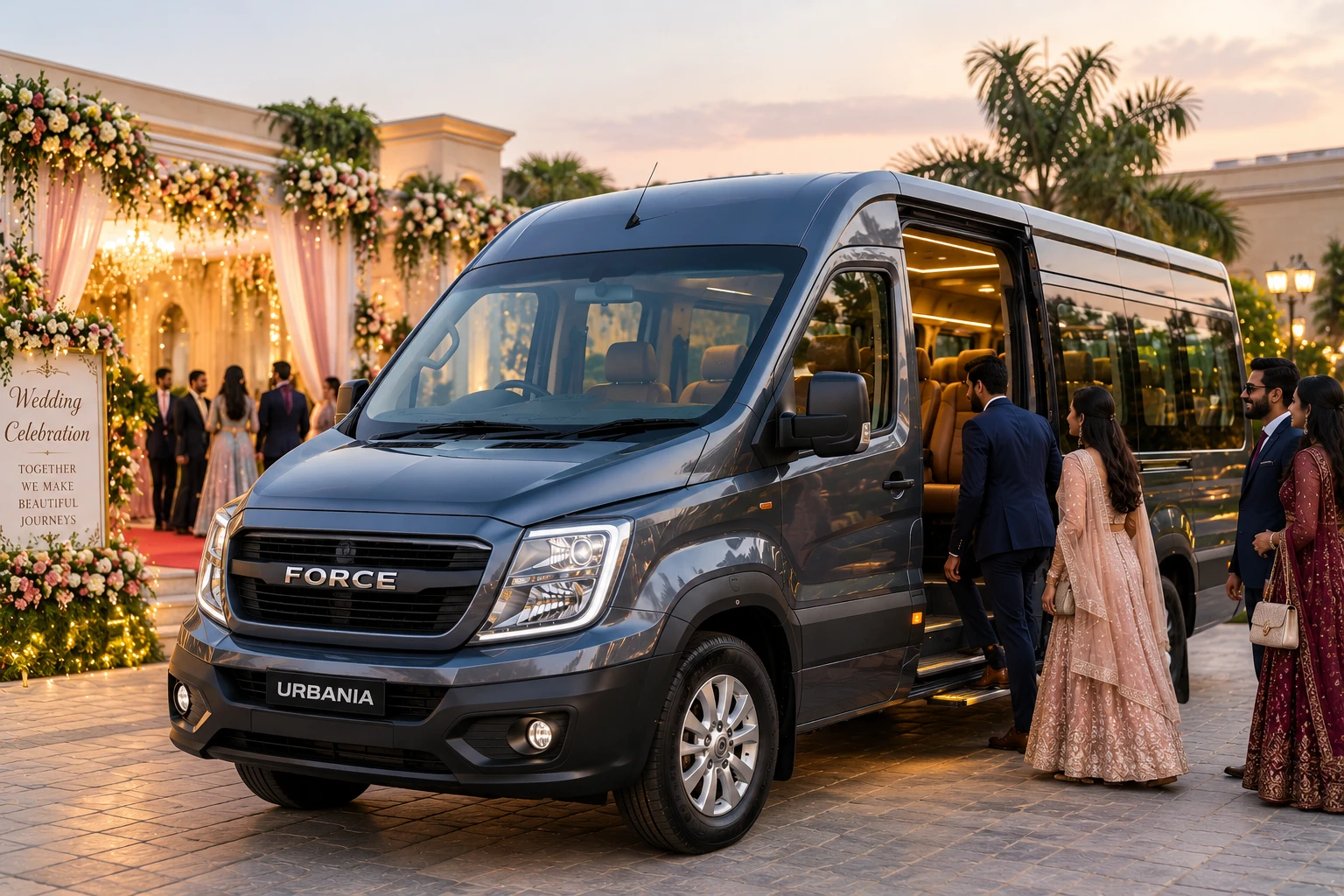
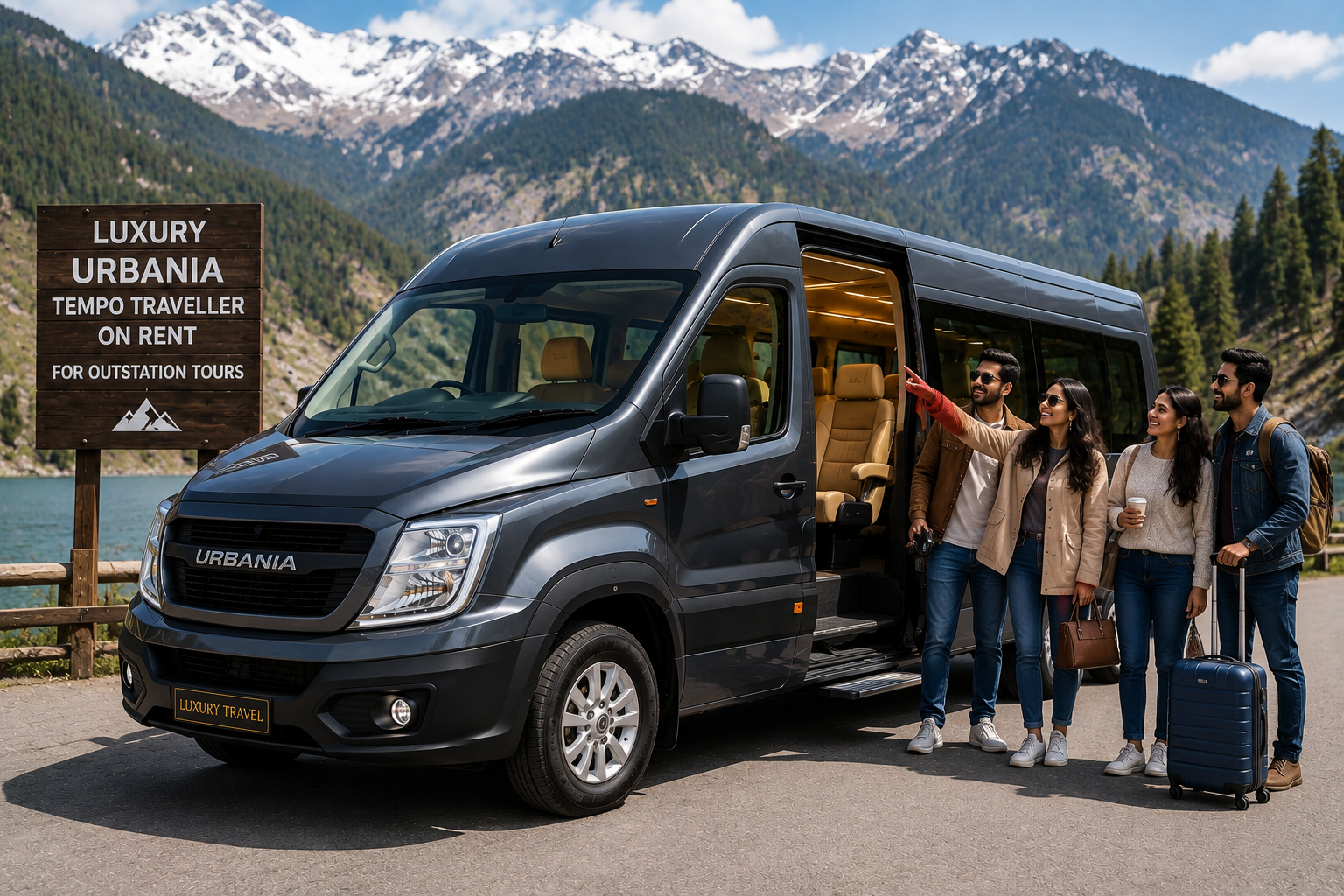
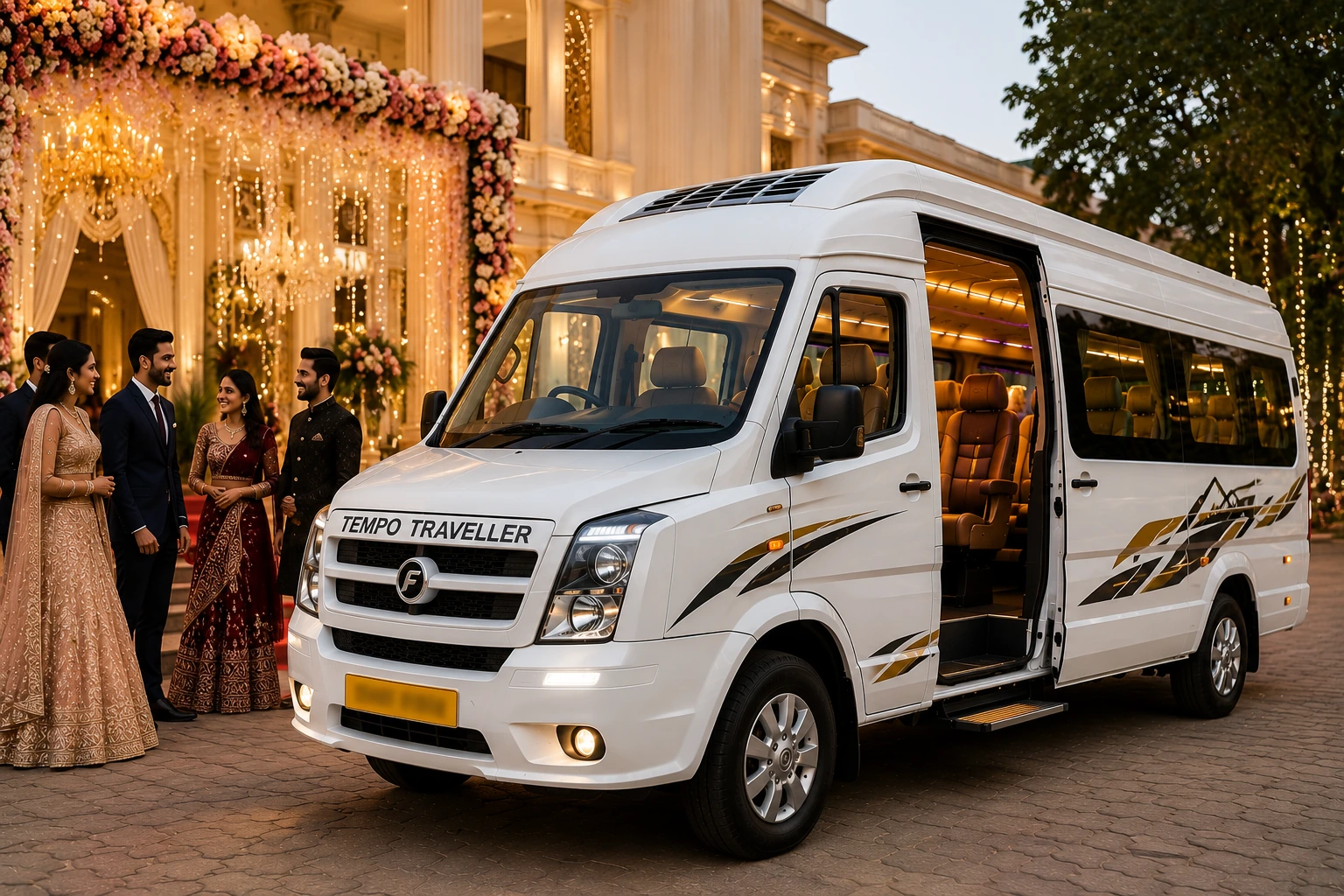
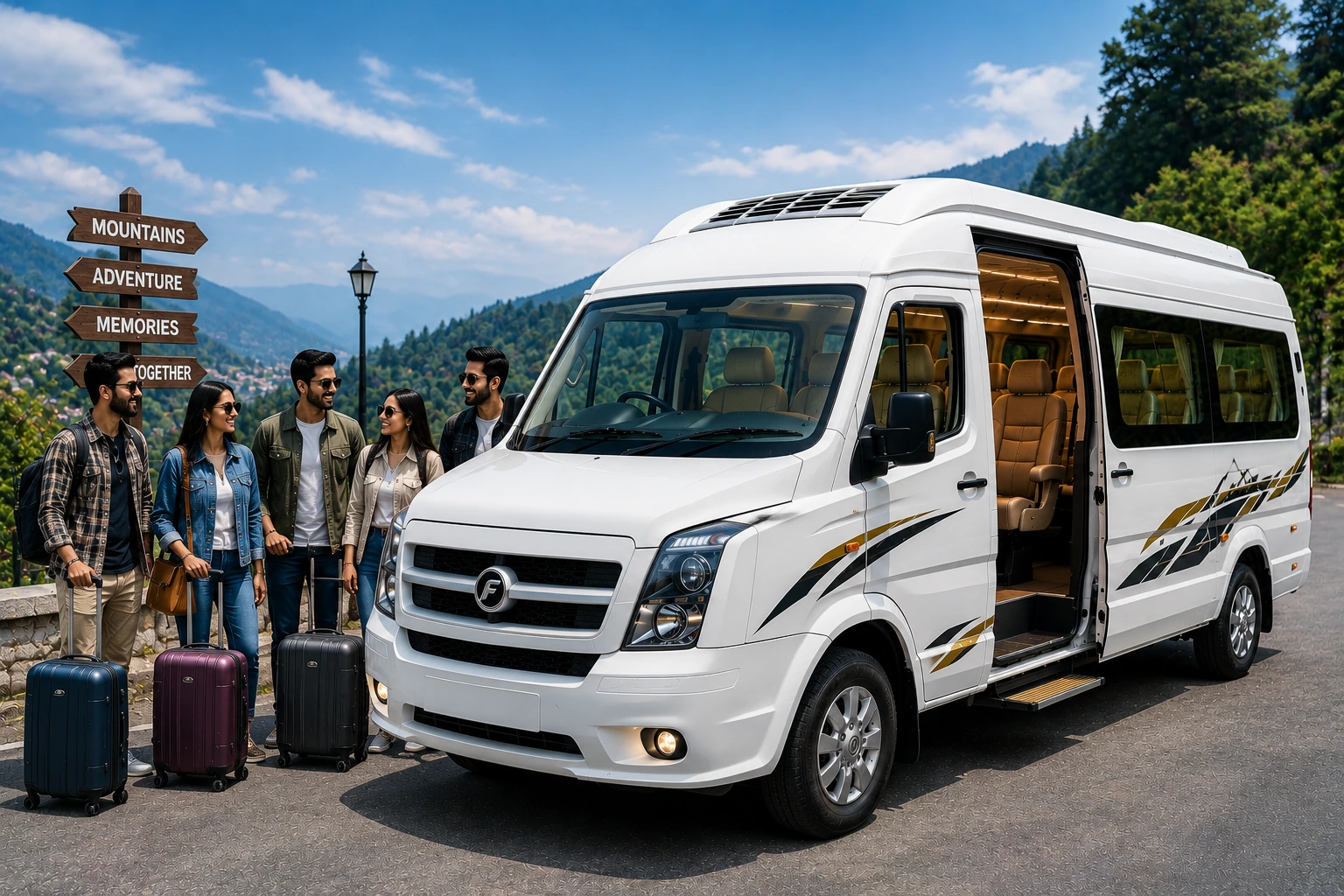
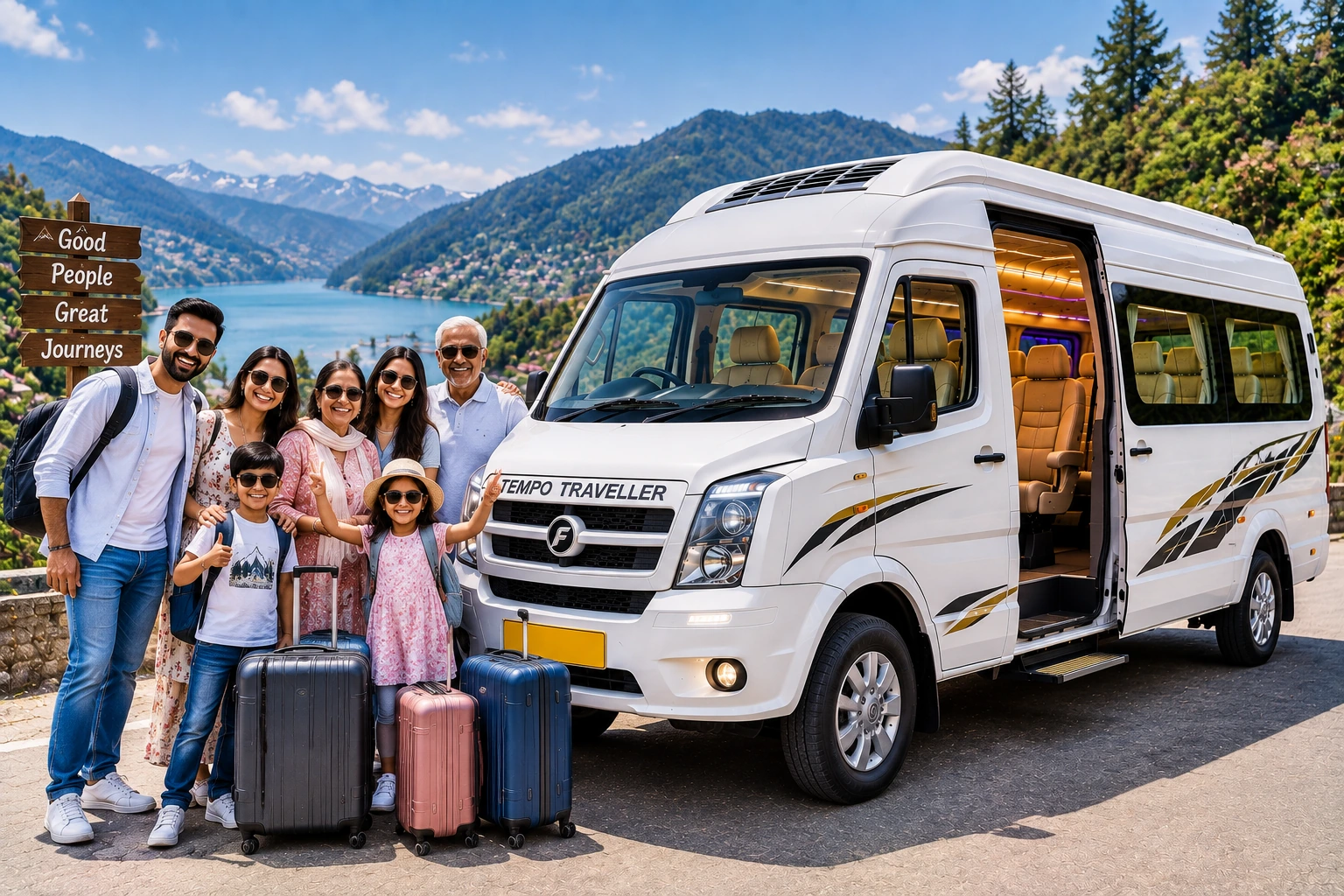
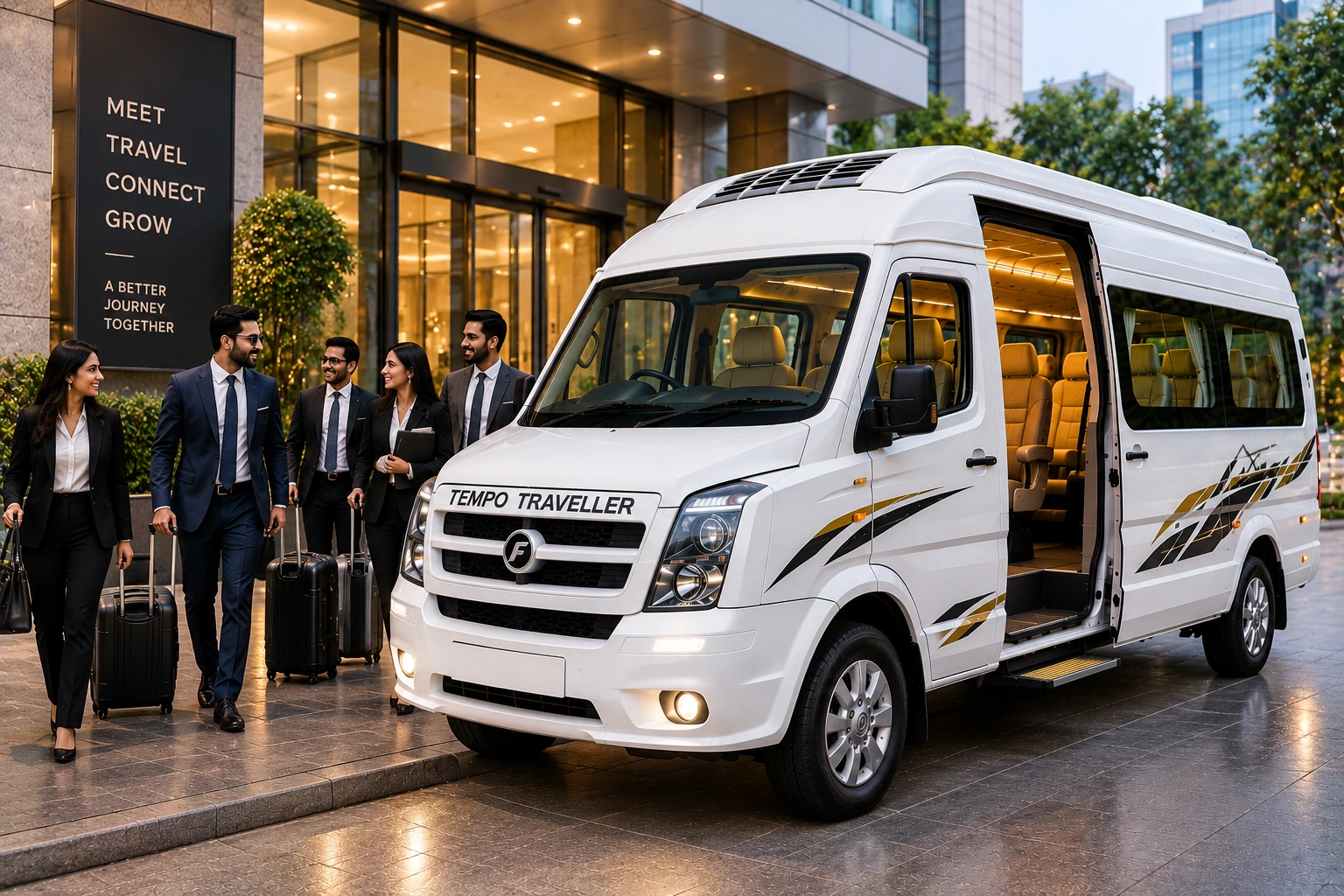
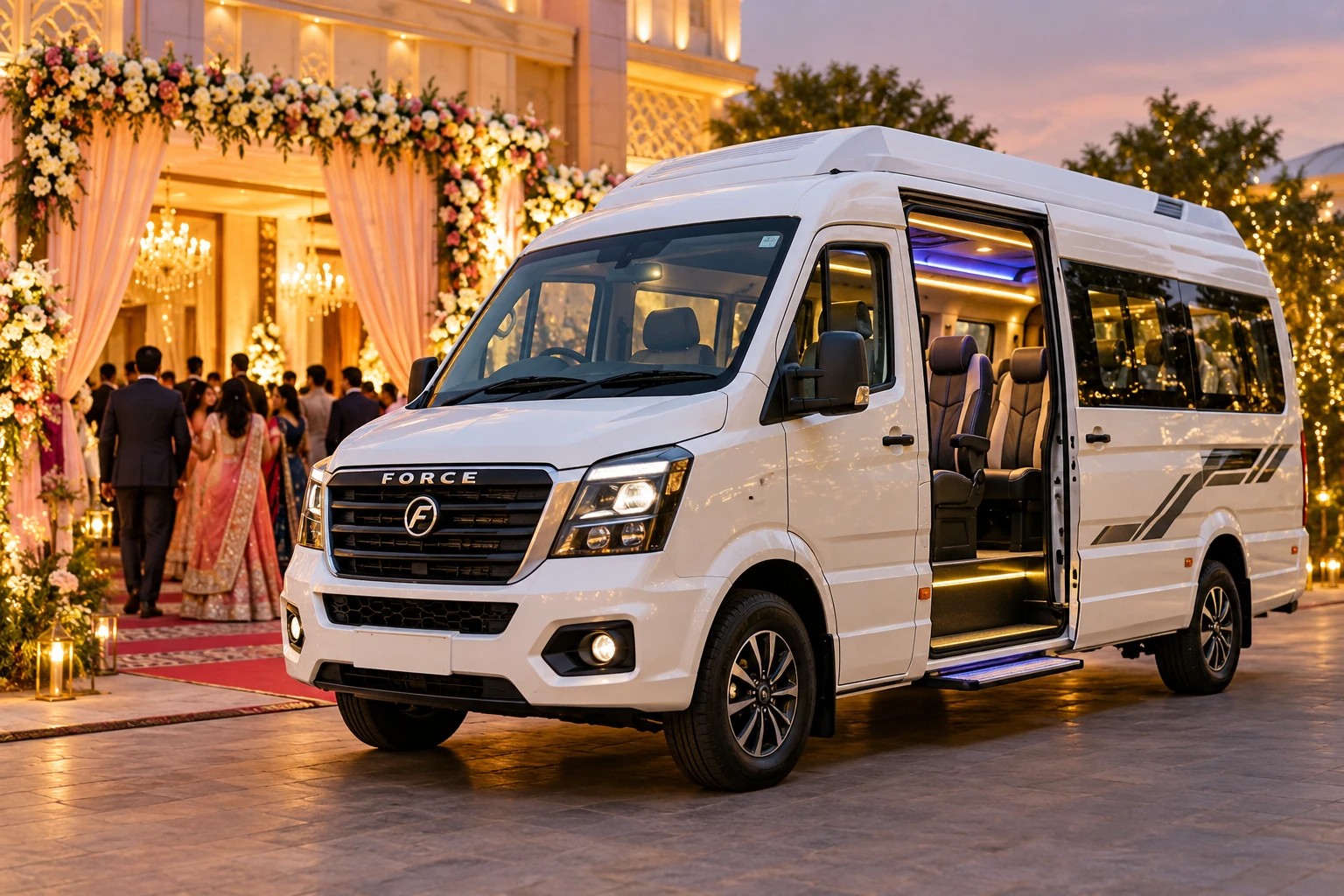
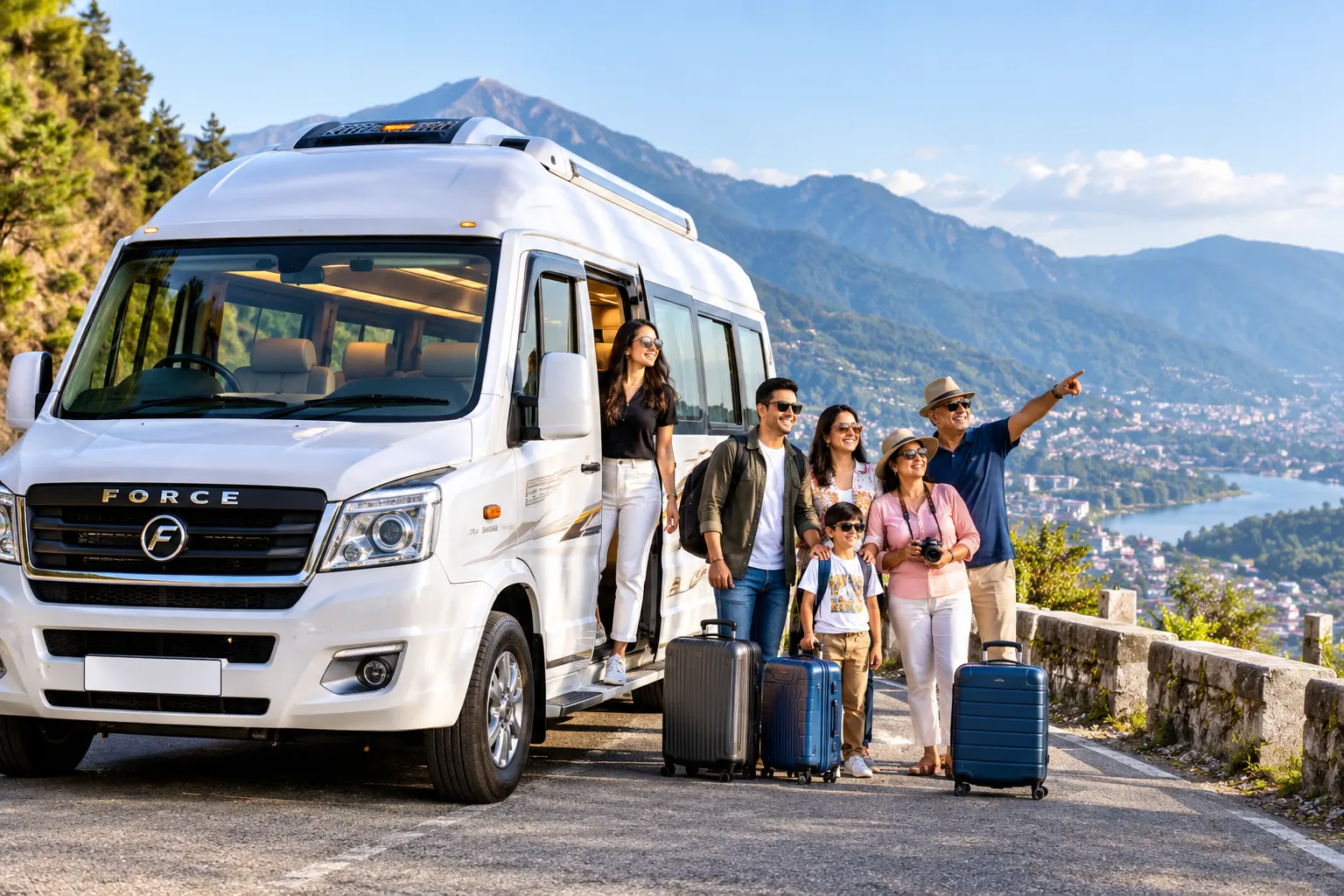
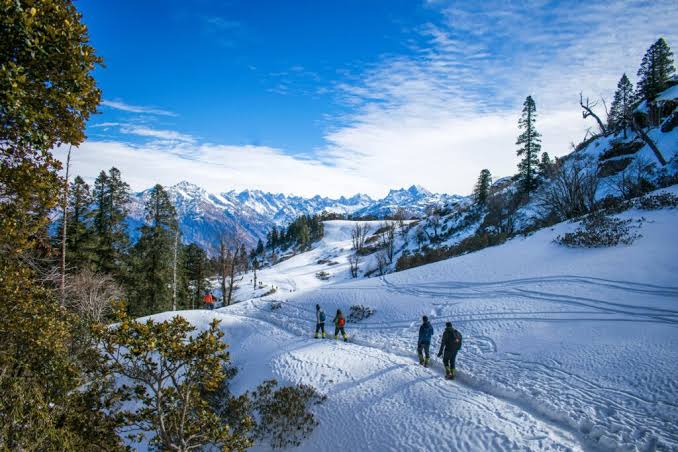
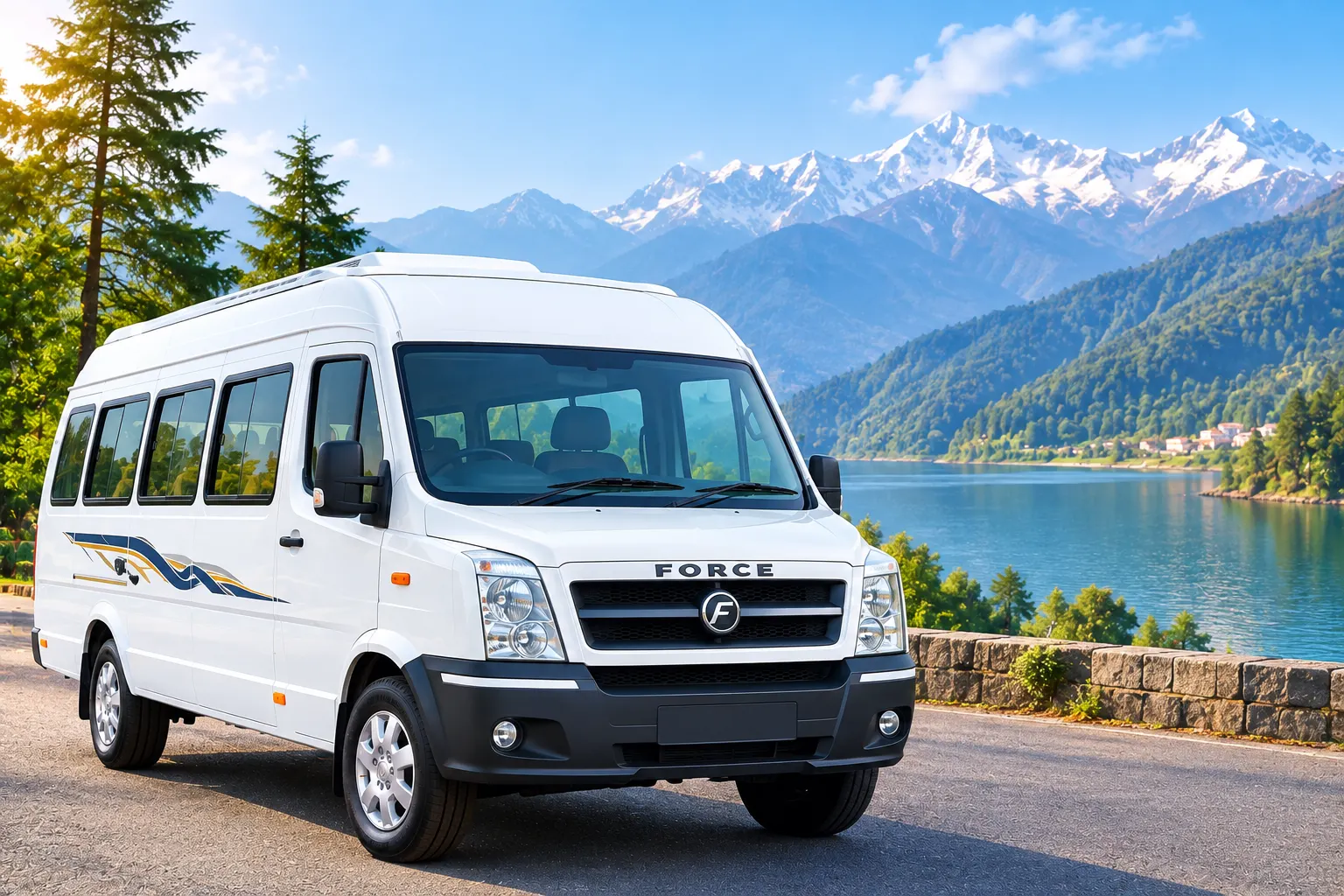
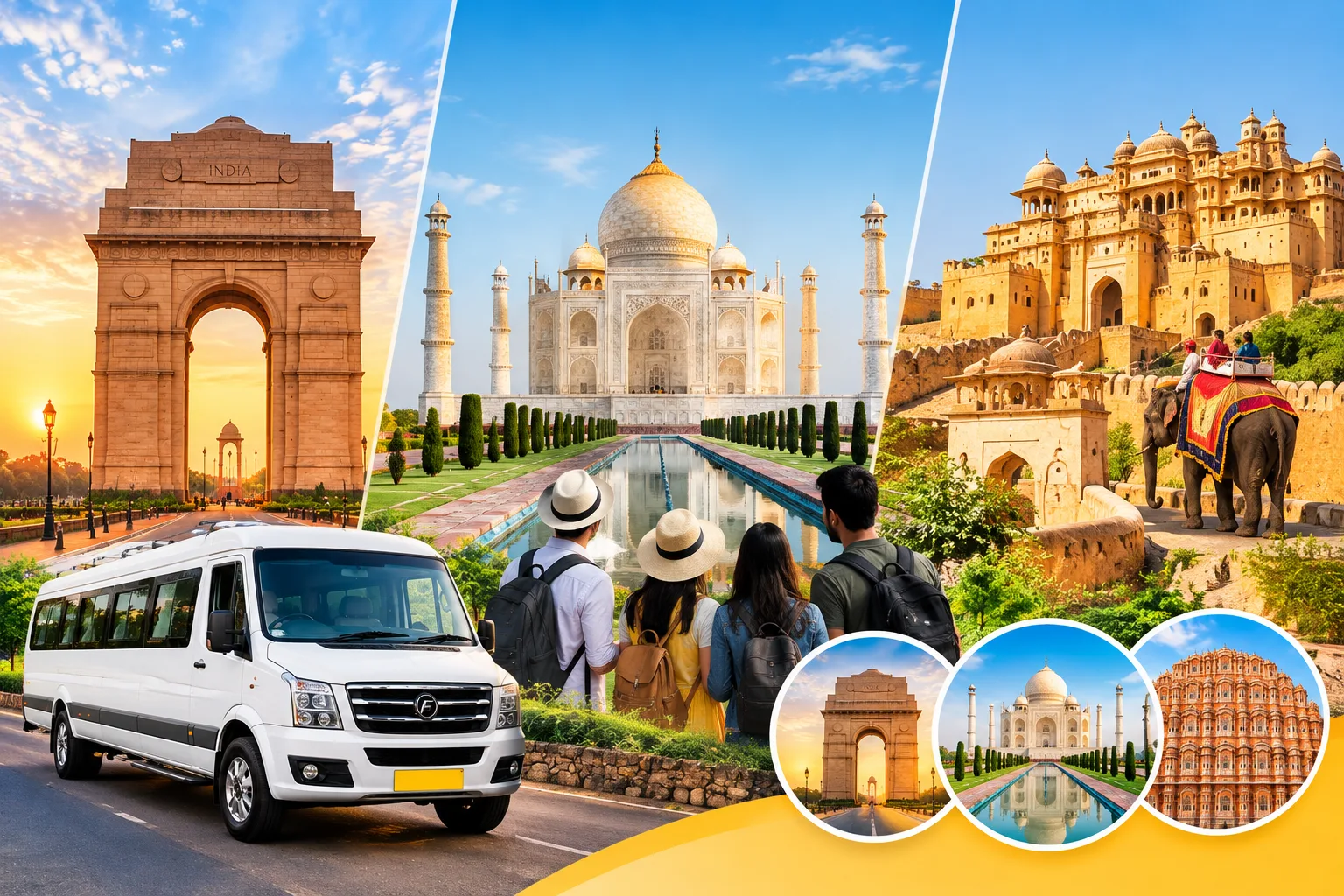
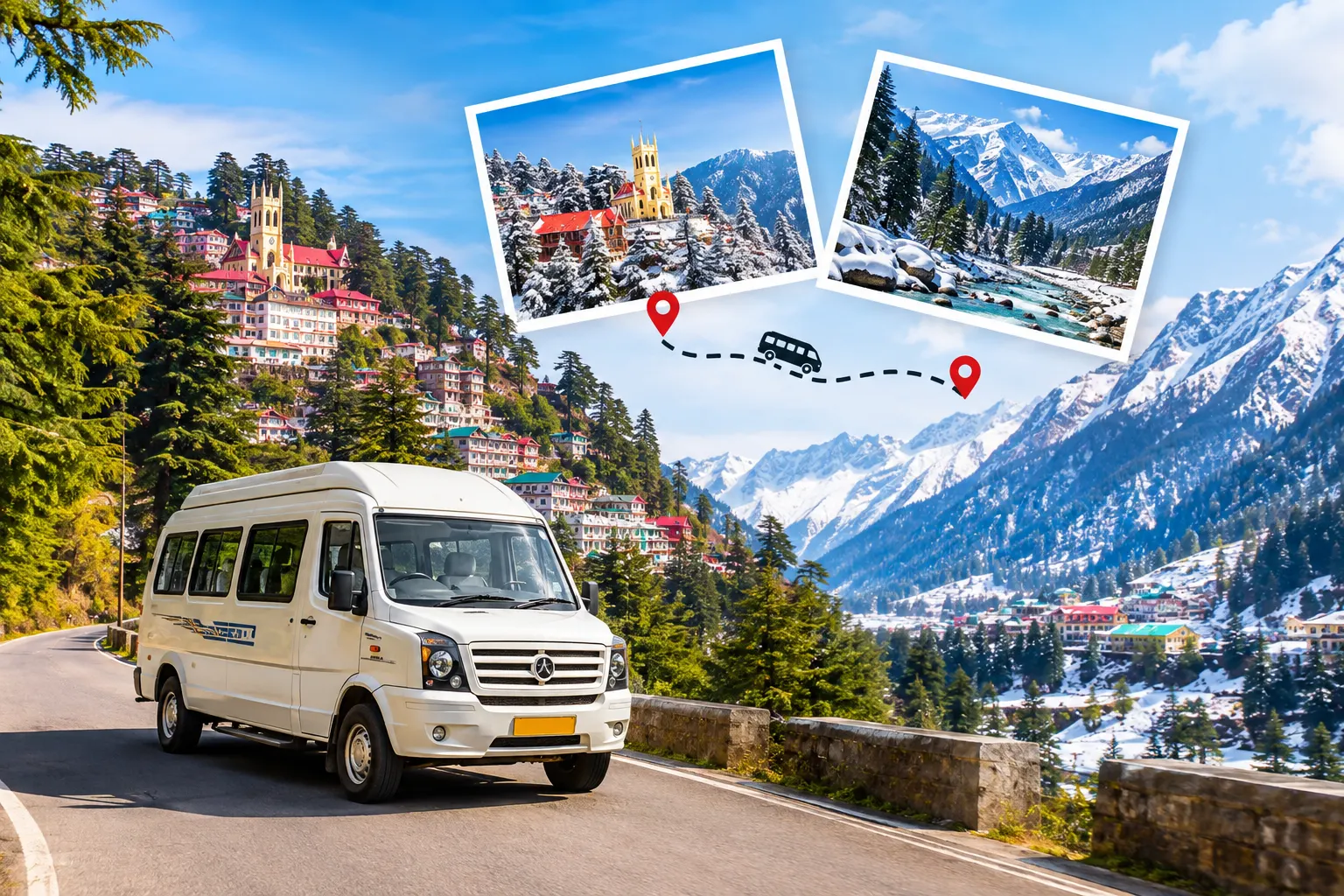
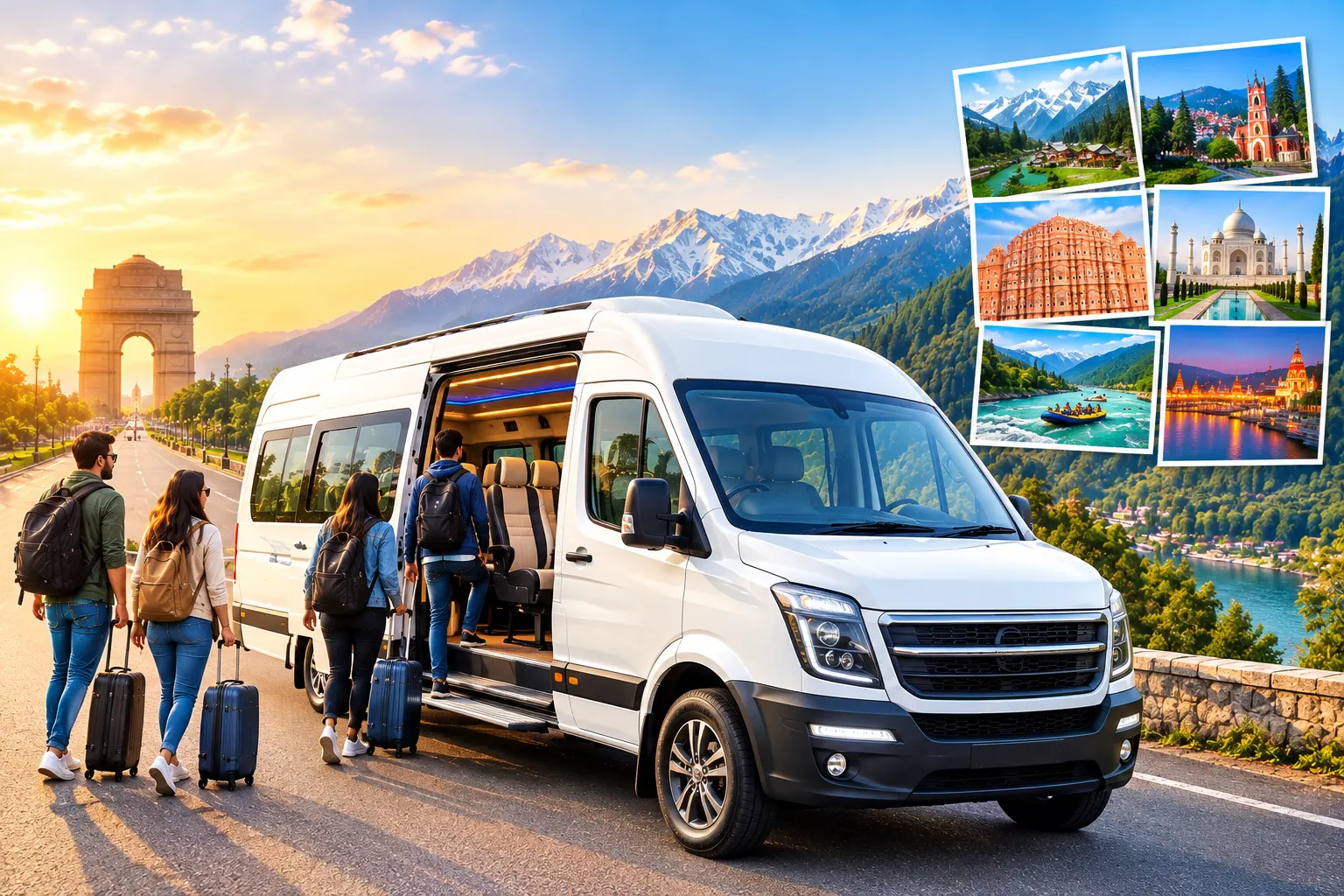
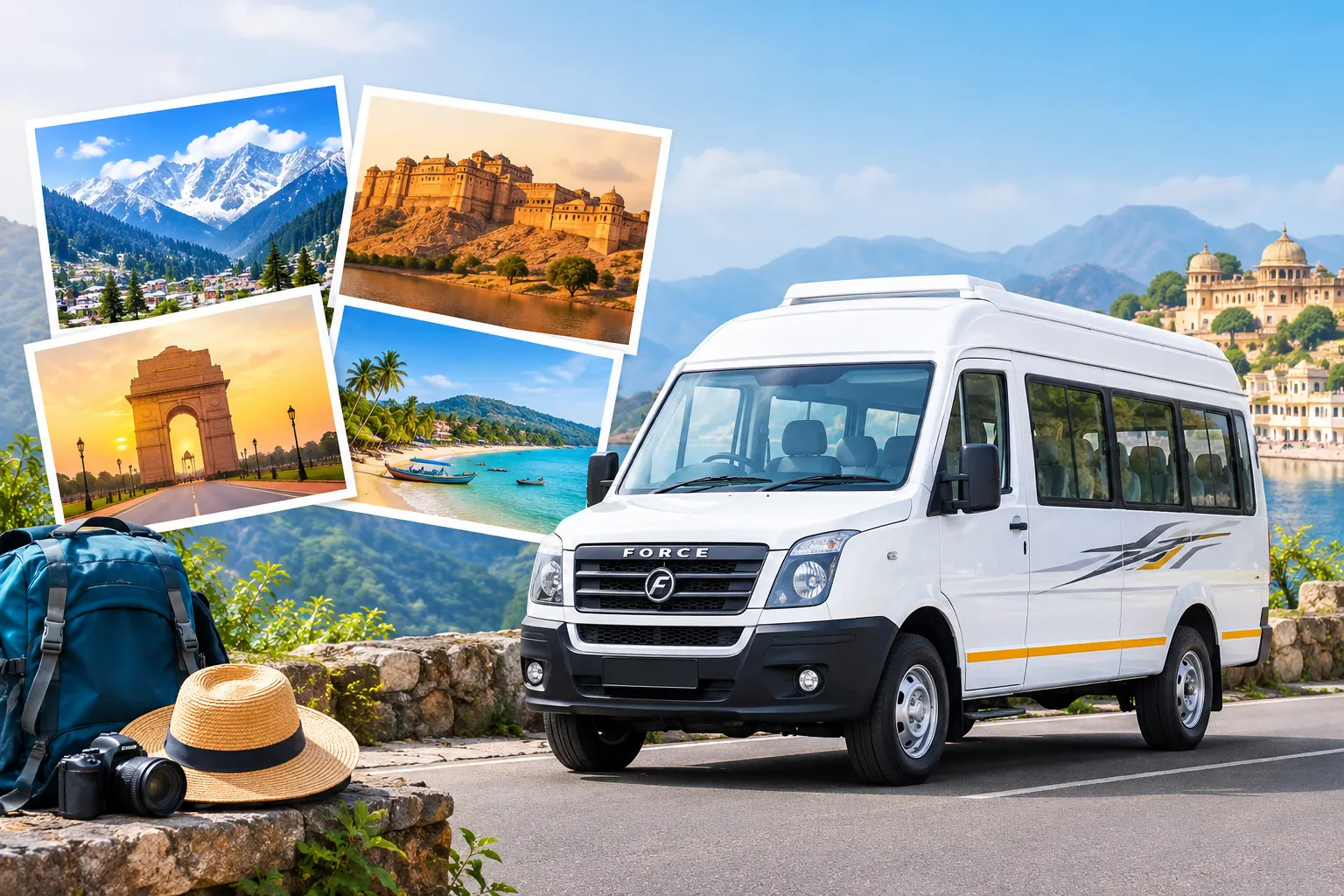
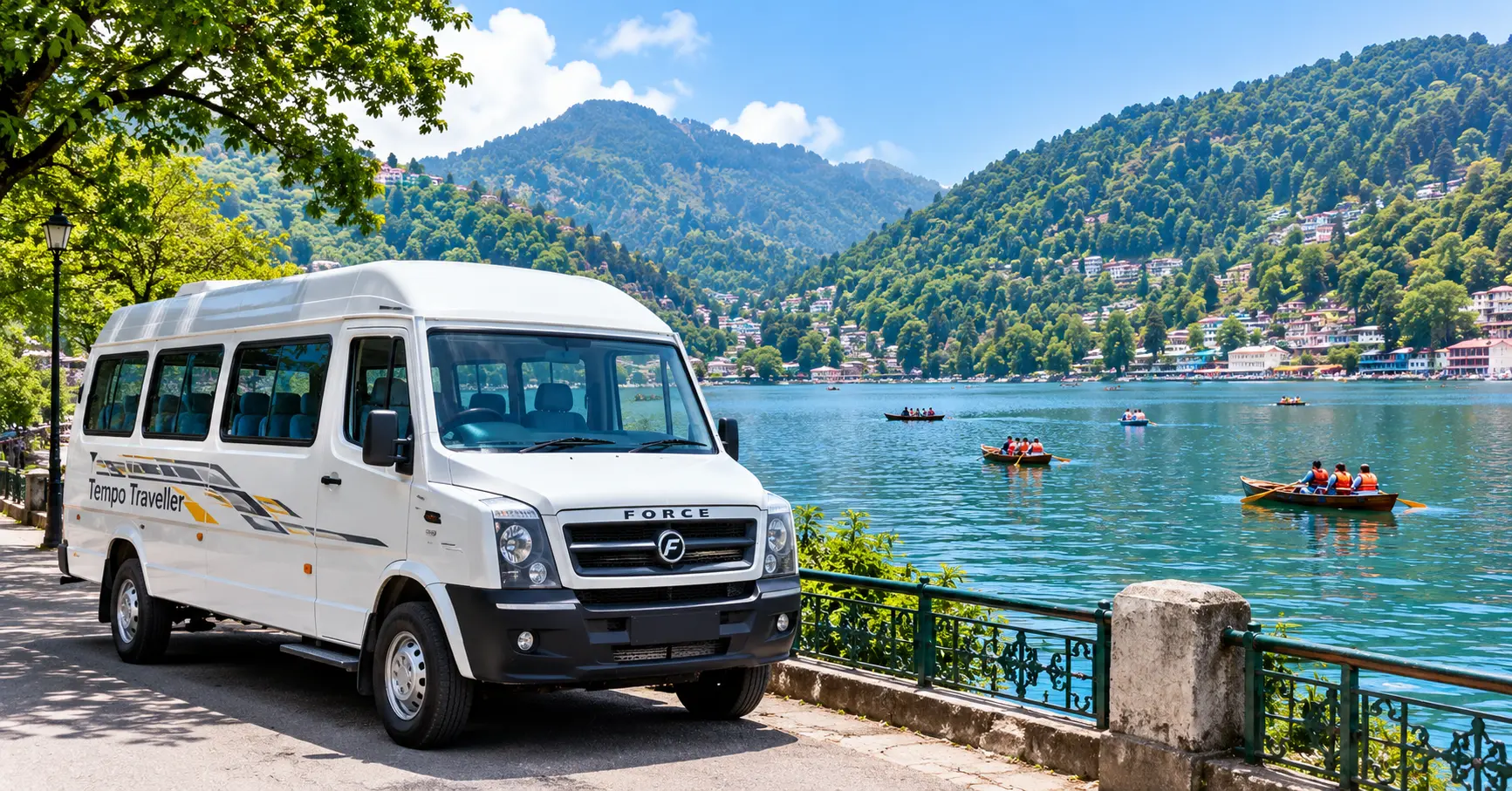
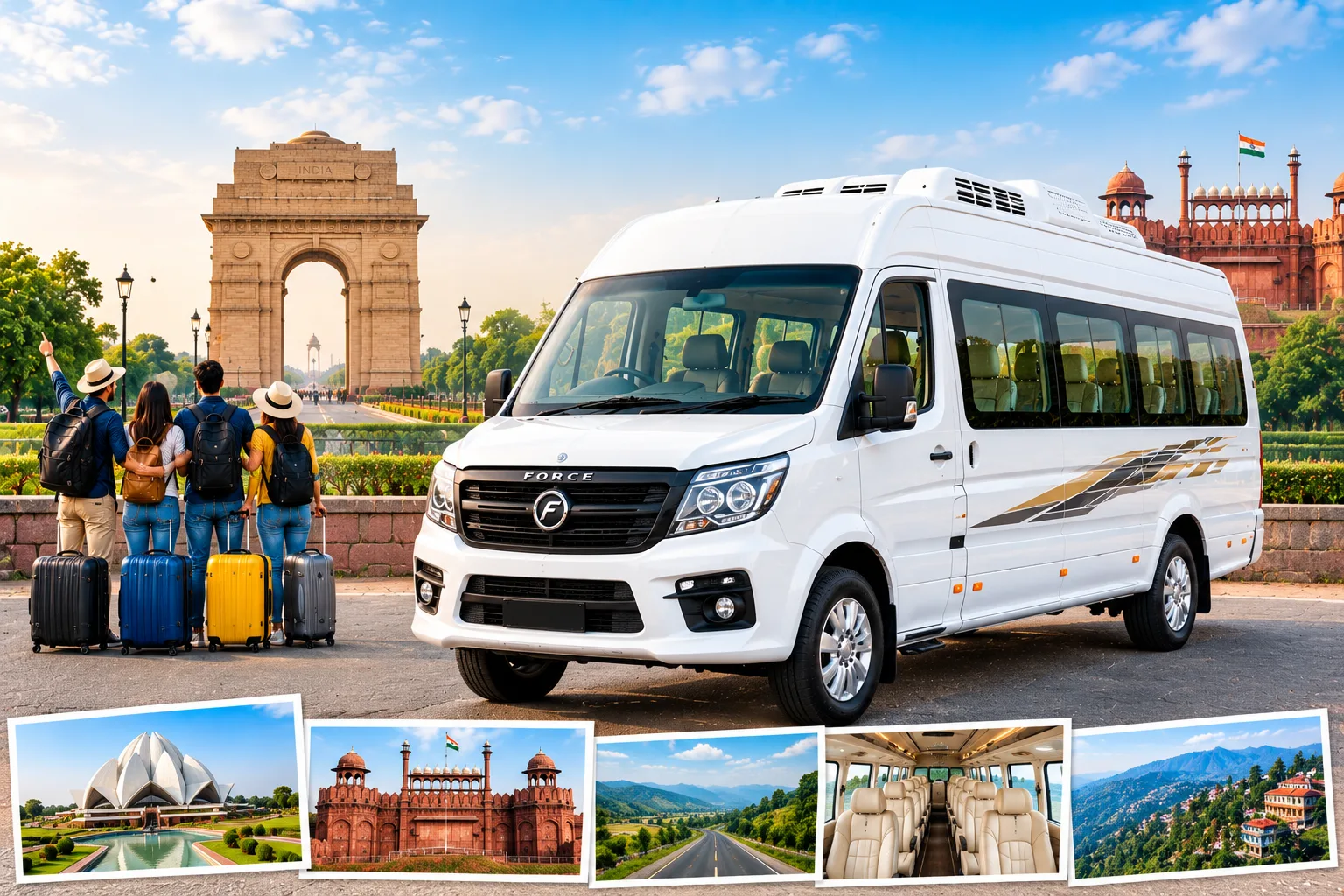
For Delhi-based travelers, a luxury tempo traveller on rent is commonly used across a wide range of trip types, and the reasons people choose it tend to repeat across bookings. Hill station trips to places like Manali, Shimla, Nainital, and Rishikesh are among the most common uses, since a comfortable seat matters more on a long, winding mountain route than on a short city drive. Airport and railway station transfers for larger groups are another frequent use case, particularly for families or groups arriving together with a lot of luggage that wouldn't fit comfortably across multiple smaller cars. Corporate offsites, team outings, wedding guest transportation, and multi-city tour packages booked through operators round out the most typical reasons groups choose this vehicle type over other options.
Types of Tempo Travellers Available on Rent in Delhi
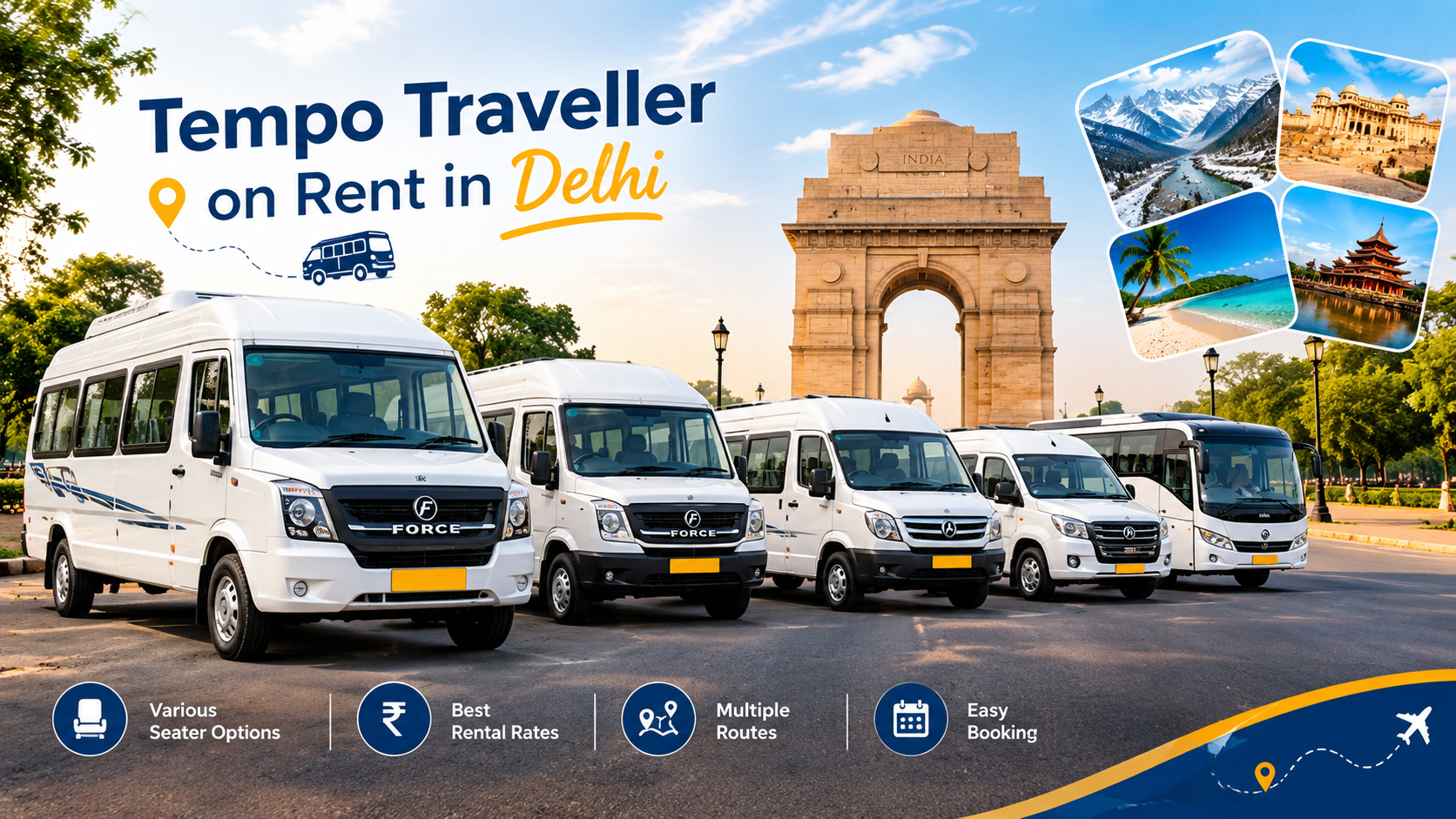
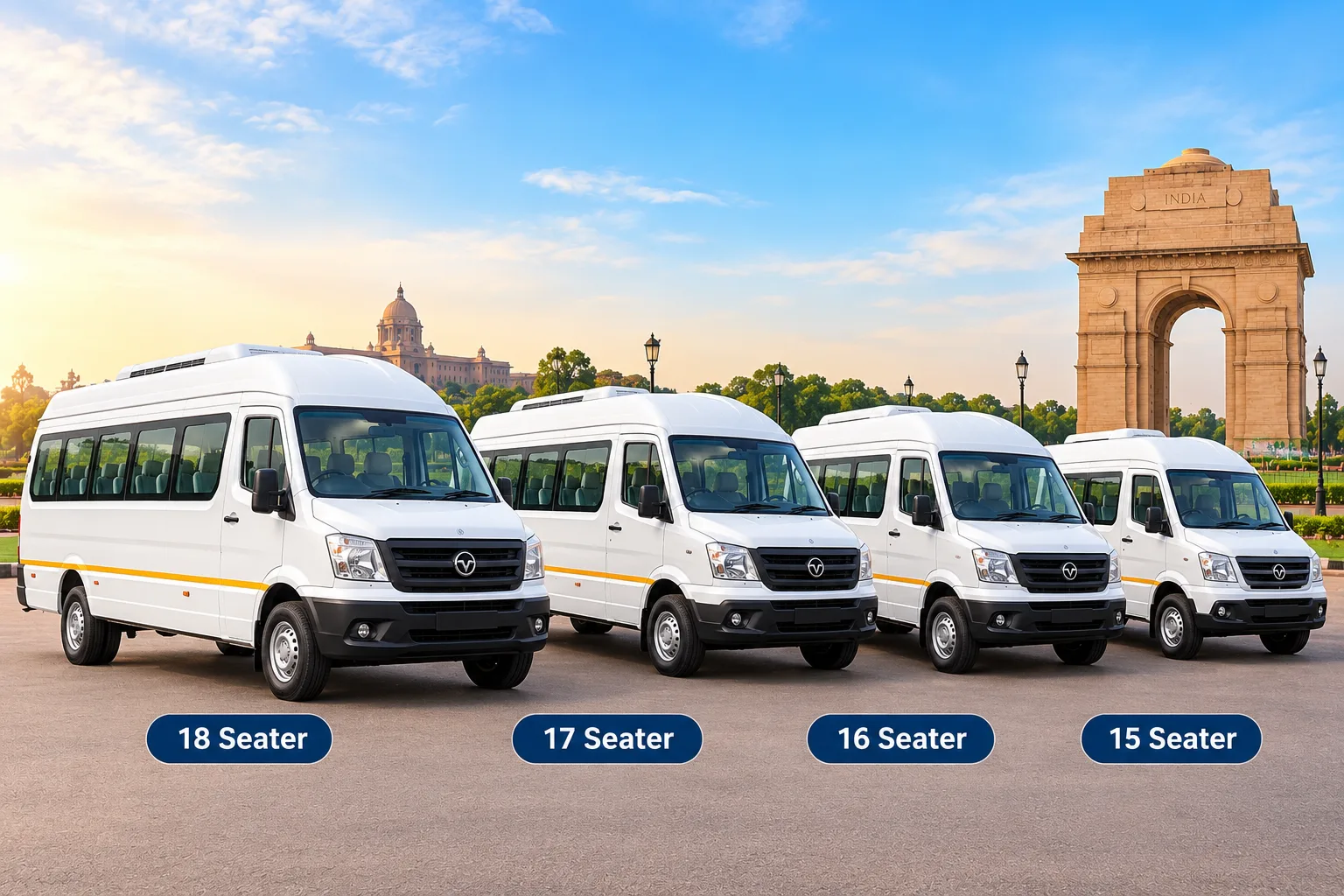
Not all tempo travellers are built the same, and seating capacity is usually the first thing that determines both comfort and price. Beyond just the number of seats, the seating layout, legroom per passenger, and whether the vehicle includes a separate luggage cabin all change depending on which size you choose, so it helps to think about your actual group size and luggage needs rather than just rounding up to the nearest available option.
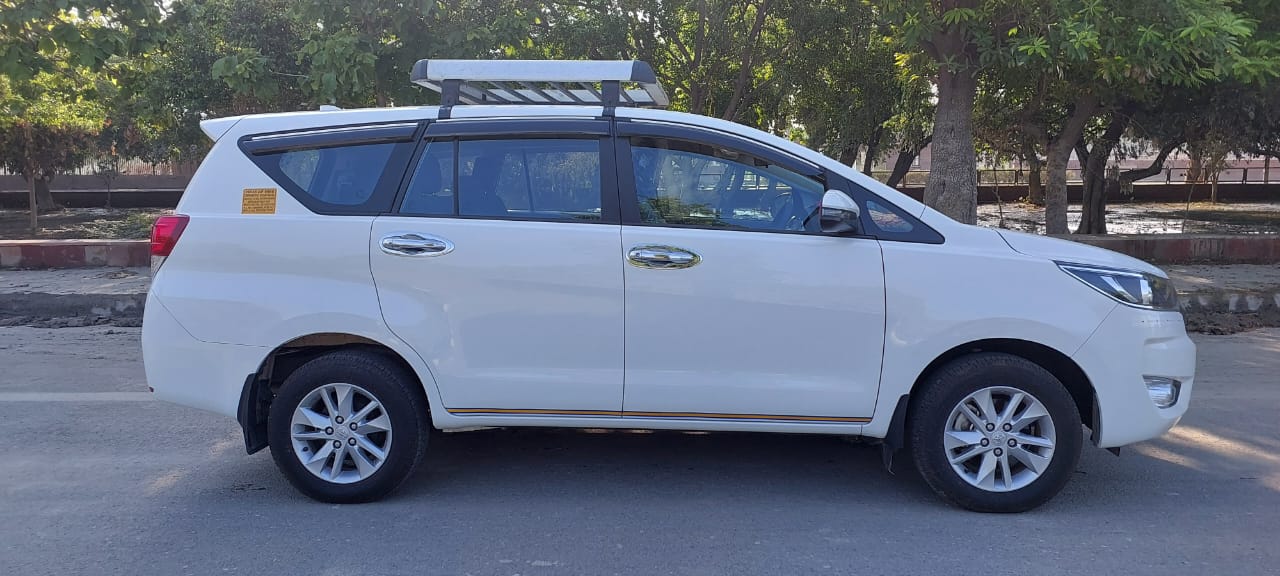
This size is best suited for small families or friend groups who want a private, comfortable vehicle without paying for unused seats. These typically come with captain seats, individual armrests, and noticeably more legroom per passenger compared to larger configurations, since the interior isn't stretched to accommodate more rows. For a group of 6-8 people planning a hill trip, this size often strikes the best balance between comfort and cost, since it avoids the higher per-day rate of larger vehicles while still giving each passenger enough space to relax on a long drive.
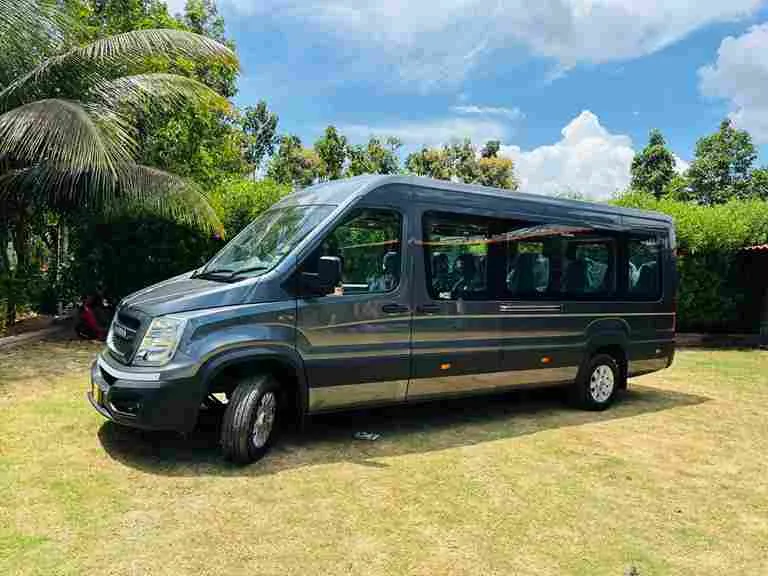
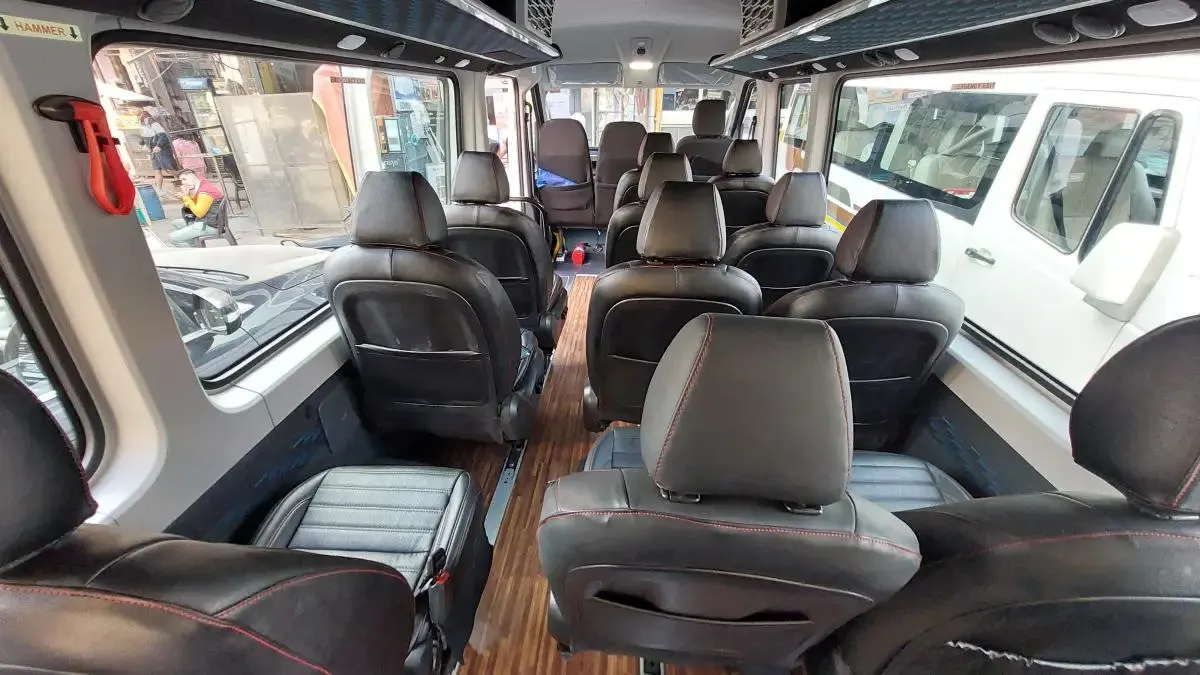
A common choice for mid-sized groups, often used for short weekend trips where comfort matters but the group isn't large enough to need a full-sized vehicle. This size works well for extended families or a group of colleagues traveling together, offering a reasonable middle ground between space and cost. Many operators fit this configuration with a small aisle and slightly more upright seating than the 9-seater version, so it's worth asking specifically about seat pitch if legroom is a priority for your group.
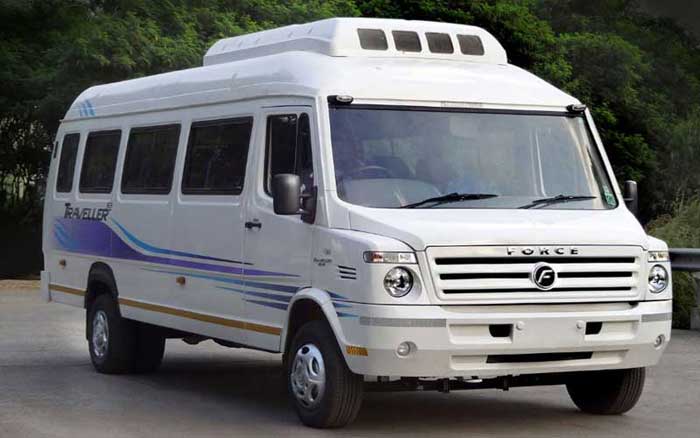
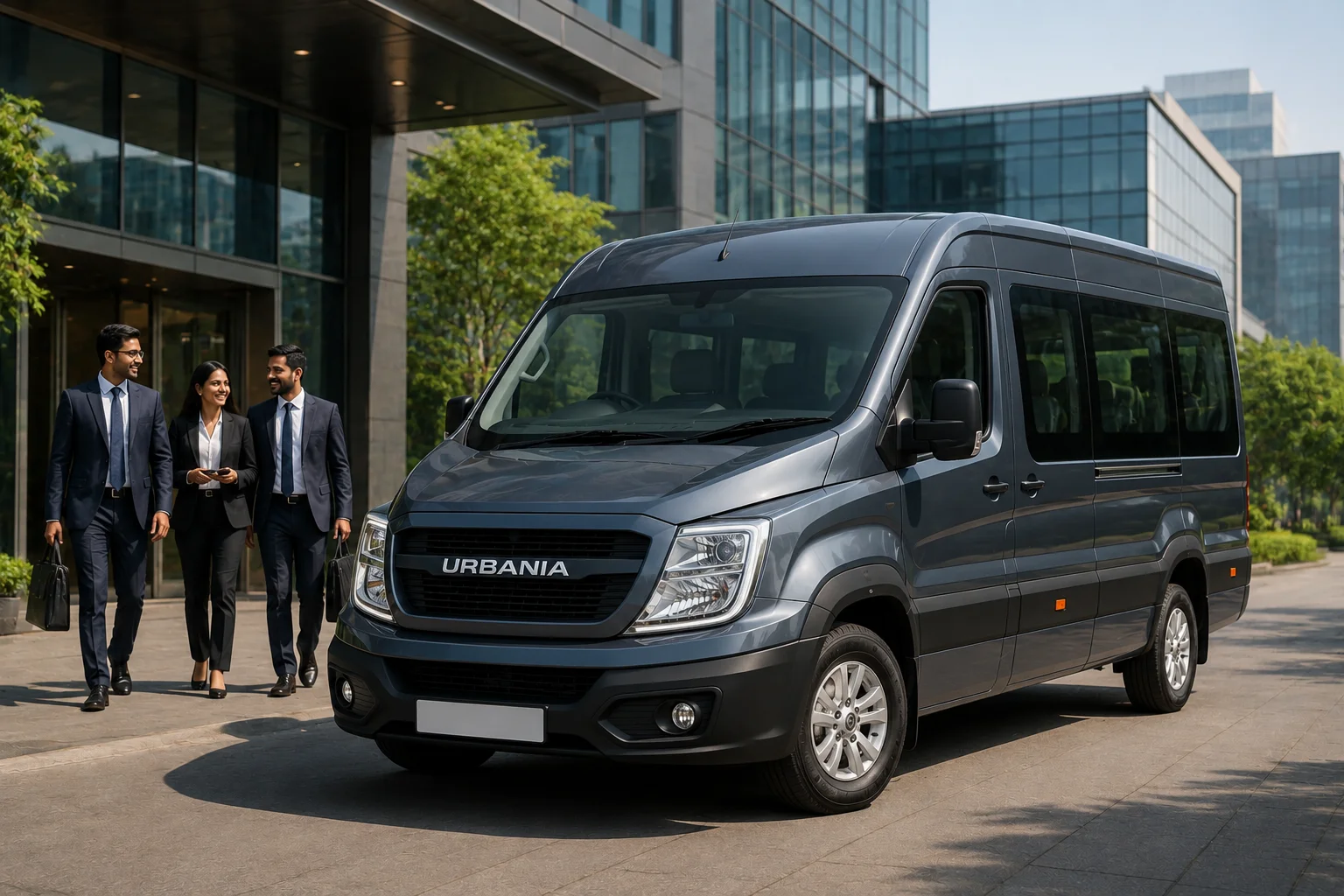
Frequently used for corporate groups and larger families, this size balances comfort with practical seating capacity for longer routes without tipping into full-bus territory. It's a popular choice for company offsites where a team wants to travel together while still having enough individual space to work, rest, or move around slightly during a multi-hour journey. Because this size sits between the smaller family-oriented vehicles and the larger group configurations, availability during peak season can be tighter, so booking a little earlier is generally a good idea.
20 to 26-Seater Luxury Tempo Traveller
Used for bigger groups, wedding parties, or tour packages where a full busload of comfort-focused seating is needed, this is the largest category typically offered under the tempo traveller banner. These come closer to a mini-coach experience, often with a rear luggage cabin large enough to handle a full group's suitcases without stacking bags in the aisle or on laps. If you're booking this size for a hill route, it's worth double-checking that the specific vehicle model is comfortable handling mountain roads, since not every large vehicle is equally suited to steep, winding terrain.
Luxury Tempo Traveller on Rent in Delhi: Pricing Guide
Pricing for a luxury tempo traveller on rent in delhi depends on several factors, and quoted rates can vary quite a bit between operators, so it helps to understand what actually drives the cost rather than comparing numbers in isolation. Two operators quoting very different prices for what sounds like the same trip are often including different things in that number, which is why reading the fine print of a quote matters as much as the headline figure itself.
What Affects the Price
Seating capacity plays the most obvious role, since a 9-seater will generally cost less than a 20-seater for the same route, as fuel consumption, vehicle maintenance, and driver handling requirements all scale up with vehicle size. A larger vehicle also tends to have a higher acquisition and upkeep cost for the operator, which naturally reflects in the daily or per-kilometer rate passed on to the customer.
Trip duration changes the pricing structure significantly, since local rentals within Delhi/NCR are priced quite differently from outstation multi-day trips. A same-day local booking typically involves a flat rate with a kilometer cap, while a multi-day outstation trip involves additional considerations like overnight driver stay, return journey costs, and total distance covered across the full itinerary.
Distance and route terrain matter more than raw kilometers alone. Hill routes like Delhi-Manali cost more per kilometer than flat highway routes such as Delhi-Jaipur, mainly because mountain driving consumes more fuel, puts more wear on the vehicle, and requires slower, more careful driving that extends total trip time without reducing operating costs.
Season is another major factor, since peak travel months — roughly May-June for summer hill trips and the December holiday period — typically see higher rates due to increased demand and limited vehicle availability. Booking well outside these peak windows, where your schedule allows it, can sometimes bring noticeably better rates.
Inclusions are often where quotes differ the most even for seemingly identical trips. Driver allowance, toll charges, parking fees, and state permit charges are sometimes bundled into the quoted price and sometimes billed separately at the end of the trip, so it's worth asking for a clear, itemized breakdown before comparing two quotes side by side.
Typical Pricing Structure
Most operators quote tempo traveller rentals in one of two broad ways, and understanding which structure you're being quoted helps avoid confusion later. On a per-kilometer basis, common for outstation multi-day trips, the total cost is calculated based on actual kilometers covered during the trip, plus a per-day driver allowance that covers the driver's stay and meals during overnight halts. This structure can work out cost-effective for shorter trips but becomes harder to predict exactly for longer, multi-stop itineraries where the final kilometer count isn't fixed in advance.
A fixed package rate, on the other hand, is common for well-defined routes like Delhi-Manali round trips, where the operator quotes a flat rate covering the full itinerary regardless of minor route variations. This tends to be easier to budget around since you know the total cost upfront, and it removes the uncertainty of an open per-kilometer calculation that could shift based on traffic diversions or extra local sightseeing added along the way.
For local Delhi/NCR day rentals such as airport transfers or half-day city tours, pricing is usually the simplest of the three — a flat day rate bundled with a kilometer cap, beyond which additional per-kilometer charges apply for any distance covered over that limit.
Quick answer: Luxury tempo traveller rental prices in Delhi vary based on seating capacity, route, season, and duration — outstation hill routes typically cost more per kilometer than flat highway trips, and it's best to get a written quote specifying exactly what's included before confirming a booking.
Popular Routes for Luxury Tempo Traveller Rental from Delhi
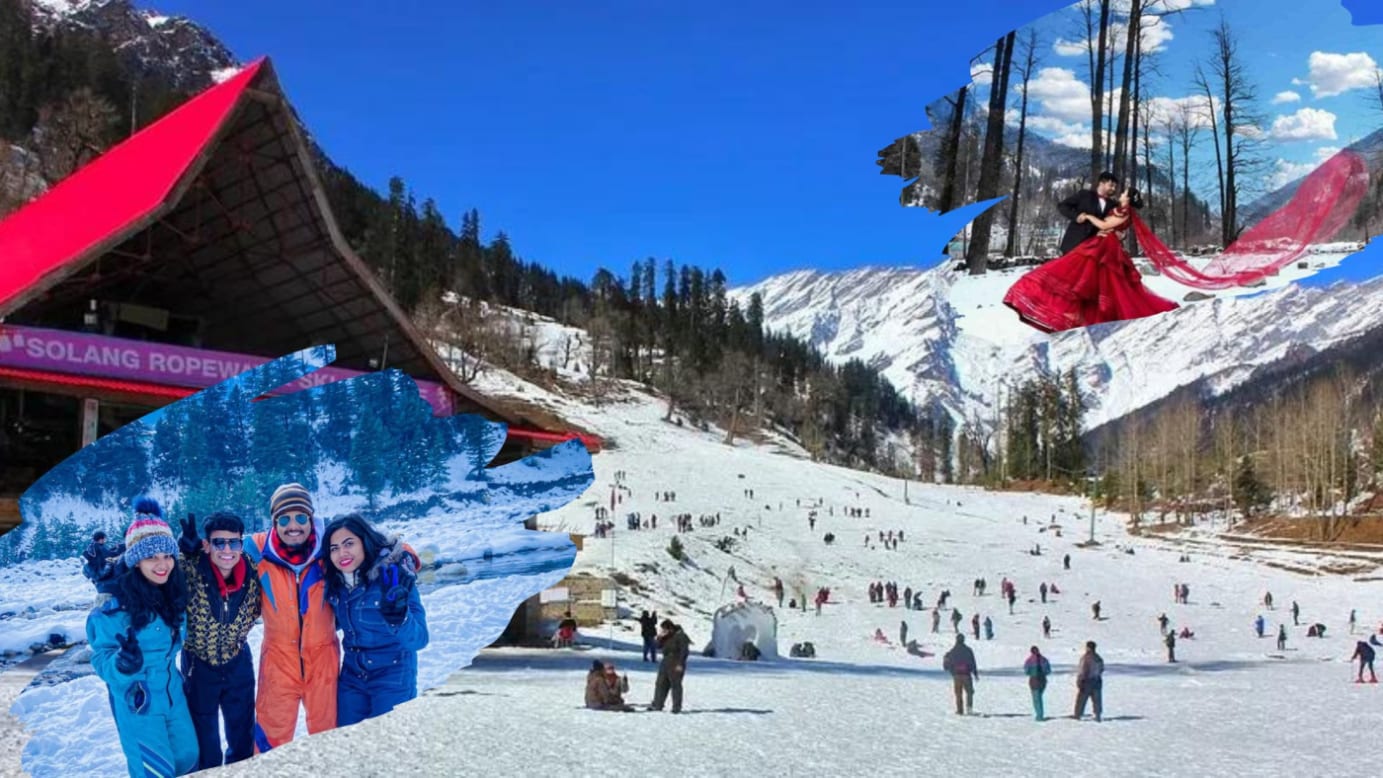
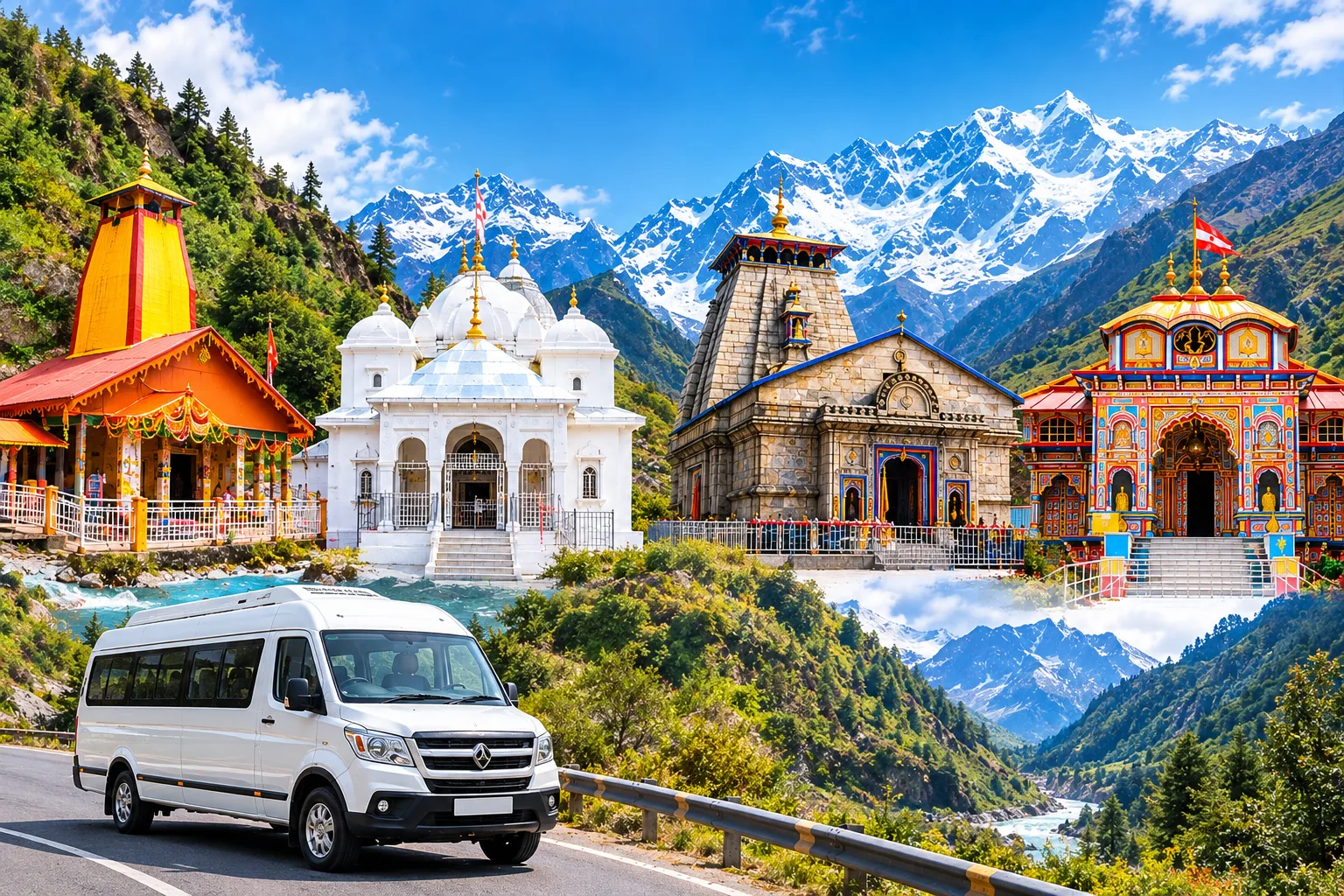
Delhi to Manali
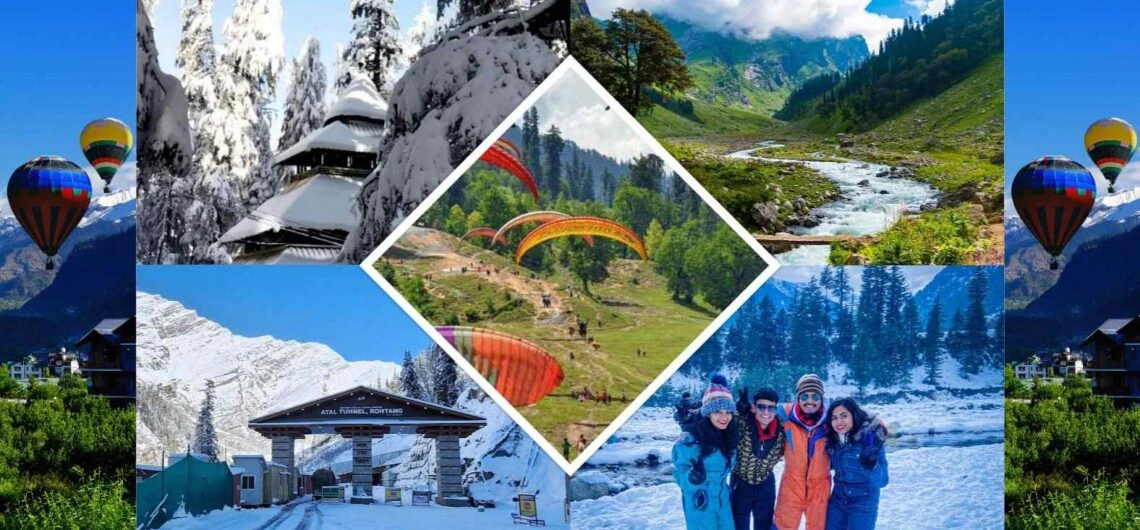
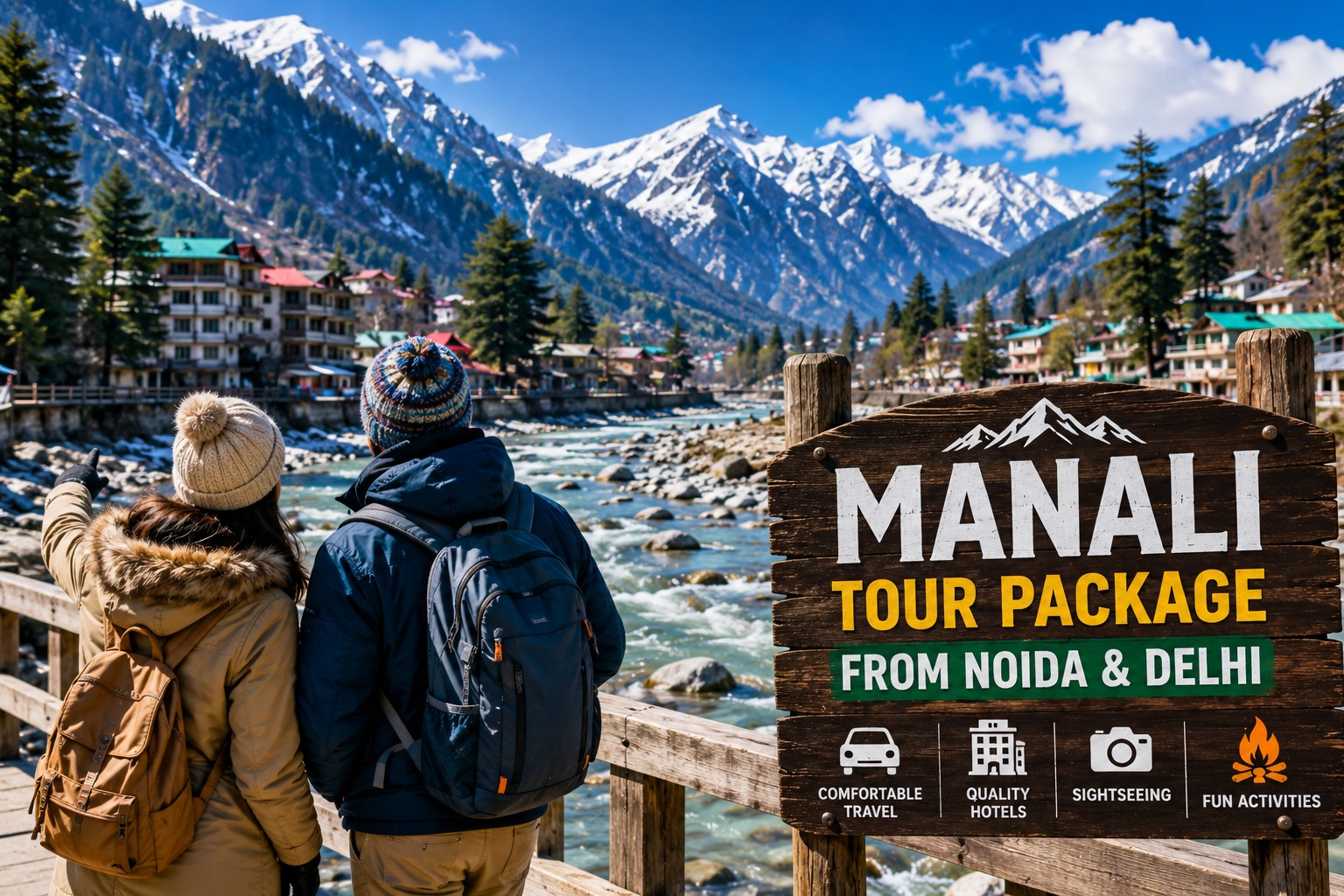
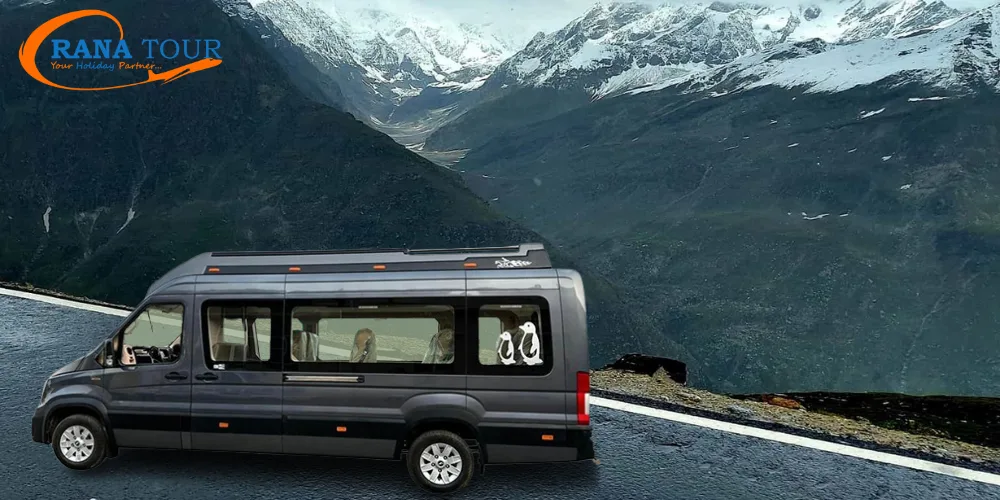
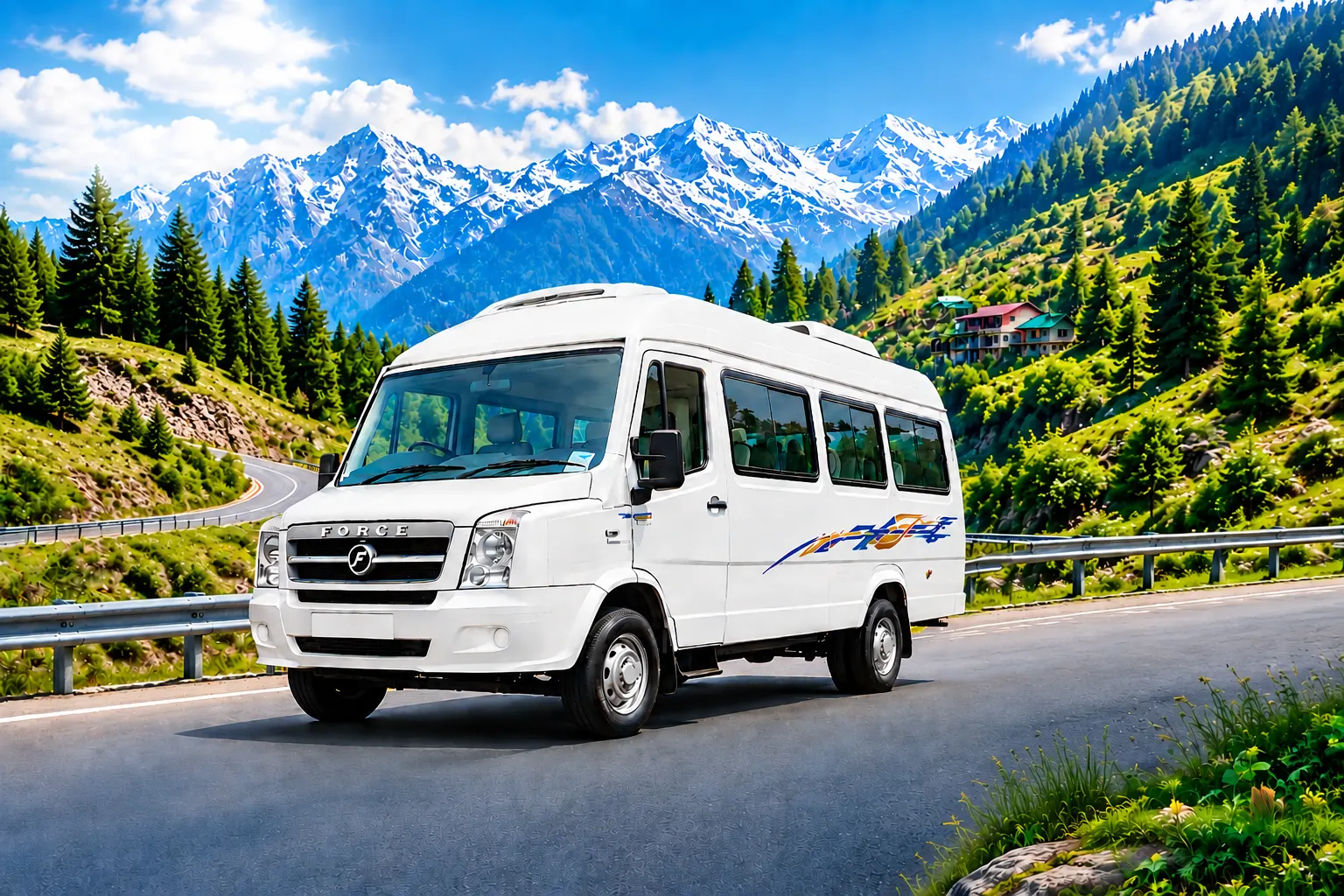
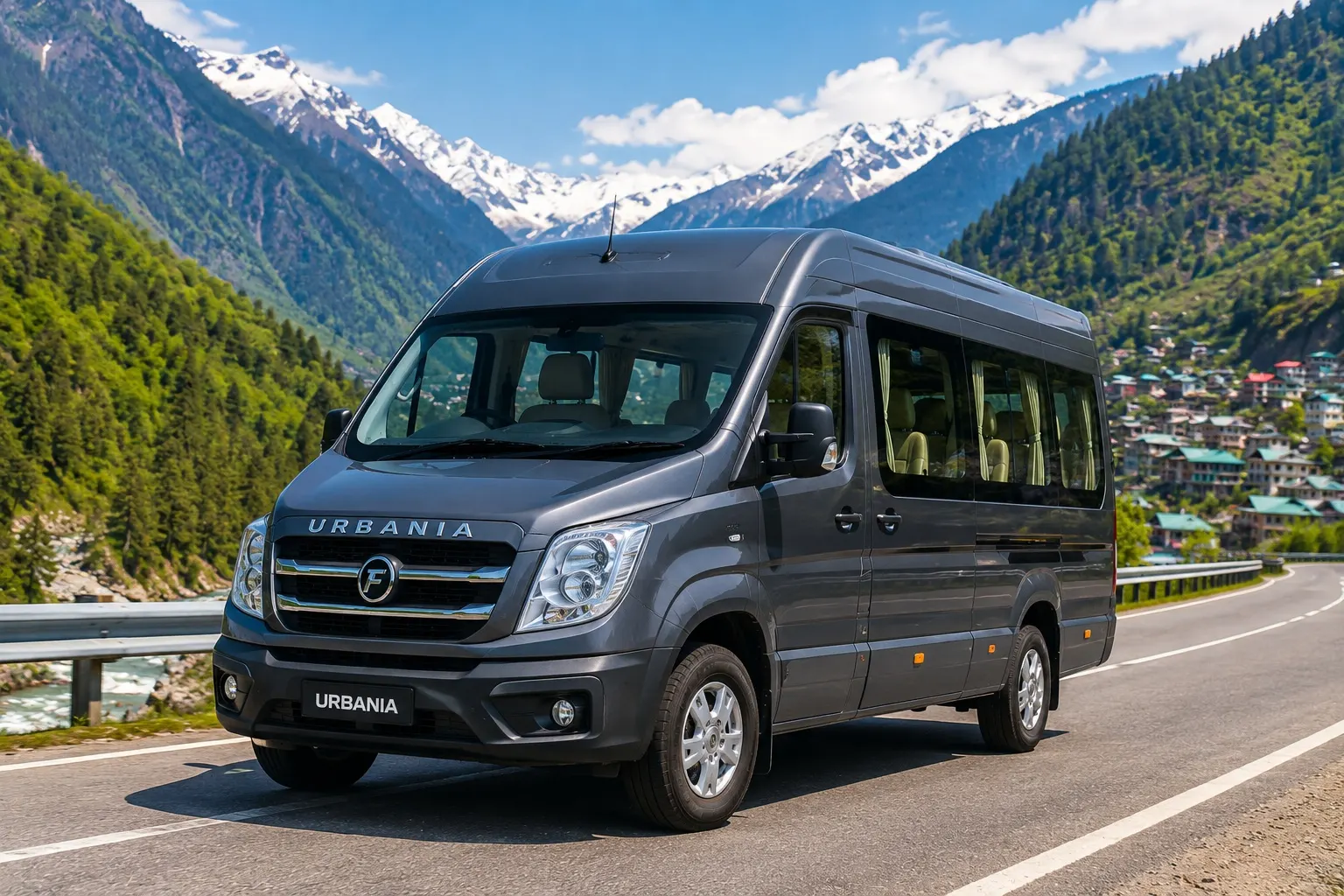
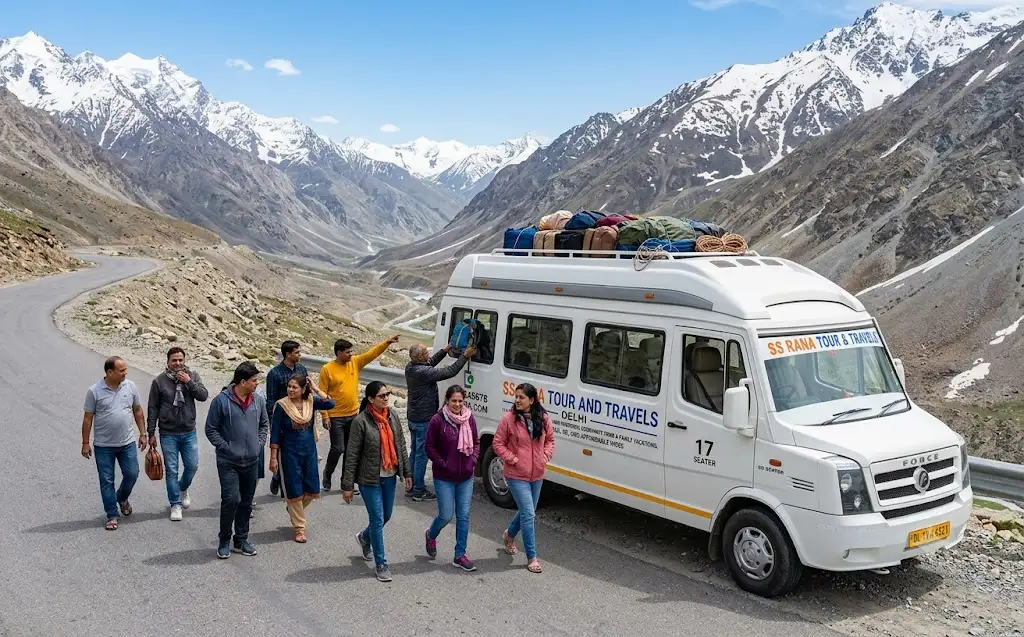
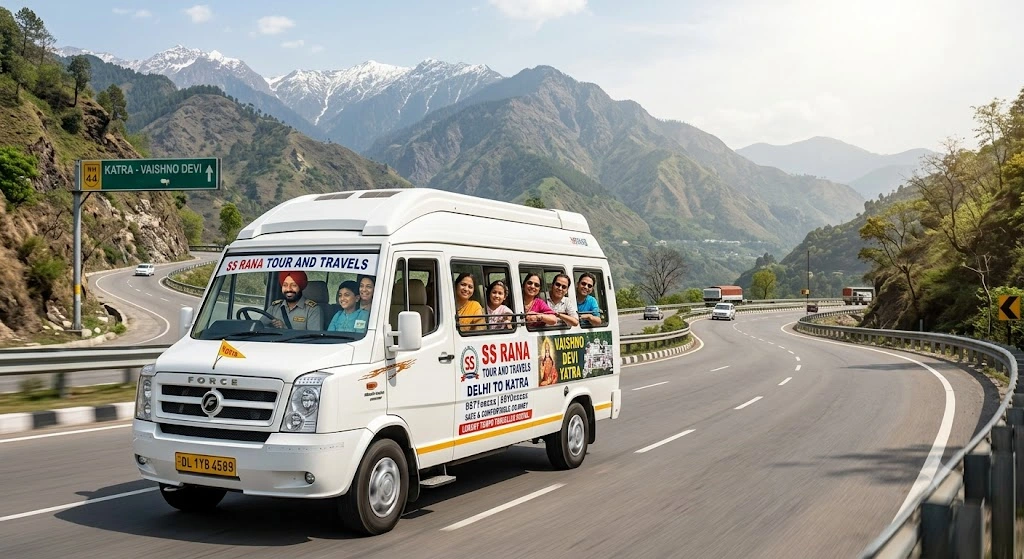
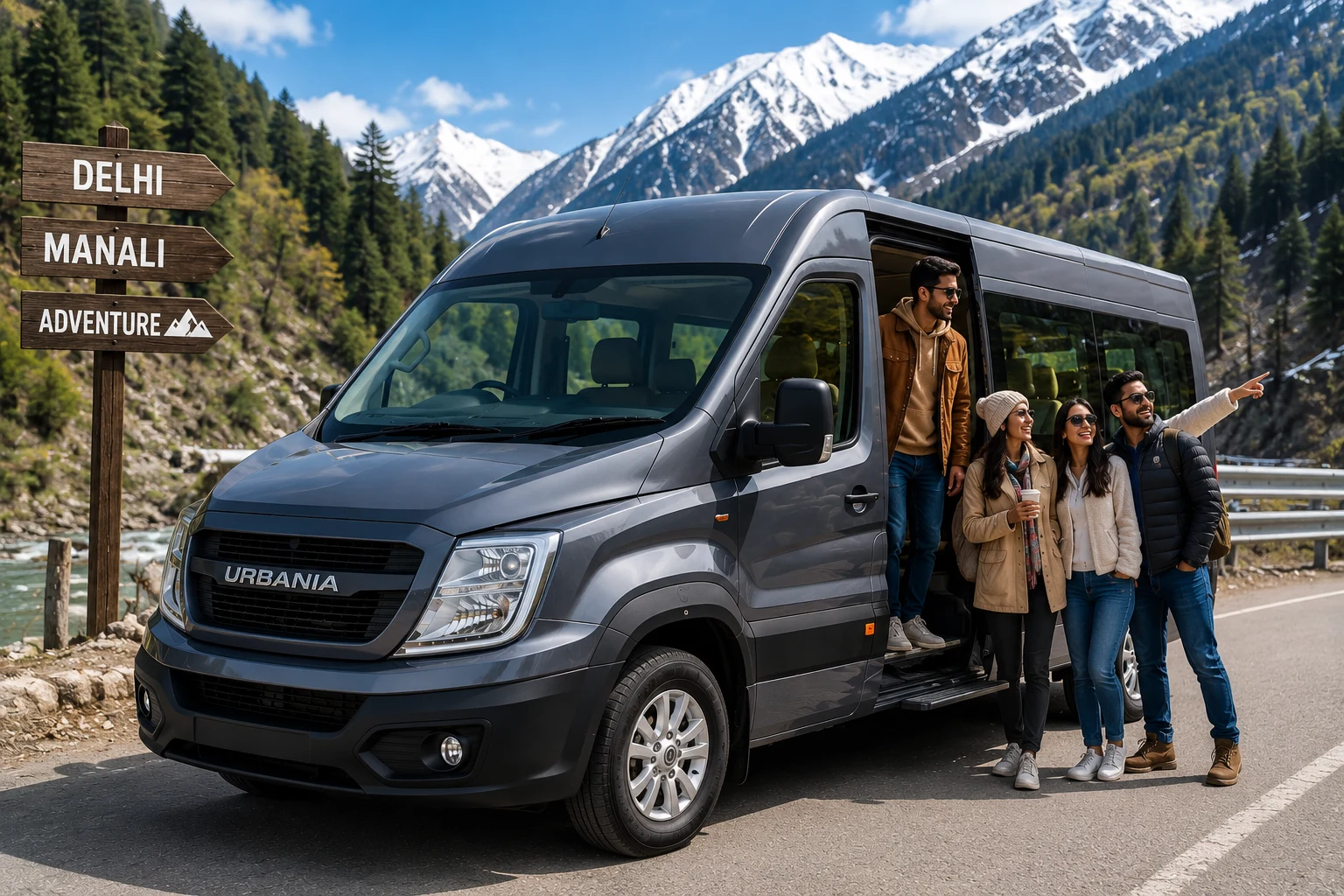
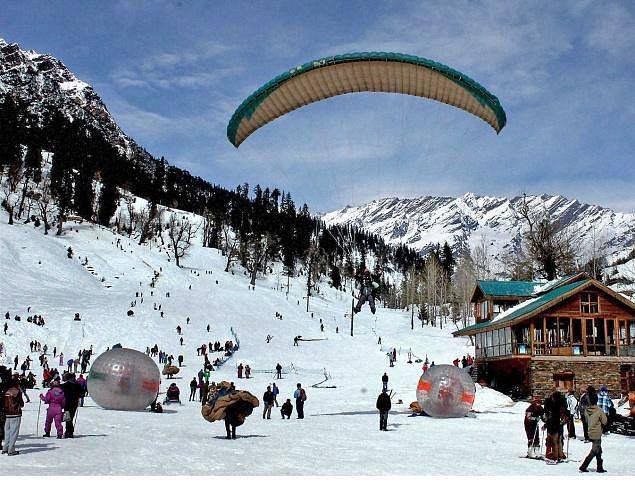
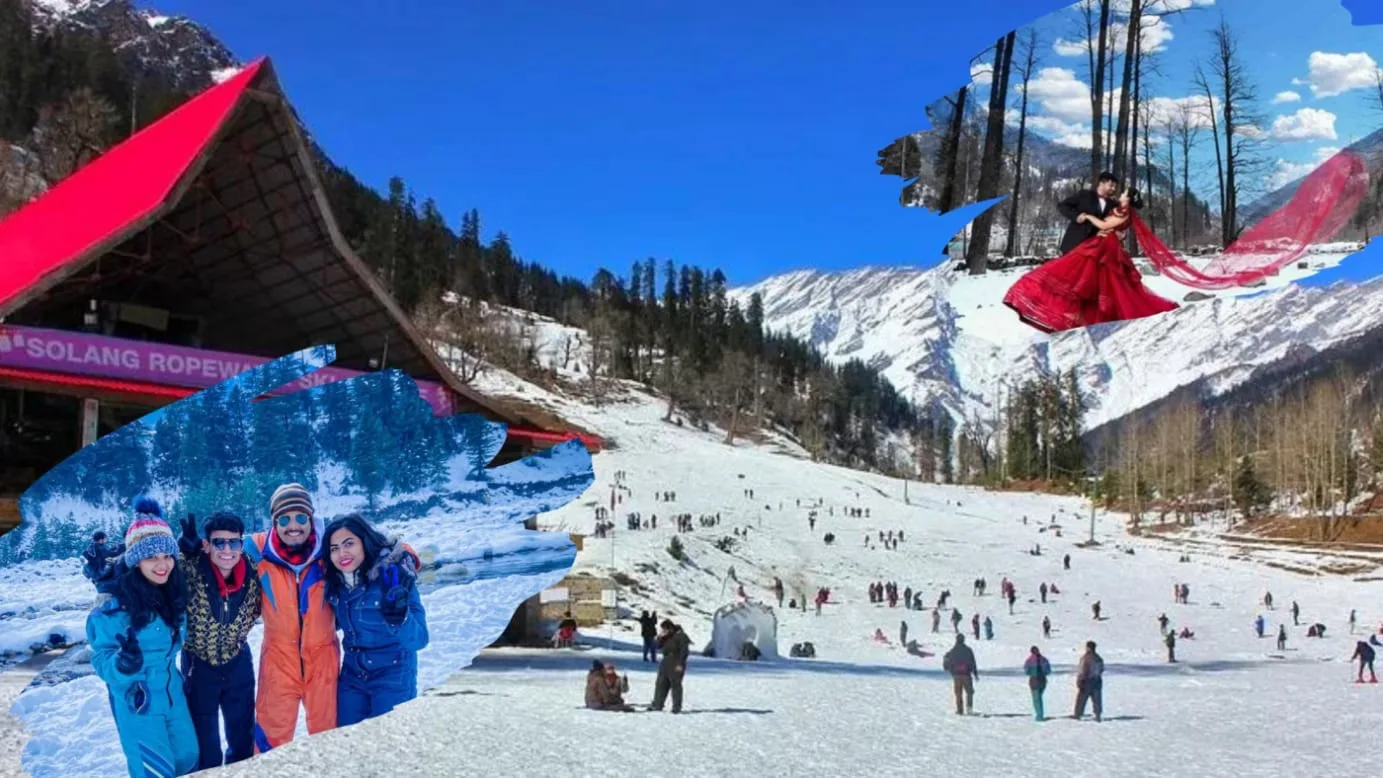
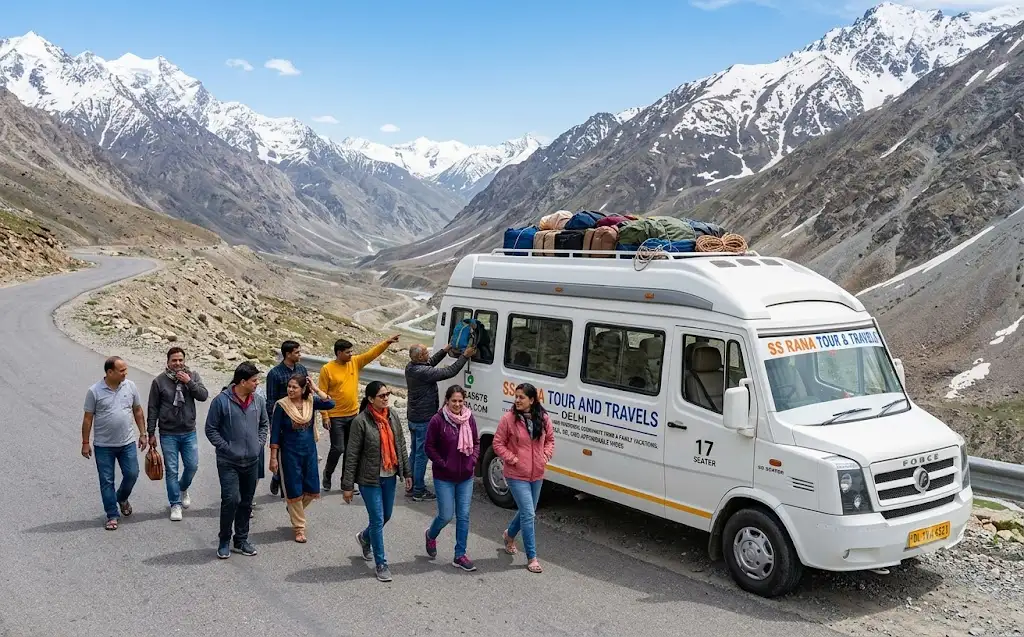
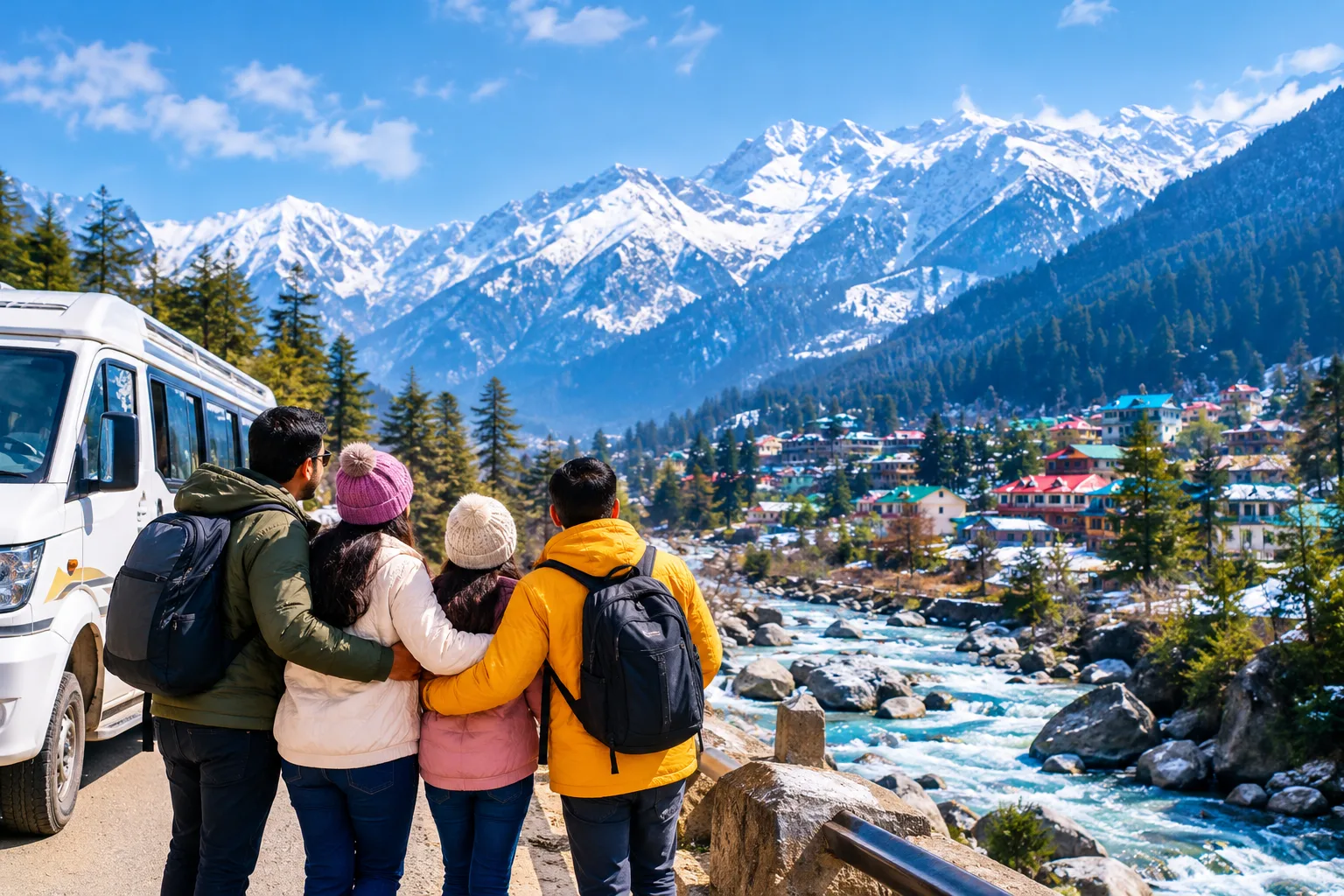
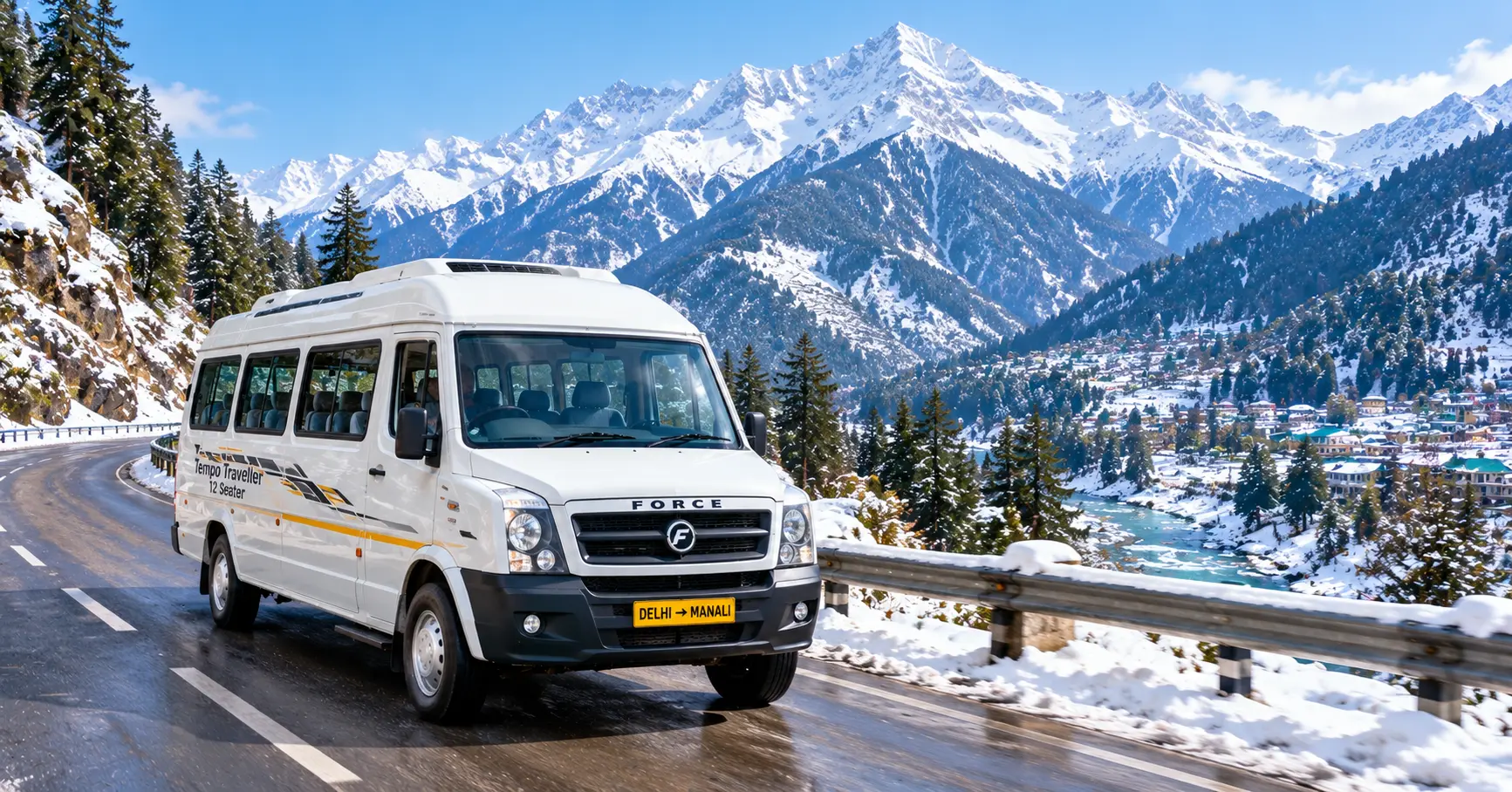
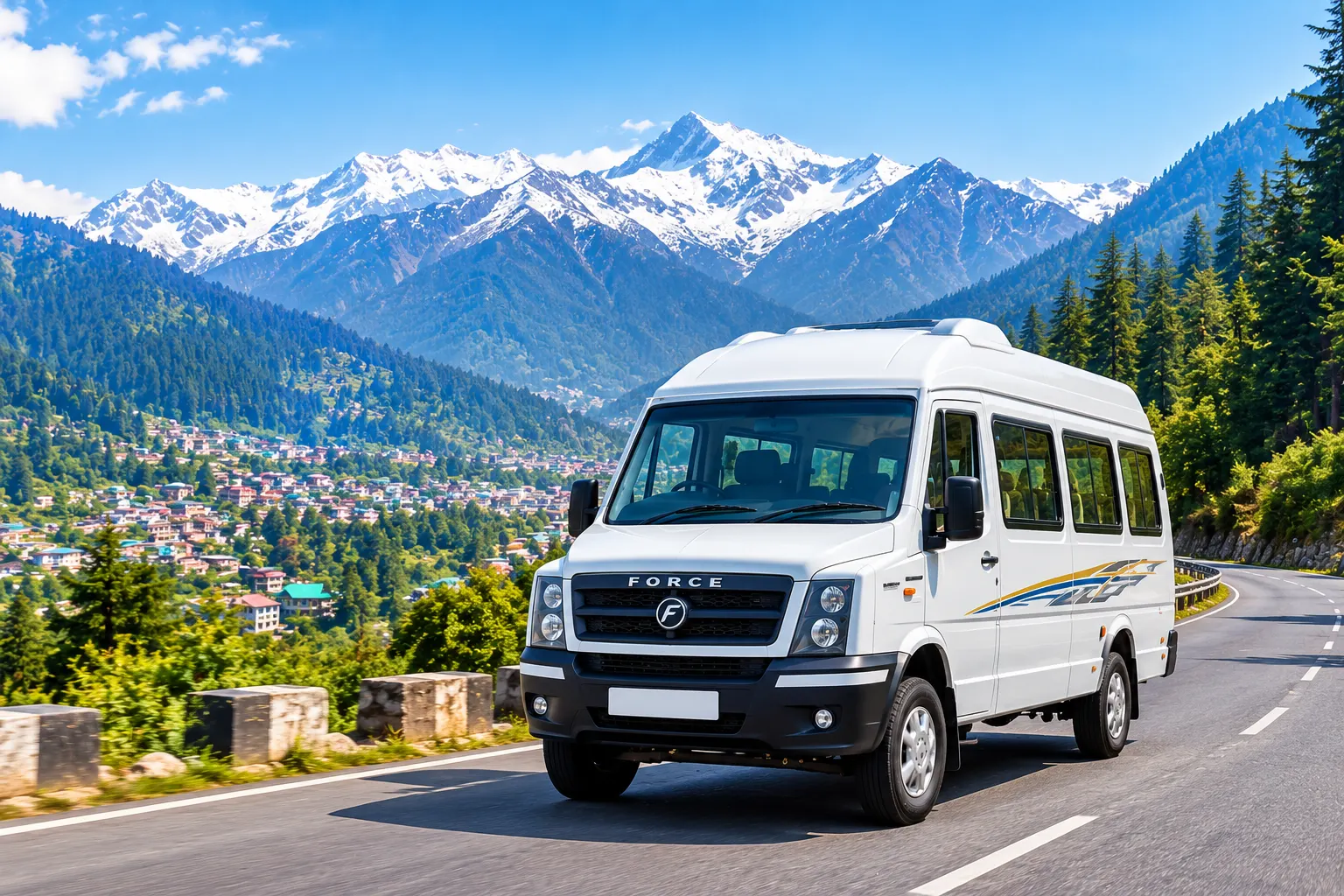
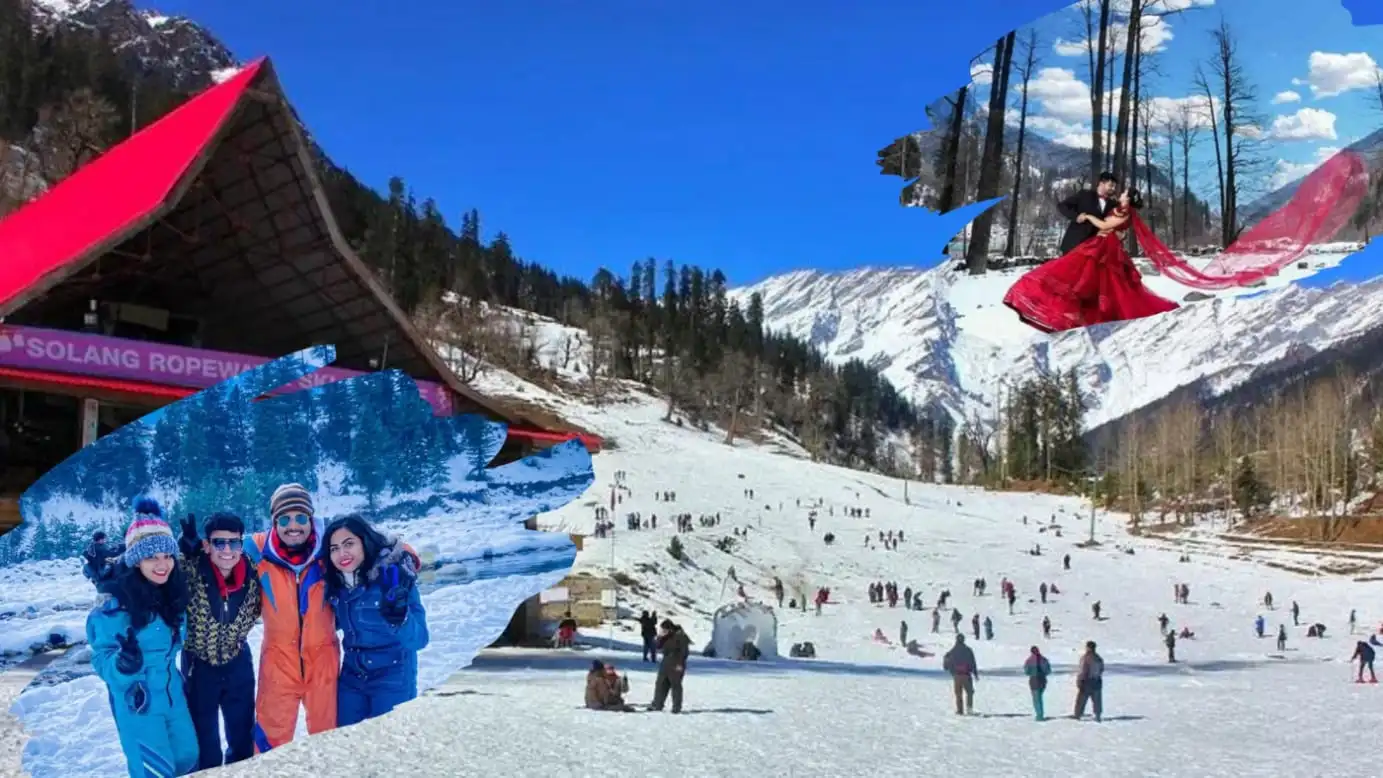
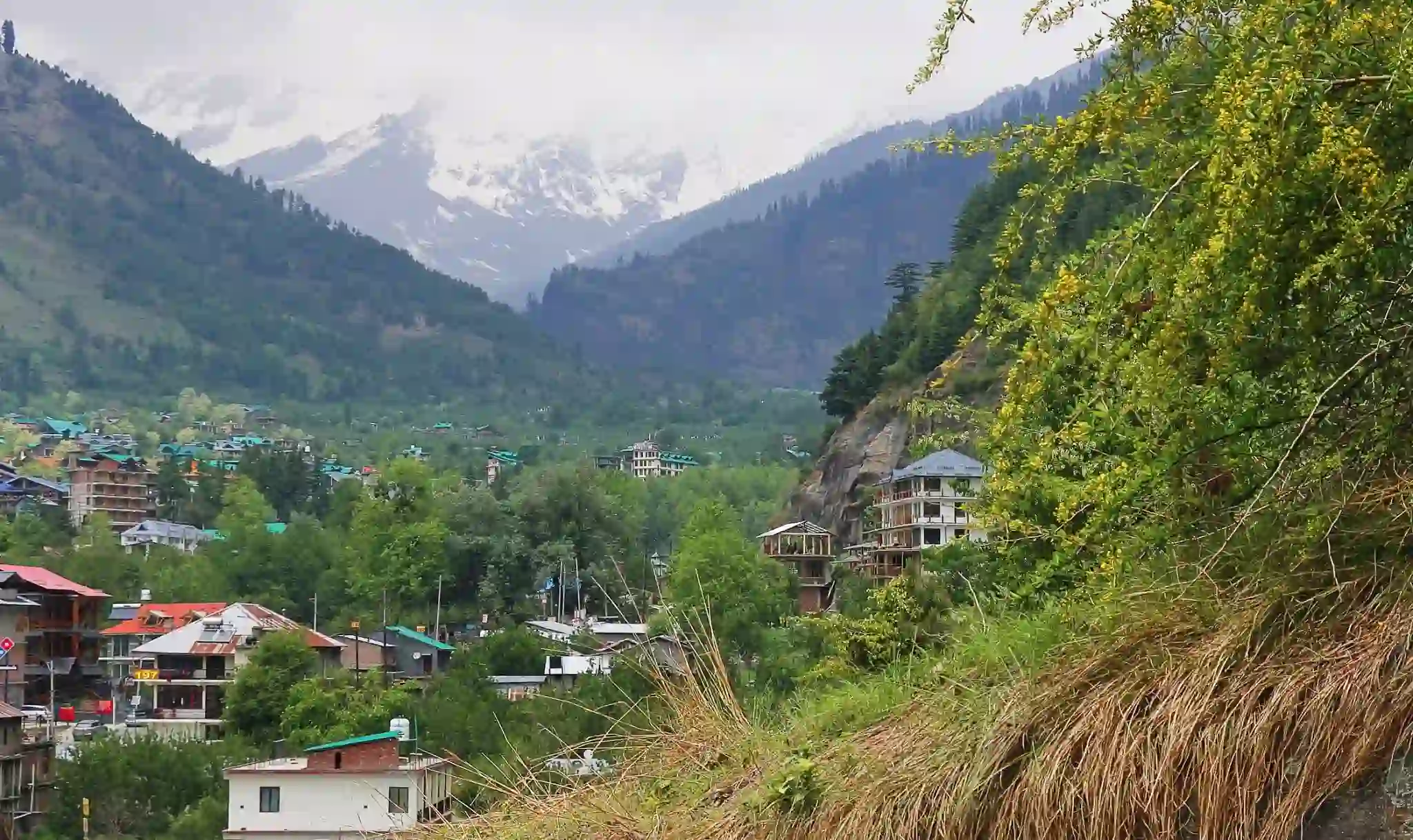
This is one of the most frequently booked routes for tempo traveller rentals out of Delhi, given how popular Manali is as a group getaway for families, friend circles, and corporate teams alike. The hill terrain in the final stretch, particularly past Mandi, means the journey time runs noticeably longer than flat-road distance calculations would suggest, since winding mountain roads require slower, more cautious driving. It's worth confirming realistic travel time with your operator rather than assuming standard highway speed, and building in a buffer for rest stops, especially if the group includes children or elderly travelers who'll need more frequent breaks.
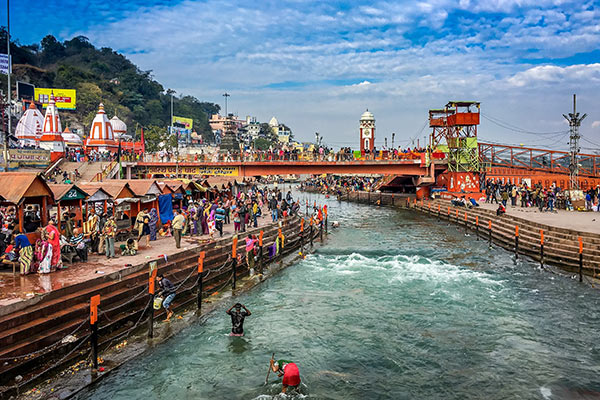
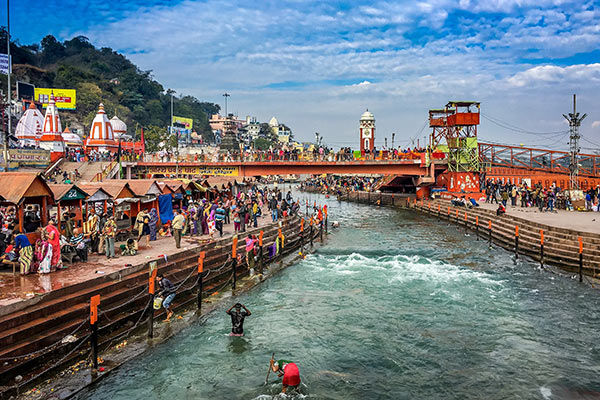
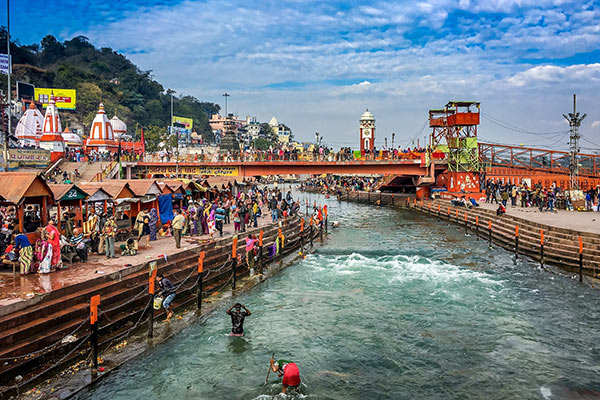
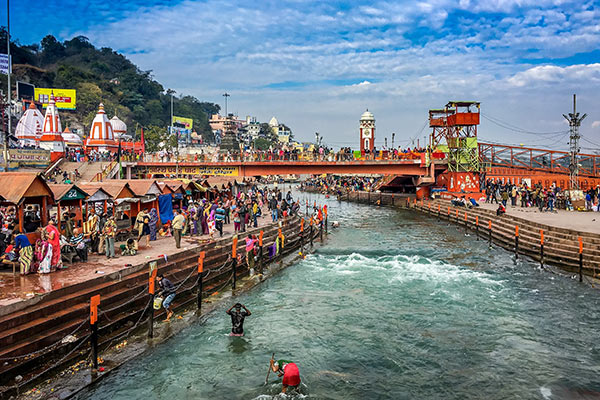
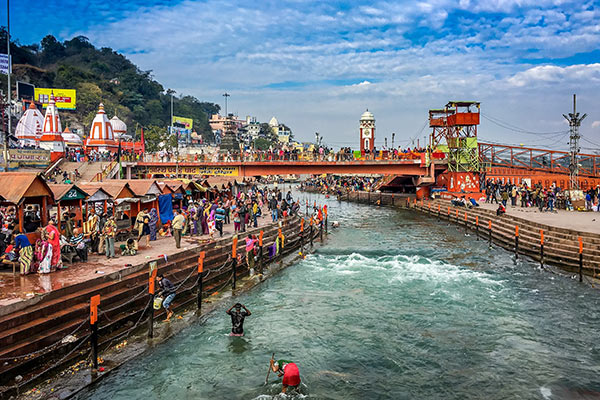
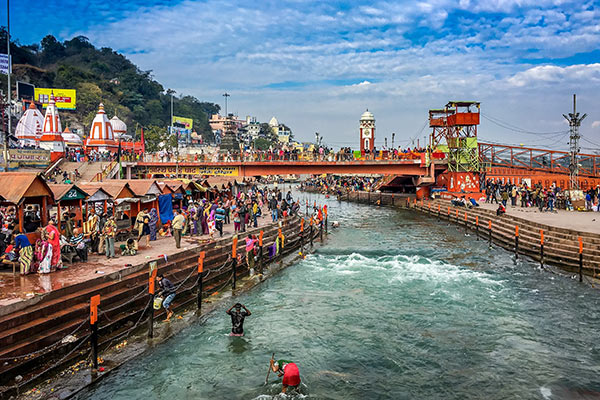
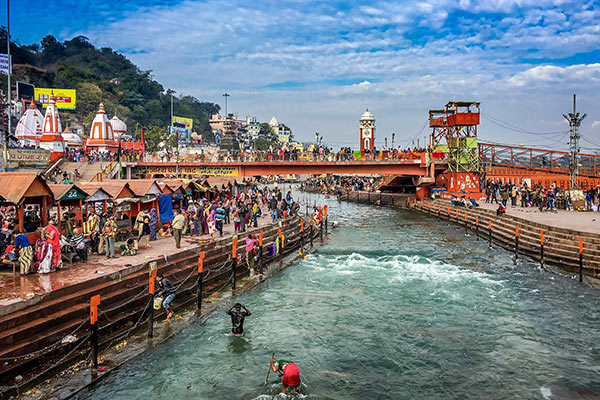
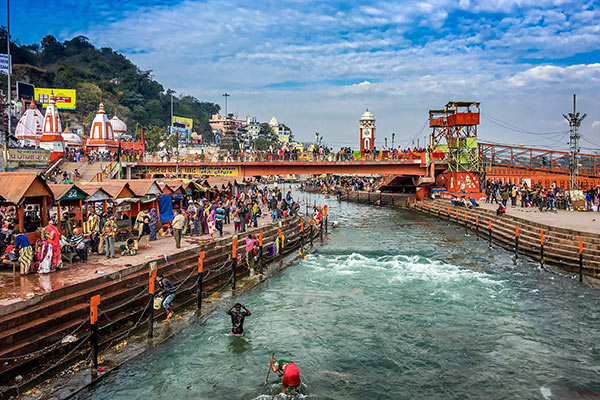
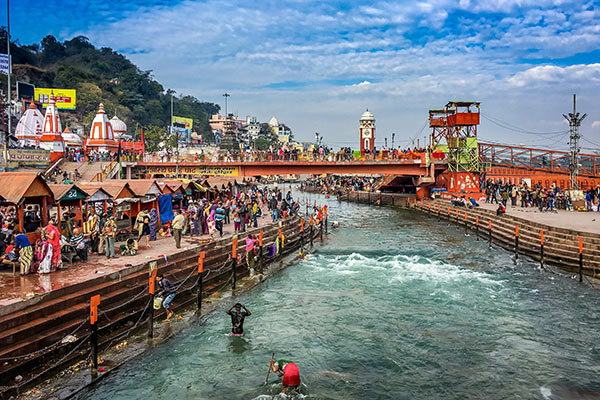
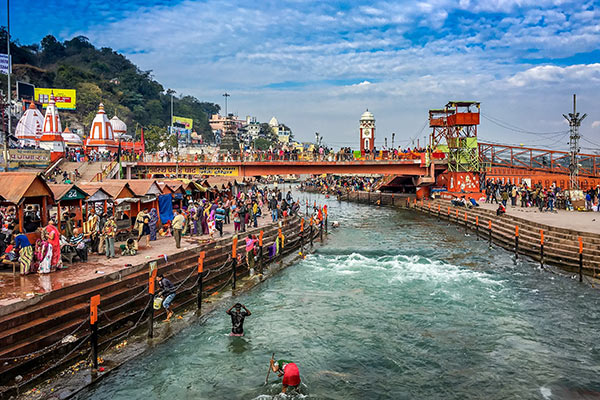
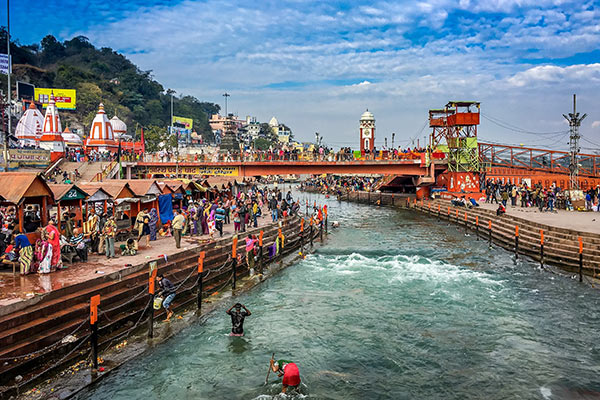
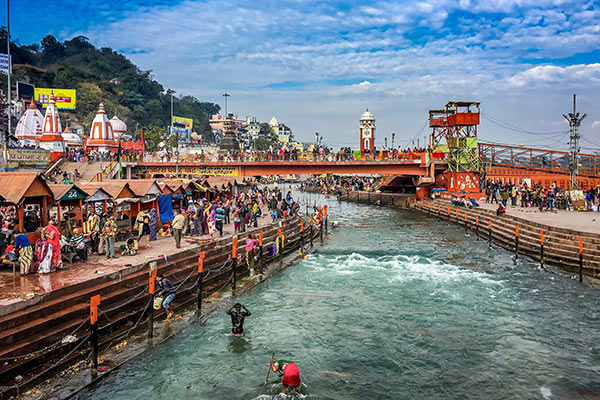
Delhi to Rishikesh/Haridwar
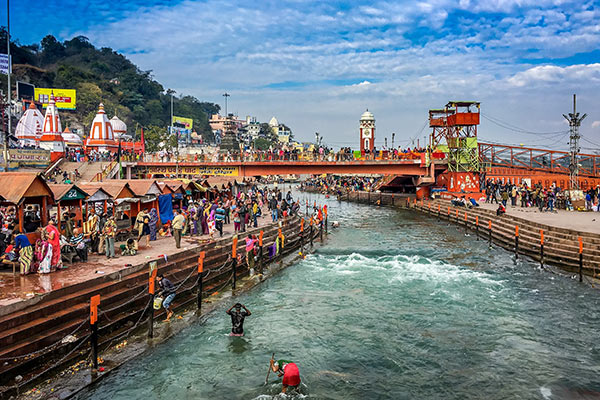
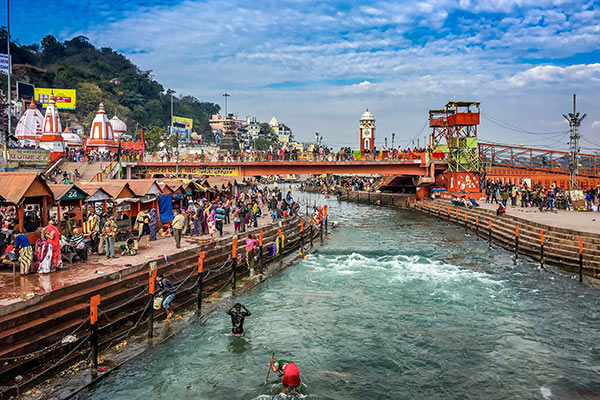
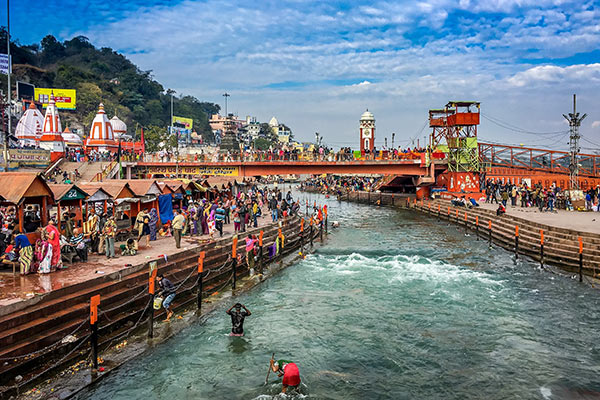
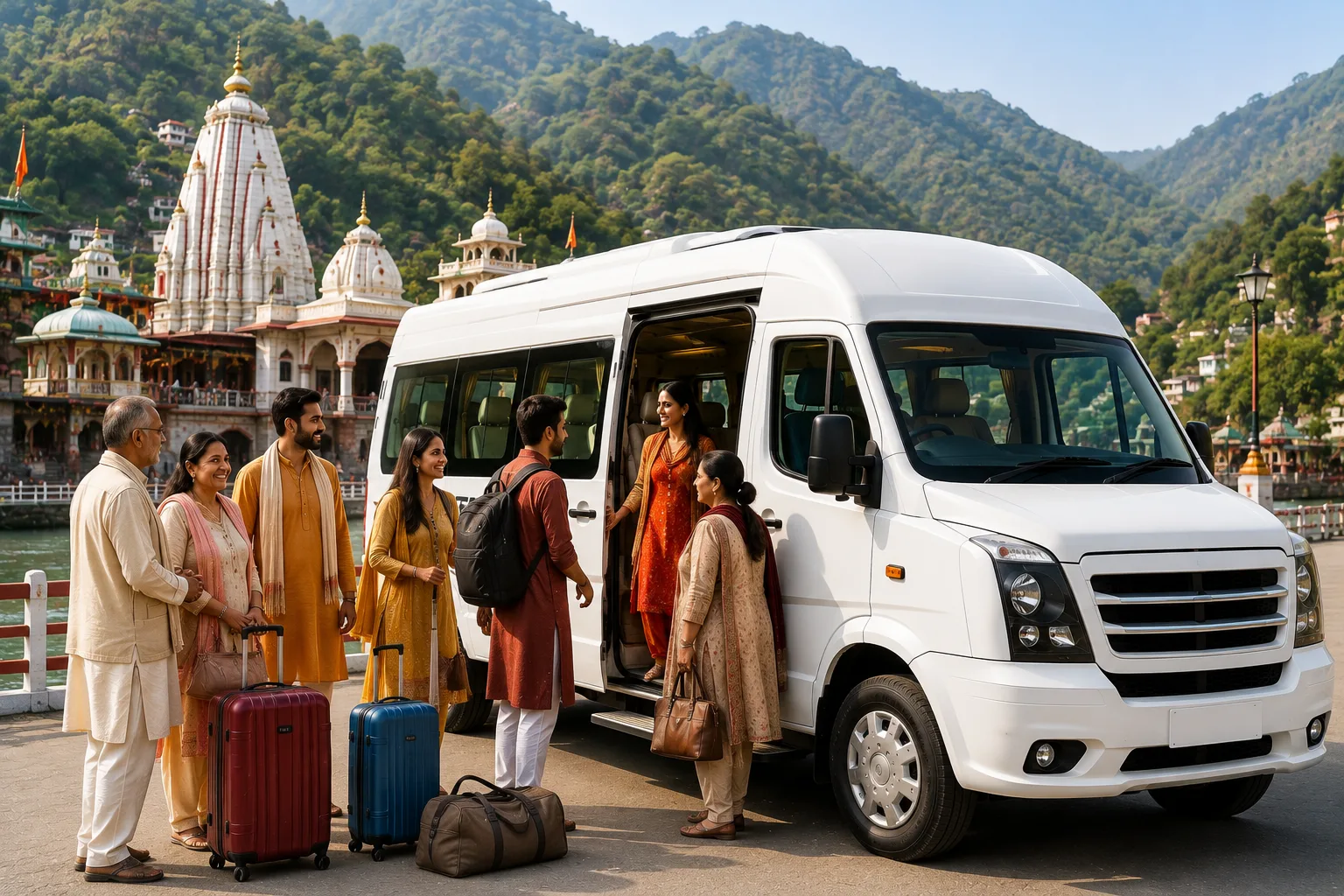
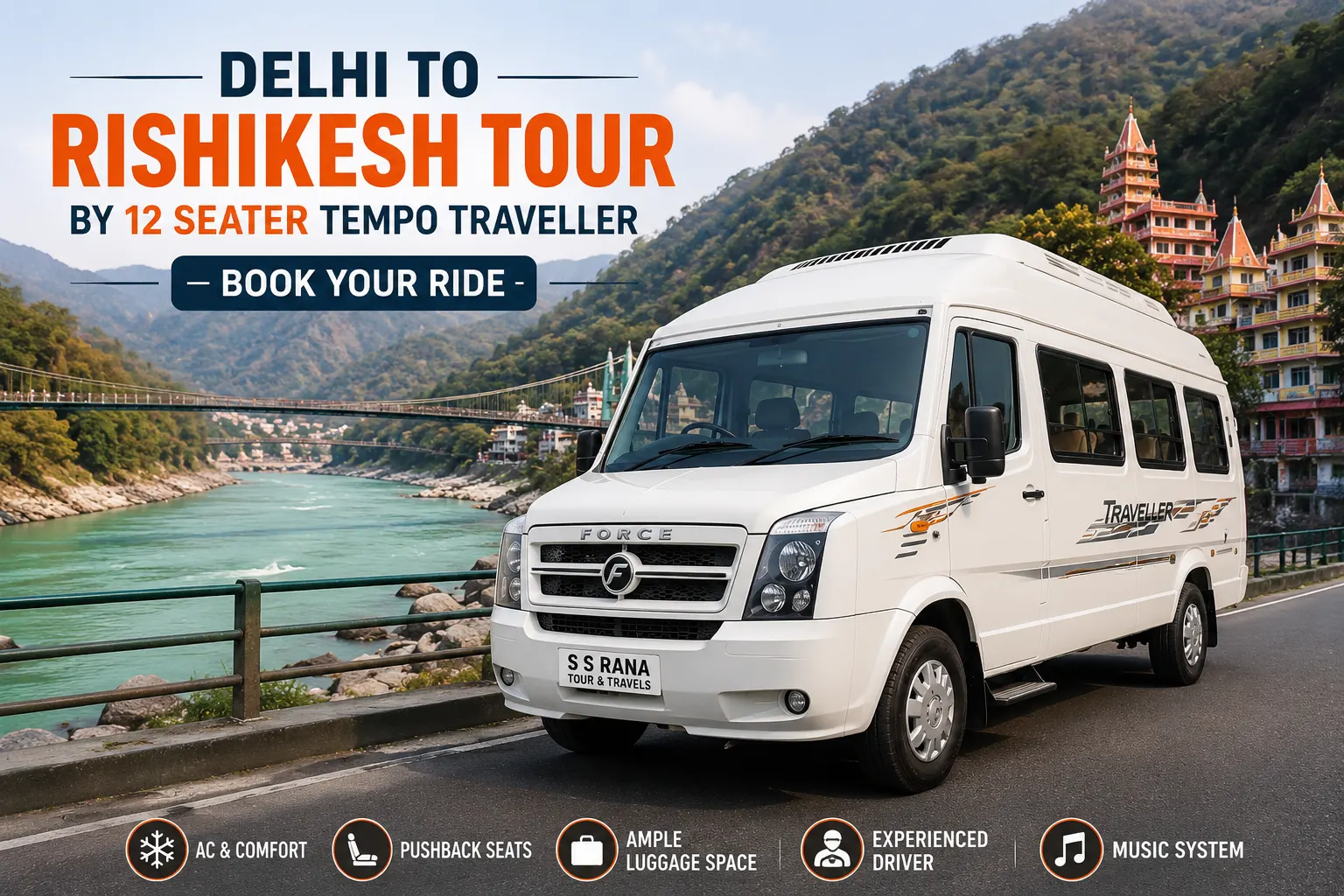
This is a comparatively shorter route, often booked for religious trips, weekend getaways, or adventure-focused groups heading out for river rafting and other outdoor activities along the Ganga. Because the drive is shorter than the Manali or Shimla routes, it's a popular option for a quick 2-3 day group trip that doesn't require taking much time off, and pricing tends to reflect the shorter distance and lower fuel and driver-allowance costs involved.
Delhi to Shimla
Similar in overall profile to Manali bookings, this route also involves hill driving in its later stages, though the total distance and drive time are shorter than the Manali route. Groups often choose Shimla over Manali specifically because of this shorter travel time, making it a more manageable option for a long weekend trip rather than requiring a full week off.
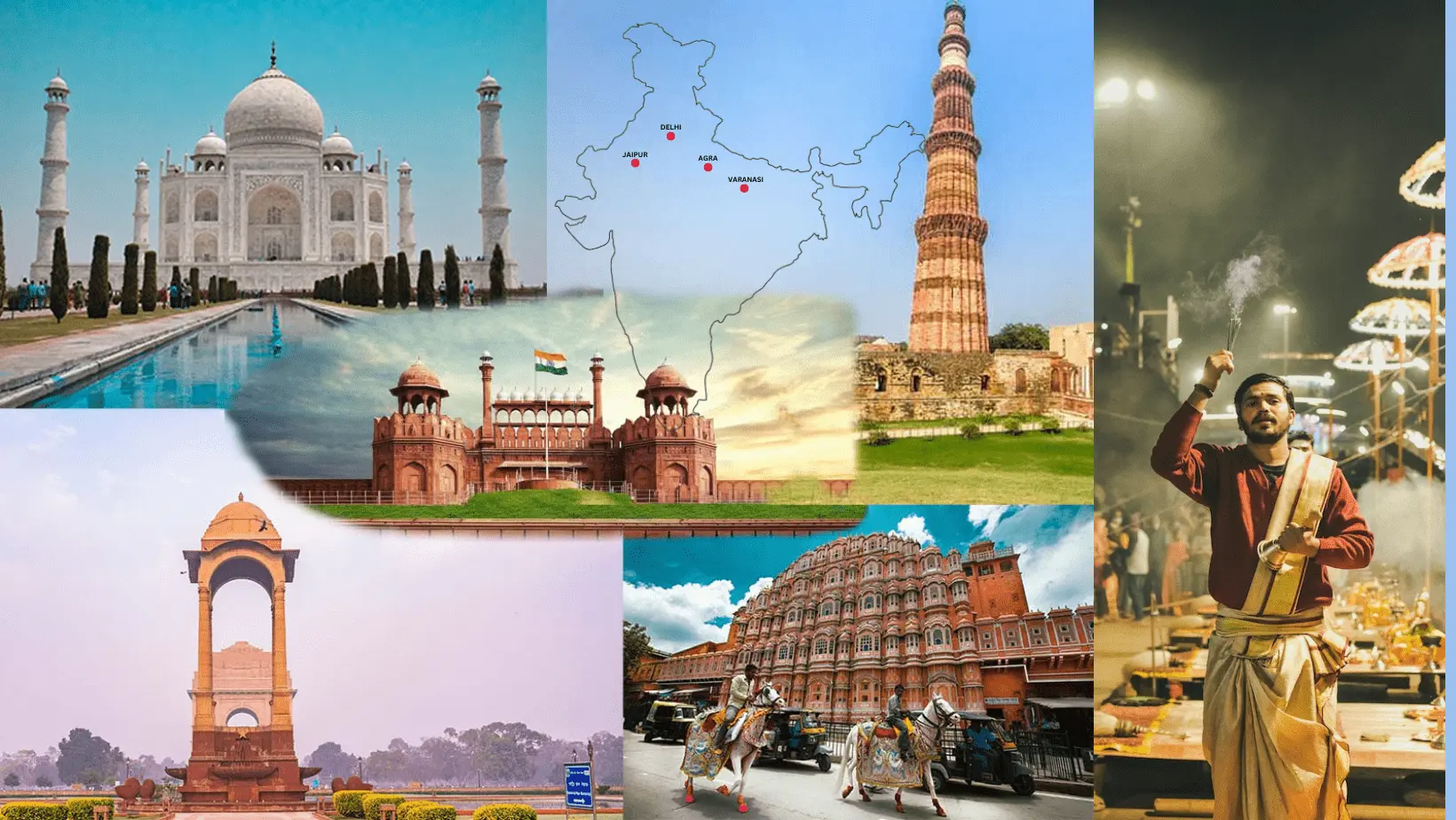
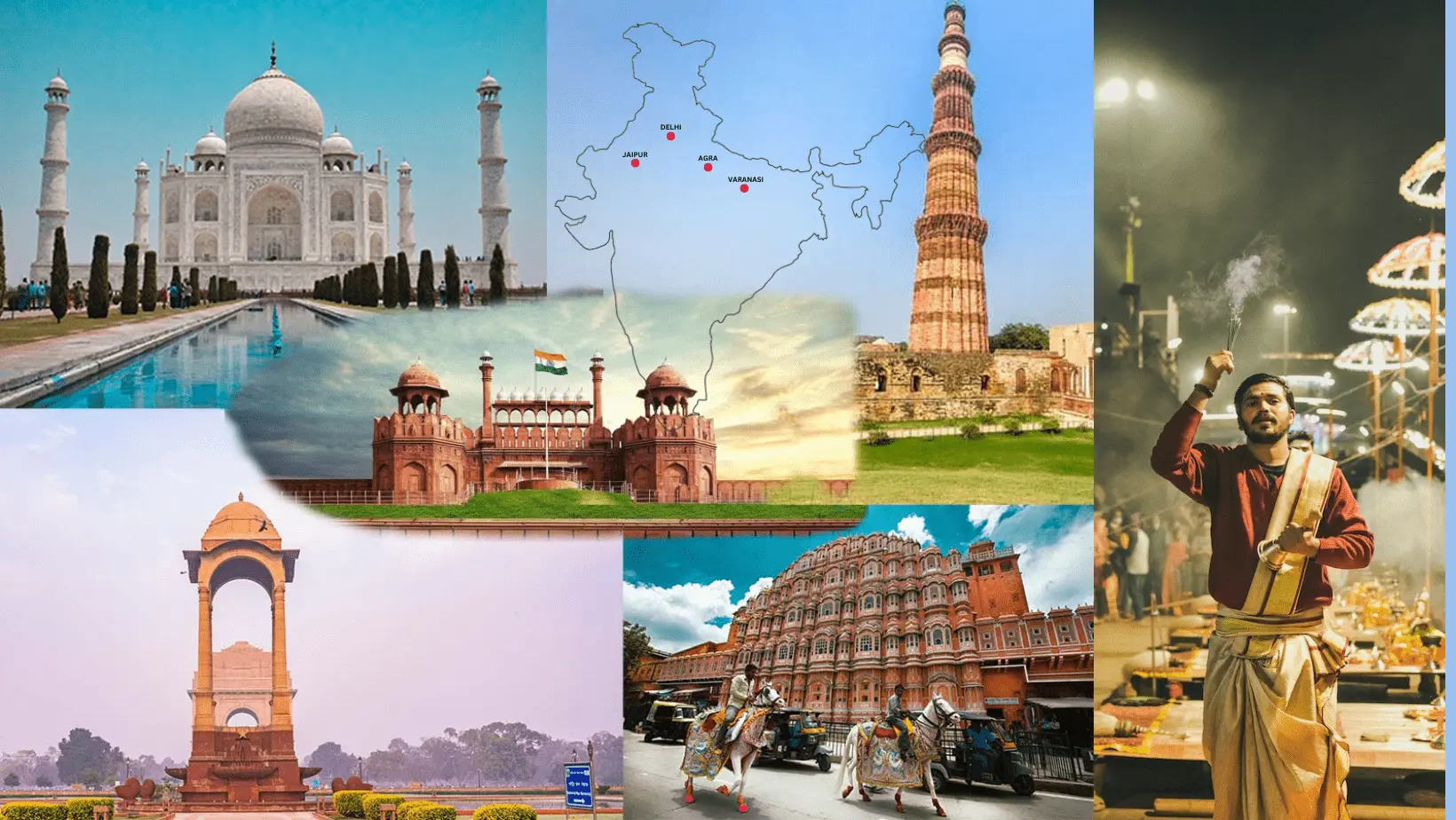
Delhi to Jaipur/Rajasthan Circuit
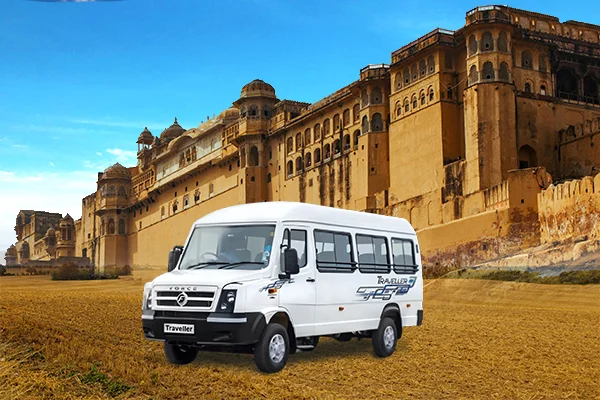
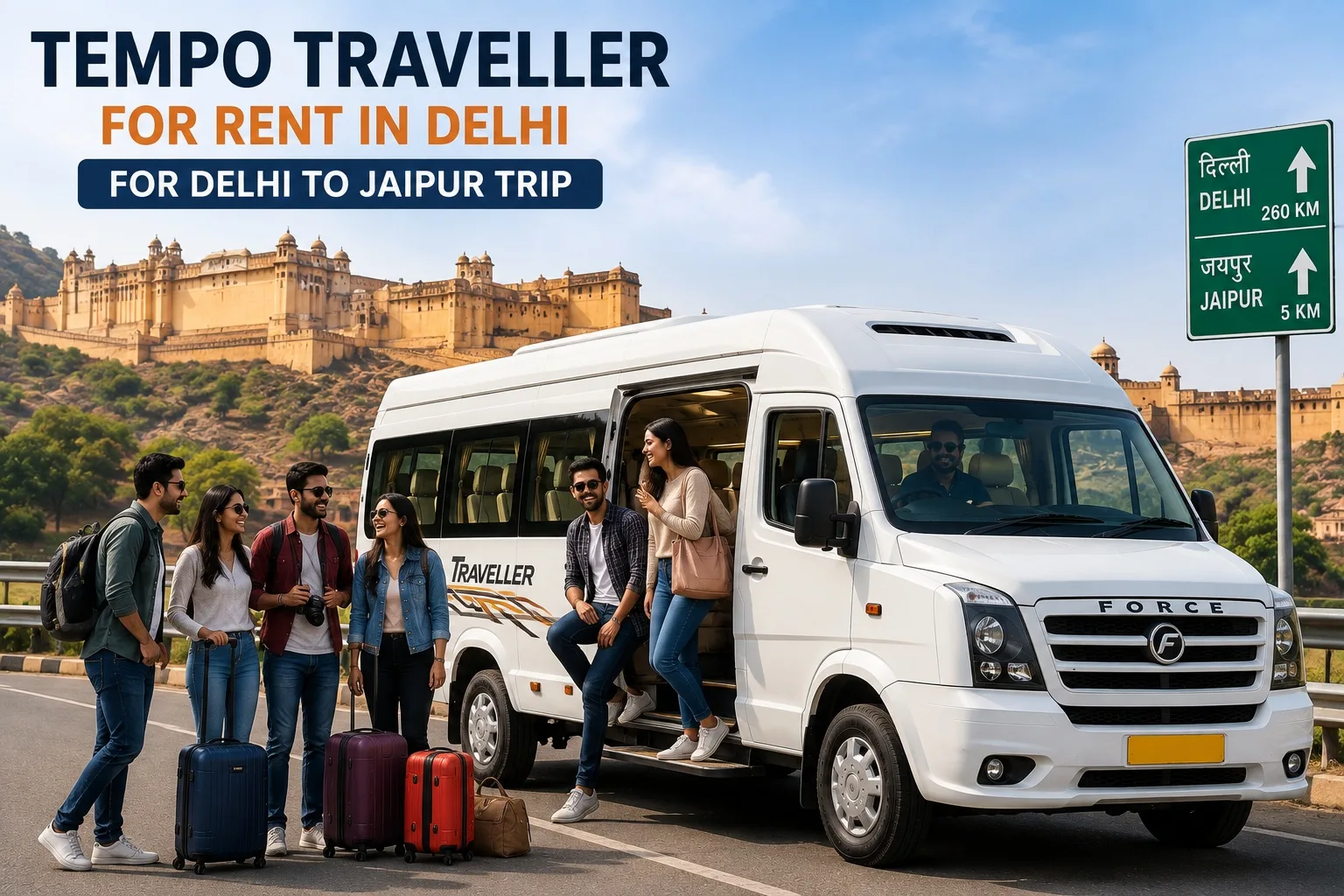
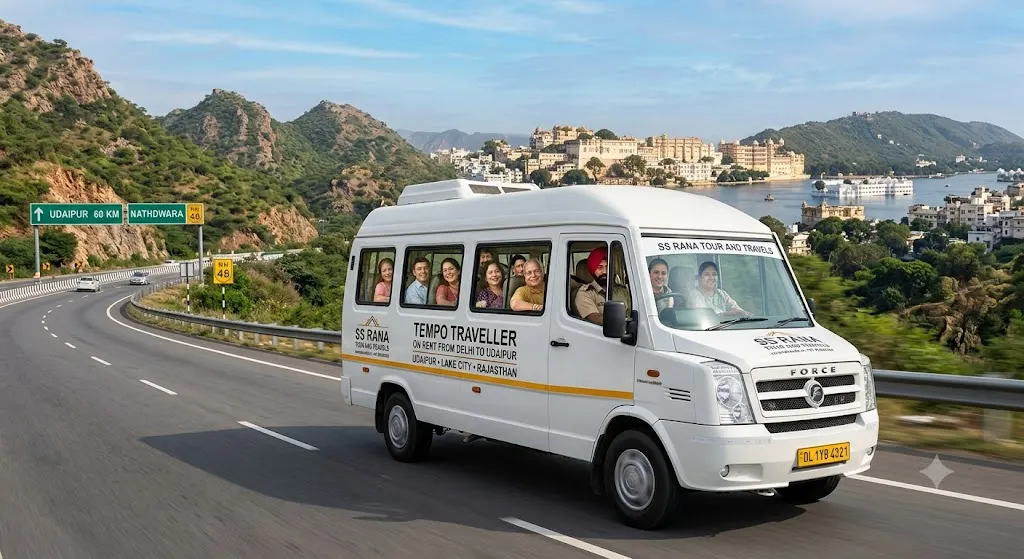
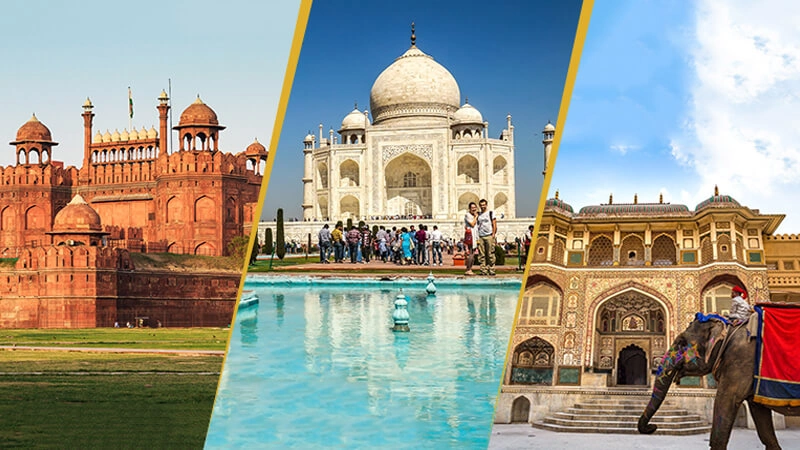
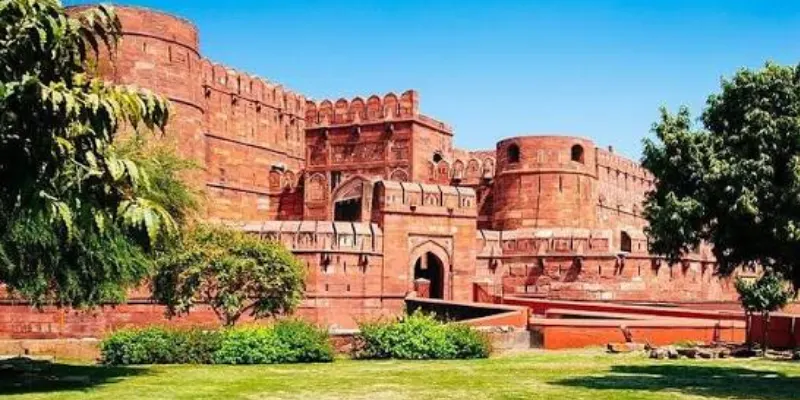
This route is popular for multi-day tour packages covering Jaipur, Udaipur, and Jodhpur, where flat highway conditions make for far more predictable travel times compared to the hill routes. Because the terrain doesn't involve steep climbs or winding roads, per-kilometer pricing on this circuit tends to be lower than equivalent-distance hill routes, and the more predictable driving conditions also make multi-city itineraries easier to plan around fixed timings.
Delhi Airport Transfers
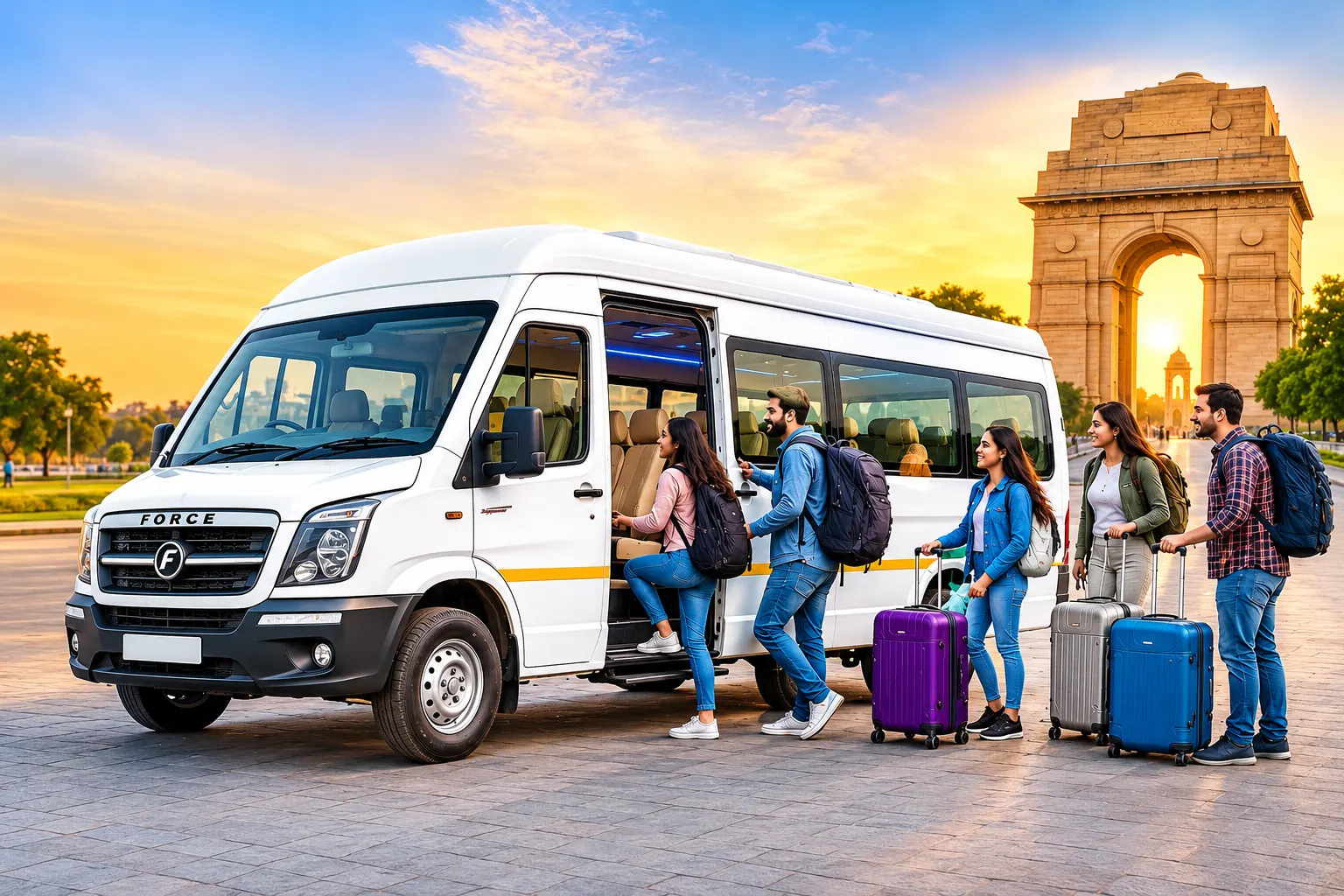
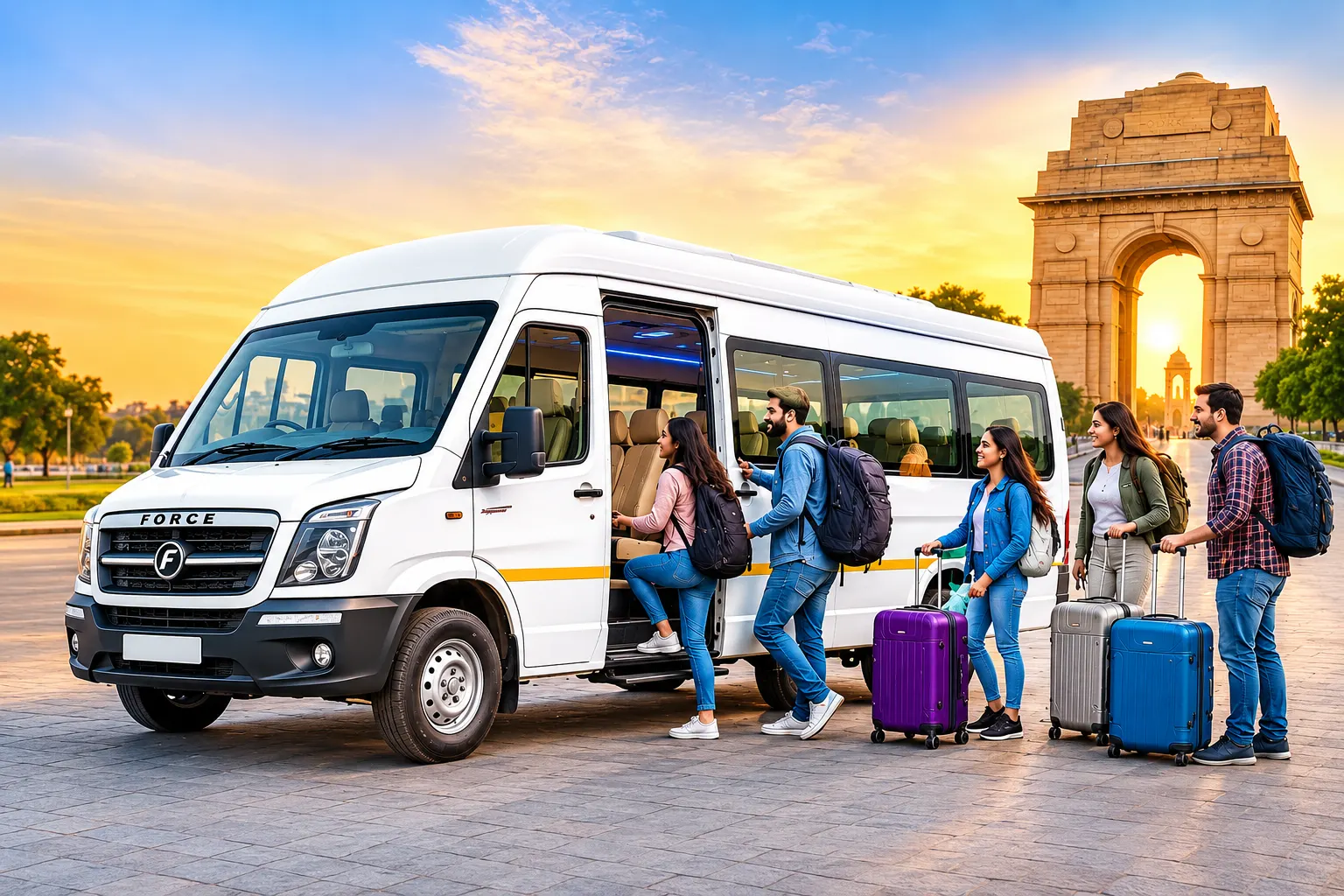
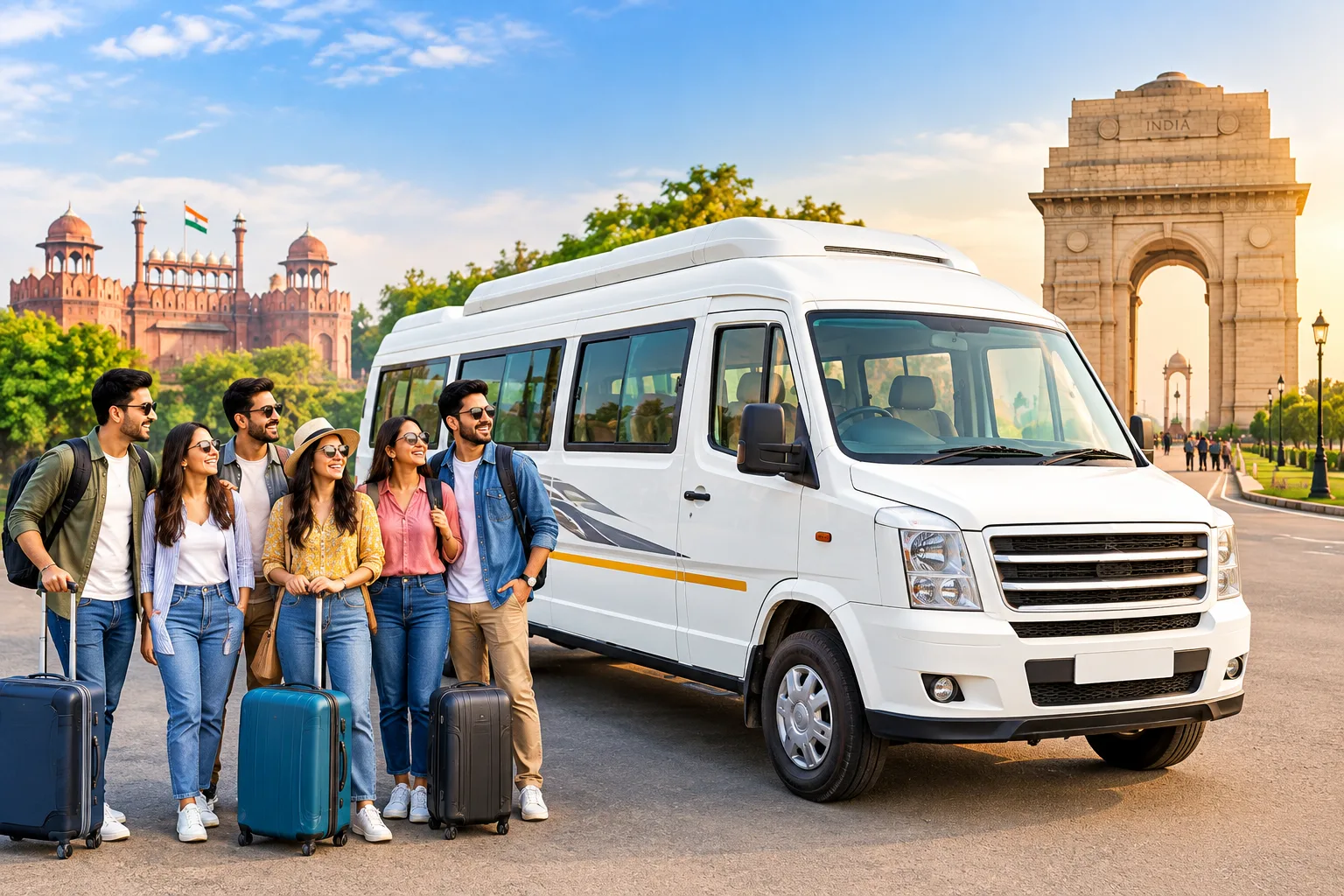
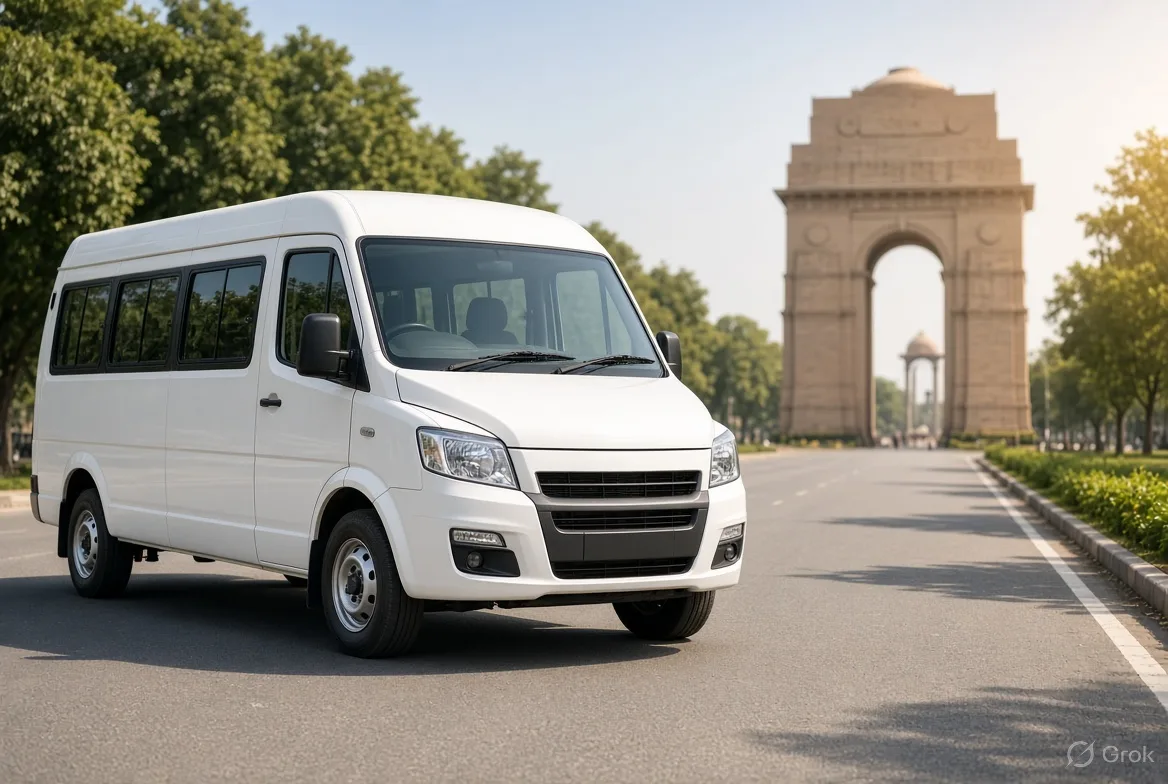
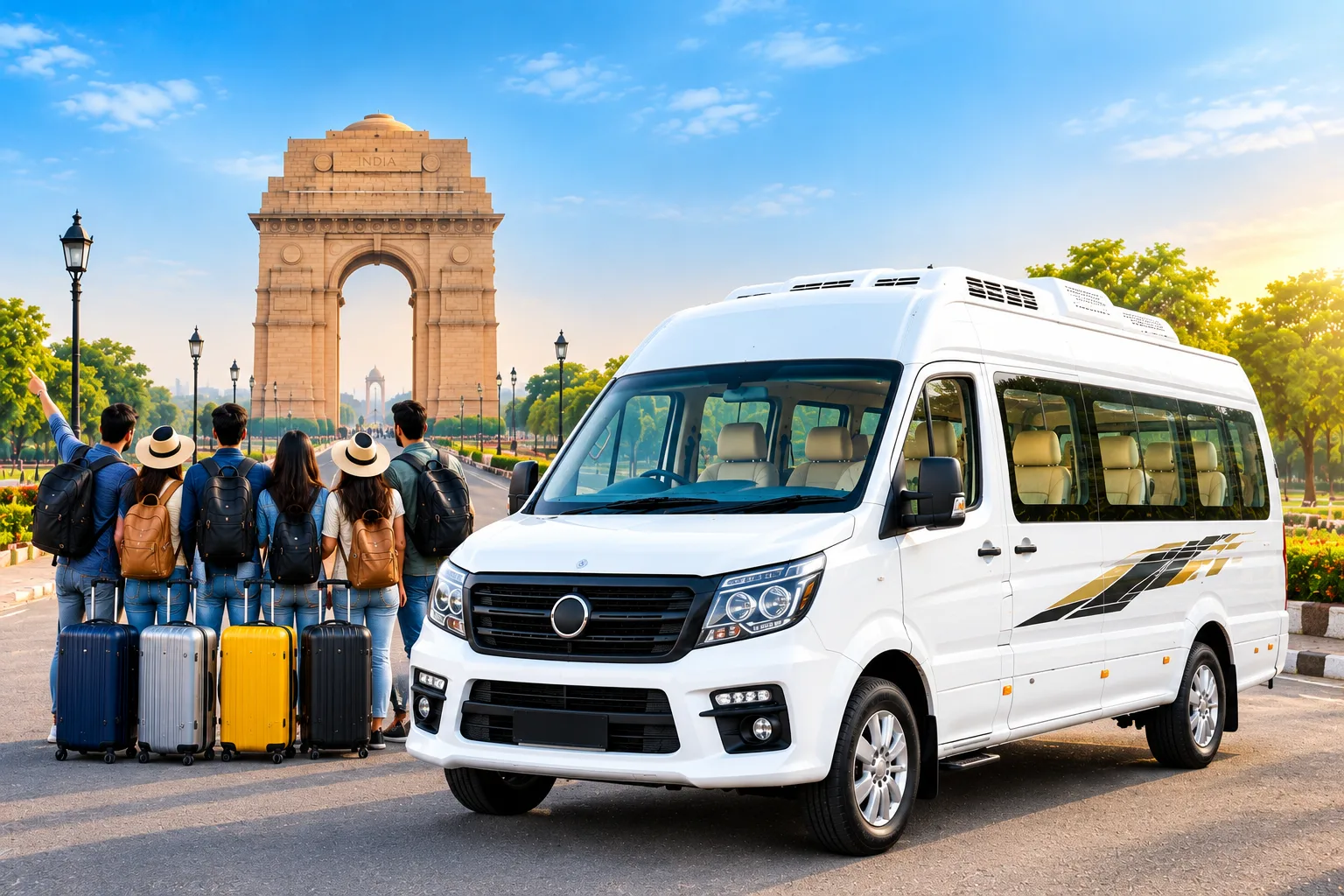
For groups arriving or departing together — whether for a family function, corporate event, or tour group pickup — a tempo traveller avoids the need for multiple cabs and keeps luggage handling considerably simpler. This is typically priced as a local rental rather than an outstation trip, with a flat rate covering pickup, drop, and a defined waiting period if needed.
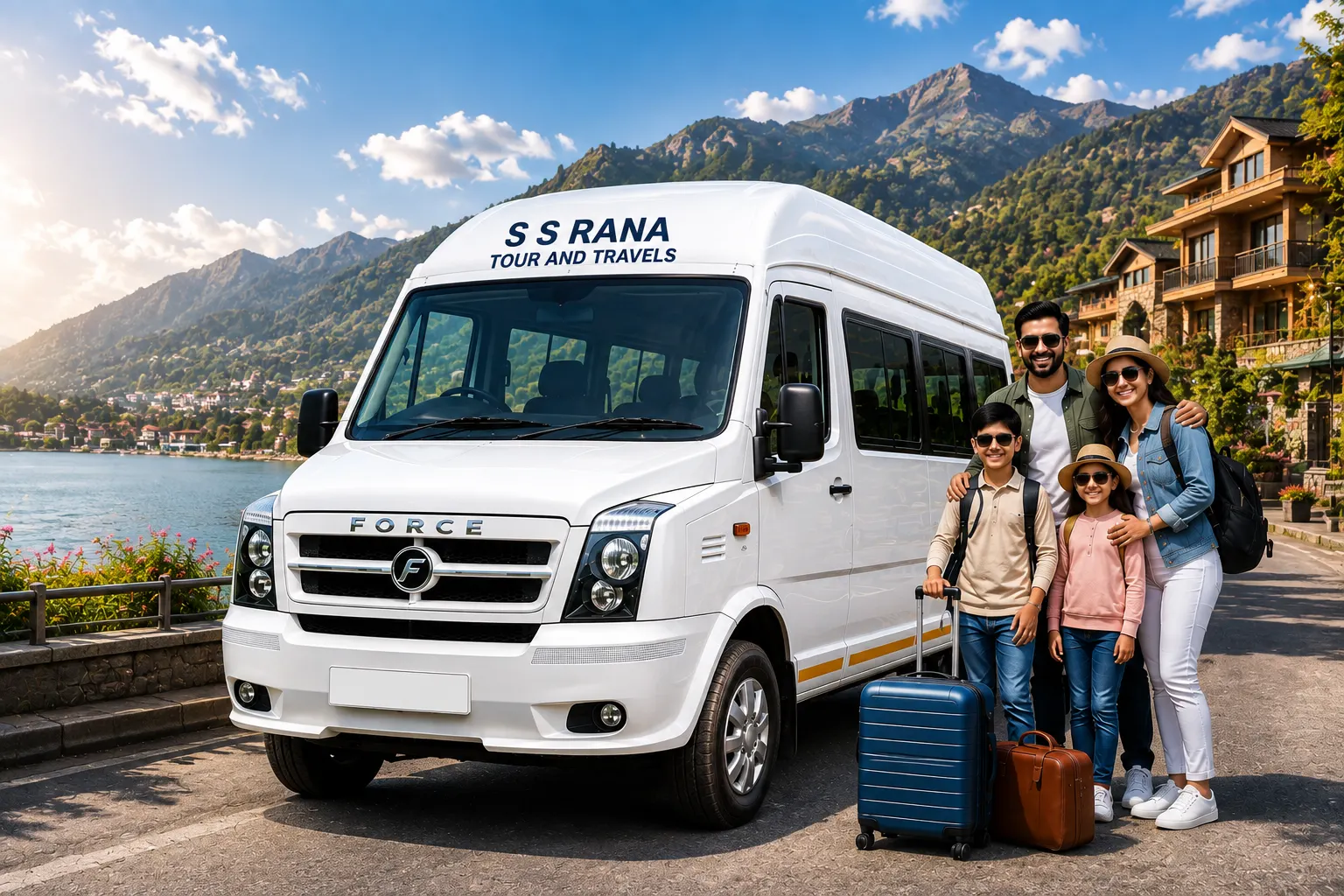
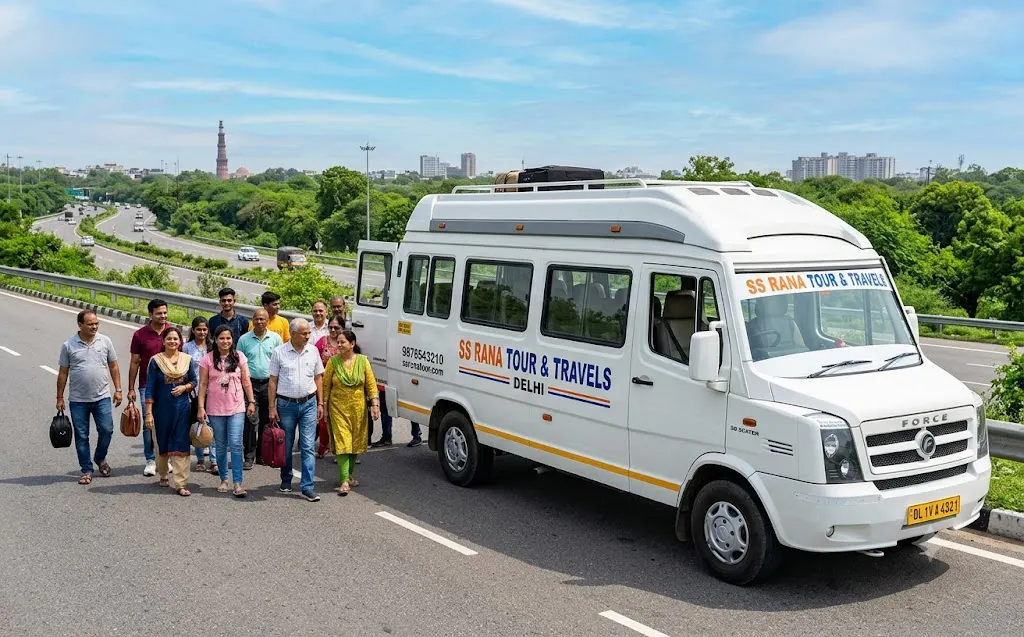
For group departures on popular routes like Manali or Rishikesh, operators such as SS Rana Tour & Travels offer fixed-route tempo traveller packages from Delhi, which can work out more predictable than negotiating a custom quote each time, especially during peak travel months when availability gets tighter and last-minute pricing tends to climb.
What to Check Before Booking a Luxury Tempo Traveller
Vehicle Condition and Age
Before confirming a booking, it's worth asking when the vehicle was last serviced and what its registration year is, since this directly affects reliability on longer routes. Older vehicles on long hill routes are more prone to breakdowns, which can disrupt a tightly planned itinerary and turn what should be a smooth trip into a stressful one, particularly on remote mountain stretches where roadside assistance isn't always quick to arrive.
Driver Experience on Hill Routes
For hill destinations like Manali or Shimla, it's important to confirm the driver has specific experience on mountain roads, since these routes require different handling, braking technique, and judgment than flat highway driving. A driver who's only ever driven flat-road routes may be far more cautious or, worse, may struggle with sharp hairpin bends, both of which can affect the overall trip experience and safety.
What's Included in the Quote
Before finalizing anything, it's worth getting absolute clarity on whether toll charges, state permits, parking, and driver allowance or night halt charges are included in the quoted price or billed separately at the end of the trip. This is genuinely one of the most common sources of confusion and disagreement after a trip is completed, since a quote that looked competitive at the outset can end up costing considerably more once these additional charges are added on.
Cancellation and Rescheduling Policy
It's worth asking about the cancellation window and any rescheduling flexibility well before you need it, particularly important during peak season when last-minute weather-related route changes — like landslides or snow closures on hill routes — are more common than travelers might expect. Knowing your options in advance means you're not scrambling to understand the policy in the middle of a disrupted trip.
AC and Amenities Check
"Luxury" branding can vary quite a bit between operators, so it's worth asking specifically what's included in the vehicle rather than assuming a uniform standard applies across the industry. Pushback seats, working AC (which matters more than people expect on long summer highway stretches), charging points, and a functioning music system are all worth confirming individually rather than taking the word "luxury" at face value.
Common Mistakes to Avoid When Renting a Tempo Traveller
Booking based on price alone is one of the most common mistakes travelers make, since the cheapest quote sometimes excludes toll, parking, or driver allowance, all of which get added later and can change the total cost significantly by the end of the trip. A quote that looks like the best deal on paper can end up costing more than a slightly higher, fully inclusive quote from a different operator.
Not confirming seating capacity accurately is another frequent issue, since a 12-seater vehicle isn't always genuinely comfortable for exactly 12 adults traveling with luggage. Checking the actual usable seating capacity, factoring in luggage space and any additional items the group is carrying, helps avoid an uncomfortably cramped trip that could have been prevented with a slightly larger vehicle.
Booking too close to travel dates during peak season often limits both your options and your budget. Manali and Shimla routes in particular see high demand in May-June and again in December, and last-minute bookings during these windows often mean either higher prices due to demand or, in some cases, limited vehicle availability altogether.
Not checking the vehicle in advance for longer trips can lead to unpleasant surprises on travel day. For multi-day outstation trips especially, requesting photos or details of the specific vehicle assigned to your booking — rather than a generic stock image — helps set accurate expectations before the group actually shows up to board.
Ignoring luggage space requirements is a smaller but genuinely common oversight. Larger groups with substantial luggage should confirm the rear cabin space is adequate for the trip, especially for hill trips where extra winter clothing, jackets, and cold-weather gear add noticeably more volume than a typical short getaway would require.
Tempo Traveller vs Bus vs Multiple Cabs: Which Works Better?
When a Tempo Traveller Makes Sense
For groups of roughly 9 to 26 people traveling together on a fixed itinerary, a tempo traveller keeps everyone on one schedule, avoids the coordination headache of managing multiple cabs arriving and departing at different times, and is generally more comfortable than a standard bus for hill routes where seat quality matters over a long drive. It also allows the whole group to make joint decisions about stops, breaks, and detours along the way, which is harder to coordinate across several separate vehicles.
When Multiple Cabs Might Work Better
For very small groups, typically under 6 people, or trips involving flexible, staggered schedules where not everyone is traveling at the same time, individual cabs might actually offer more practical flexibility. This usually comes at a higher combined cost per person compared to a single shared vehicle, but the flexibility can be worth it for groups without a single fixed departure and return time.
When a Full-Sized Bus Makes Sense
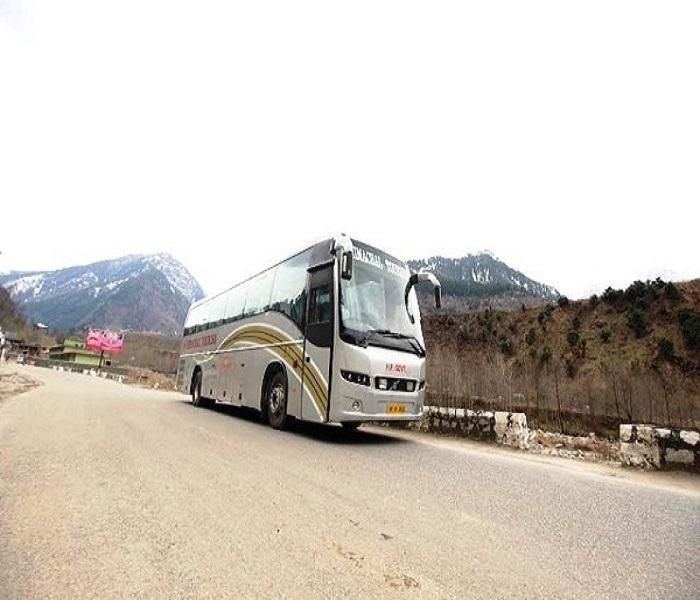
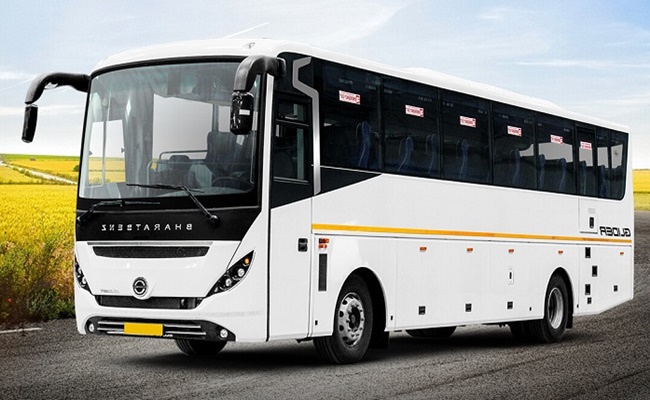
For groups larger than roughly 30 people, a full-sized bus becomes more cost-effective on a per-person basis, since the fixed costs of the vehicle and driver get spread across more passengers. That said, it does sacrifice some of the comfort, seat quality, and route flexibility that a tempo traveller offers, which is why groups that fall just under this threshold often still prefer the tempo traveller option despite the slightly higher per-person cost.
Quick answer: A luxury tempo traveller works best for groups of roughly 9 to 26 people who want to travel together on a fixed itinerary with better comfort than a standard bus, without the coordination complexity of multiple cabs.
Conclusion
Renting a luxury tempo traveller on rent in delhi is one of the more practical choices for group travel, particularly for hill routes like Manali and Shimla where comfort and driver experience matter as much as price. The key is comparing quotes carefully — checking what's included, confirming the vehicle's actual condition, and booking early during peak season — rather than choosing purely on the lowest number quoted, since that number rarely tells the full story on its own. If you're planning a group trip and want the vehicle, driver, and route sorted out in advance, SS Rana Tour and Travels offers tempo traveller rentals from Delhi for popular routes, so you can focus on the trip itself rather than the logistics of getting there.
Daily rates vary based on seating capacity, route, and season, with local Delhi/NCR day rentals generally priced lower than outstation multi-day hill trips. It's best to request a written quote specifying exact inclusions for an accurate comparison, since two quotes with different totals often reflect different inclusions rather than a genuine price gap.
Luxury tempo travellers are commonly available in 9, 12, 17, 20, and 26-seater configurations, with larger vehicles typically including a rear luggage cabin. The right size depends on your group count and how much luggage the group is carrying, since a technically adequate seat count can still feel cramped with a lot of bags.
This varies by operator — some include toll, parking, and state permit charges in the base quote, while others bill them separately at the end of the trip. Confirming this before booking avoids unexpected costs that can otherwise come as a surprise once the trip has already concluded.
Yes, tempo travellers are commonly used for Delhi-Manali group trips, offering more comfort than a standard bus for the hill route, provided the driver has specific experience handling mountain roads and the vehicle is in good working condition for a longer journey.
During peak season (May-June and December), booking at least 2-3 weeks in advance is advisable, since popular routes see high demand and limited vehicle availability closer to travel dates, which can also push prices higher for last-minute bookings.
Luxury tempo travellers typically include pushback seats, better legroom, LED lighting, entertainment systems, and sometimes charging points, whereas standard versions offer more basic seating and amenities without these additional comfort features.
Yes, one-way bookings are usually possible, though pricing may differ from round-trip packages since the vehicle often needs to return to Delhi empty, a cost that some operators factor into the one-way quote to offset the empty return leg.



















.jpeg)



.jpeg)
.webp)
.jpeg)
.jpeg)
.jpeg)

.jpeg)
.jpeg)
.jpeg)
.jpeg)
.jpeg)


.jpeg)
.webp)
.jpeg)
.jpeg)

.jpeg)

.jpeg)
.jpeg)
.jpeg)
.jpeg)

.jpeg)

.webp)
.jpeg)
.jpeg)
.jpeg)

.jpeg)














.webp)


.webp)









_15_11zon.webp)




















































































.webp)


















































.webp)
















.jfif)





.jfif)
.jfif)

.jpg)

.jfif)
.jfif)
.jfif)

.jfif)
.jfif)
.jfif)


.jfif)


.jfif)





.webp)
.webp)
.webp)

.webp)
.webp)

.webp)


.webp)


.webp)




.webp)


.webp)



.webp)
.webp)


.webp)
.webp)
















.webp)








































@.webp)