Planning a group trip with a Tempo Traveller? Splitting the rental cost among group members makes travel more affordable and convenient. Learn how to calculate the total rental charges, fuel expenses, toll taxes, parking fees, and driver allowance to ensure everyone pays a fair share. With proper budget planning, you can enjoy a comfortable and hassle-free group journey with SS Rana Tour & Travels.
Published on 16 Nov, 2026
Updated on 17 Nov, 2026
964 Views
How to Split Tempo Traveller Cost Among Group Members
Every group trip starts with excitement and, sooner or later, one awkward question: “So, who pays how much?”
Hiring a tempo traveller on rent is one of the most economical ways to travel with friends, family or colleagues. But the savings only feel real when the cost is divided fairly and everyone knows what they are paying for. A vague “we’ll sort it out later” often turns into a quiet argument on the way back.
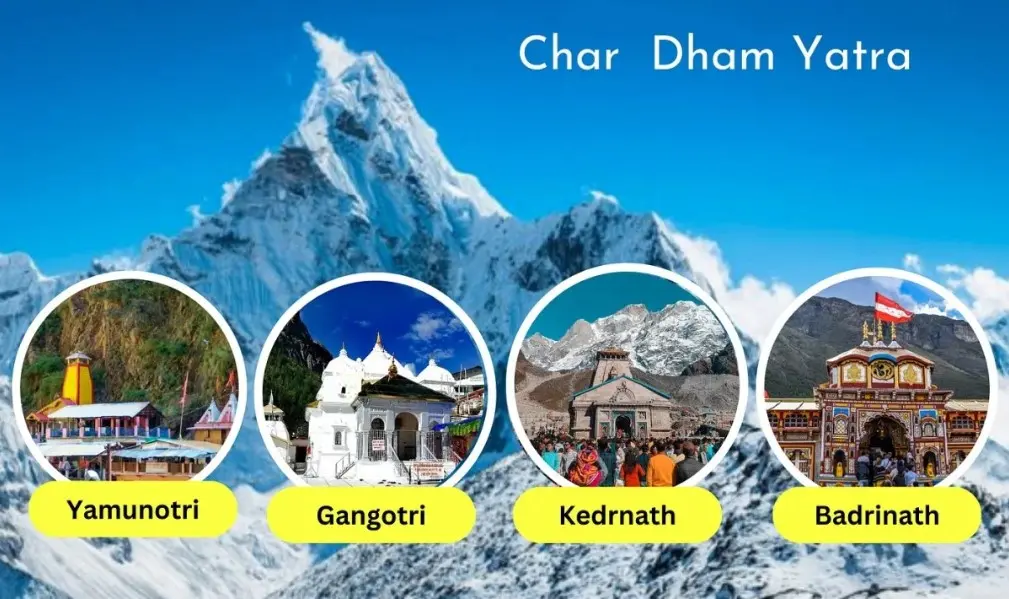
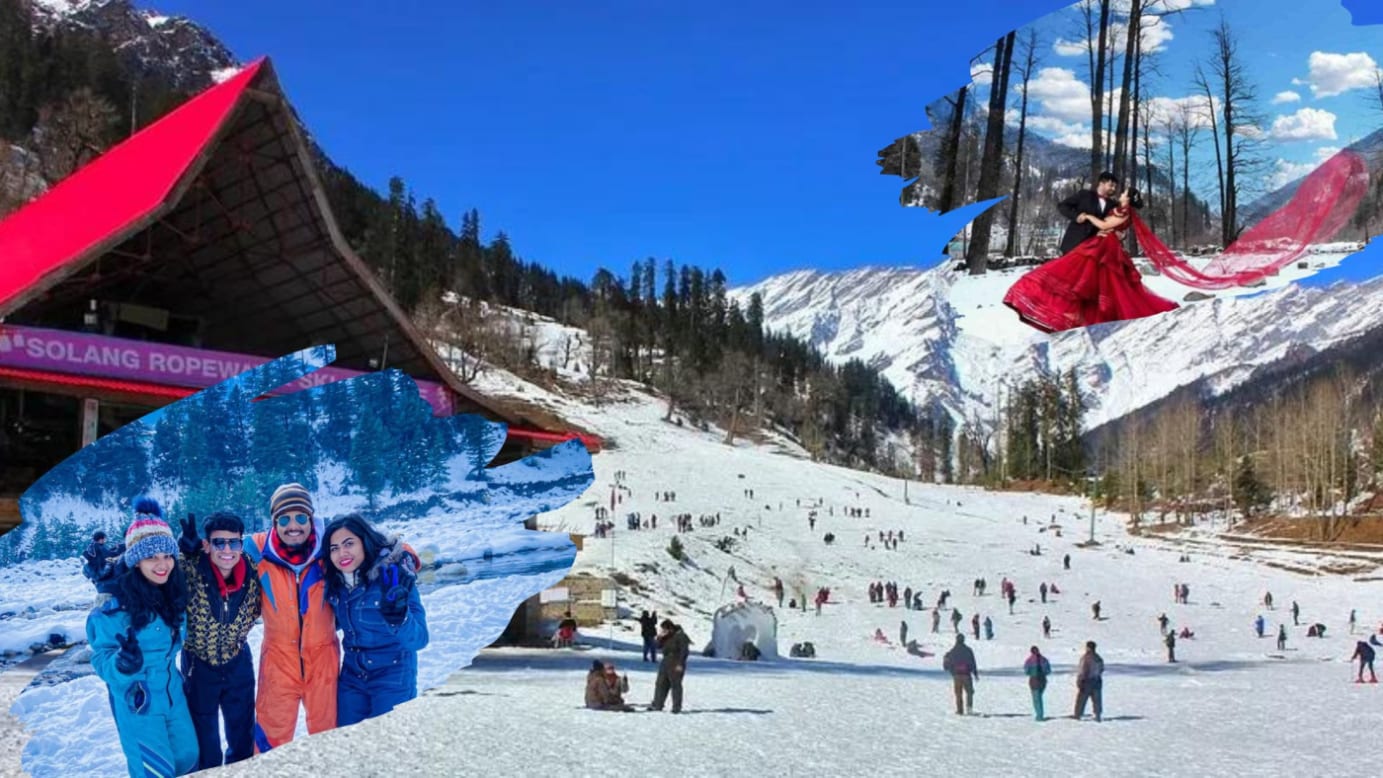
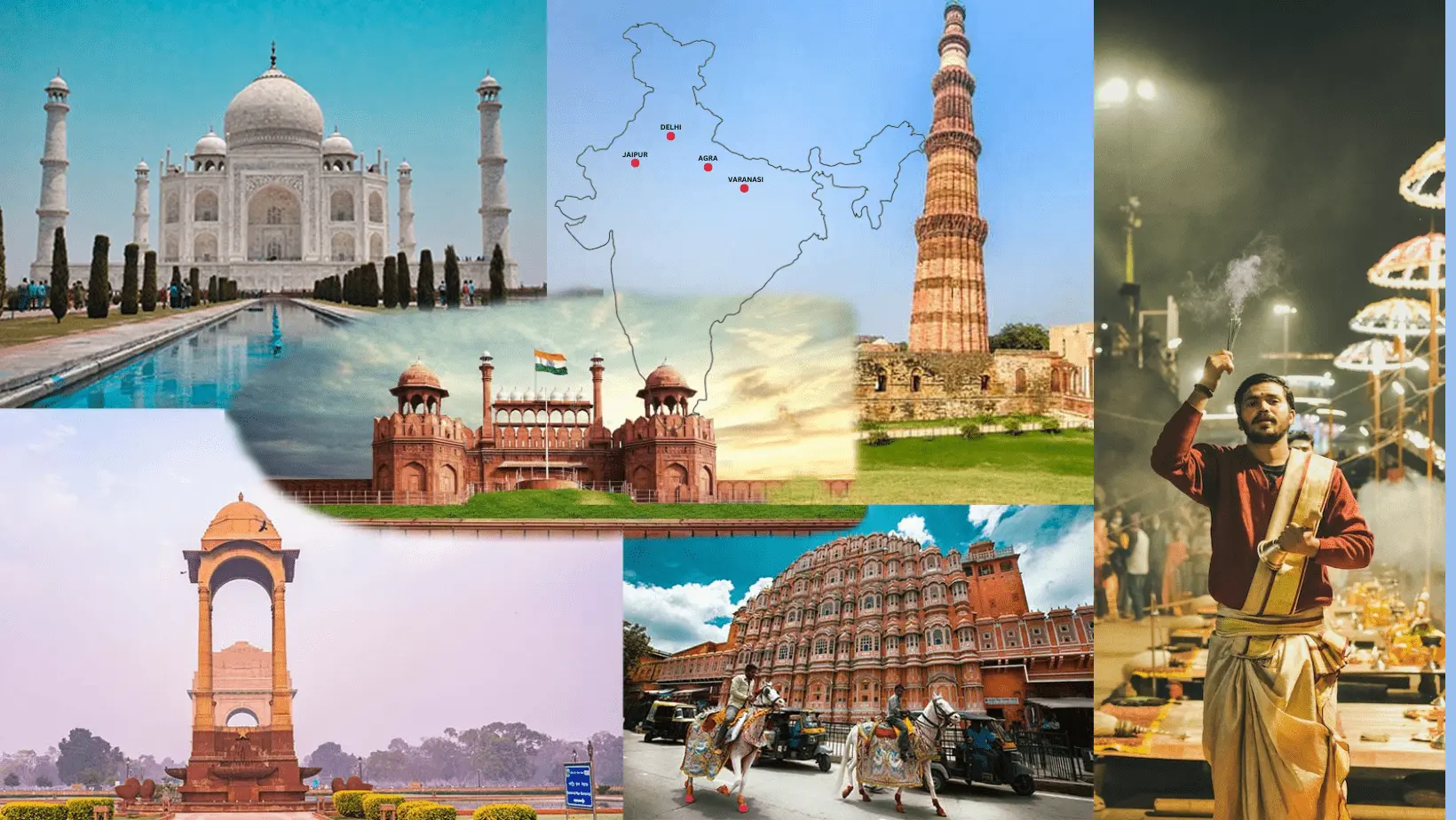
At S S Rana Tour and Travels, we run group trips from Delhi every week, from Haridwar and Rishikesh to Jaipur, Agra and Manali. Over the years, we have seen which cost-sharing methods work and which ones create friction. This guide walks you through the simple, practical ways to handle cost sharing on a group trip when you hire a tempo traveller.
Quick Answer: How Do You Split Tempo Traveller Cost?
The simplest method is to divide the total trip cost by the number of travellers. For example, if the total cost of the tempo traveller, including toll, parking and driver allowance, is ₹30,000 and 12 people are travelling, each person pays ₹2,500.
For a fairer split, add the extras (toll, parking, driver allowance, extra kilometres) to the base rental first, then divide the final amount. Collect the money before the trip and keep a shared record.
Why Splitting the Cost Properly Matters
Most group trip disagreements are not about money. They are about surprise and unclear rules. Someone assumes the toll is included. Someone else thinks children travel free. A third person joins late and wants a discount.
A clear plan helps you:
Avoid last-minute arguments and awkward conversations
Keep the booking confirmed with a timely advance payment
Make sure no single person ends up paying more than their share
Keep the trip about the journey, not the maths
Step 1: Know What the Total Tempo Traveller Cost Includes
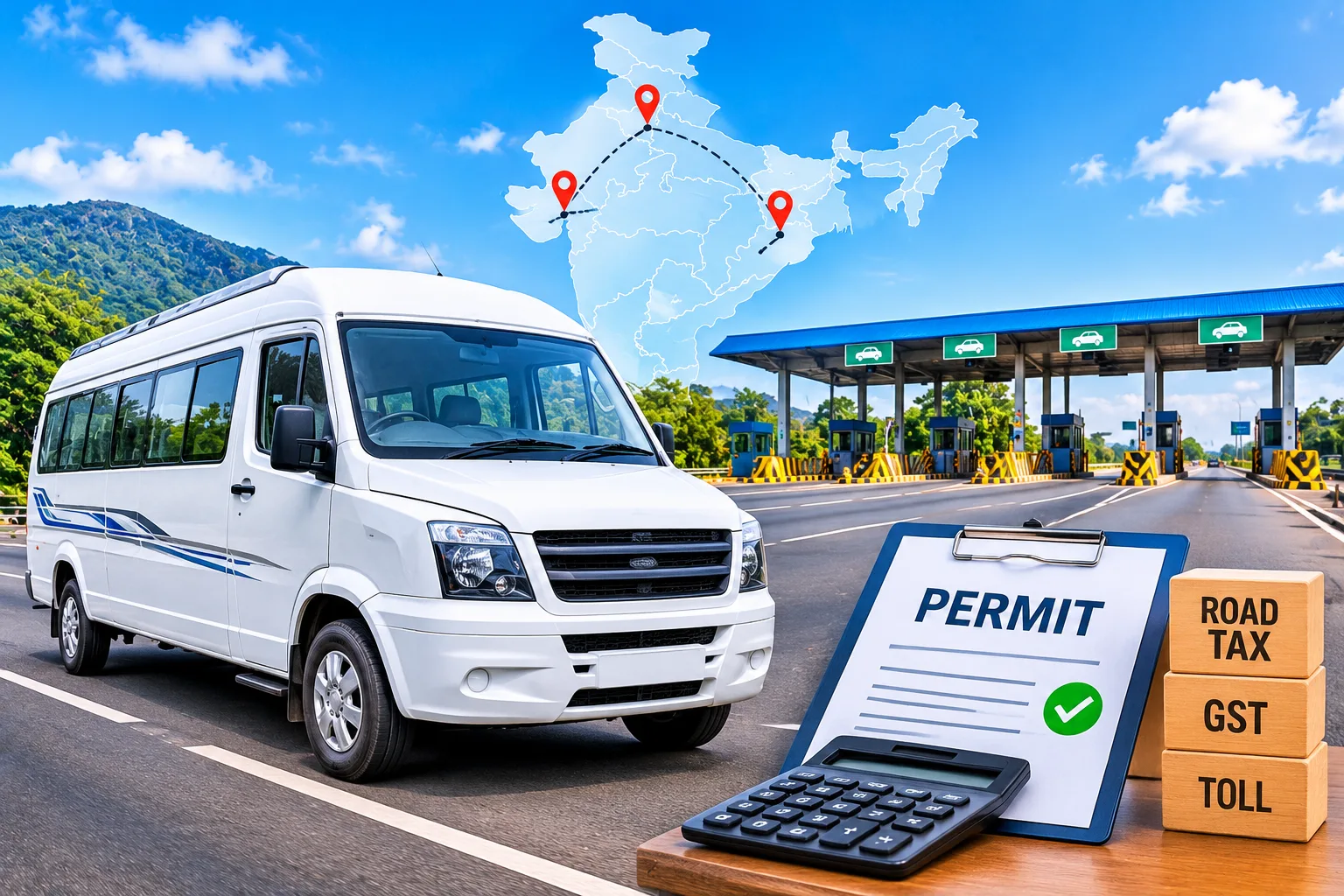
Before you divide anything, you need to know the real total. When you hire a tempo traveller in Delhi, the quote usually covers a few things and leaves others out.
Usually included in the base rental:
Vehicle with an experienced driver
Fuel for the agreed kilometres
Basic driver arrangement on the road
Often charged extra (confirm before booking):
Toll tax and parking
Interstate permit and state entry tax
Driver night allowance on overnight trips
Extra kilometres or extra hours beyond the package
GST, where applicable
Ask your operator for a written quote with a clear list of inclusions and exclusions. Then build your total trip cost like this:
Total cost = Base rental + Toll + Parking + Permit/Entry tax + Driver allowance + Buffer for extras
Add a small buffer, around 5 to 10 percent, for small surprises such as a detour or a longer waiting time. If it is not used, return it equally at the end.
Step 2: Choose the Right Splitting Method
There is no single correct way. The right method depends on your group and the type of trip. Here are the five most common ones.
Method 1: Equal Split (Per Head)
Formula: Total cost ÷ Number of travellers
This is the simplest and most popular method, and it works best for friends, families and office teams where everyone uses the vehicle for the same distance.
Example: A 12 seater tempo traveller for a 3-day Rishikesh trip costs ₹36,000 in total (including toll and driver allowance). With 12 travellers, each person pays ₹3,000.
Best for: Friend groups, family trips, college outings.
Method 2: Seat-Based Split
Formula: Total cost ÷ Total seats booked, then multiply by seats used per person or family
Some travellers take more than one seat, for example a family of four. Others share. A seat-based split makes this transparent.
Example: The total cost is ₹30,000 for 10 seats. Each seat costs ₹3,000. A family using 4 seats pays ₹12,000.
Best for: Family groups, mixed groups with different seat needs.
Method 3: Child and Infant Adjustment
Children below a certain age often do not occupy a full seat, and many groups choose to charge them less or nothing. Decide this before you start collecting money.
A fair way to do it:
Count infants (who sit on a lap) as free.
Count children (who share a seat or sit between adults) as half.
Count everyone else as full.
Divide the total cost by the total “full-share” count.
Example: The total cost is ₹27,000. There are 8 adults (8 shares), 2 children (1 share) and 1 infant (0 shares). Total shares = 9. Each share = ₹3,000. Each adult pays ₹3,000, and each child pays ₹1,500.
Best for: Family trips and multi-generation travel.
Method 4: Distance-Based or Pickup-Based Split
When people board or leave at different points, an equal split may feel unfair. A distance-based split charges each person for the portion of the route they actually use.
How it works:
Break the route into sections (for example Delhi to Meerut, Meerut to Haridwar).
Calculate the cost of each section.
Divide each section’s cost among the people travelling in that section.
Best for: Pilgrim groups, relatives joining from different cities, and trips with multiple pickups.
Method 5: Fixed Contribution With a Common Fund
Here, every member pays the same fixed amount into a common fund before the trip. The fund covers the tempo traveller, toll, parking and sometimes food and entry tickets. At the end, any balance is refunded equally or any shortfall is topped up.
Example: Each of 10 members pays ₹5,000 into a shared fund. After the trip, the actual spending is ₹46,000, so ₹400 is returned to each person.
Best for: Longer trips, corporate groups, and organisers who prefer one clear pot of money.
Quick Comparison of Cost Splitting Methods
Method
Best For
Simplicity
Fairness
Equal split
Friends, small groups
Very easy
Good
Seat-based
Families
Easy
Very good
Child adjustment
Family trips
Moderate
Very good
Distance-based
Multiple pickups
Complex
Excellent
Common fund
Long trips, offices
Moderate
Very good
Step 3: Pick the Right Vehicle Size to Lower the Per-Head Cost
The size of the vehicle has a big effect on how much each person pays. A larger vehicle with more passengers can bring the per-head cost down, but only if you fill the seats comfortably.
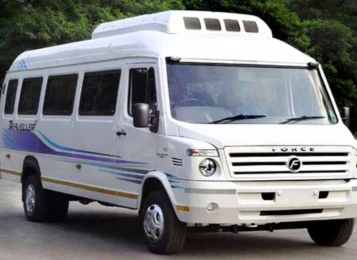
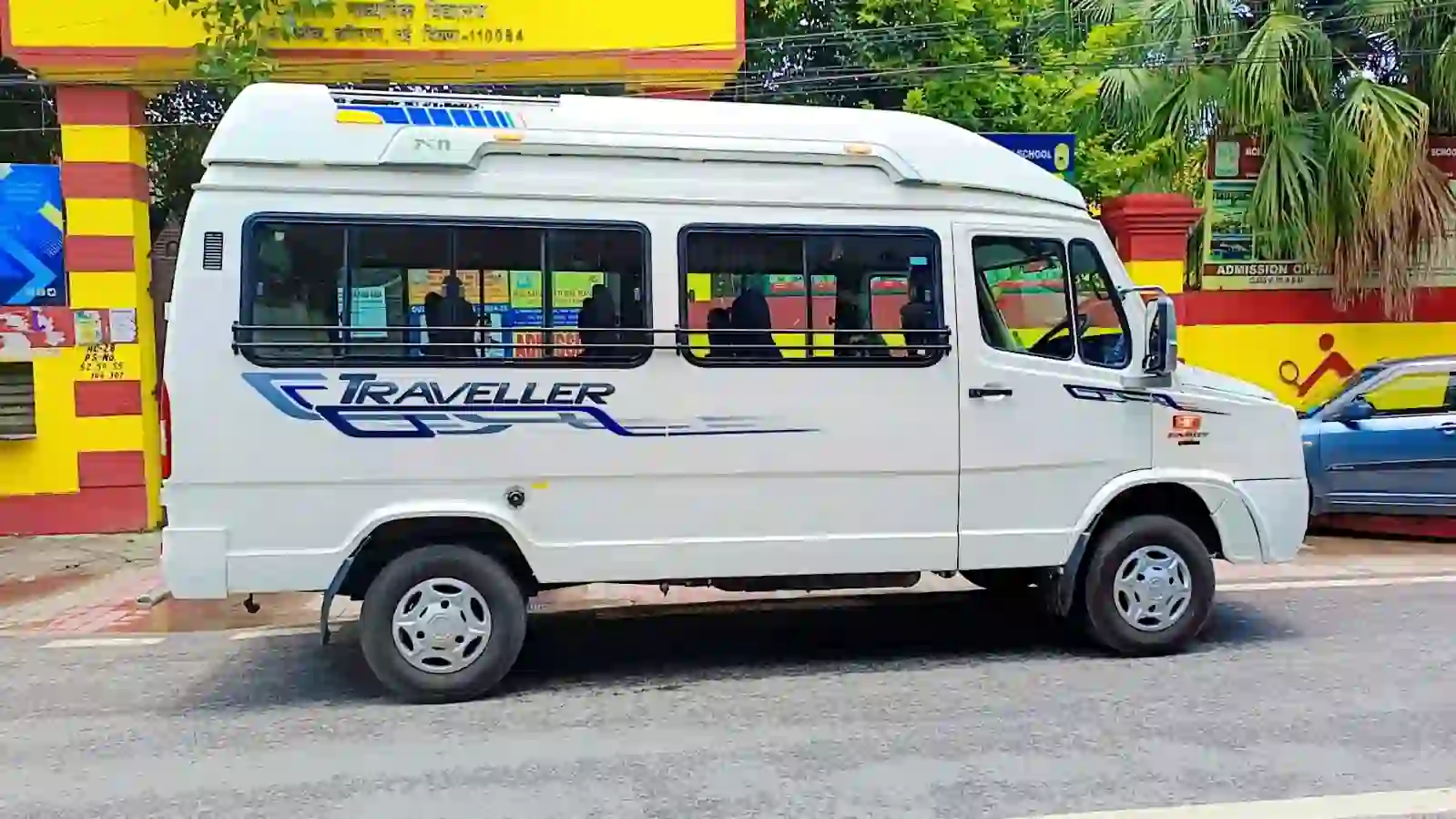
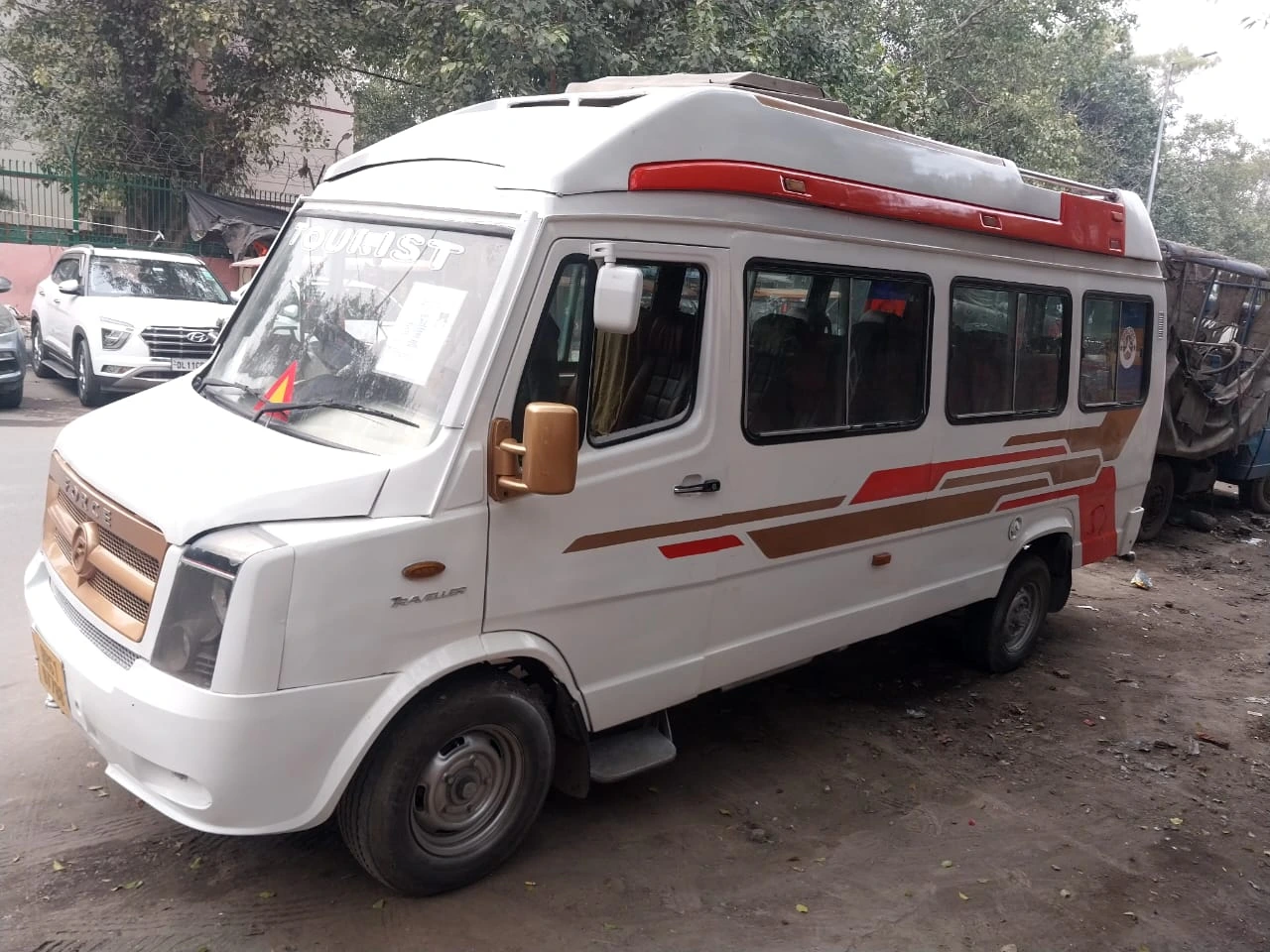
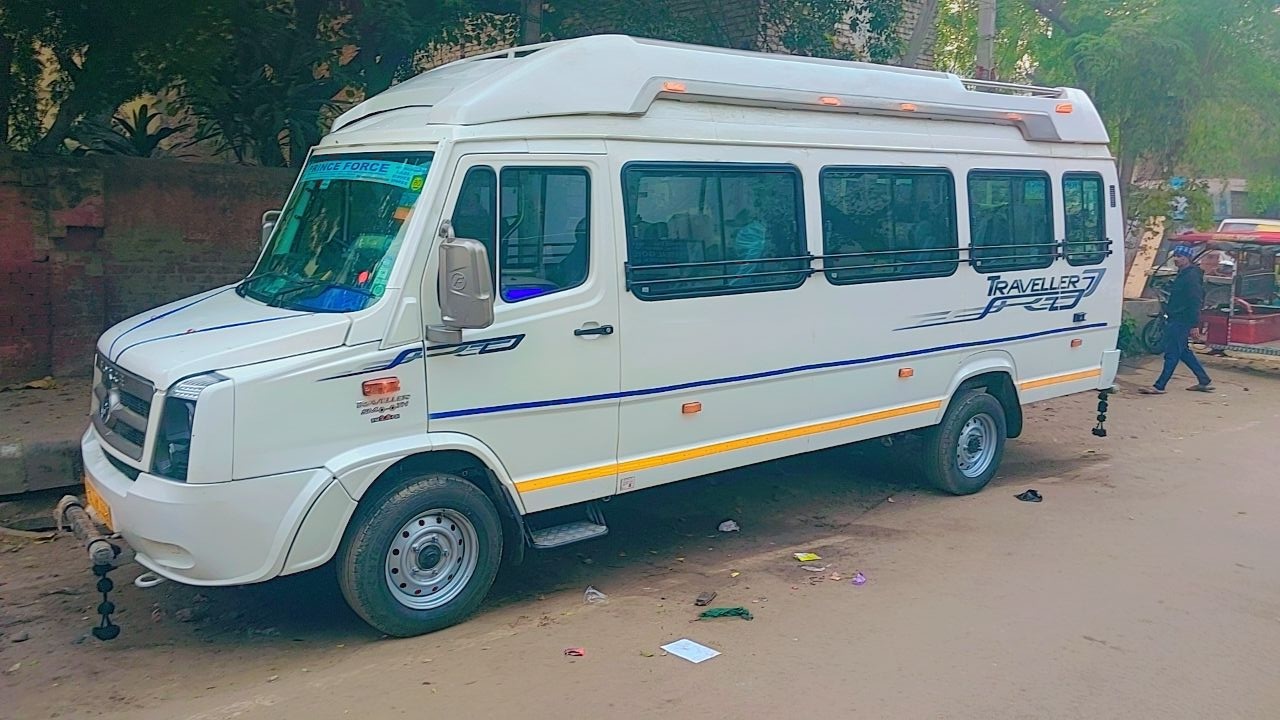
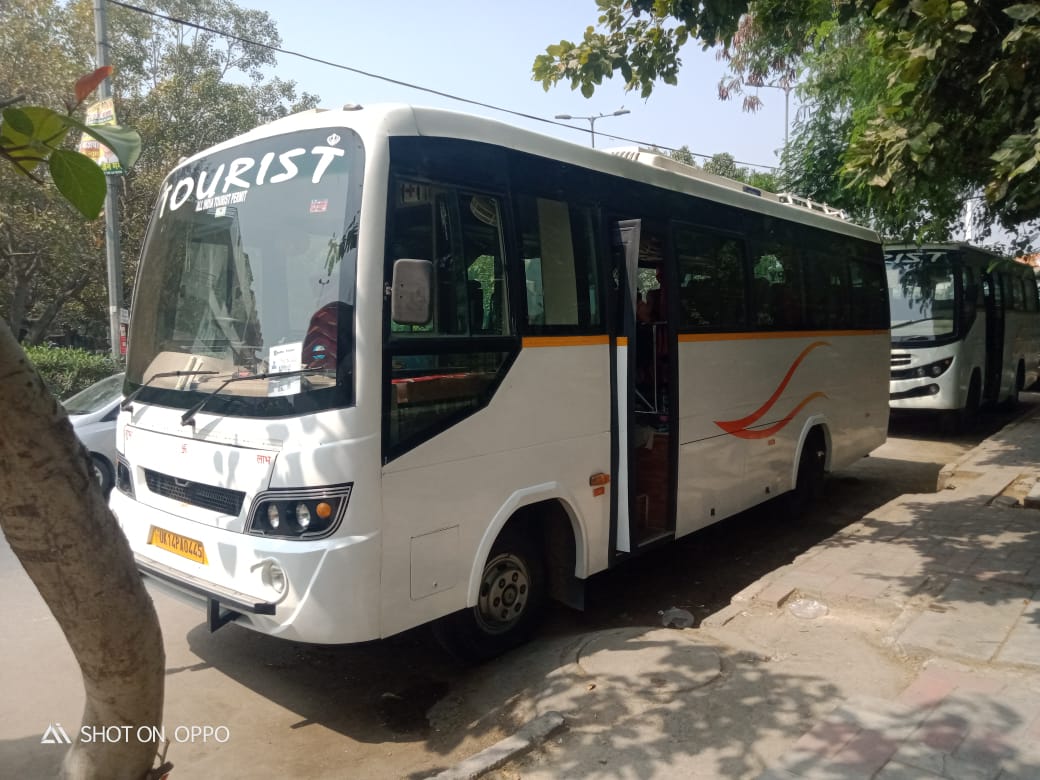
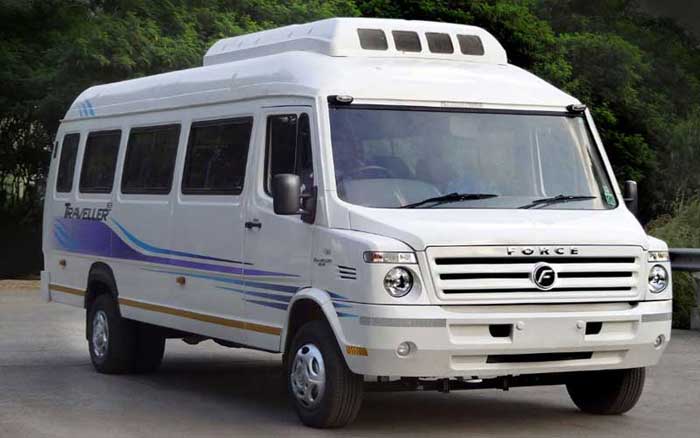
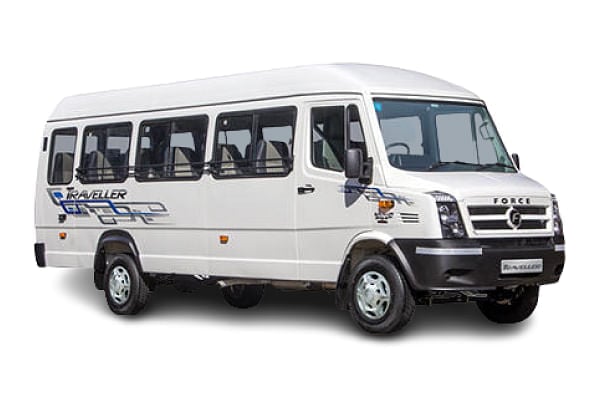
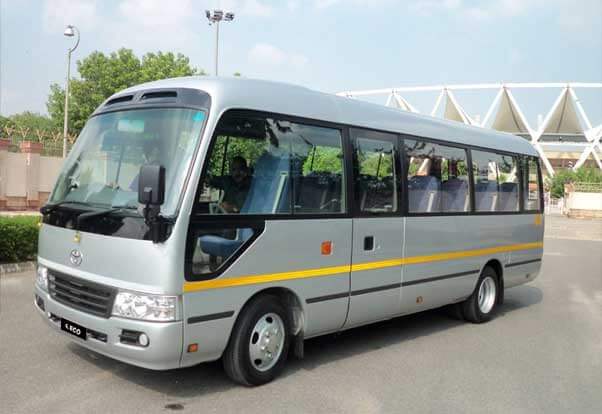
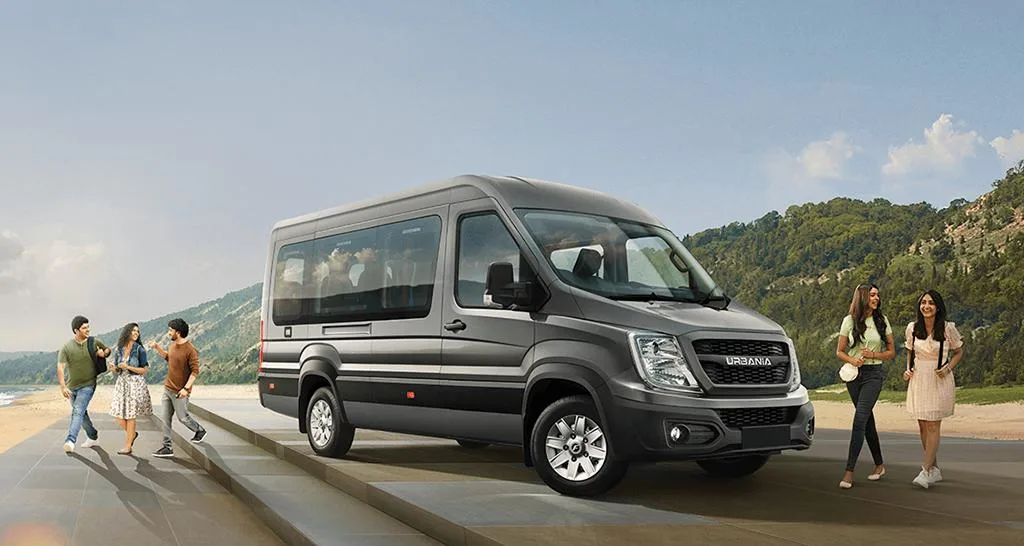
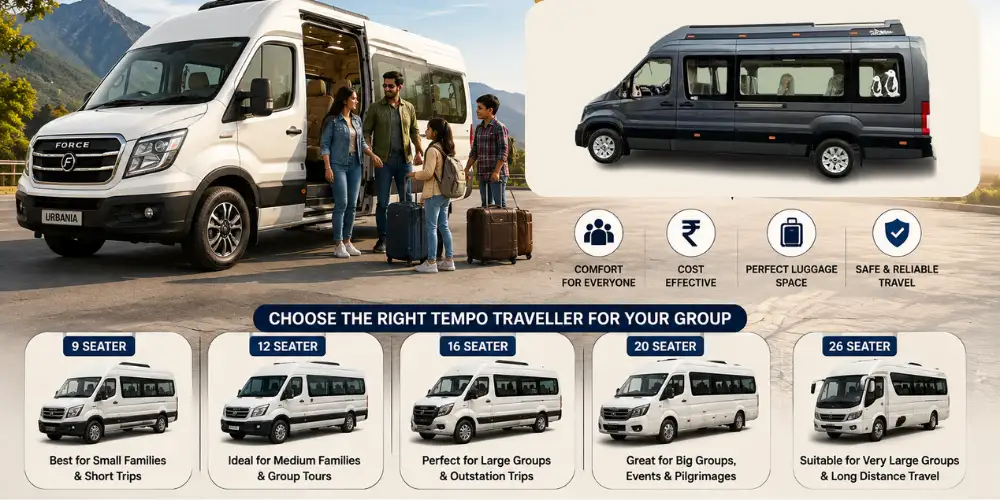
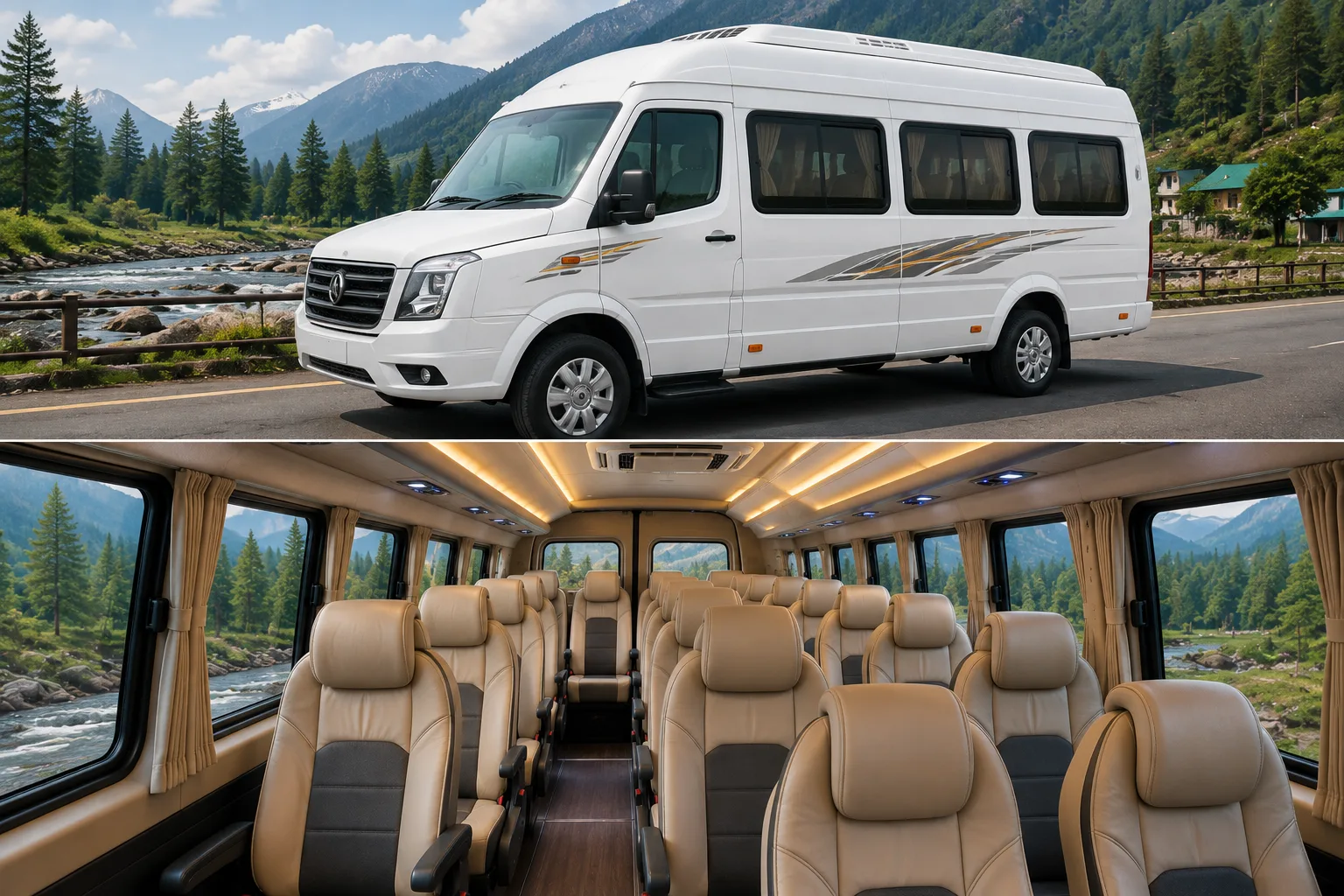
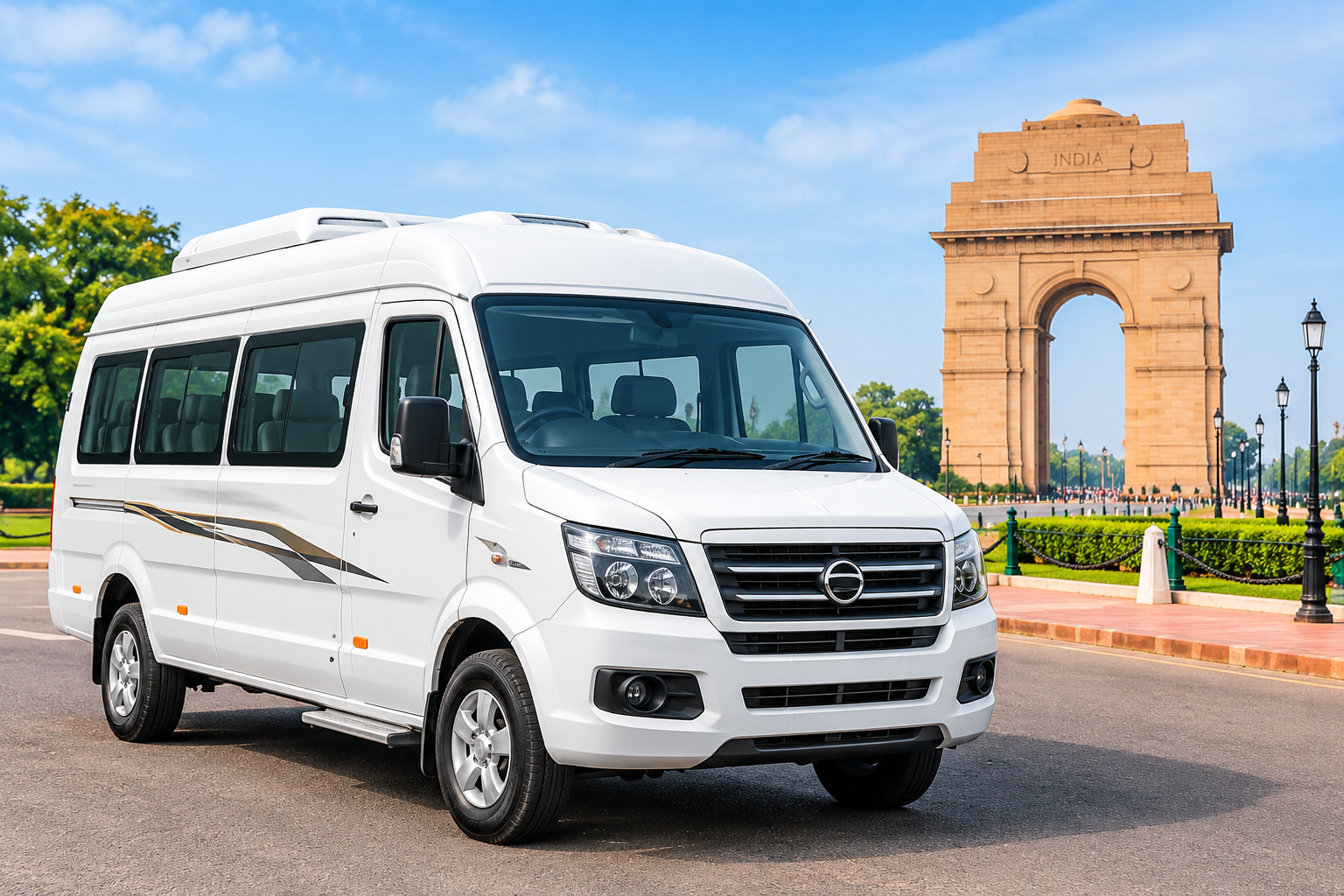
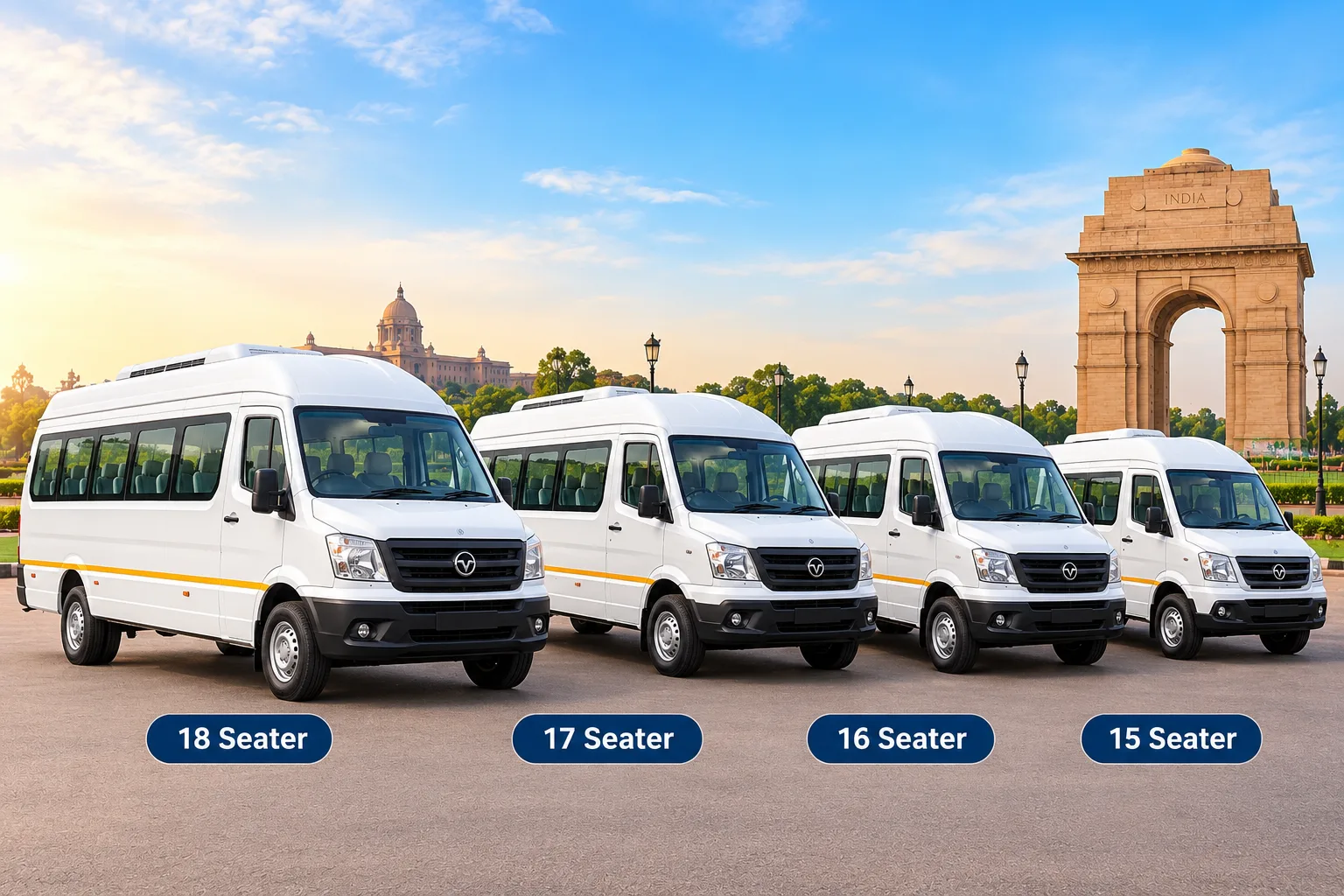
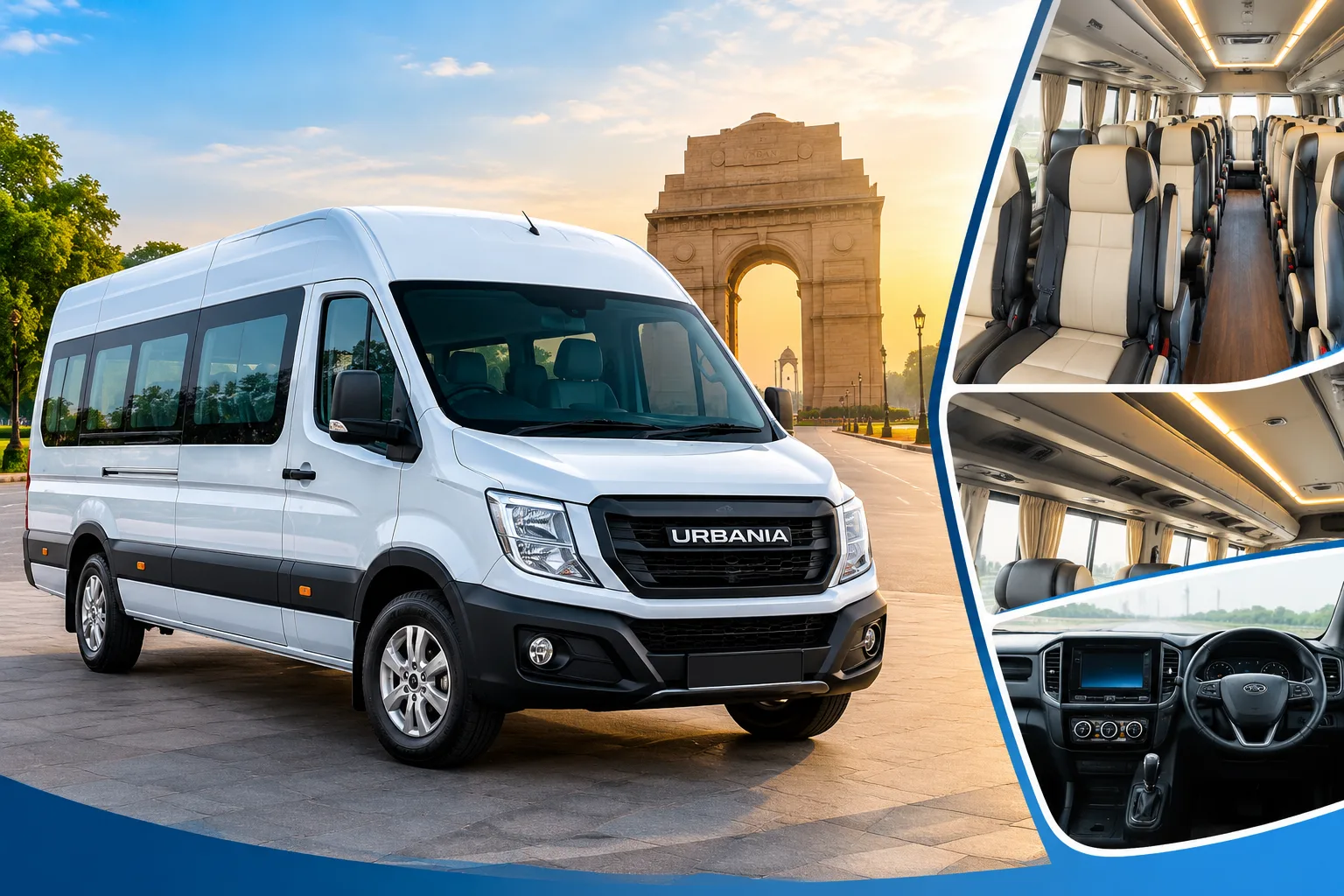
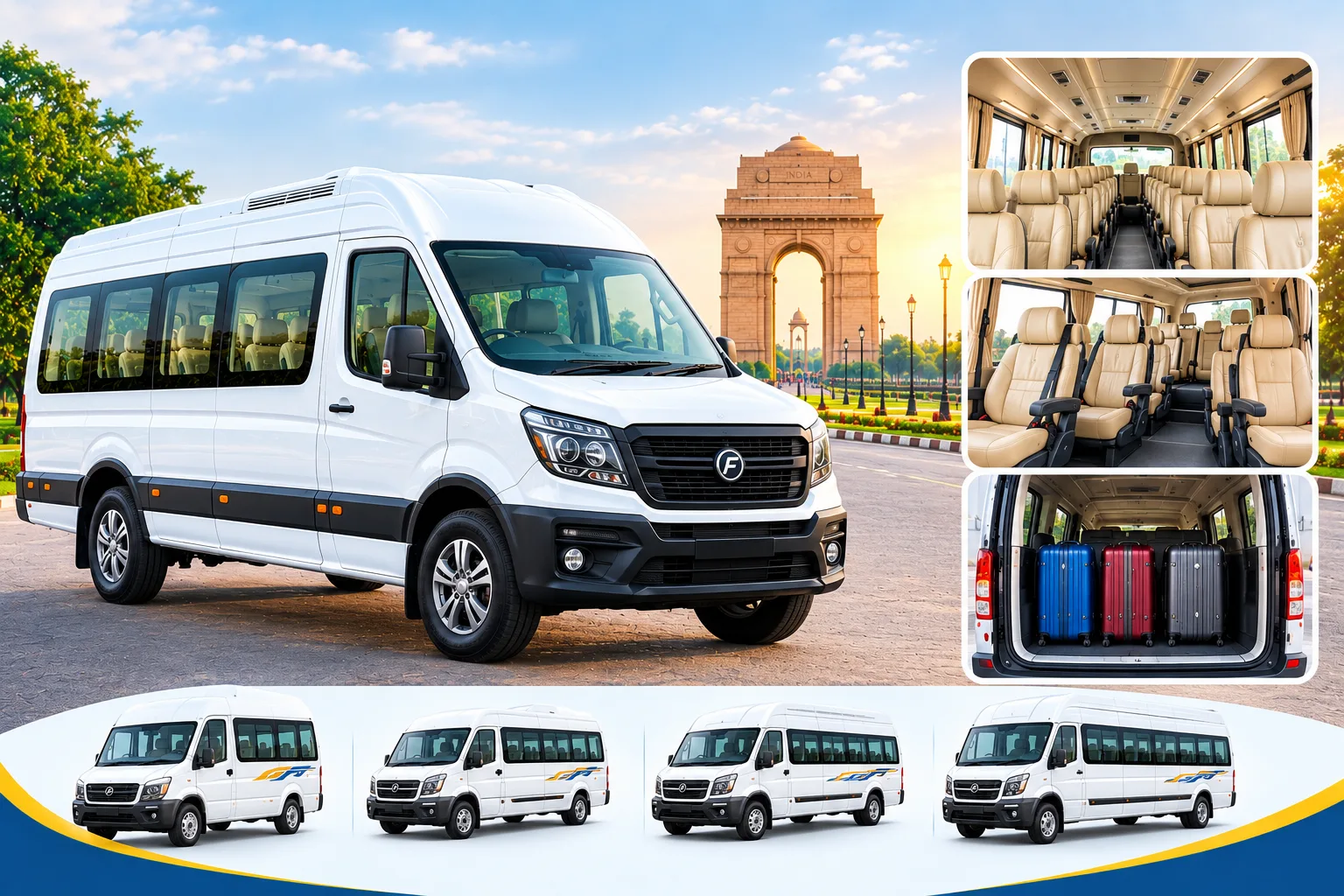
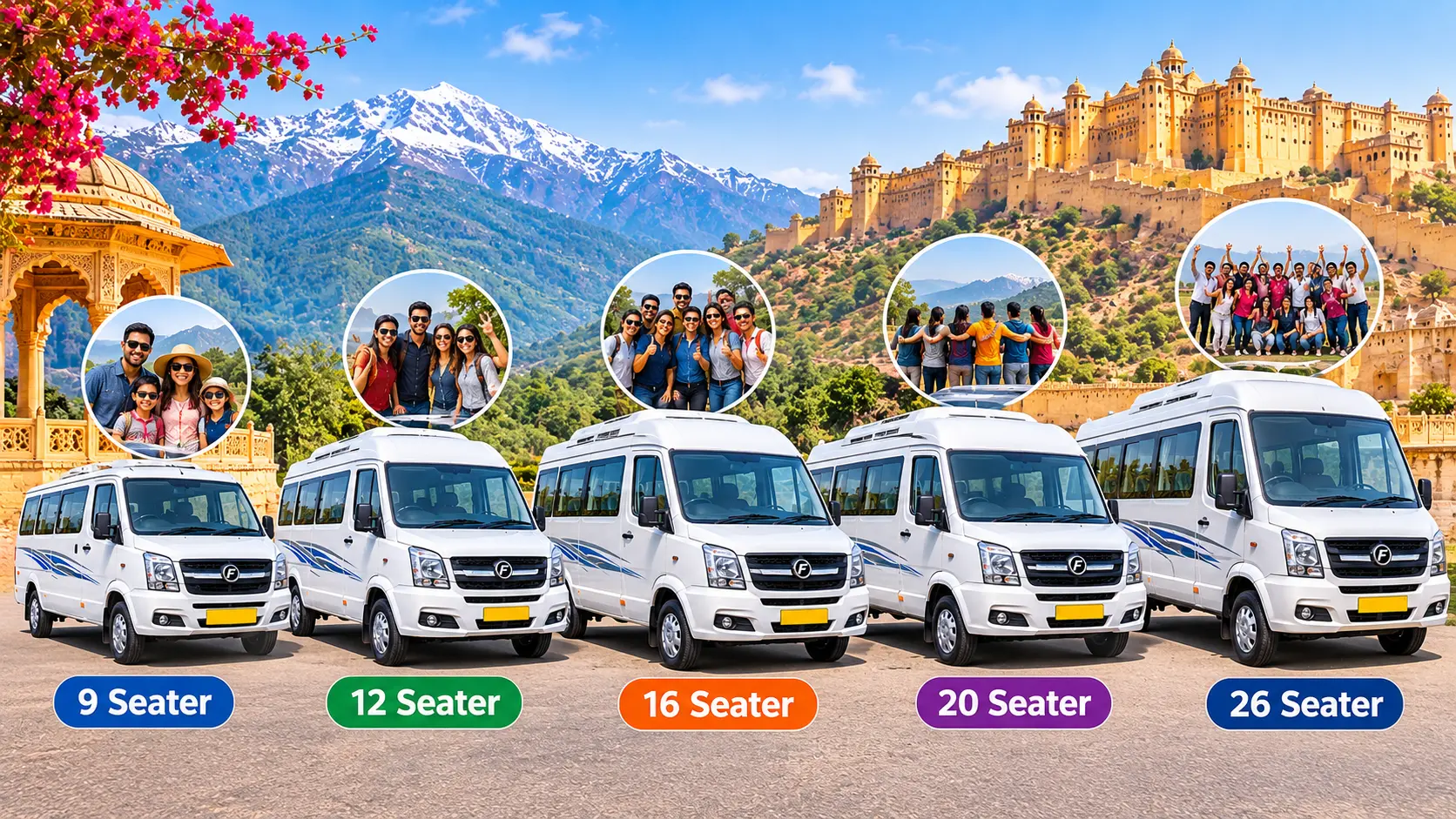
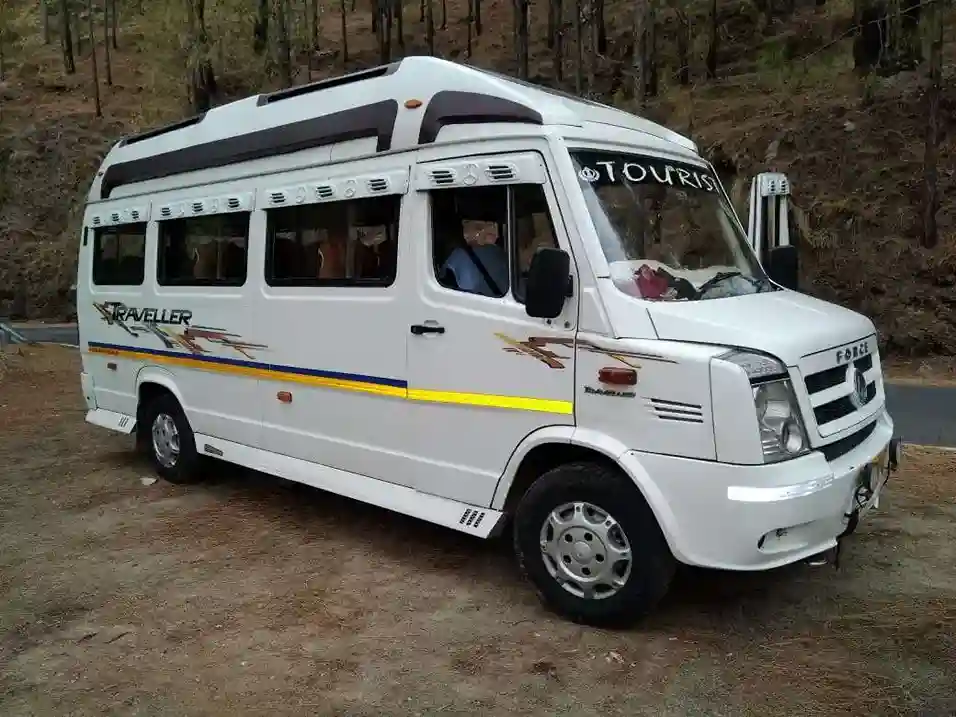
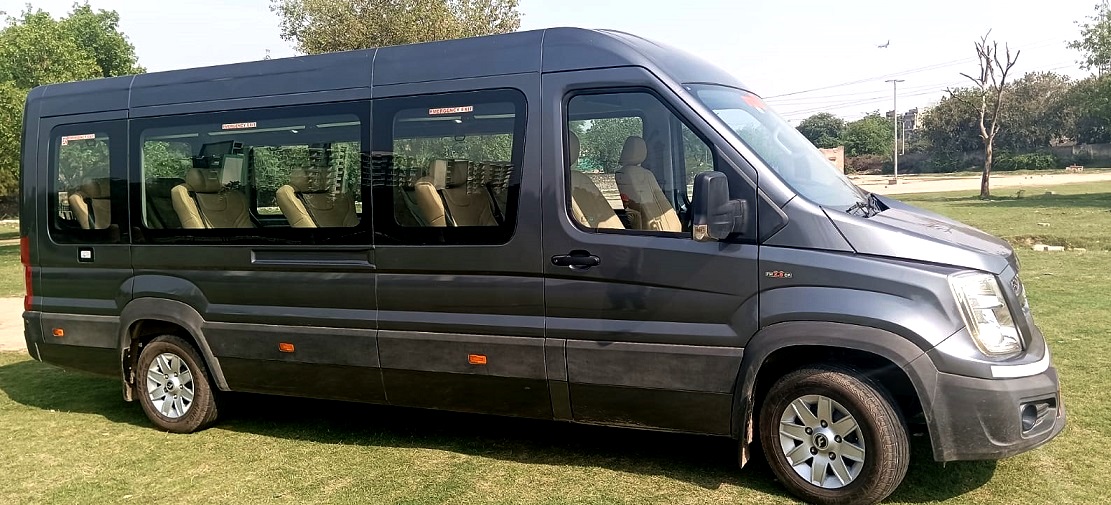
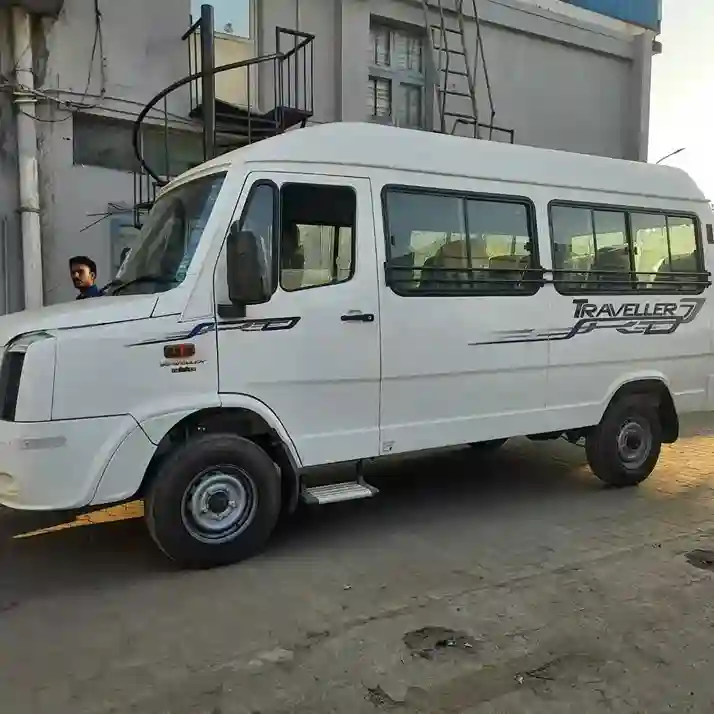
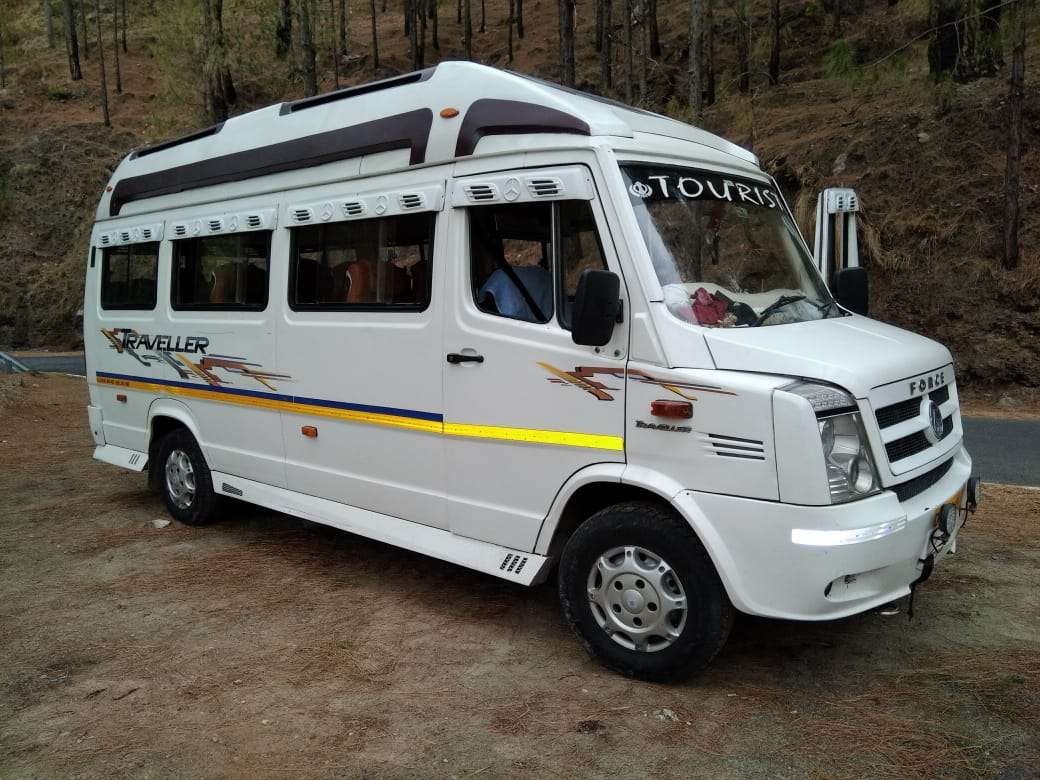
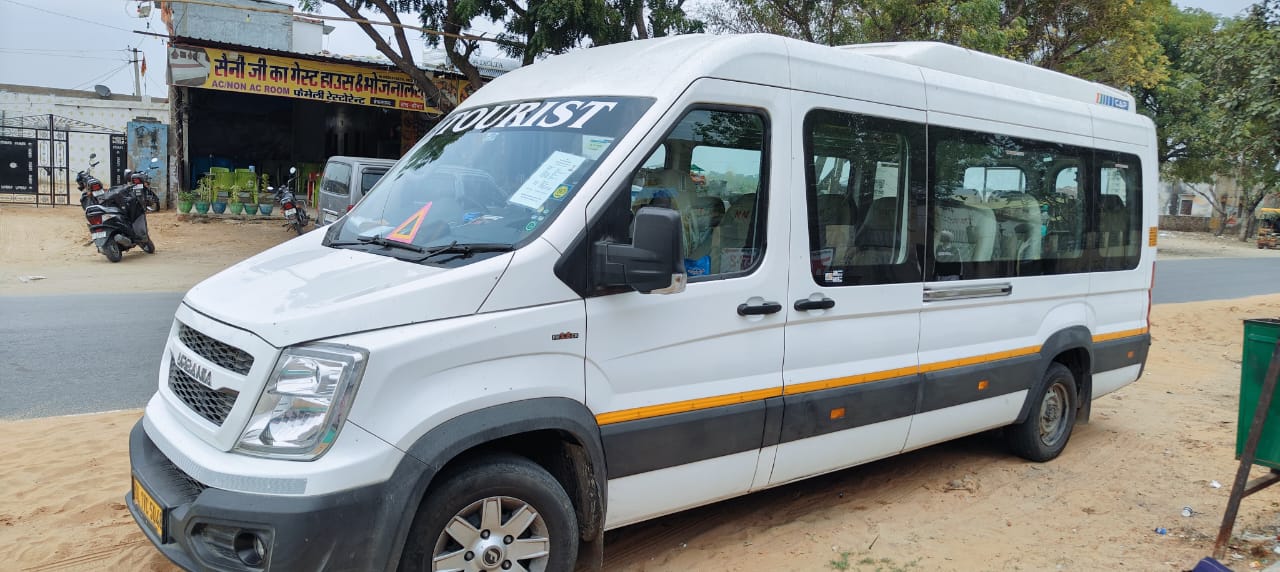
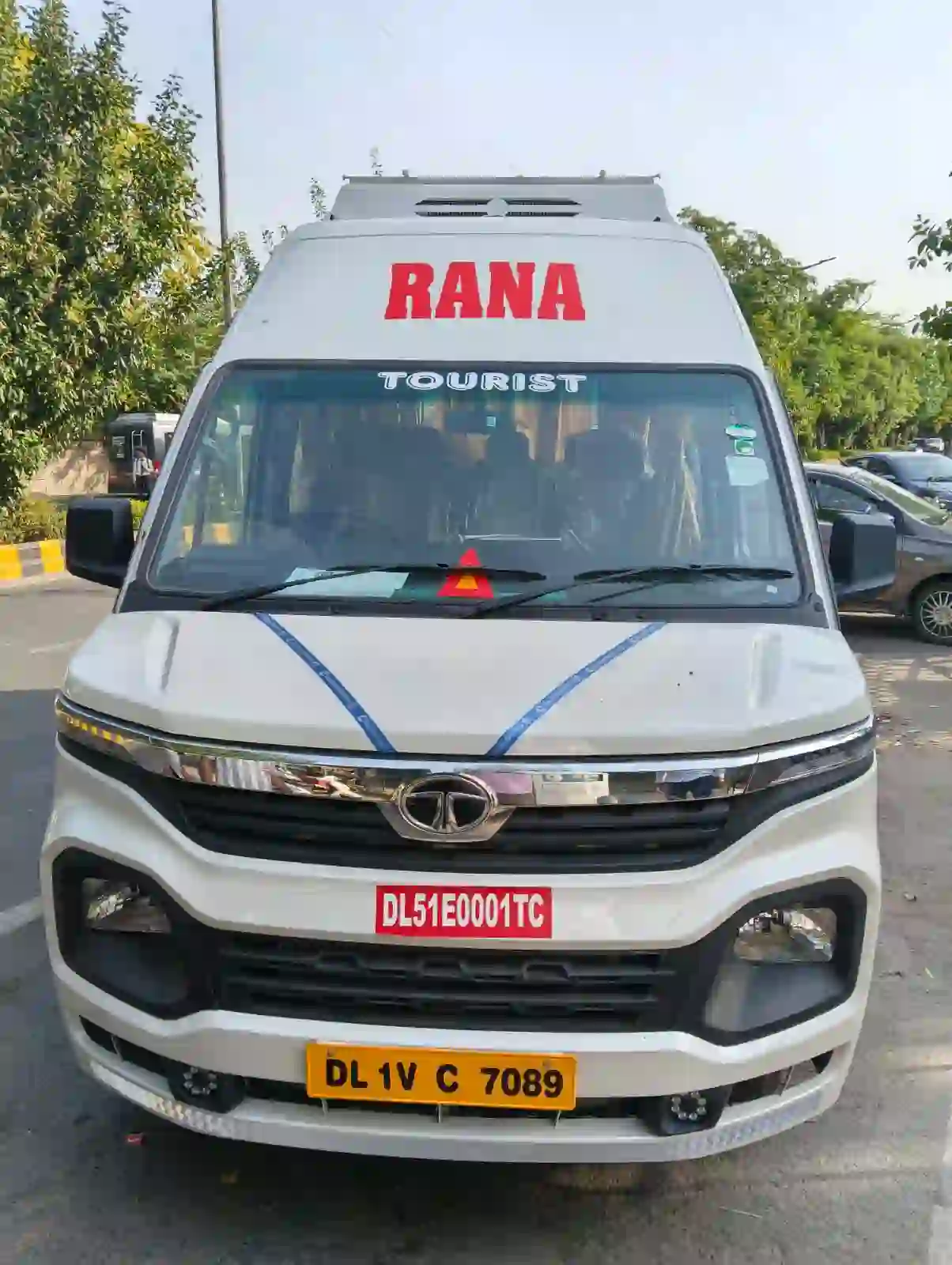
9 seater tempo traveller: Suits small families and groups of 6 to 8 people who want extra legroom and luggage space.
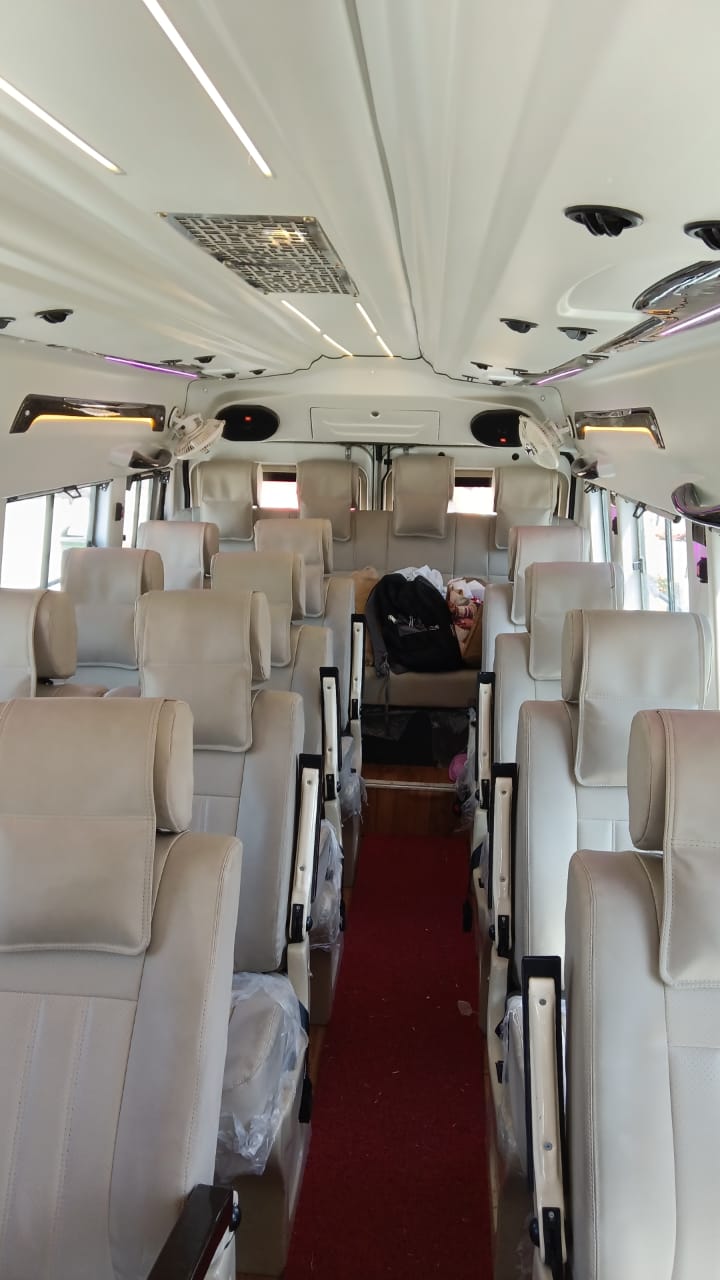
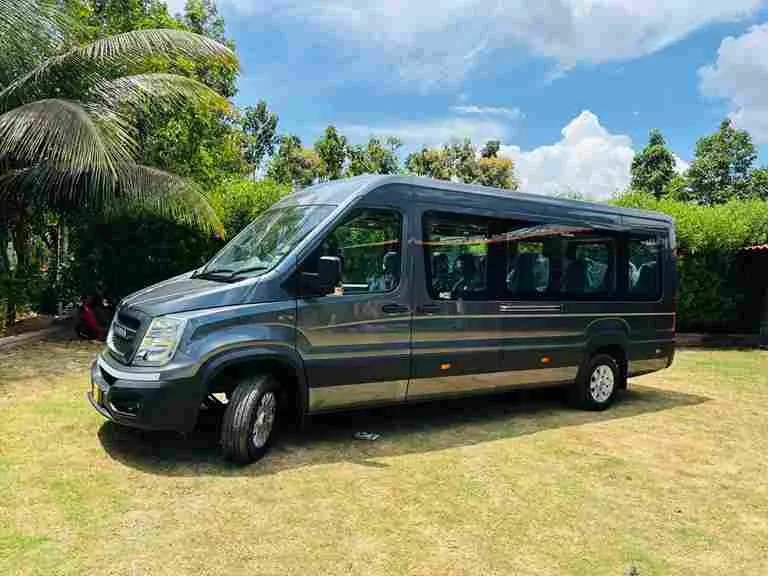
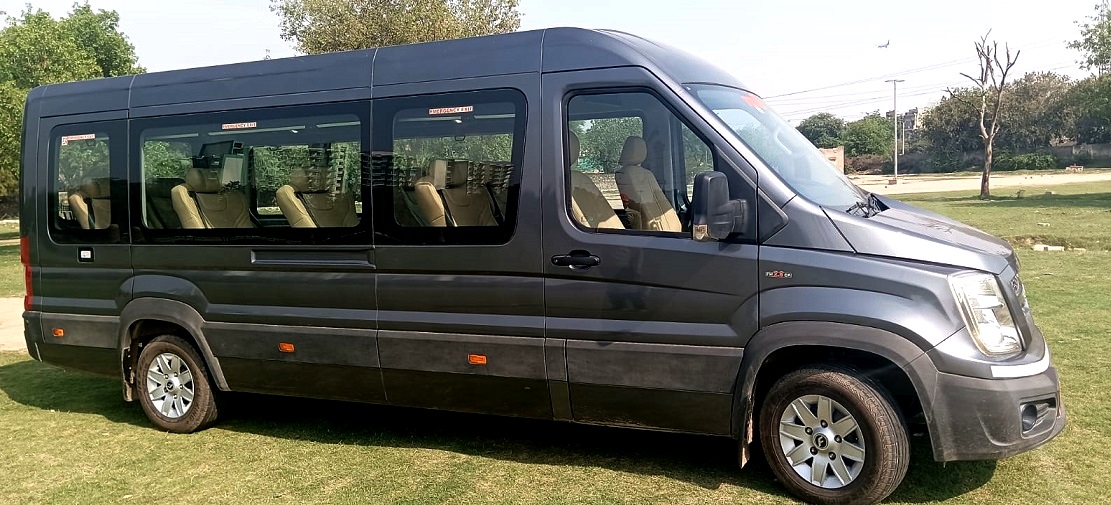
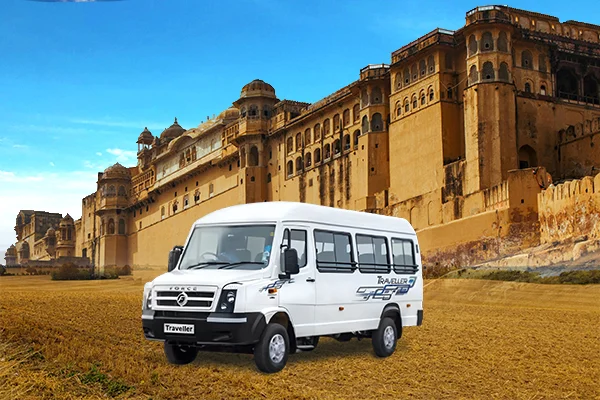
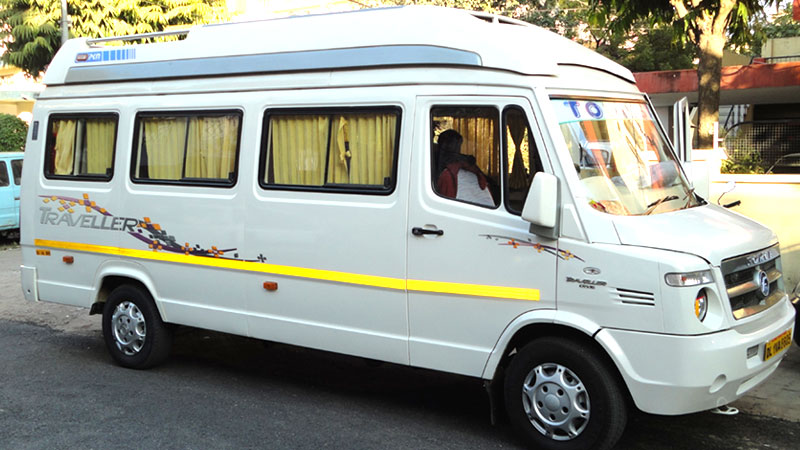
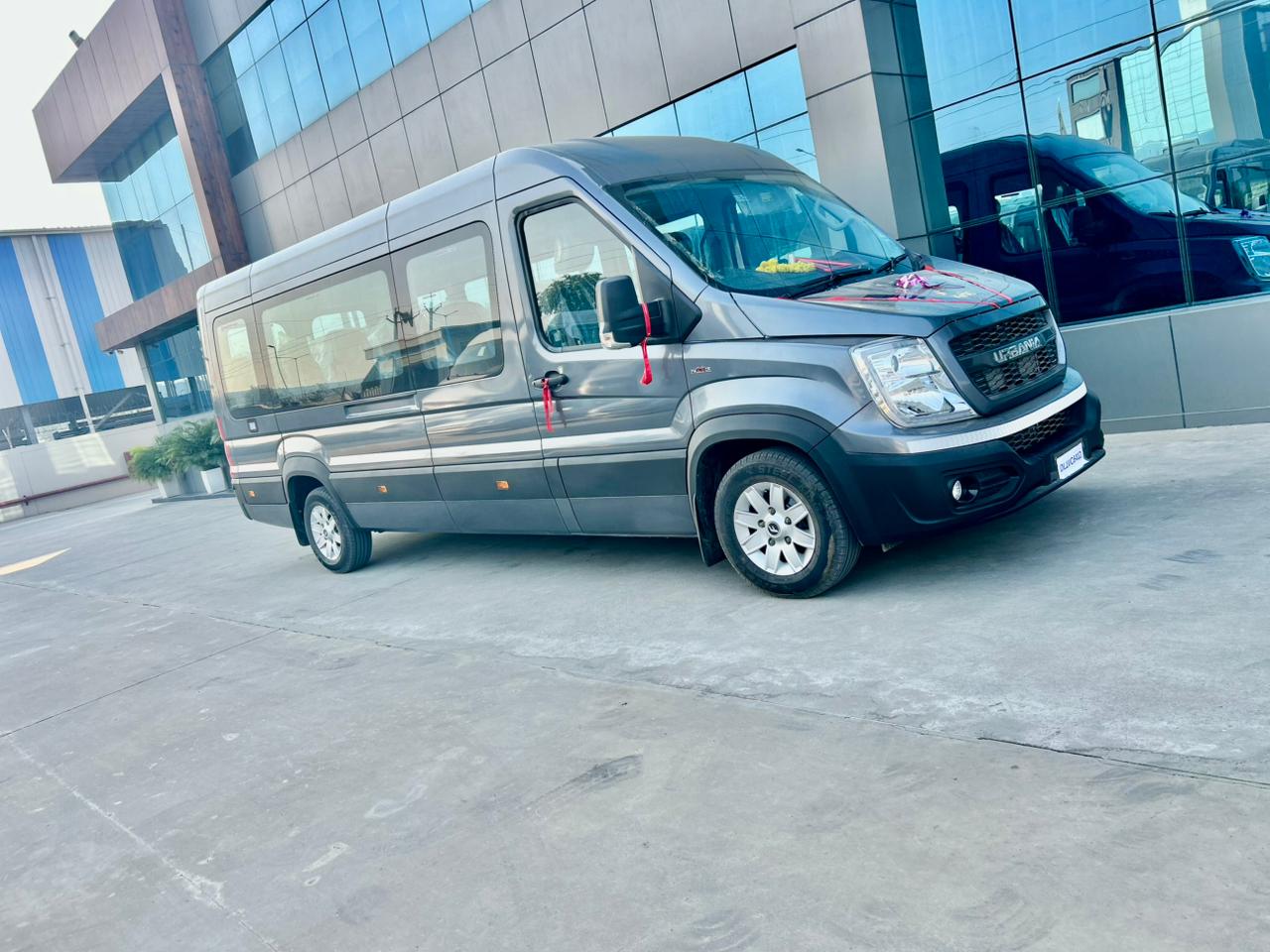
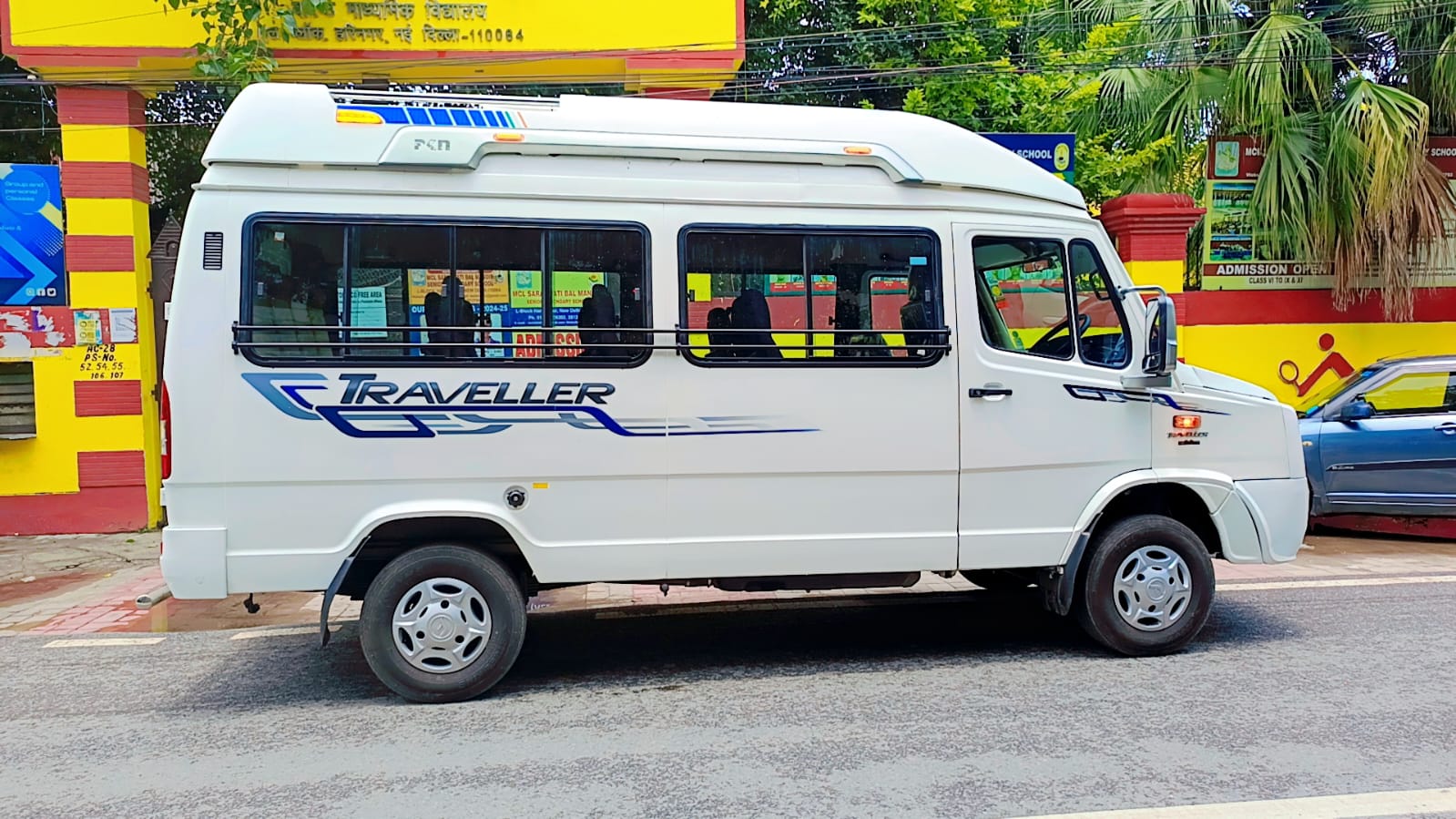
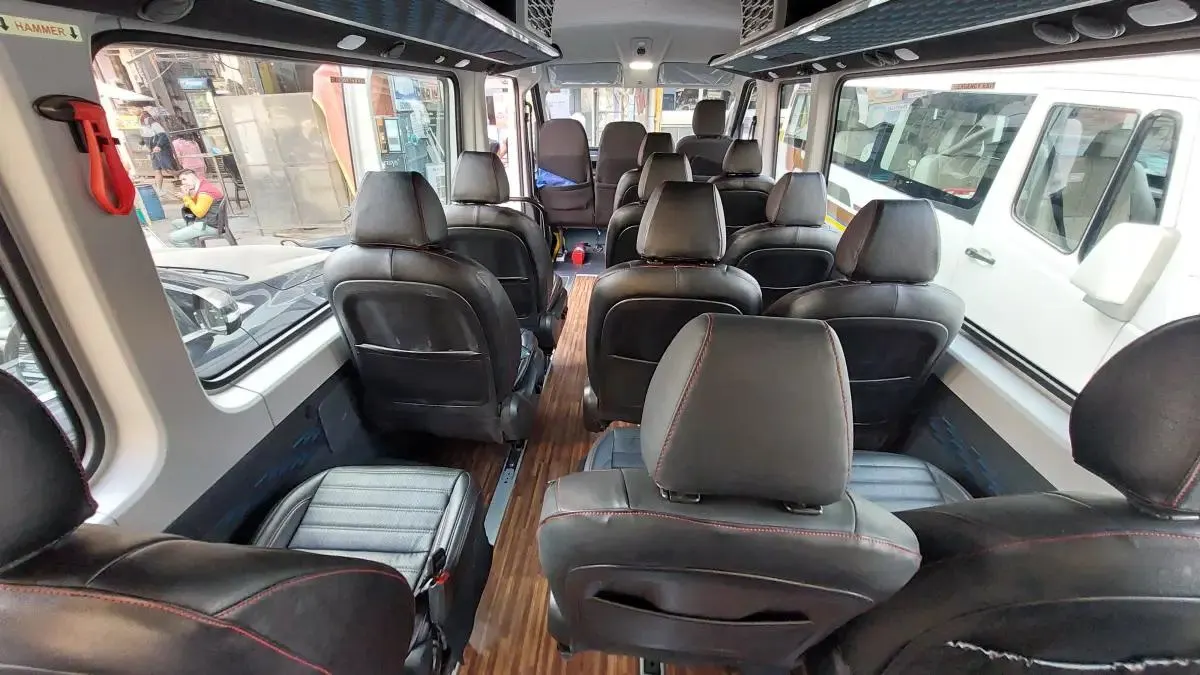
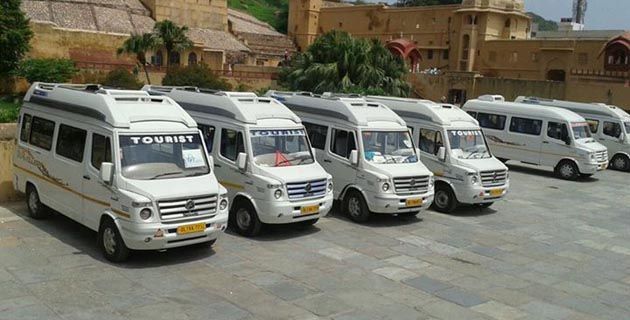
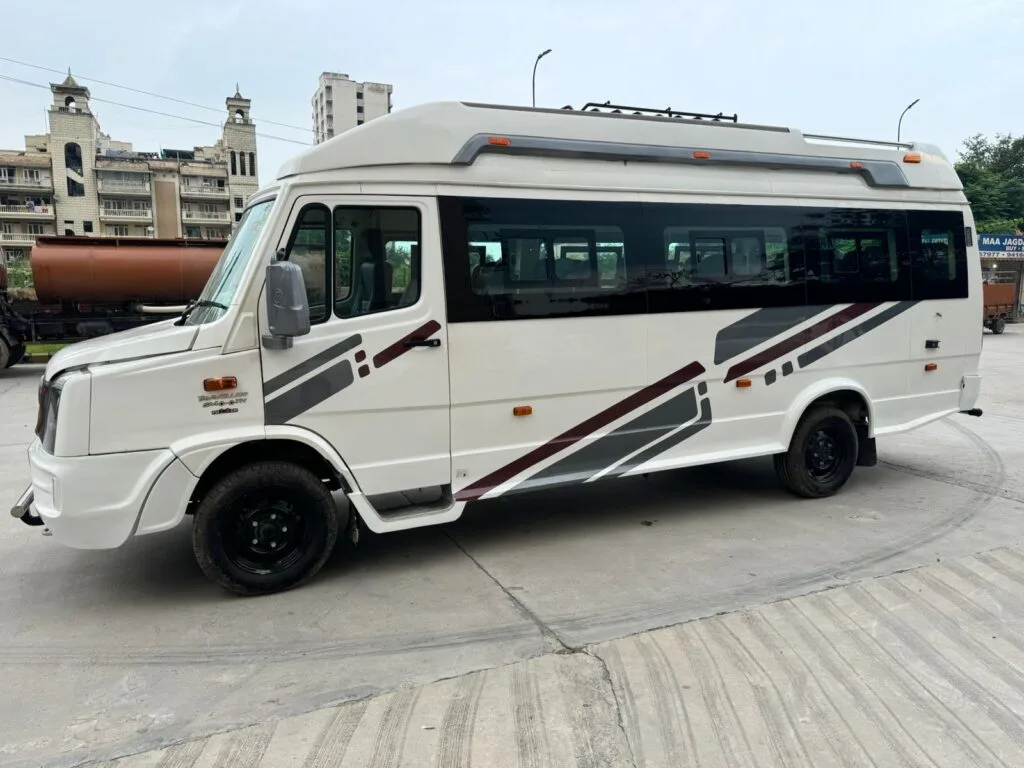
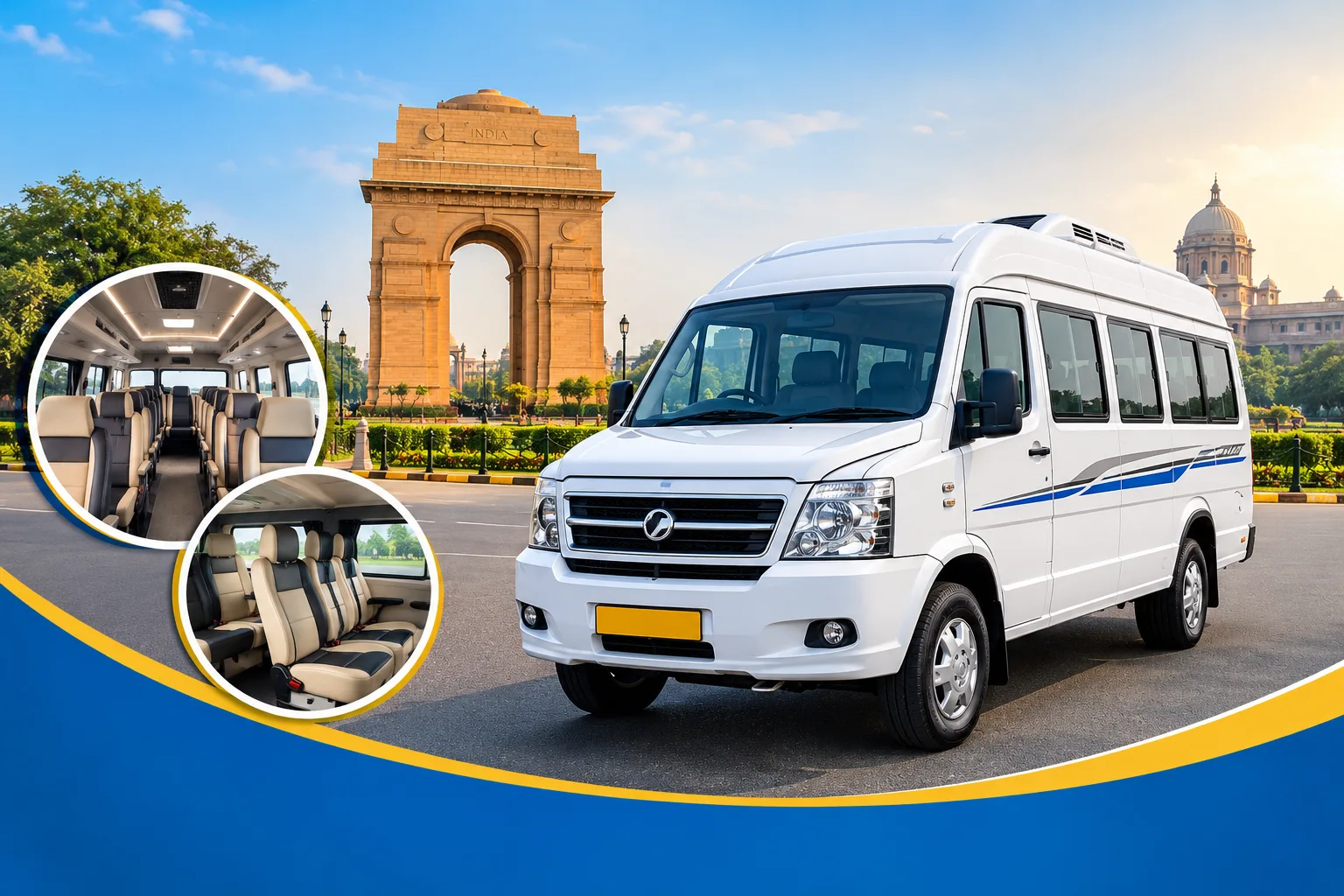
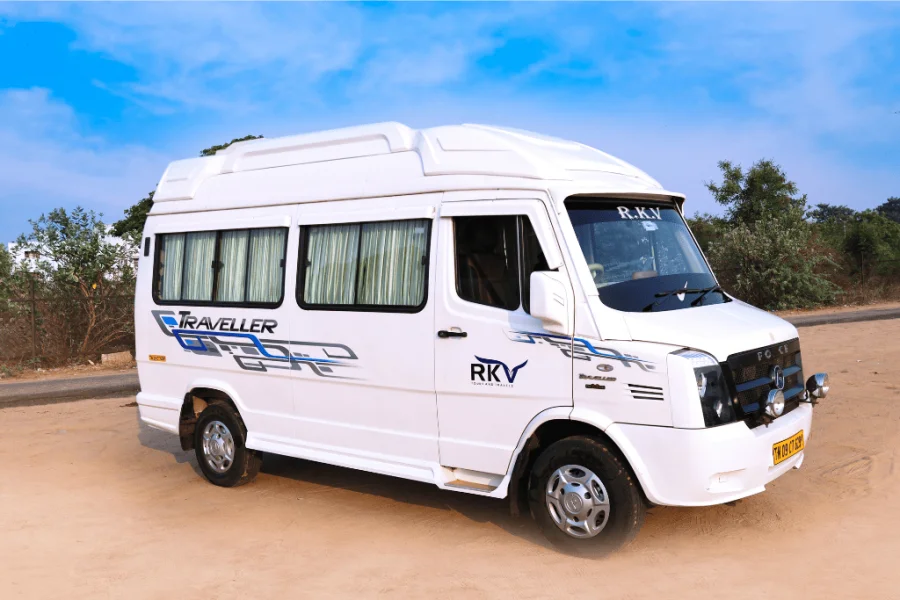
12 seater tempo traveller: The most popular choice for groups of 9 to 12, offering a strong balance between comfort and cost.
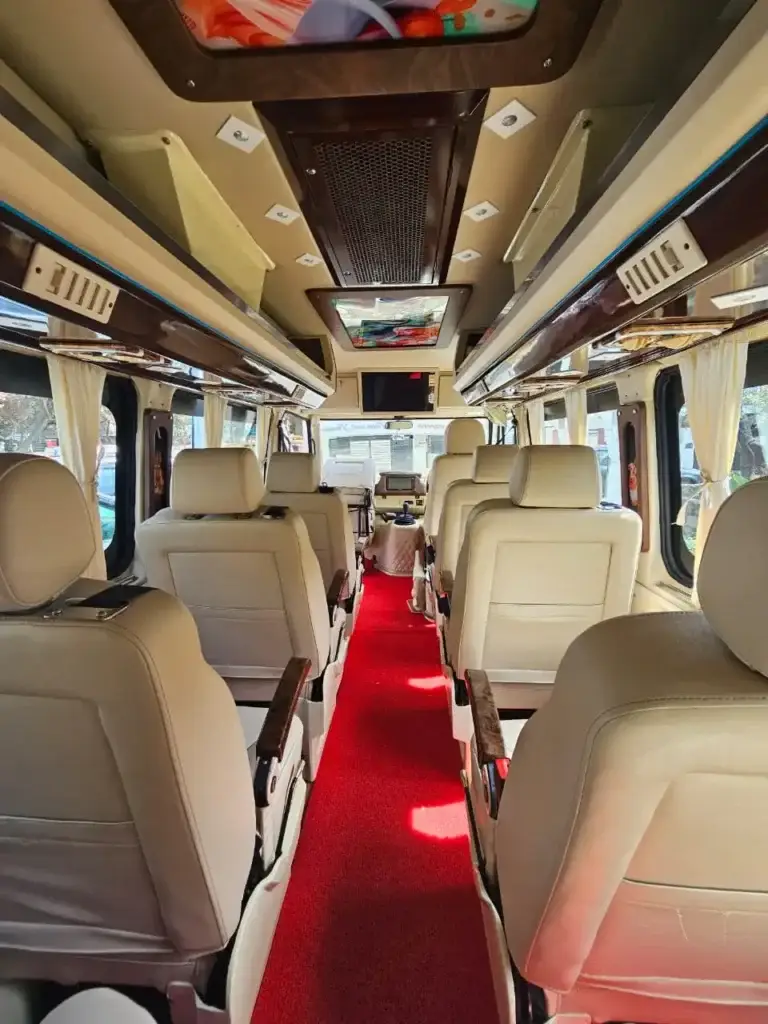
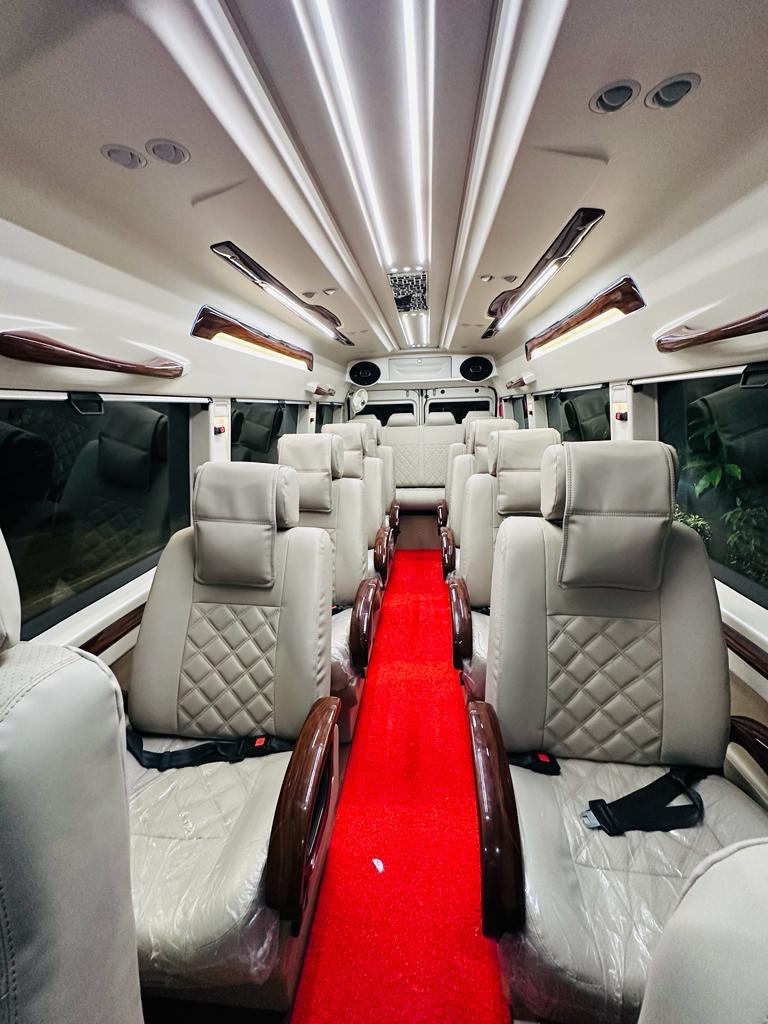
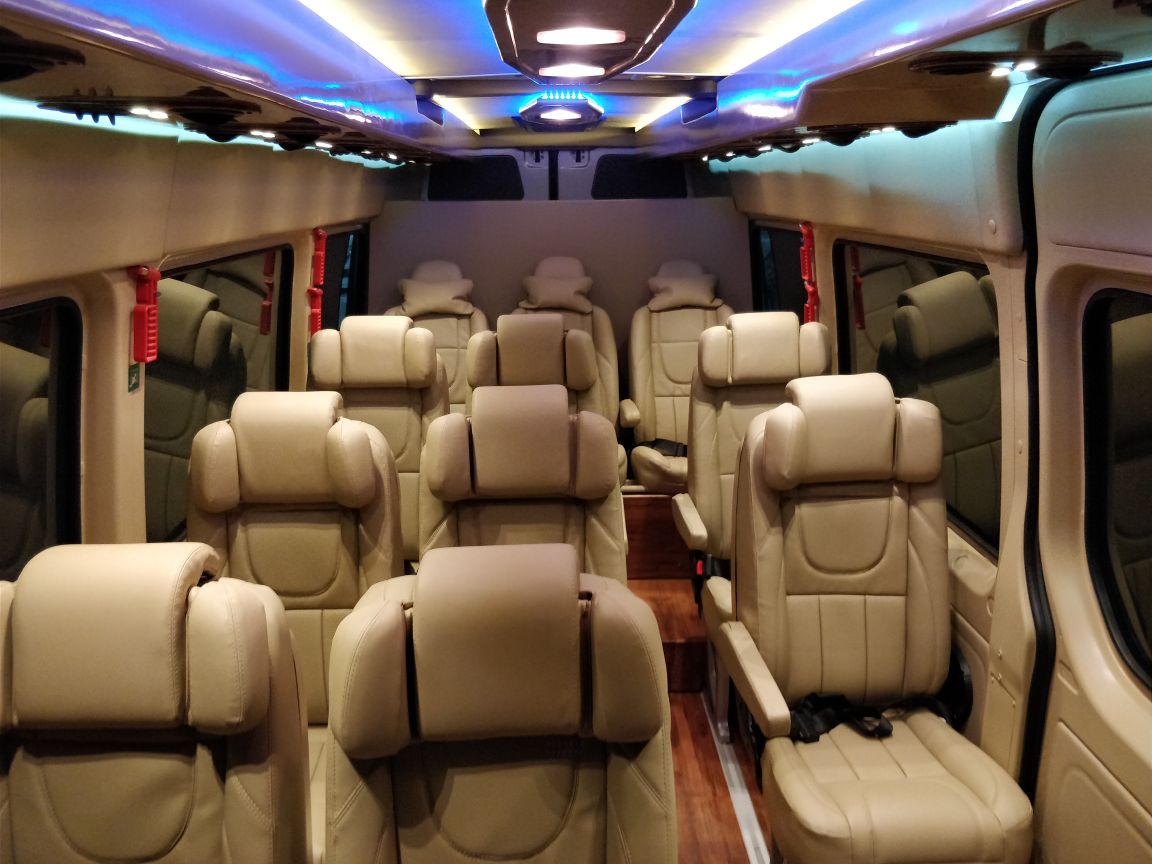
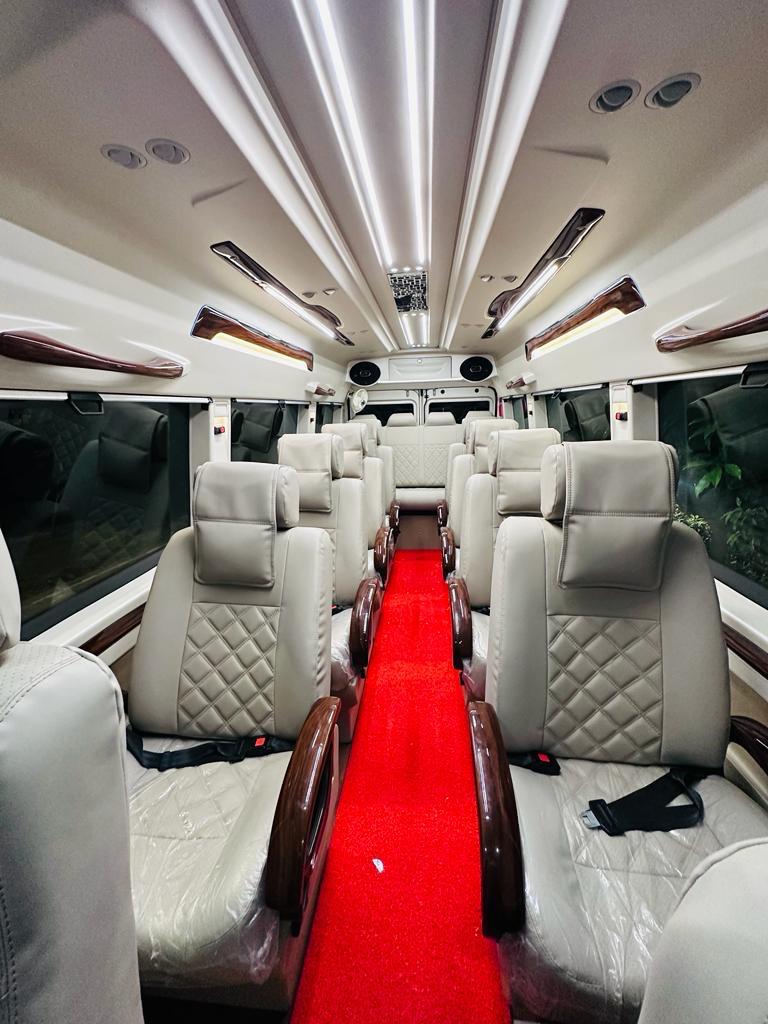
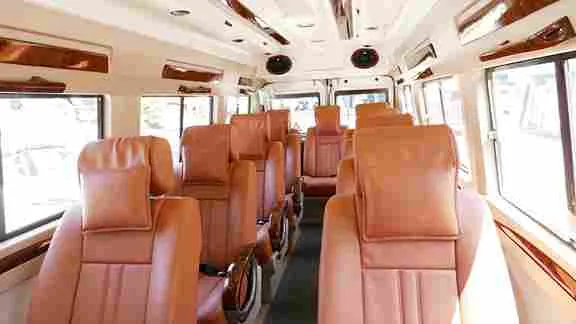
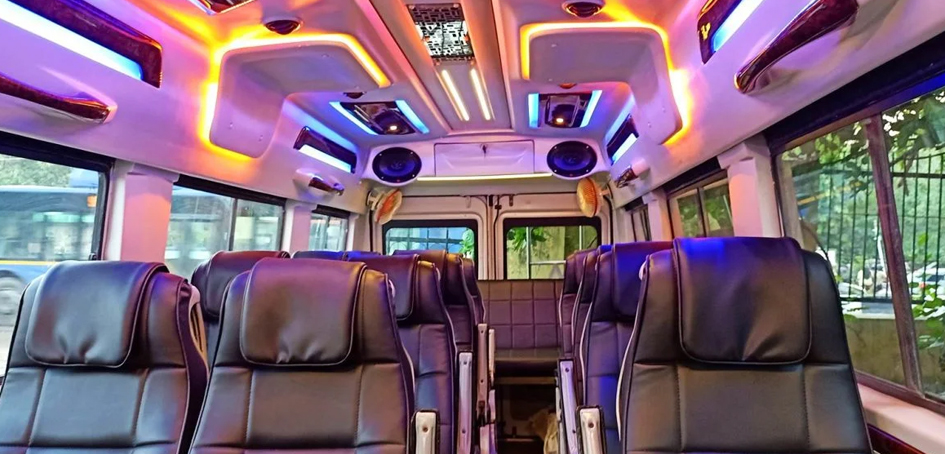
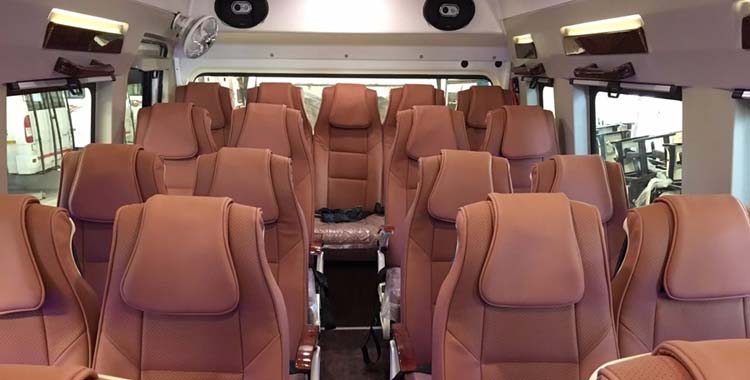
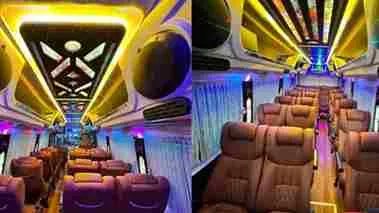
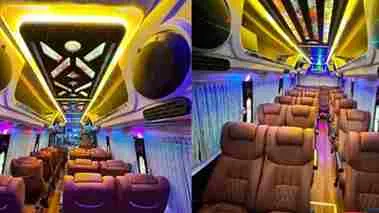
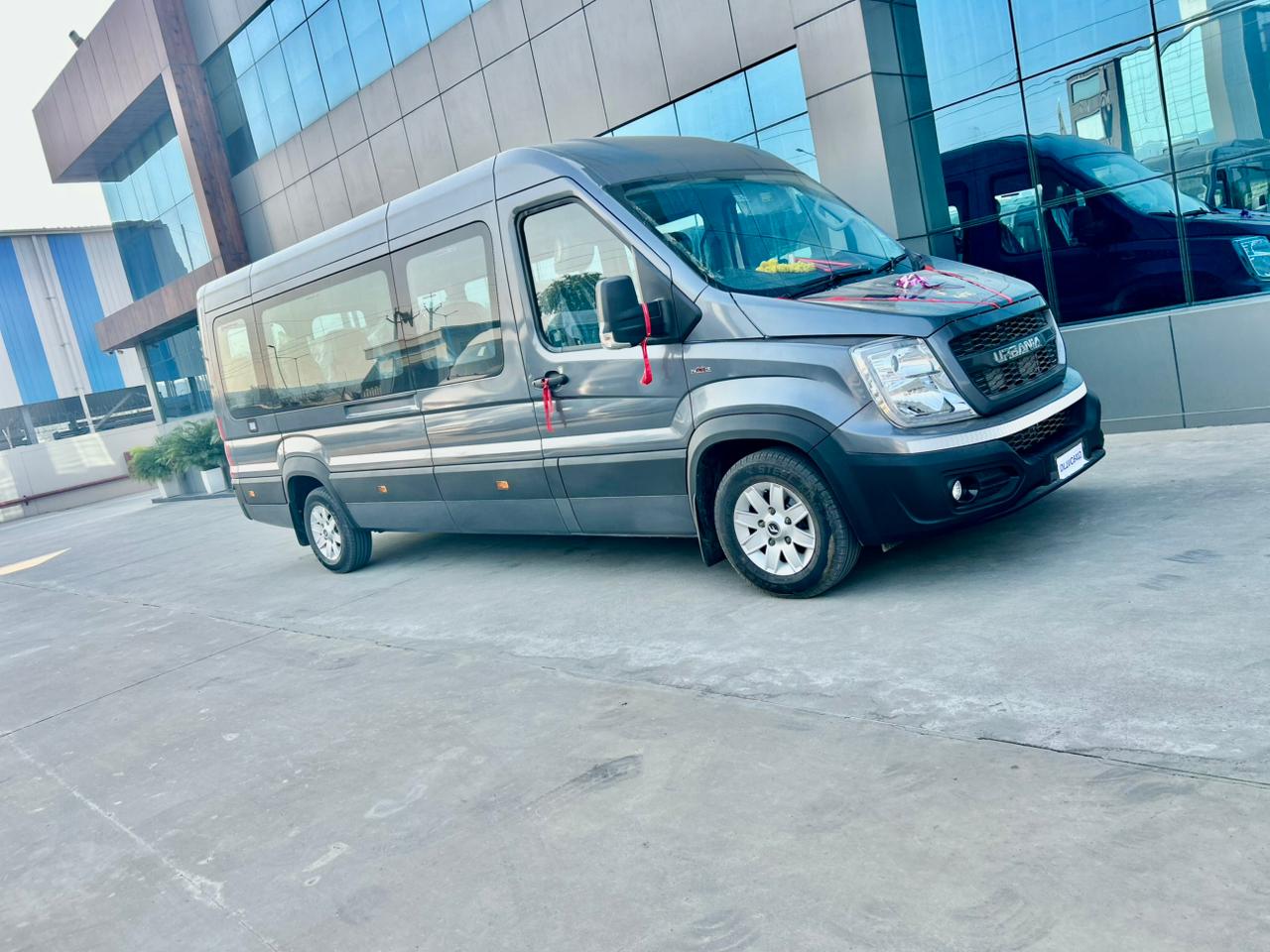
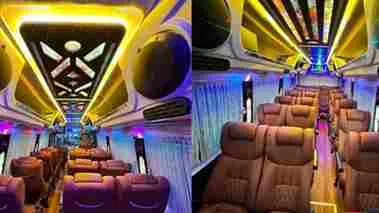
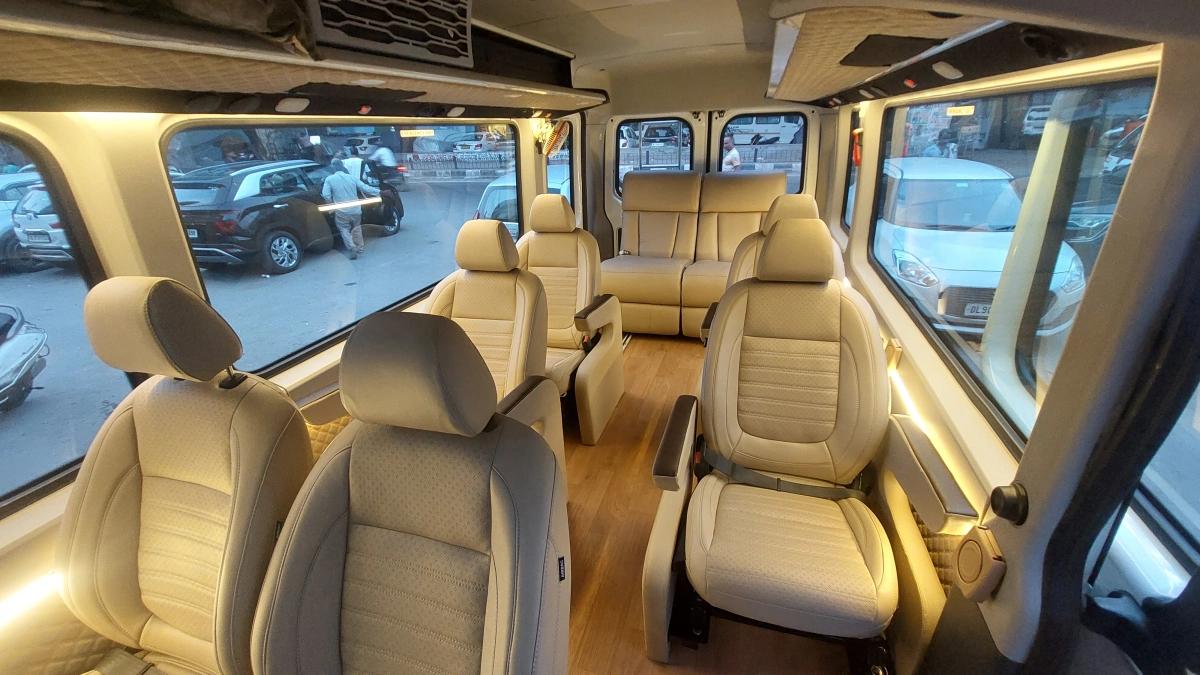
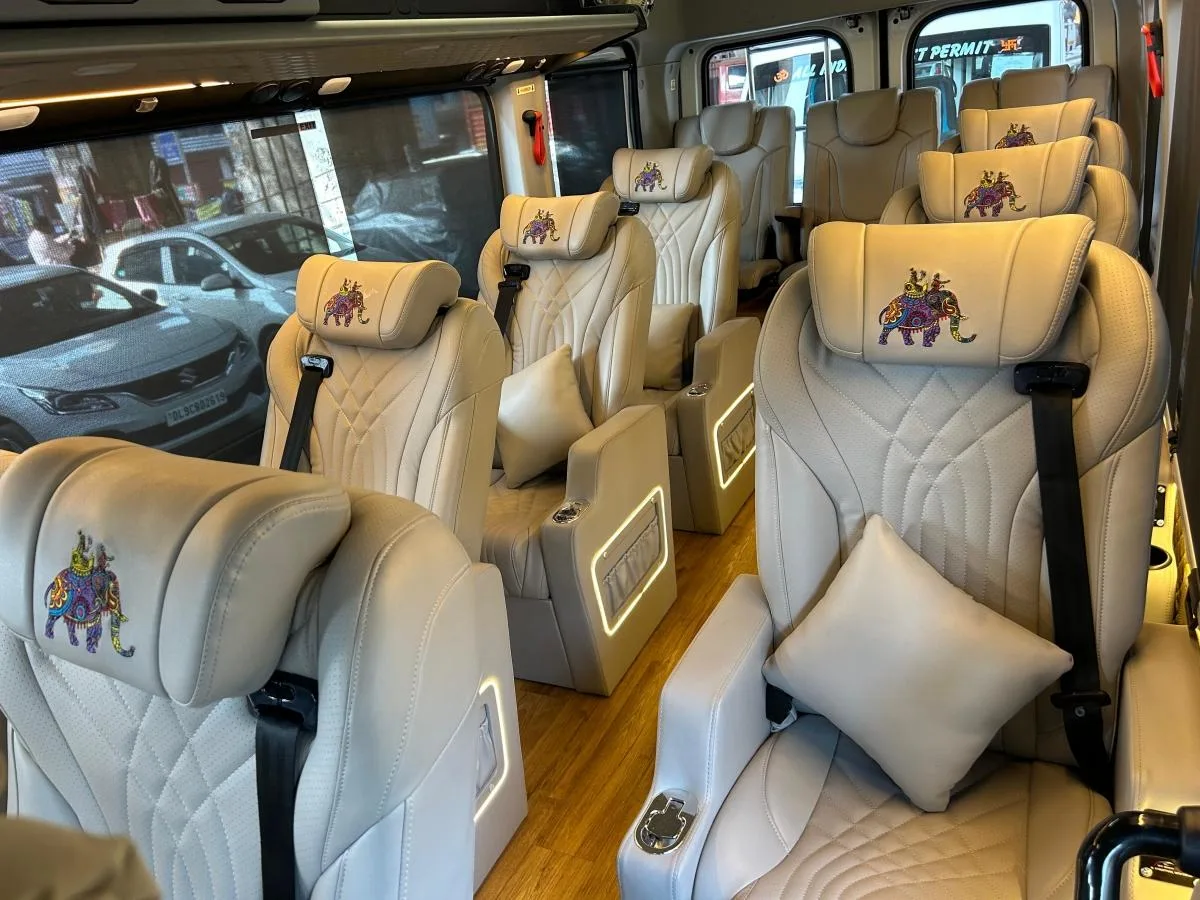
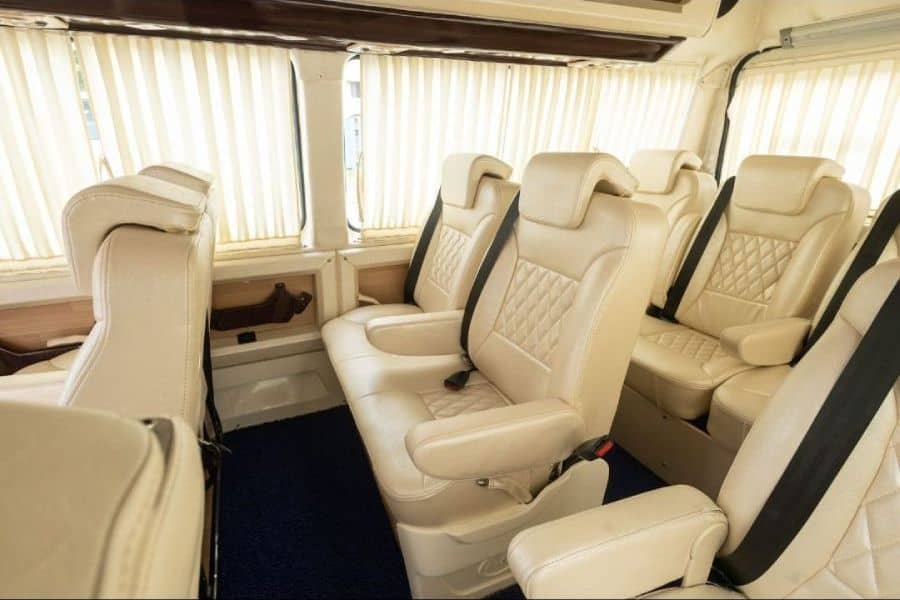
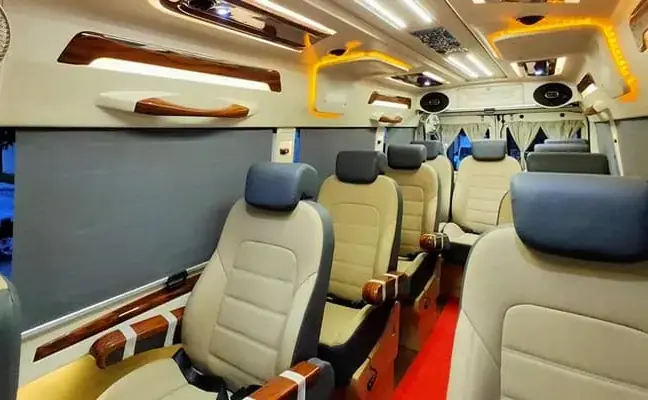
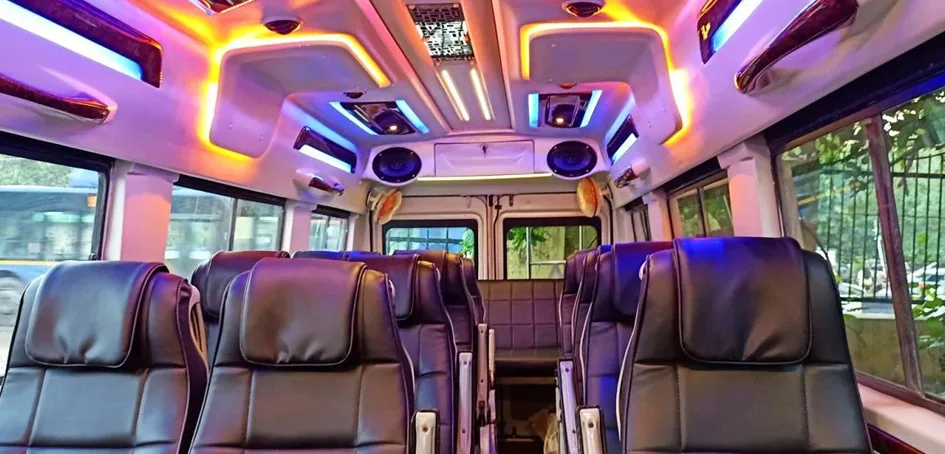
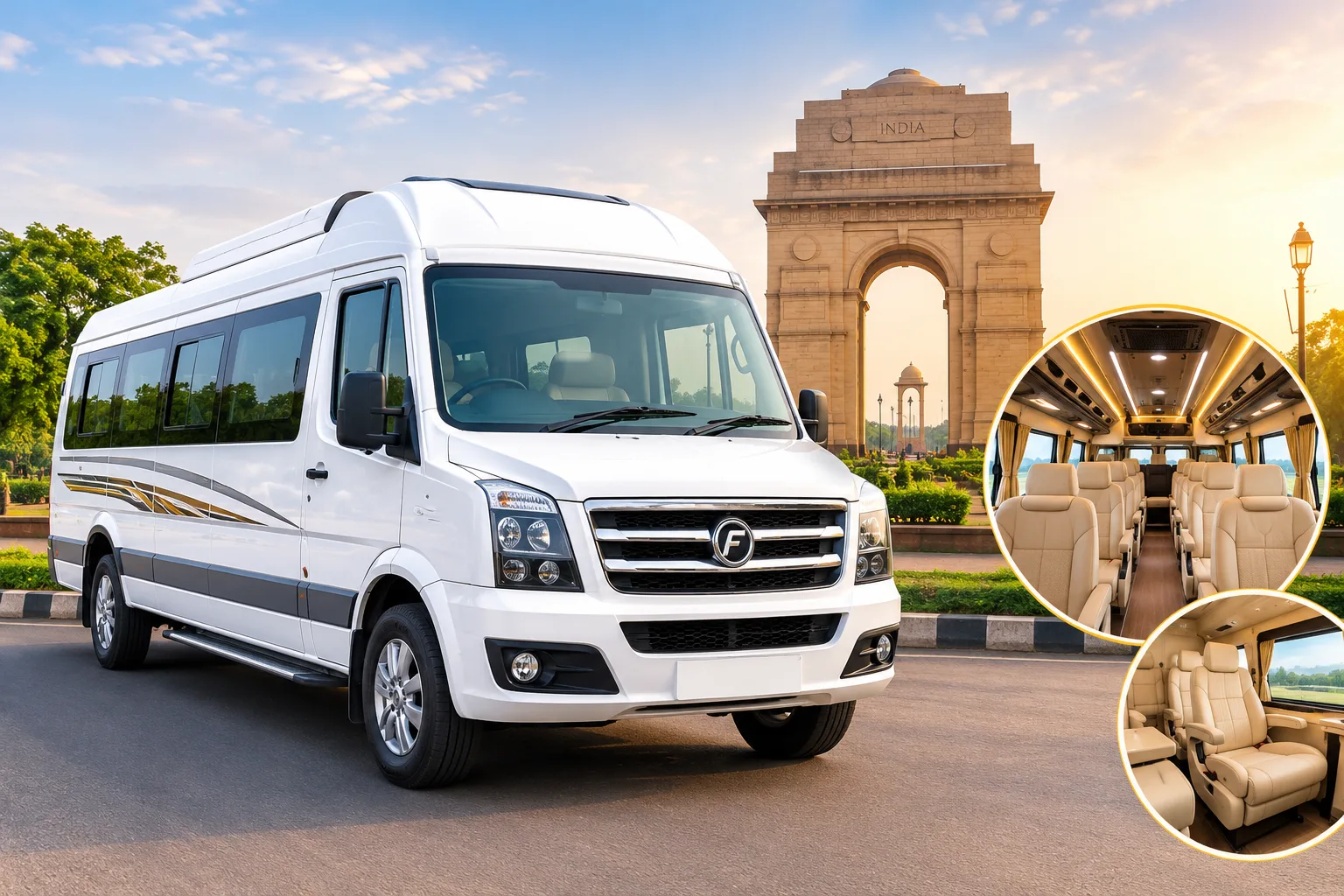
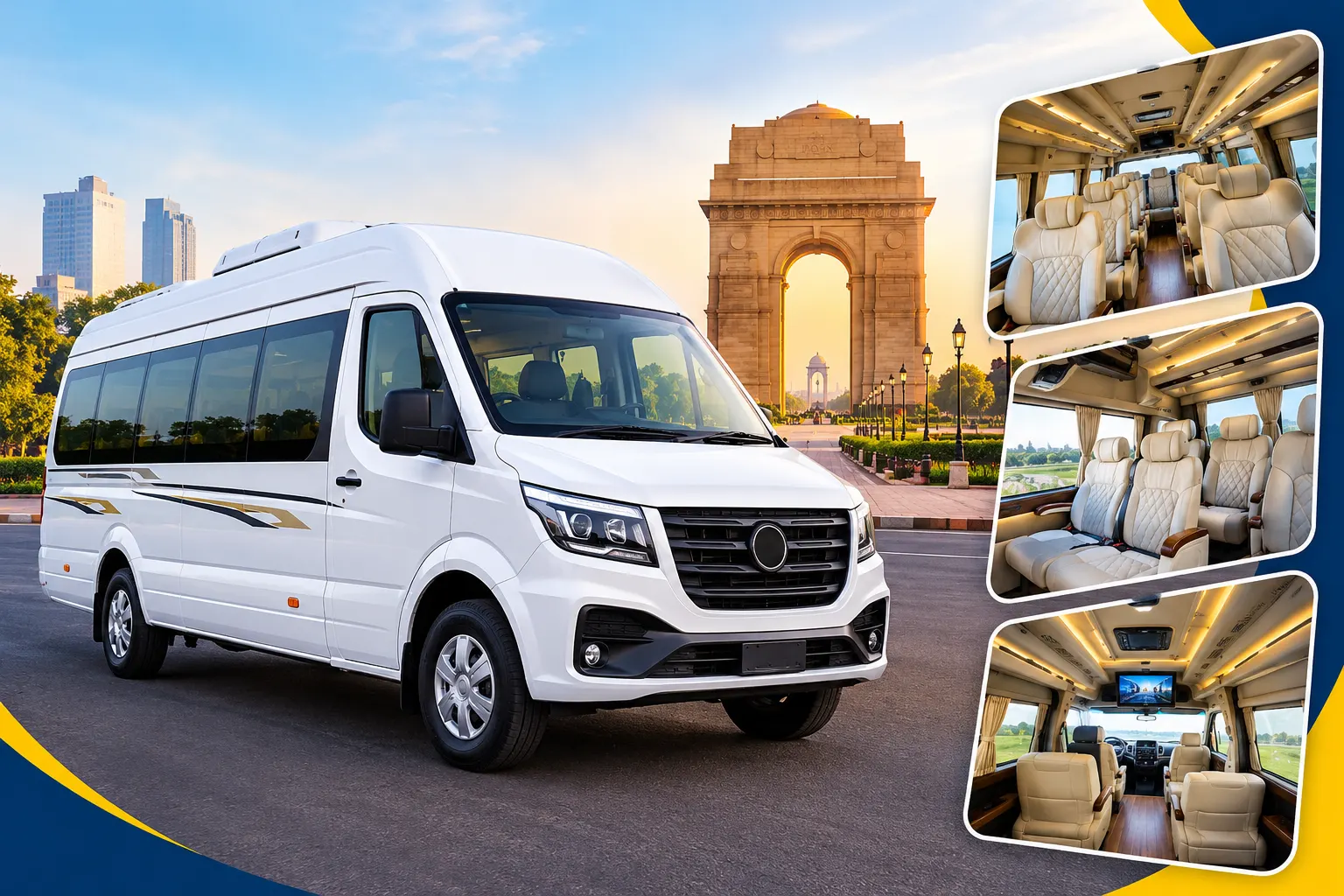
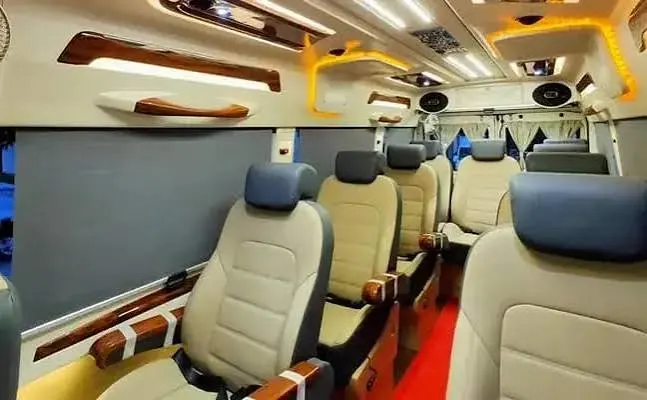
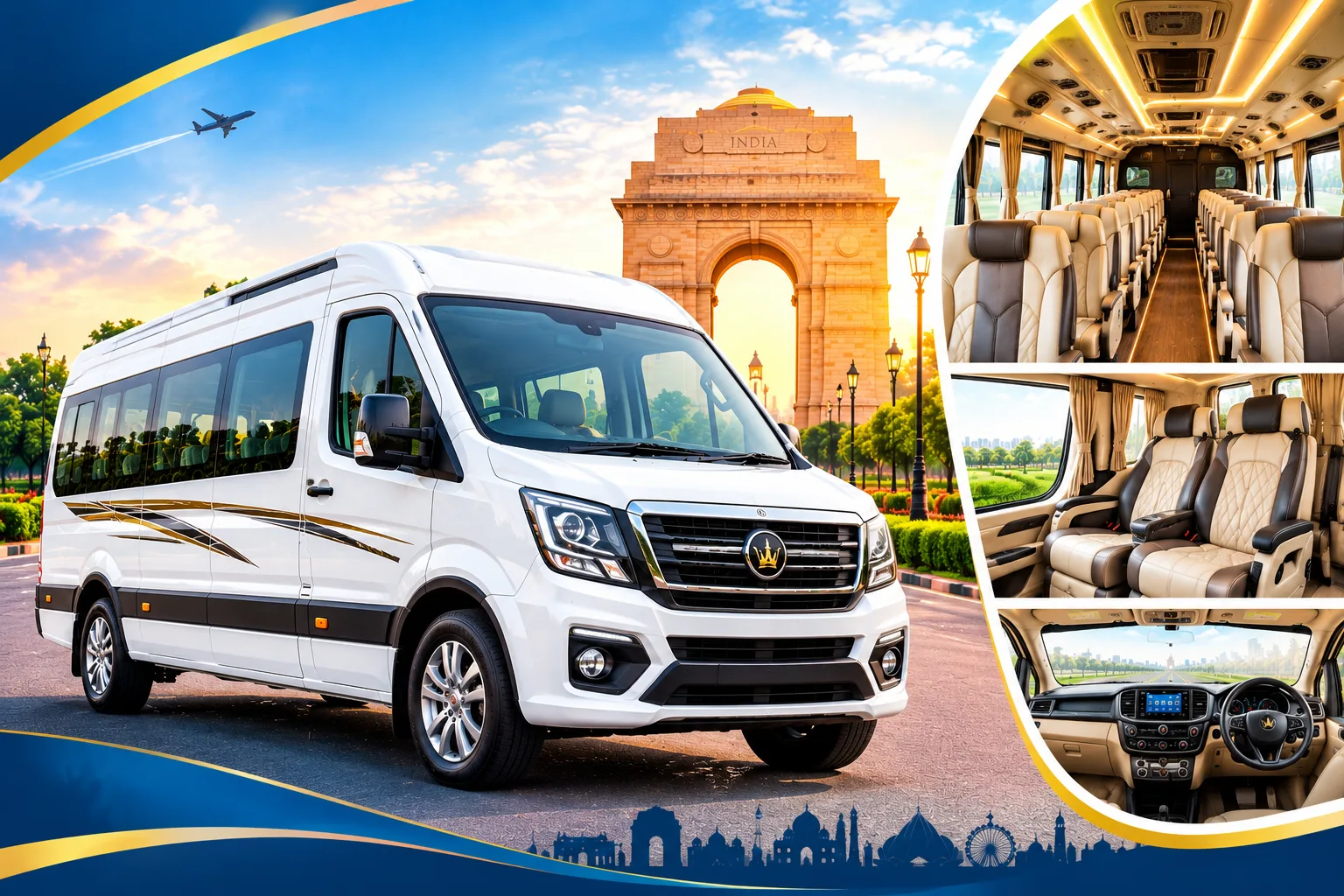
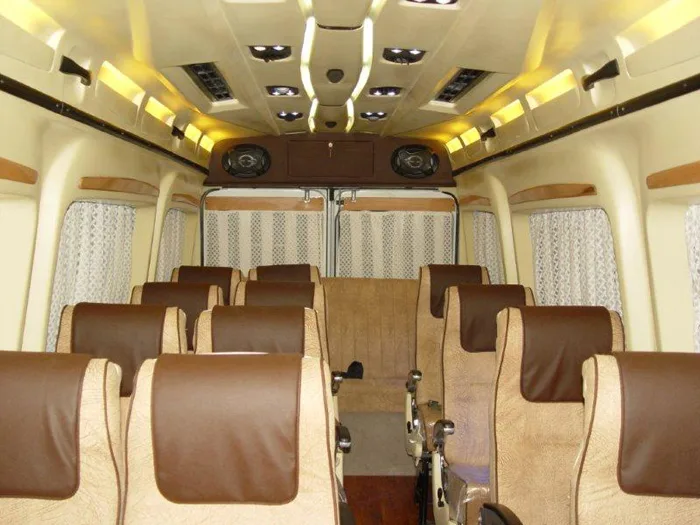
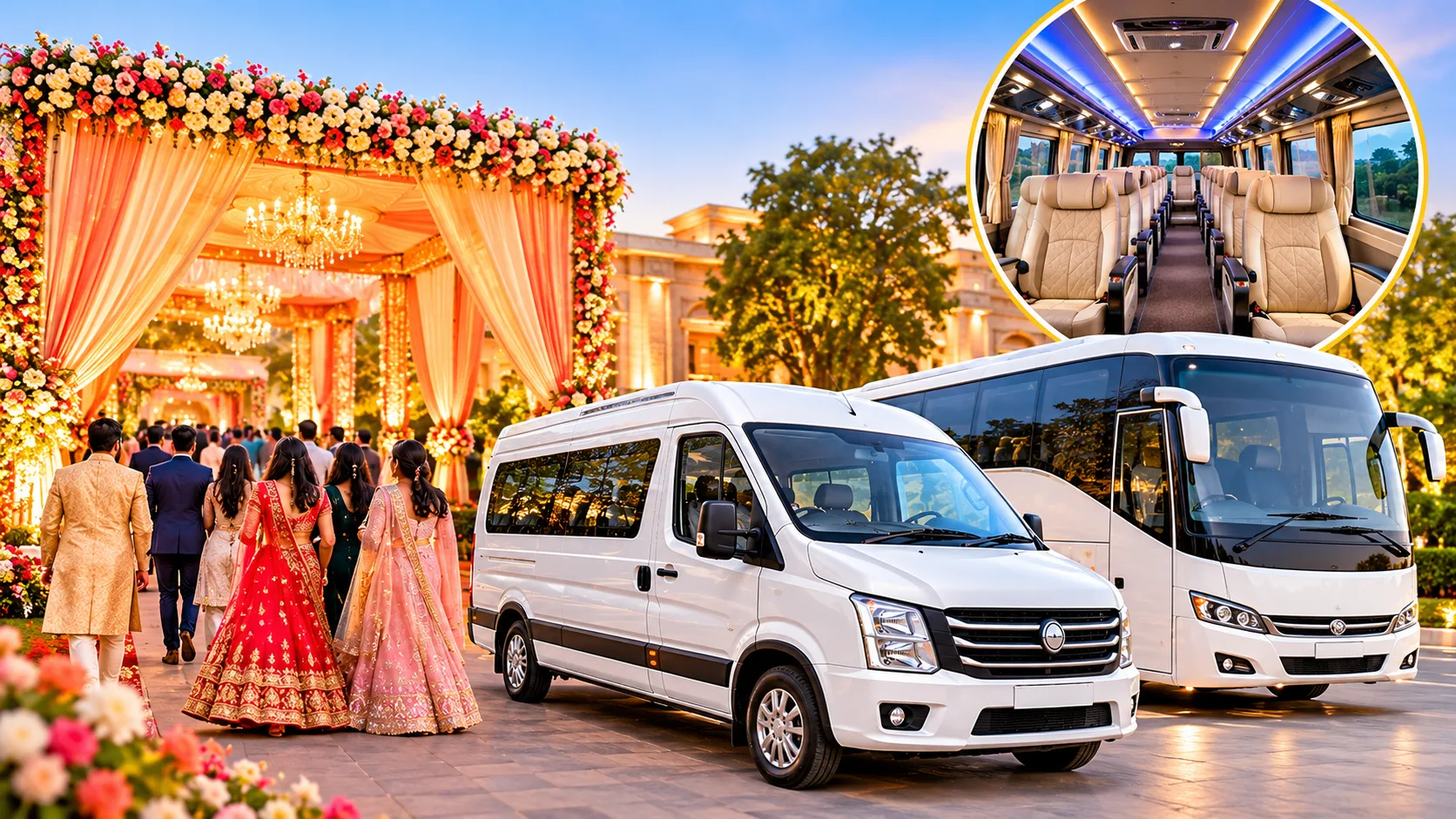
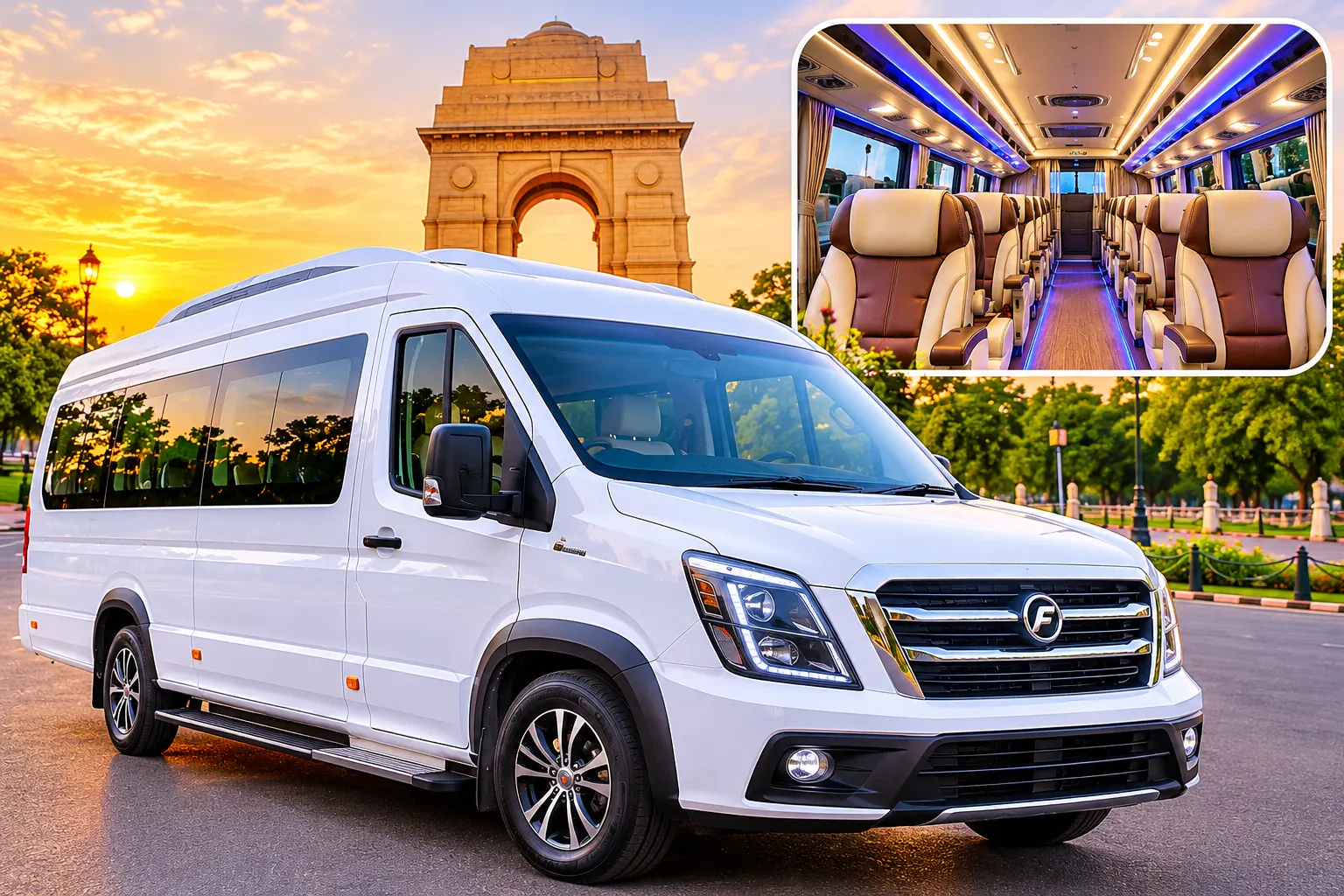
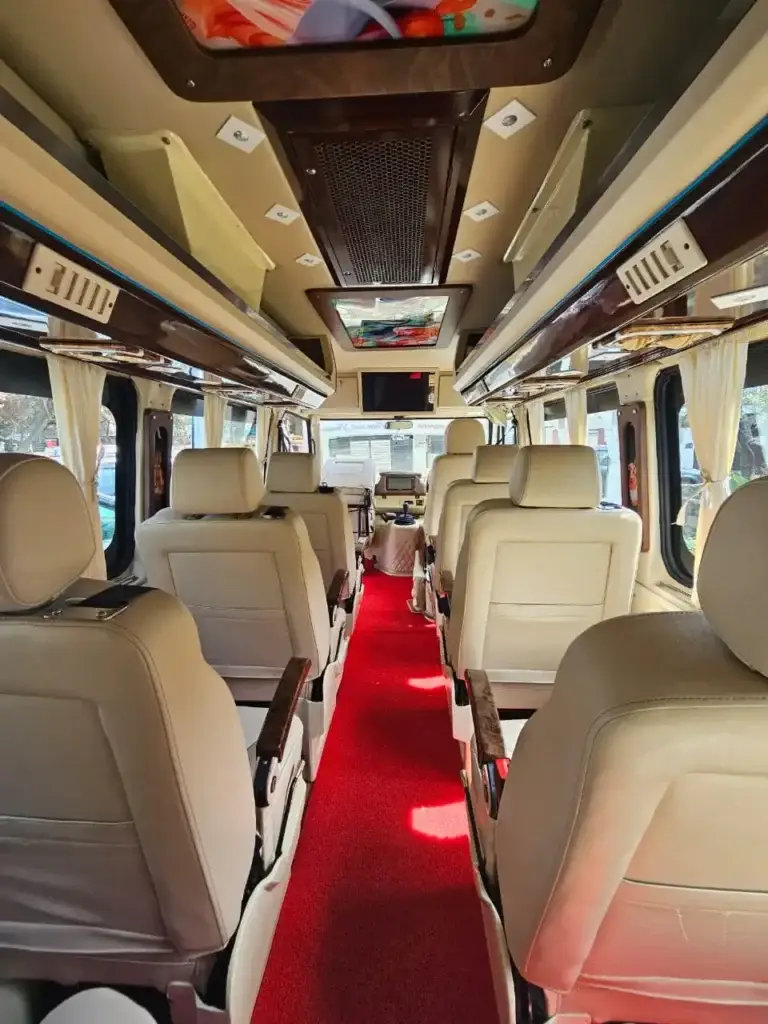
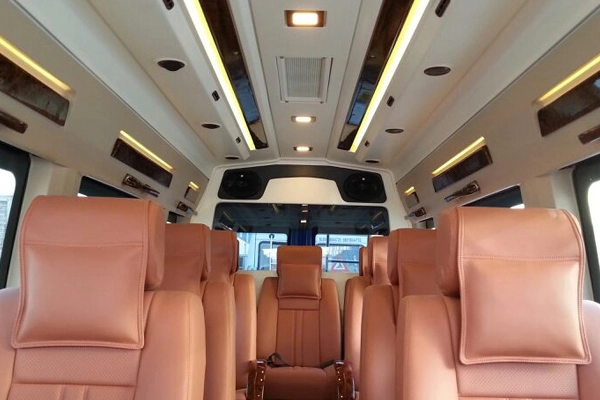
12 seater Maharaja tempo traveller: A premium option with plush seating, ideal for long journeys, family trips and guests who value extra comfort.
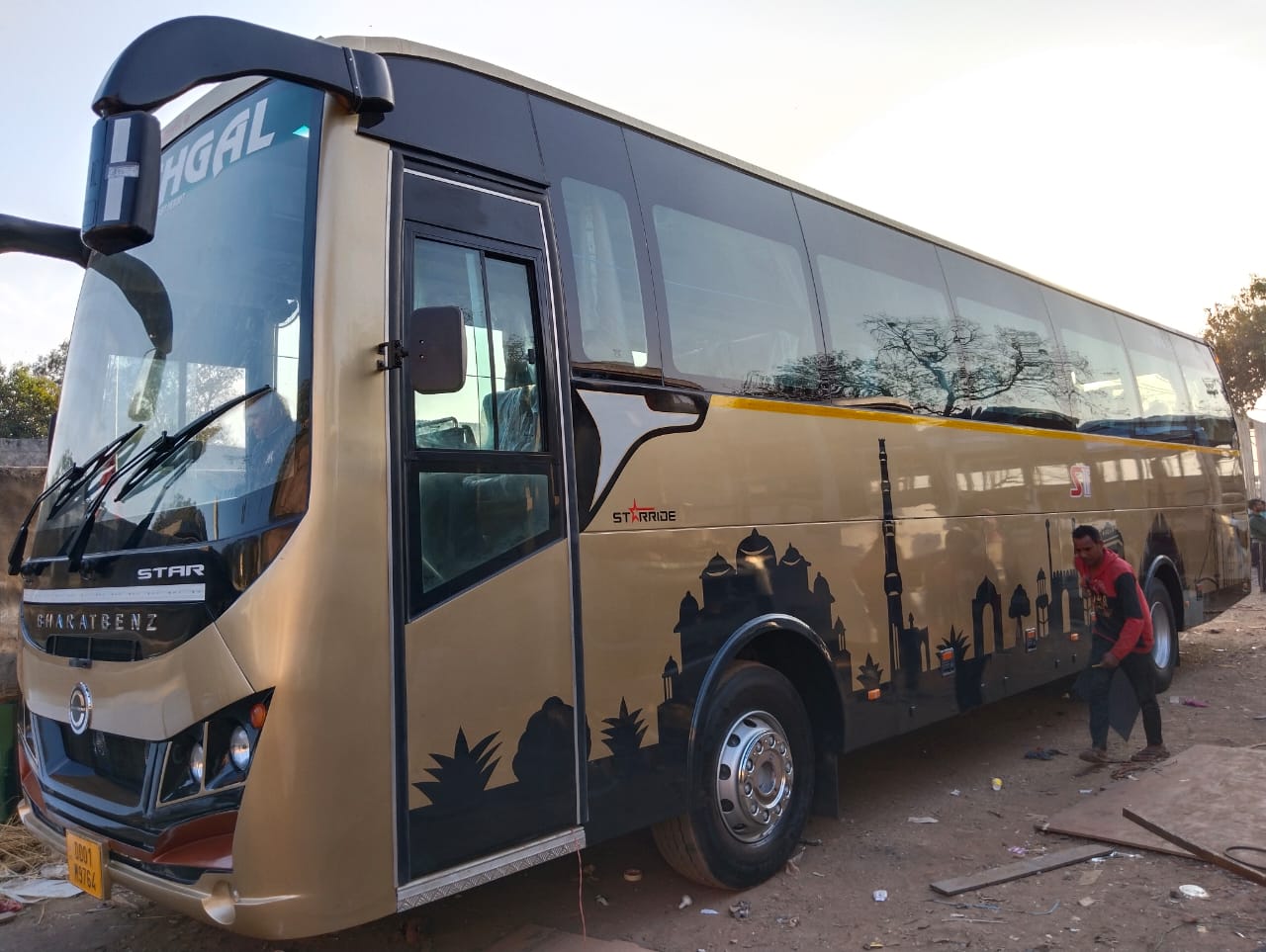
A practical tip: Do not squeeze 13 people into a 12 seater to save money. Overloading affects comfort, safety and the validity of your insurance. If your group is slightly larger, consider a bigger vehicle, or add a second smaller one.
Step 4: Collect the Money in the Right Order
Good collection habits prevent most problems. Follow this sequence.
Finalise the headcount first. Lock the number of travellers before you calculate each share.
Share the written quote with the group. Transparency builds trust.
Announce the per-person amount and the last payment date.
Collect an advance at booking. This confirms your vehicle, and the operator will usually ask for an advance too.
Collect the balance before the trip. Do not wait until the last day.
Keep a shared record. A simple note or sheet that lists names, amounts and dates is enough.
Settle extras at the end. Toll, parking and any extra hours can be adjusted after the trip.
Digital tools: UPI apps and bill-splitting apps make collection easy. One person can collect all payments, then pay the operator directly.
Step 5: Decide Who Pays for What on the Road
During the journey, small expenses add up. Decide these in advance.
Toll and parking: Pay from the common fund or split afterwards.
Driver tip: Many groups give a driver tip at the end of a long trip. Agree on an amount as a group.
Driver meals: For long outstation trips, check if the driver’s food is covered in the quote.
Food stops: Decide whether food is part of the shared budget or paid individually.
Fuel stops: Fuel is normally covered in the rental, so do not pay extra unless the quote clearly says otherwise.
Sample Cost Splitting Examples
Example 1: Friends’ Weekend Trip, Delhi to Rishikesh
A group of 10 friends hires a 12 seater tempo traveller for 2 days. The total including toll and driver allowance comes to ₹28,000.
Equal split: ₹28,000 ÷ 10 = ₹2,800 per person
Add a 5 percent buffer (₹1,400): ₹29,400 ÷ 10 = ₹2,940 per person
Example 2: Family Trip With Children
Three families travel together: 6 adults, 4 children (counted as half) and 1 infant (free). The total cost is ₹32,000.
Total shares = 6 + 2 + 0 = 8
Each share = ₹4,000
Each adult pays ₹4,000, and each child pays ₹2,000
Example 3: Office Team Outing
A team of 12 colleagues travels to Jaipur. The company pays 50 percent of the cost, and employees pay the rest. The total is ₹45,000, so employees pay ₹22,500 together, which is ₹1,875 per person.
These figures are examples only. Actual rates depend on the route, season, vehicle and duration.
Mistakes to Avoid When Splitting Group Trip Costs
Not confirming inclusions: Many groups assume toll and parking are included and end up short.
Accepting late additions without a rule: Decide beforehand how a last-minute member will pay.
Collecting money too late: A delayed advance can cost you the vehicle on peak dates.
Ignoring cancellations: If someone drops out, decide whether their share is refunded or redistributed.
Mixing personal and group spending: Keep the vehicle fund separate from food and shopping.
No written record: Memory fails, and a short note saves arguments.
Choosing the cheapest quote blindly: A very low price often hides extra charges or poor vehicle quality.
What If Someone Cancels or Joins Late?
This is the most common problem in group travel, so set a simple policy before you collect money.
If someone cancels before booking: Recalculate and divide the total among the remaining members.
If someone cancels after booking: Check the operator’s cancellation policy. The advance may not be fully refundable, and the group may need to share the loss.
If someone joins late: Recalculate the per-head amount. If the vehicle has free seats, the new person can pay an equal share and the others can receive a small adjustment.
Whatever the rule, announce it in the group chat at the start so nobody feels surprised later.
How to Get the Best Tempo Traveller Hire Price in Delhi
Lowering the total cost lowers everyone’s share. Here is how to get fair pricing.
Book early. Peak seasons, long weekends and wedding dates fill up fast.
Travel on off-peak days. Weekday trips are often cheaper than weekend trips.
Choose the right size. A vehicle that is too big wastes money, and one that is too small causes discomfort.
Plan a clear route. Detours and last-minute stops increase kilometres and charges.
Compare quotes on inclusions, not only price. A lower base rate with extra charges can cost more.
Combine trip days wisely. A longer, well-planned trip often costs less per day.
Ask for a written quote. It protects both you and the operator.
Why Book a Tempo Traveller on Rent in Delhi With S S Rana Tour and Travels
Clear, written quotes: You will know what is included before you pay.
Well-maintained fleet: From 9 seater and 12 seater models to the premium Maharaja tempo traveller.
Experienced drivers: Familiar with Delhi NCR roads, long highways and hill routes.
Flexible for groups: We help you choose a vehicle that fits your group size and budget.
Support during the trip: Our team stays reachable if plans change.
Plan Your Group Trip With Confidence
A fair cost split does not need complicated maths. It needs a clear total, an agreed method, early collection and honest communication. Once your group is aligned, the trip becomes what it should be: a comfortable journey with good company.
Ready to book? Share your date, route and group size with S S Rana Tour and Travels, and we will recommend the right vehicle and send you a transparent written quote for your tempo traveller on rent in Delhi.
Call or WhatsApp us today, and get your group trip moving.
The cost per person depends on the total trip cost and the number of travellers. Divide the full amount, including the base rental, toll, parking and driver allowance, by the number of people in the group. A full 12 seater usually gives a lower per-head cost than a half-empty one, so fill the vehicle comfortably before comparing prices.
The fairest method depends on your group. For friends travelling the same route, an equal split is simple and fair. For families, a seat-based split is better. For groups with different pickup or drop points, a distance-based split works best. Whichever method you choose, agree on it before collecting any money.
Yes. Driver night allowance on overnight trips is part of the real trip cost, so add it to the total before dividing. If it is not included in your quote, ask the operator to confirm the amount in writing. This avoids a surprise at the end of the journey.
Use a distance-based split. Break the route into sections, work out the cost of each section, and divide it among the people travelling in that section. For example, someone who joins at Meerut and leaves at Haridwar pays only for that stretch, while those travelling the full route pay for the whole journey.
Choose one trusted coordinator, usually the person who is organising the trip. The coordinator collects the payments by UPI, keeps a simple written record of names, amounts and dates, and pays the operator directly. Share the record with the group so everyone can see where the money went.
Most operators ask for a part payment at the time of booking to confirm the vehicle, with the balance paid before or after the trip as agreed. The amount varies by season and trip length, so ask your operator for the exact advance and payment schedule in writing. Collect the advance from your group quickly, especially on peak dates.























.jpeg)



.jpeg)
.webp)
.jpeg)
.jpeg)
.jpeg)


.jpeg)
.jpeg)
.jpeg)
.jpeg)
.jpeg)


.jpeg)
.webp)
.jpeg)
.jpeg)

.jpeg)

.jpeg)
.jpeg)
.jpeg)
.jpeg)

.jpeg)

.webp)
.jpeg)
.jpeg)
.jpeg)

.jpeg)















.webp)


.webp)











_15_11zon.webp)












































































































































































































.webp)





















































.webp)




























.jfif)










.jfif)

.jfif)

.jpg)

.jfif)
.jfif)
.jfif)
.jfif)
.jfif)
.jfif)



.jfif)


.jfif)







.webp)

.webp)
.webp)

.webp)
.webp)

.webp)


.webp)


.webp)





.webp)



.webp)









.webp)
.webp)



.webp)

.webp)





























.webp)






.webp)


































































@.webp)